Comparison
Tennis vs badminton: almost nothing carries over
Two racquet sports with a net, and about as much in common as swimming and cycling. The implement weighs a third as much and the projectile does not bounce.
By Janet H.Updated
The short answer
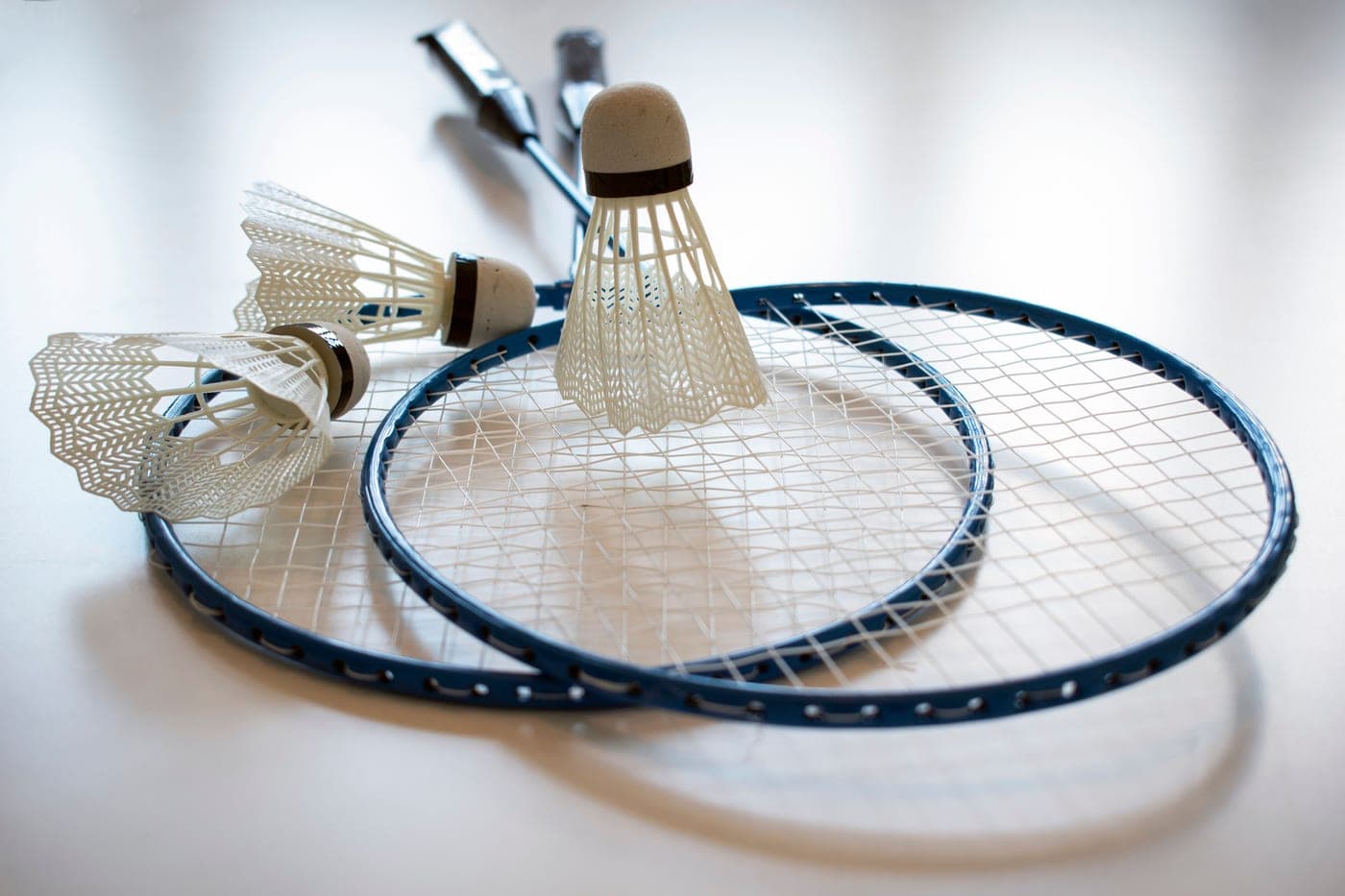
A tennis doubles court is 23.77 m by 10.97 m; a badminton doubles court is 13.4 m by 6.1 m. Tennis rackets weigh roughly 250 to 350 g against a badminton racket's 100 g or so, and the shuttlecock cannot bounce — every shot is taken in the air. Scoring differs completely.
Disclosure — we earn a commission on qualifying purchases made through links on this page, at no extra cost to you. It never changes which product we rank first. How this site is funded.
Our picks
| # | Product | Best for | Score | Price |
|---|---|---|---|---|
| 1 | 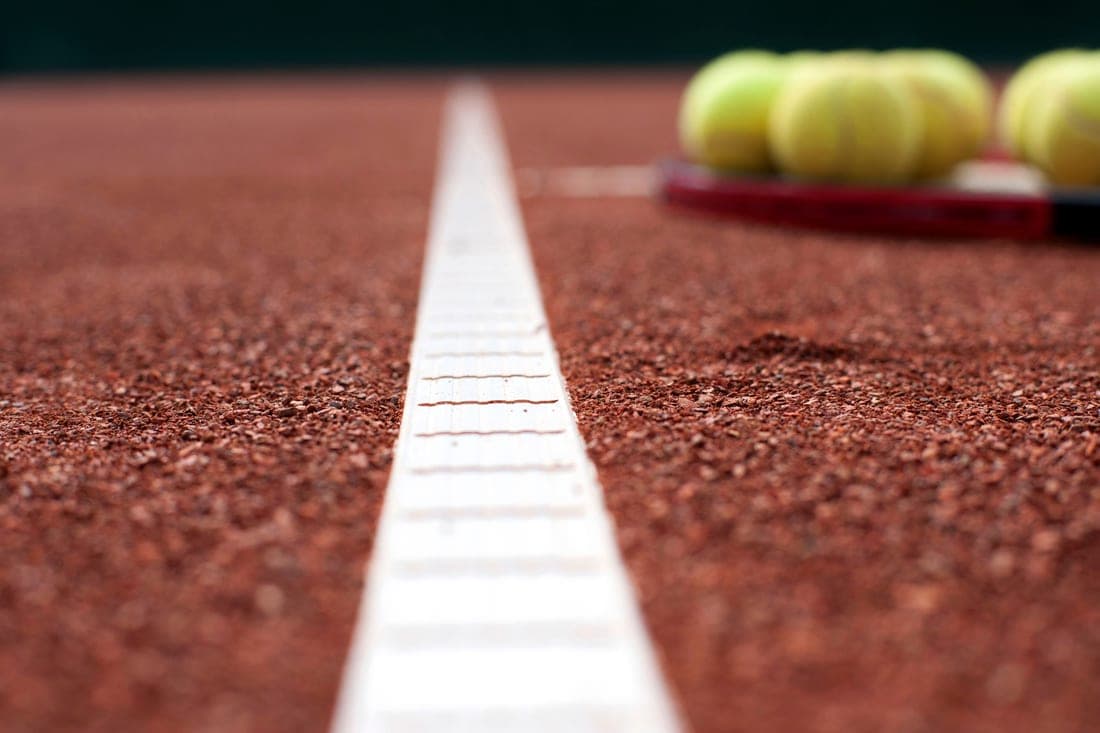 Wilson Clash 100 v3Best tennis racket for converts | Badminton players coming to tennis | 8.64 criteria | |
| 2 | 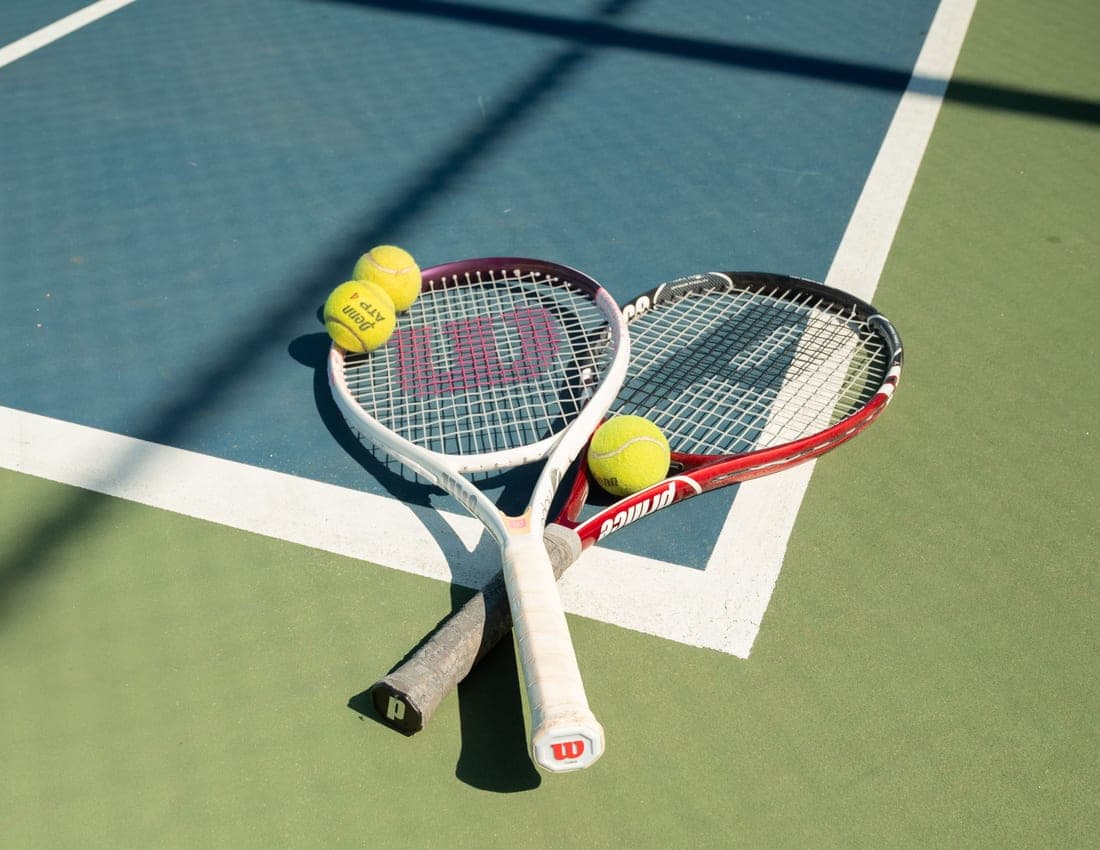 HEAD Speed MP UL 2026Lightest full-size frame | Keeping the weight down | 8.34 criteria |
The picks in detail
01Wilson Clash 100 v3
Best tennis racket for convertsBest for: Badminton players coming to tennis
A badminton player picking up tennis faces a specific problem: the implement weighs three times as much, and the wrist-led technique that generates shuttle speed produces both bad tennis and a sore forearm.
The Clash's 54 RA is the softest mainstream frame sold, which matters while you are learning to hit with the body rather than the hand. A 308 swingweight at 312 g strung is also manageable coming from 100 g.
It is a premium purchase at $299 and it will still be appropriate at 3.5 or 4.0 level.
Our score
- Performance
- 8.5
- Comfort
- 9.5
- Durability
- 8.5
- Value
- 7.5
- Overall
- 8.6
Verified specs
- Head size
- 100 sq in
- Strung weight
- 11 oz / 312 g
- Balance
- 7 pts head light
- Swingweight
- 308
- Stiffness (RA)
- 54
- Beam
- 24.5 mm uniform
- String pattern
- 16x19
- Length
- 27 in
Specs as published by Tennis Warehouse, checked September 2026.
Buy if
- You are moving from badminton to tennis
- You want the softest available frame
- You expect to keep playing
Pass if
- You want the cheapest entry
- You want maximum power
- You are trying tennis once
02HEAD Speed MP UL 2026
Lightest full-size frameBest for: Keeping the weight down
If a 312 g frame is the sticking point — and coming from a 100 g badminton racket it often is — this is the lightest genuinely good adult tennis racket we would recommend: 278 g strung with a 291 swingweight.
It pairs that with a 61 RA, which is unusual. Light frames are normally stiffened to compensate for missing mass, and stiff plus light is a harsh combination for a forearm already adjusting.
You give up power. There is not much mass behind the ball, so depth comes from your swing — which for a badminton player learning tennis technique is arguably a feature.
Our score
- Performance
- 7.5
- Comfort
- 9.0
- Durability
- 8.0
- Value
- 8.5
- Overall
- 8.3
Verified specs
- Head size
- 100 sq in
- Strung weight
- 9.8 oz / 278 g
- Balance
- 2 pts head light
- Swingweight
- 291
- Stiffness (RA)
- 61
- Beam
- 23 mm uniform
- String pattern
- 16x19
- Length
- 27 in
Specs as published by Tennis Warehouse, checked September 2026.
Buy if
- Standard tennis rackets feel heavy
- You want a standard 100 sq in head
- Arm comfort matters to you
Pass if
- You want the frame to supply power
- You face heavy hitters
- You want the biggest sweet spot
The numbers
| Tennis | Badminton | |
|---|---|---|
| Court (doubles) | 23.77 m x 10.97 m | 13.4 m x 6.1 m |
| Court (singles) | 23.77 m x 8.23 m | 13.4 m x 5.18 m |
| Surface | Grass, clay or hard, indoor or outdoor | Indoor wood or synthetic |
| Implement | Roughly 250-350 g | Roughly 100 g |
| Projectile | Ball, bounces | Shuttlecock, never touches the floor in play |
| Scoring | Games and sets, 15/30/40 | 21 points, best of three or five, serve to score |
The most consequential line in that table is the projectile. In tennis the ball may bounce once before you return it; in badminton the shuttlecock cannot touch the floor at all. That single rule makes badminton an air game and tennis a ground game, and it is why the footwork is unrecognisable between them.
Why the racket weight matters so much
A badminton racket is around 100 g and a tennis racket is 250 to 350 g. The LTA note that badminton rackets are deliberately light, with smaller circular heads, specifically to maximize racket speed — because shuttle speed comes from how fast you can move the head, not from mass behind the impact.
Tennis inverts that. Mass matters because a tennis ball has real momentum, and a racket that is too light gets pushed around by incoming pace rather than pushing back.
So the technique diverges at the root. Badminton generates power with wrist and forearm rotation; tennis generates it with a kinetic chain through the legs and trunk. A badminton player's first tennis forehand is almost always all arm.
What actually transfers
- Hand-eye coordination and timing. General, and genuinely useful.
- The overhead. A badminton smash and a tennis serve share a kinetic shape, and badminton players often have excellent overheads.
- Footwork speed. The patterns differ but the athletic quality carries.
- Touch at the net. Badminton's net play is delicate and that feel transfers.
What does not transfer: the wrist-led stroke, the expectation that the projectile decelerates sharply (a shuttle does; a ball does not), and the footwork pattern, which in badminton is built around covering a small court in the air rather than a large one on the ground.
Physical demand
Badminton is one of the fastest racquet sports in the world by projectile speed, and it is played almost entirely in short explosive bursts with jumping and lunging. Tennis covers far more ground per point and is longer in duration.
Neither is easier. They are demanding in different directions, and the crossover injuries are different too — badminton's characteristic problems are the shoulder and the achilles, tennis's are the elbow and the lower back.
If you are choosing between them
Choose badminton if you want an indoor sport that is available year-round regardless of weather, if you like explosive short rallies, and if court access near you is a sports hall rather than a tennis club.
Choose tennis if you want to play outdoors, you want a sport with a deep recreational league structure in most US towns, and you prefer longer points with more construction.
If what appeals is the small-court, fast-hands quality of badminton but you want to play outdoors, pickleball is closer to what you are looking for than tennis is.
Common questions
Is badminton harder than tennis?
They are demanding in different ways. Badminton is faster by projectile speed and is played in explosive bursts with jumping and lunging; tennis covers far more ground per point over a longer duration. Neither is objectively easier.
How much does a badminton racket weigh compared to a tennis racket?
About a third. A badminton racket is around 100 g against a tennis racket's 250 to 350 g. Badminton rackets are deliberately light to maximize racket-head speed, which is where shuttle speed comes from.
Does badminton help your tennis?
Hand-eye coordination, timing and the overhead motion transfer. The wrist-led stroke production does not, and it is the main habit a badminton player has to unlearn when taking up tennis.
Can you play badminton outdoors?
Not competitively. A shuttlecock is extremely light and any breeze makes it unplayable, which is why badminton is an indoor sport on wood or synthetic surfaces.
Which has the faster projectile?
Badminton, comfortably — it is frequently described as the fastest racquet sport by projectile speed. The shuttle decelerates very quickly after impact, though, which is why rallies still work in a small court.
Read next
Sources
- 01the LTA — Tennis vs badminton
- 02Tennis Warehouse — Wilson Clash 100 v3
- 03Tennis Warehouse — HEAD Speed MP UL 2026
Every source above was retrieved while writing this page. Specifications are quoted from the listing or manufacturer page cited, not from memory.