Buying guide
Best clay court tennis shoes in 2026
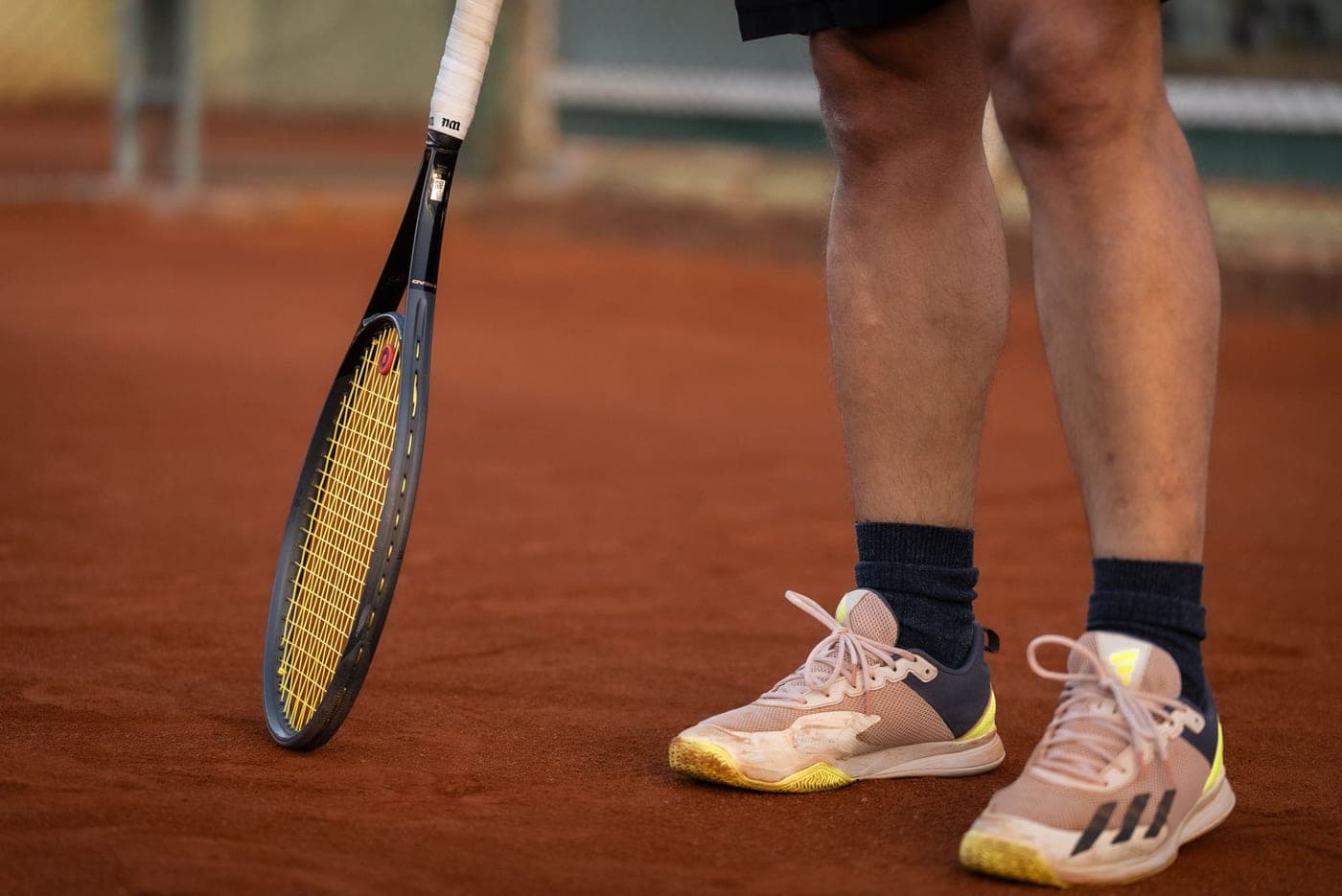
A clay outsole has two jobs that fight each other: hold when you plant, and release the clay so it does not pack in. The herringbone pattern is how that gets solved.
By Janet H.Updated
The short answer
The ASICS GEL-Resolution 9 Clay is the best clay court shoe available: RunRepeat scores it 89, measures its clay traction at a 0.82 coefficient with 5/5 torsional rigidity, and it carries a six-month outsole guarantee. The Solution Speed FF 3 Clay is the lighter alternative at a score of 86.
Disclosure — we earn a commission on qualifying purchases made through links on this page, at no extra cost to you. It never changes which product we rank first. How this site is funded.
Our picks
| # | Product | Best for | Score | Price |
|---|---|---|---|---|
| 1 | 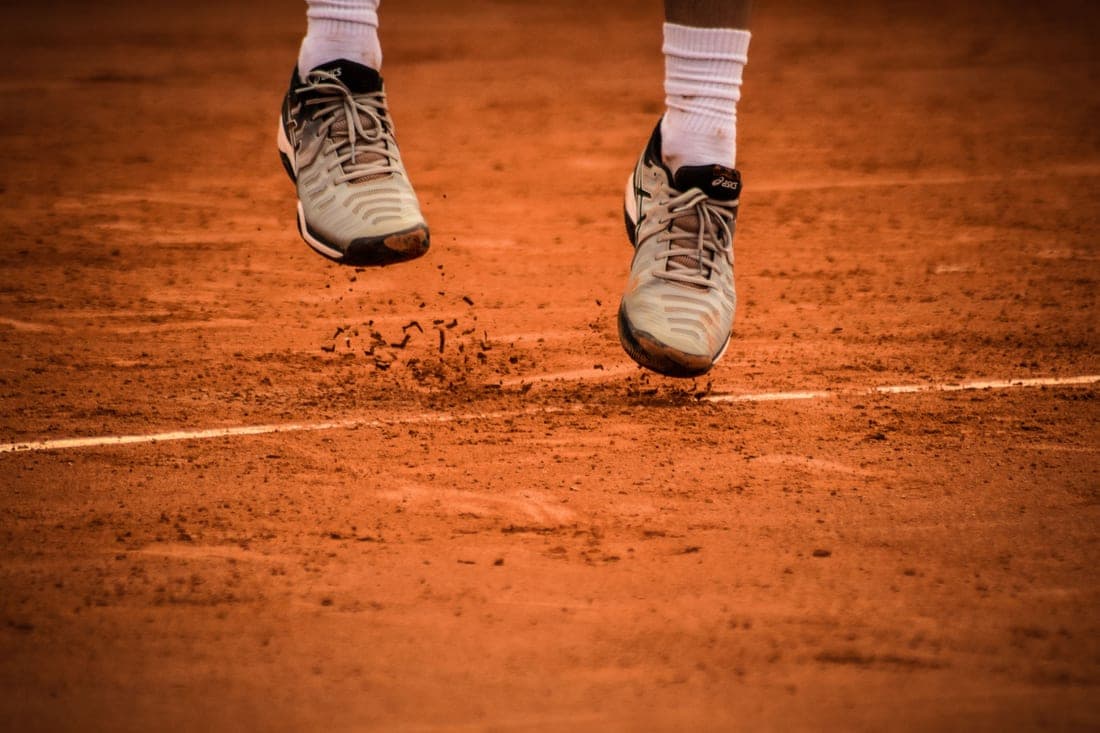 ASICS GEL-Resolution 9 ClayTop pick | Serious clay play | 8.95 criteria | |
| 2 |  ASICS Solution Speed FF 3 ClayBest lightweight clay option | Clay play with a lighter chassis | 8.45 criteria | |
| 3 | adidas Barricade 13 ClayBest for wide feet on clay | Clay play with a wider forefoot | 8.15 criteria |
The picks in detail
01ASICS GEL-Resolution 9 Clay
Top pickBest for: Serious clay play
RunRepeat's lab work on this shoe is the most complete clay data available and it is strong throughout: a 0.82 traction coefficient, which they describe as amazingly grippy on clay; 5/5 torsional rigidity from the TPU shank; 97 SA of heel shock absorption; and an 88.5 HC outsole that wore only 0.8 mm under their abrasion test.
The outsole is 4.6 mm thick, which supports the six-month durability guarantee the model carries. On clay, where the surface itself is less abrasive than hard court, that thickness translates into a long service life.
Two honest caveats. At 369 g it is a substantial shoe, and RunRepeat flag the non-breathable PU upper as a problem for players who run hot — clay season is summer season in most of the country, so weigh that.
Our score
- Lateral stability
- 9.5
- Cushioning
- 8.5
- Outsole durability
- 9.5
- Fit accommodation
- 7.5
- Lightness
- 5.5
- Overall
- 8.9
Verified specs
- RunRepeat score
- 89
- Weight
- 13.0 oz / 369 g
- Heel / forefoot stack
- 31.7 mm / 21.5 mm
- Drop
- 10.2 mm
- Traction
- 0.82 coefficient on clay
- Torsional rigidity
- 5/5
- Heel counter stiffness
- 4/5
- Outsole
- 88.5 HC, 0.8 mm wear, 4.6 mm thick
- Toebox at big toe
- 68.4 mm
Specs as published by RunRepeat, checked September 2026.
Buy if
- You play clay regularly rather than occasionally
- You want maximum stability when you slide
- You want an outsole guarantee
Pass if
- You overheat easily in summer
- You want a light shoe
- You only play clay a few times a year
02ASICS Solution Speed FF 3 Clay
Best lightweight clay optionBest for: Clay play with a lighter chassis
RunRepeat score this at 86, which puts it comfortably in their great band, and it sits on the Solution Speed chassis rather than the Gel-Resolution stability chassis — a meaningfully lighter and quicker platform.
That suits the way a lot of club players actually move on clay. Sliding into a shot is a skill that takes years; most recreational clay players still stop and plant, and a lighter shoe helps more than a stability shank does.
RunRepeat's catalog listing gives the score and the surface but not the full lab breakdown for this model, so we are not quoting measurements we cannot cite. Treat it as the lighter option in the same family.
Our score
- Lateral stability
- 8.0
- Cushioning
- 7.5
- Outsole durability
- 8.5
- Fit accommodation
- 8.0
- Lightness
- 8.5
- Overall
- 8.4
Verified specs
- RunRepeat score
- 86
- Surface
- Clay-specific herringbone outsole
- Line
- Speed chassis rather than stability chassis
Specs as published by RunRepeat, checked September 2026.
Buy if
- You want clay tread without a heavy stability shoe
- You move quickly and stop rather than slide
- You play clay in hot weather
Pass if
- You need maximum ankle support
- You slide aggressively into shots
- You want published lab measurements
03adidas Barricade 13 Clay
Best for wide feet on clayBest for: Clay play with a wider forefoot
RunRepeat score the Barricade 13 Clay at 84 and list it in their wide-feet catalog, which makes it the accommodating option in a category where most shoes run narrow.
The Barricade platform has been adidas's stability chassis for two decades, and the clay version keeps that structure while swapping to a full herringbone outsole.
It is a step below the ASICS options on score, and the catalog listing does not publish the lab breakdown. If fit is your binding constraint on clay, this is where to start.
Our score
- Lateral stability
- 8.5
- Cushioning
- 7.5
- Outsole durability
- 8.0
- Fit accommodation
- 9.0
- Lightness
- 6.0
- Overall
- 8.1
Verified specs
- RunRepeat score
- 84
- Surface
- Clay-specific outsole
- Width fit
- Listed in RunRepeat's wide-feet catalog
Specs as published by RunRepeat, checked September 2026.
Buy if
- Your forefoot is wide and clay shoes pinch
- You like the Barricade platform
- You want stability structure on clay
Pass if
- You want the highest-scoring clay shoe
- You want published lab data
- Weight is your main concern
What a clay outsole has to do
Clay and Har-Tru are loose surfaces sitting on a compacted base. Grip comes from the tread biting through that loose layer, and the problem is that the same tread then wants to hold onto the material it picked up. A packed outsole is a slick outsole.
Full herringbone — continuous zig-zag ridges across the whole outsole — solves both halves. The ridges bite in when you load them laterally, and their open geometry lets clay fall out when the foot unloads. That is why every genuine clay shoe looks the same underneath, regardless of brand.
Do you actually need clay-specific shoes?
Honest answer: it depends how often you play on it. RunRepeat's guidance is that court-specific outsoles matter — hard-court shoes on clay do not have enough grip and clog quickly — but they also note that for beginner and recreational players an all-court shoe is a reasonable compromise on clay, as long as its tread is not flat and smooth.
| How often you play clay | What to buy |
|---|---|
| Every session | A dedicated clay shoe — the tread is the whole point |
| Most weeks in summer | A dedicated clay shoe, kept as your second pair |
| A few times a year | All-court, with a tread that is not worn smooth |
| Never | Hard court, and ignore this page |
The strongest reason to buy a clay-specific pair once you are playing regularly is not performance — it is that hard-court tread on clay slides unpredictably, and an unpredictable slide is how ankles go.
Sliding, and why stability matters more here
A controlled slide on clay is a deliberate technique, and the shoe is part of it: you load the outside edge, let the foot travel, and arrive balanced. That places a large lateral load on the shoe's torsional structure for longer than a hard-court plant does.
This is why the GEL-Resolution 9 Clay's 5/5 torsional rigidity is the headline number rather than its cushioning. A shoe that twists during a slide puts the load through your ankle instead of through the chassis.
If you are learning to slide, do it on a clay-specific outsole. Learning on hard-court tread teaches you a stop that will not translate.
Looking after them
- Bang them out at the end of each session, sole to sole, before the clay dries in the tread.
- Do not wear them off the court. Clay tread on concrete wears fast and pointlessly.
- Dry them at room temperature, not on a radiator — heat degrades midsole foam and glue lines.
- Brush the herringbone occasionally with a stiff brush; packed clay in the grooves is exactly the failure mode the pattern exists to avoid.
Common questions
Can I wear hard court shoes on clay?
Occasionally, yes. Regularly, no — hard-court tread does not have the bite for loose clay and clogs quickly, which produces the unpredictable sliding that causes ankle injuries. RunRepeat note that all-court shoes are an acceptable compromise for recreational players as long as the tread is not smooth.
What is the herringbone pattern for?
The zig-zag ridges grip when loaded laterally, and their open geometry lets clay fall out as the foot unloads. Grip and shedding are competing requirements, and herringbone is the pattern that solves both.
Are clay court shoes hotter to wear?
Generally yes. Clay uppers are less perforated to keep material out of the shoe, and RunRepeat specifically flag the GEL-Resolution 9 Clay's non-breathable PU upper as a problem for heat-sensitive players.
Do clay court shoes last longer?
The outsole usually does, because clay is far less abrasive than acrylic over concrete. The GEL-Resolution 9 Clay's 4.6 mm outsole and six-month guarantee reflect that. Midsole compression becomes the limiting factor instead.
Read next
Sources
- 01RunRepeat — Clay Court Tennis Shoe reviews
- 02RunRepeat — ASICS GEL-Resolution 9 Clay lab review
- 03RunRepeat — Wide tennis shoes catalog
Every source above was retrieved while writing this page. Specifications are quoted from the listing or manufacturer page cited, not from memory.