Buying guide
Best tennis shoes for wide feet in 2026
A shoe can be genuinely wide at the ball of the foot and still pinch at the big toe. Those are two different measurements, and knowing which one is your problem changes the answer.
By Janet H.Updated
The short answer
The ASICS Court FF 3 has the widest forefoot RunRepeat has measured in a tennis shoe at 101.8 mm, and scores 93 overall. If your problem is the ball of the foot rather than toe length, the ASICS GEL-Resolution X is also listed for wide feet — but it narrows to 66.6 mm at the big toe.
Disclosure — we earn a commission on qualifying purchases made through links on this page, at no extra cost to you. It never changes which product we rank first. How this site is funded.
Our picks
| # | Product | Best for | Score | Price |
|---|---|---|---|---|
| 1 | 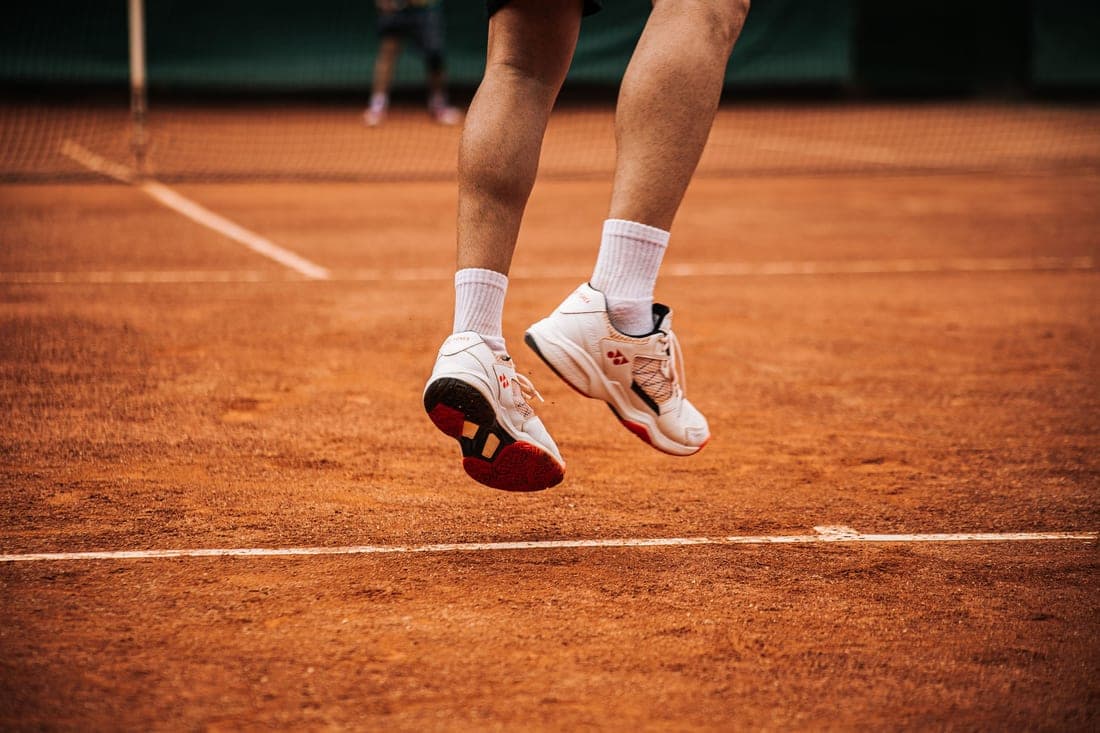 ASICS Court FF 3Top pick | The widest measured forefoot | 9.05 criteria | |
| 2 | 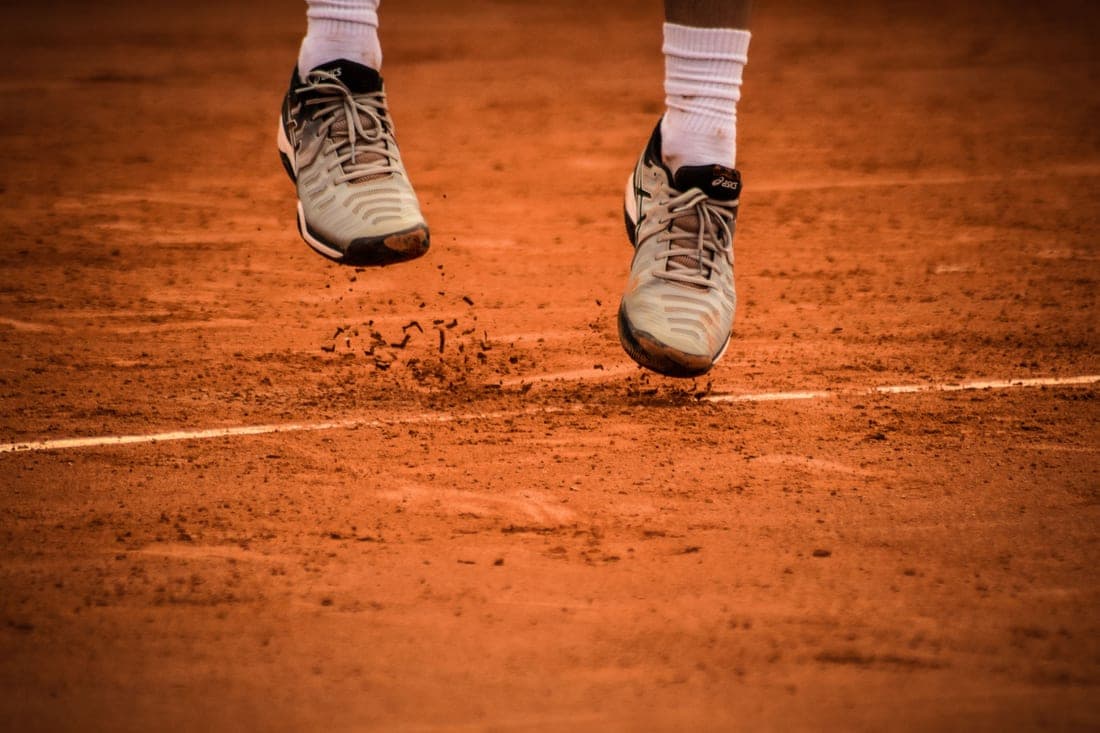 ASICS GEL-Resolution XMost supportive | Wide forefoot plus maximum stability | 8.85 criteria | |
| 3 | K-Swiss Hypercourt Express 2Best value | Wide fit on a budget | 8.35 criteria | |
| 4 | Nike Zoom GP Challenge 1Most rigid chassis | Wide feet who want Nike | 8.25 criteria | |
| 5 |  adidas Barricade 13 ClayBest wide clay option | Wide feet on clay | 8.05 criteria |
The picks in detail
01ASICS Court FF 3
Top pickBest for: The widest measured forefoot
101.8 mm at the widest part of the toebox is the largest figure RunRepeat has published for a tennis shoe, and it comes attached to their highest-scoring hard-court model at 93. That is an unusually happy combination — accommodating shoes are often accommodating because they are unstructured.
It is not. The outsole measures 85.3 HC and took only a 0.4 mm cavity in their abrasion test, so the shoe that fits your foot is also one that will survive hard courts.
The known gap is the missing outsole guarantee, which RunRepeat flag specifically. Worth knowing, not a reason to avoid it.
Our score
- Lateral stability
- 8.5
- Cushioning
- 8.0
- Outsole durability
- 8.5
- Fit accommodation
- 10.0
- Lightness
- 6.5
- Overall
- 9.0
Verified specs
- RunRepeat score
- 93 — Best Overall, hard court
- Heel stack
- 28.8 mm
- Forefoot stack
- 20.6 mm
- Toebox width (widest)
- 101.8 mm
- Outsole hardness
- 85.3 HC
- Dremel wear
- 0.4 mm cavity
Specs as published by RunRepeat, checked September 2026.
Buy if
- Standard court shoes pinch across the forefoot
- You want width without losing durability
- You play mostly hard court
Pass if
- You want a light shoe
- You specifically want an outsole warranty
- Your issue is toe length, not forefoot width
02ASICS GEL-Resolution X
Most supportiveBest for: Wide forefoot plus maximum stability
RunRepeat list this in their wide-feet catalog and note it suits players who need extra stability for flat feet, overpronation or a past ankle injury — a combination that often comes with a broad foot.
The structure numbers are the best on the site: 5/5 torsional rigidity, 5/5 heel counter stiffness, a 90.4 HC outsole with 0.6 mm wear, and 98 SA of heel shock absorption.
Read the shape carefully before buying. It is wide at the ball of the foot but measures only 66.6 mm at the big toe, which RunRepeat describe as snug. Broad forefoot, yes. Long toes, no.
Our score
- Lateral stability
- 10.0
- Cushioning
- 8.5
- Outsole durability
- 9.5
- Fit accommodation
- 8.0
- Lightness
- 3.5
- Overall
- 8.8
Verified specs
- RunRepeat score
- 90 — Best Stability
- Weight
- 14.7 oz / 417 g (men's 9)
- Heel / forefoot stack
- 30.8 mm / 21.9 mm
- Drop
- 8.9 mm
- Torsional rigidity
- 5/5
- Heel counter stiffness
- 5/5
- Heel shock absorption
- 98 SA
- Outsole wear
- 0.6 mm depth, 90.4 HC
Specs as published by RunRepeat, checked September 2026.
Buy if
- You are wide at the ball of the foot
- You overpronate or have flat feet
- You want maximum stability structure
Pass if
- Your toes are long rather than splayed
- Weight matters to you at 417 g
- You want a breathable summer shoe
03K-Swiss Hypercourt Express 2
Best valueBest for: Wide fit on a budget
Wide-fitting shoes usually come at flagship prices, because accommodating lasts are a premium feature. This one does not: RunRepeat score it 86 at $110, about 13% under their category average, and list it for wide feet.
It is also lighter than average, which is unusual for a wide shoe — broad lasts tend to bring extra material with them.
It will not match the ASICS models on outsole hardness or structural scores. For once or twice a week across surfaces, it is enough shoe.
Our score
- Lateral stability
- 7.5
- Cushioning
- 7.0
- Outsole durability
- 7.5
- Fit accommodation
- 9.0
- Lightness
- 8.0
- Overall
- 8.3
Verified specs
- RunRepeat score
- 86 — Best Budget, hard court
- Price
- $110, 13% below category typical
- Weight
- Lighter than average
- Width fit
- Listed in RunRepeat's wide-feet catalog
Specs as published by RunRepeat, checked September 2026.
Buy if
- You need width and have a budget
- You play once or twice a week
- You want a lighter wide shoe
Pass if
- You play four or more times a week
- You need flagship stability
- You wear outsoles out quickly
04Nike Zoom GP Challenge 1
Most rigid chassisBest for: Wide feet who want Nike
Nike court shoes have a long reputation for running narrow, which is why this one is worth naming: RunRepeat list it in their wide-feet catalog and score it 88.
The structure is serious — 5/5 torsional rigidity and 4/5 heel counter stiffness — and RunRepeat award it best energy return in their hard-court set, so it is a springy platform rather than a dead one.
At 14.71 oz / 417 g it is as heavy as the GEL-Resolution X. This is a substantial shoe and it plays like one.
Our score
- Lateral stability
- 9.5
- Cushioning
- 8.0
- Outsole durability
- 8.0
- Fit accommodation
- 8.5
- Lightness
- 3.5
- Overall
- 8.2
Verified specs
- RunRepeat score
- 88 — Best Energy Return
- Weight
- 14.71 oz / 417 g
- Torsional rigidity
- 5/5
- Heel counter stiffness
- 4/5
- Width fit
- Listed in RunRepeat's wide-feet catalog
Specs as published by RunRepeat, checked September 2026.
Buy if
- You want a wide-fitting Nike court shoe
- You want a responsive, springy ride
- You want a rigid chassis
Pass if
- Weight is a concern
- You want the widest possible forefoot
- You want the cheapest wide option
05adidas Barricade 13 Clay
Best wide clay optionBest for: Wide feet on clay
Clay shoes are frequently the narrowest thing in a brand's range, because a tight upper keeps clay out. That makes a wide-listed clay option genuinely useful, and RunRepeat carry this one in their wide-feet catalog at a score of 84.
The Barricade chassis brings adidas's long-standing stability structure, which matters more on clay than on hard court because a slide loads the shoe laterally for longer.
The catalog listing publishes the score and the width classification rather than a full lab breakdown, so we are not quoting further measurements.
Our score
- Lateral stability
- 8.5
- Cushioning
- 7.5
- Outsole durability
- 8.0
- Fit accommodation
- 9.0
- Lightness
- 6.0
- Overall
- 8.0
Verified specs
- RunRepeat score
- 84
- Surface
- Clay-specific outsole
- Width fit
- Listed in RunRepeat's wide-feet catalog
Specs as published by RunRepeat, checked September 2026.
Buy if
- You play clay and standard clay shoes pinch
- You want stability structure on loose surfaces
- You already get on with the Barricade fit
Pass if
- You play hard court only
- You want published lab measurements
- You want the widest forefoot available
Two different width problems
RunRepeat measure toebox width at two separate points — the widest part of the forefoot, and the area around the big toe — because a shoe can be generous at one and tight at the other. The GEL-Resolution X is the textbook case: roomy across the ball of the foot, but only 66.6 mm at the big toe, which they describe as snug.
| Your symptom | What is actually tight | What to look for |
|---|---|---|
| Pressure across the ball of the foot | Forefoot girth | A wide widest-point measurement |
| Big toe rubbing or nail bruising | Toebox taper | A square-ish toe shape, generous big-toe width |
| Little toe blistering | Forefoot girth and upper stiffness | A softer, wider upper |
| Heel slipping in a shoe that fits width | Wrong length, bought up for width | A proper wide fitting, not a larger size |
That last row is the most common and most expensive mistake. Sizing up to gain width buys you heel slip, which is both a blister source and a stability problem — the heel counter cannot hold a heel that is not seated in it.
Why court shoes run narrow
It is not carelessness. A tennis shoe has to hold the foot against lateral force, and the simplest way to do that is to wrap it closely. A generous last works against the shoe's primary job, which is why wide-fitting court shoes are rarer than wide-fitting running shoes.
The shoes that do both — the Court FF 3 is the clearest example — achieve it with structure elsewhere: a firm heel counter and a torsional shank doing the containment work that a tight upper would otherwise do.
Fitting practicalities
- Measure both feet. Most people have one larger, and you fit to the larger one.
- Fit late in the day, when your feet are at their largest.
- Wear your playing socks. A thicker sock changes fit by about half a size.
- Check some brands offer explicit 2E or 4E widths — a true wide fitting beats a standard width in a roomy model.
- Replace the insole if the shoe is close. A thinner flat insole can free up a surprising amount of volume.
Common questions
Which tennis shoe has the widest toebox?
Of the shoes RunRepeat has measured, the ASICS Court FF 3 has the widest forefoot at 101.8 mm. It also scores highest in their hard-court set at 93.
Should I buy a larger size for wide feet?
No. A longer shoe with the same width gains you a little room at the cost of heel slip, which is a blister source and a stability problem. Buy a genuinely wide model or a brand's explicit wide fitting instead.
Do tennis shoes stretch?
Barely. Court uppers are reinforced against lateral force, which is exactly the property that stops them relaxing. Do not buy tight expecting them to give.
Are there tennis shoes in 2E or 4E widths?
Some models are offered in explicit wide fittings, which is a better solution than a standard width in a roomy model. Check the specific model's size options before assuming.
Read next
Sources
- 01RunRepeat — Wide tennis shoes catalog
- 02RunRepeat — Best Hard Court Tennis Shoes
- 03RunRepeat — Best Tennis Shoes
- 04RunRepeat — ASICS GEL-Resolution X lab review
Every source above was retrieved while writing this page. Specifications are quoted from the listing or manufacturer page cited, not from memory.