Comparison
Padel vs squash: two wall sports that are nothing alike
Squash is a singles sport in a sealed box where the front wall is the target. Padel is a doubles sport over a net where the walls are a consequence, not an objective.
By Janet H.Updated

The short answer
A squash court is 9.75 m by 6.4 m and fully enclosed, with the front wall as the target and point-a-rally scoring to 11. A padel court is 10 m by 20 m — more than three times the floor area — played in doubles over a net with tennis scoring, where the walls only come into play after the ball bounces.
Disclosure — we earn a commission on qualifying purchases made through links on this page, at no extra cost to you. It never changes which product we rank first. How this site is funded.
Our picks
| # | Product | Best for | Score | Price |
|---|---|---|---|---|
| 1 | 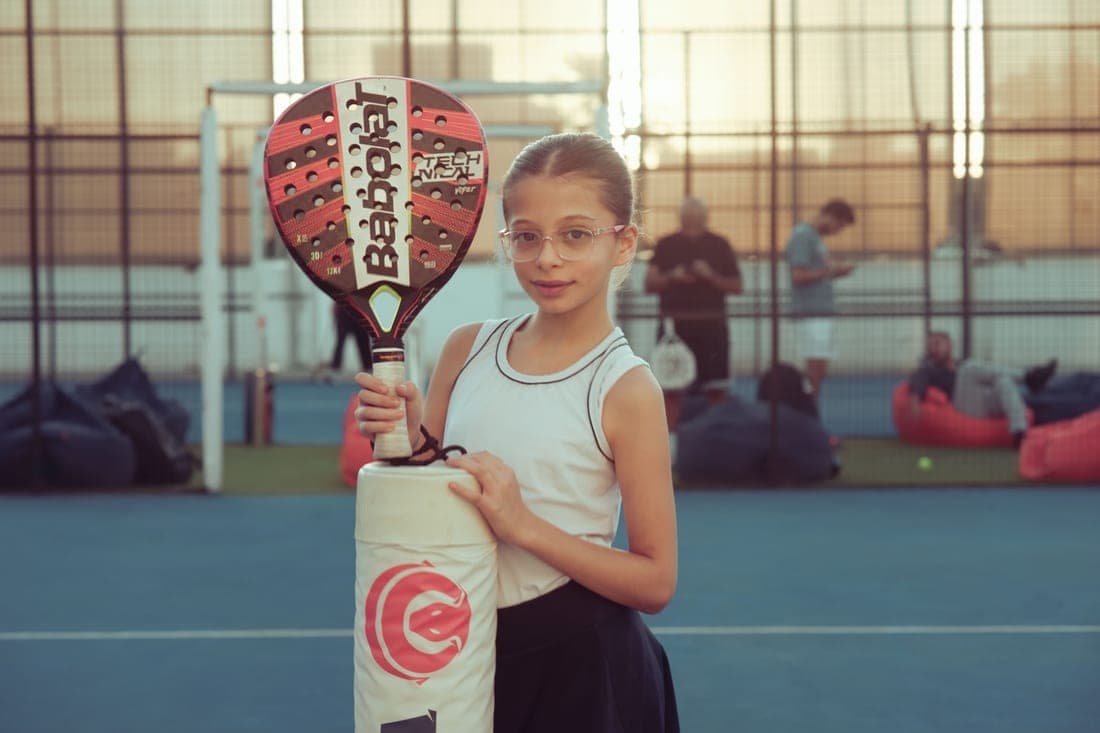 Babolat ContactBest first padel racket | Squash players trying padel | 8.54 criteria | |
| 2 | 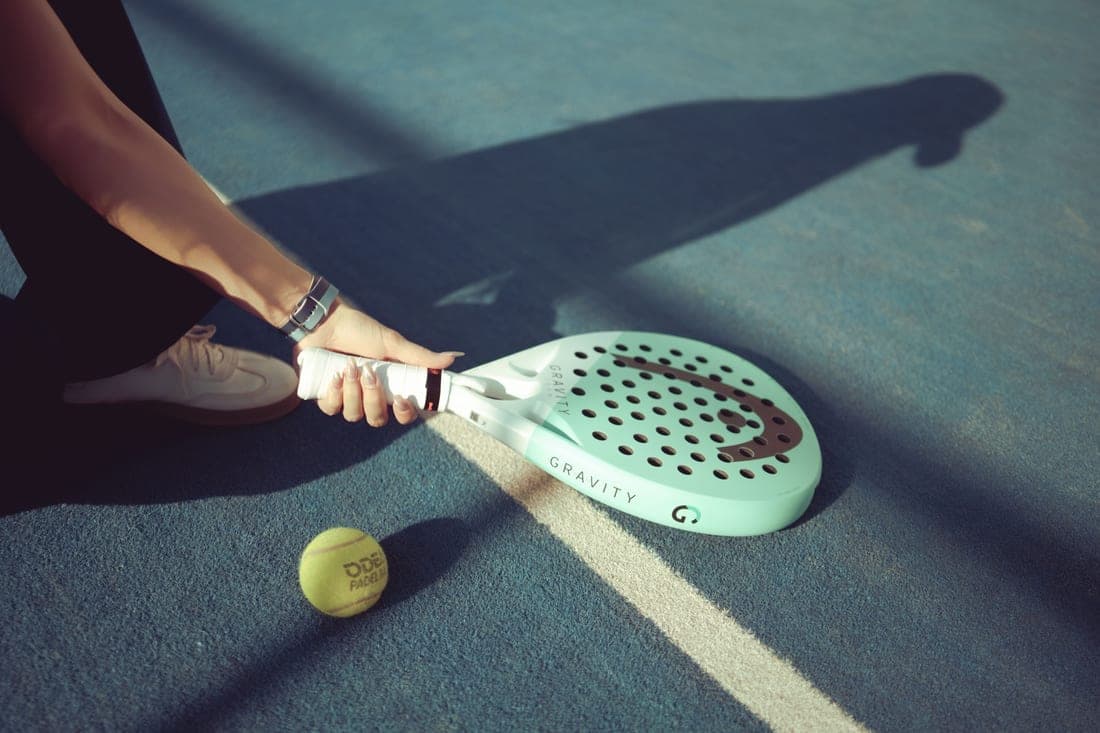 HEAD Evo SpeedBest step-up | Squash players who take to it quickly | 8.34 criteria |
The picks in detail
01Babolat Contact
Best first padel racketBest for: Squash players trying padel
Squash players arrive at padel with excellent wall reading and a wrist-led technique that is too flicky for the padel ball. A soft, round, control-first racket is the frame that suits the transition.
A round head with a soft EVA core at 340 g gives the largest centered sweet spot in the beginner band, which matters while you recalibrate for a heavier ball that sits up rather than dying.
Your squash racket weighs 90 to 150 g. A 340 g padel racket will feel enormous for two sessions and then normal.
Our score
- Performance
- 8.5
- Comfort
- 9.0
- Durability
- 7.5
- Value
- 9.5
- Overall
- 8.5
Verified specs
- Shape
- Round
- Weight
- 340 g
- Core
- Soft EVA
- Face
- Composite
- Frame
- Composite
Specs as published by Padel Padel, checked September 2026.
Buy if
- You are a squash player trying padel
- You want maximum forgiveness
- You want to spend under $100
Pass if
- You already play padel
- You want an attacking frame
- You are staying with squash
02HEAD Evo Speed
Best step-upBest for: Squash players who take to it quickly
Squash players often progress faster than tennis players in padel, because they already read rebounds and are comfortable letting a ball pass them.
If that is you, an oversize teardrop with a soft foam core and a fiberglass face at 360 to 370 g is the frame to move to — more mass behind the ball without giving up the sweet spot.
The 270 mm balance is medium rather than head heavy, which keeps it quick at the net where your squash reactions are an advantage.
Our score
- Performance
- 8.5
- Comfort
- 8.5
- Durability
- 8.5
- Value
- 8.5
- Overall
- 8.3
Verified specs
- Shape
- Teardrop (oversize)
- Weight
- 360-370 g
- Balance
- 270 mm (medium)
- Core
- Soft foam
- Face
- Fiberglass
- Frame
- Carbon
- Profile
- 38 mm
Specs as published by Padel USA, checked September 2026.
Buy if
- You are picking padel up quickly
- You want a frame with room to grow
- You want a carbon frame
Pass if
- You are in your first month
- You want the lightest racket
- You want maximum control
The numbers
| Squash | Padel | |
|---|---|---|
| Court | 9.75 m x 6.4 m, 5.64 m high | 10 m x 20 m |
| Enclosure | Four solid walls, roofed | Glass back walls and corners, mesh sides |
| Target | The front wall | Over a net into the opposite court |
| Format | Singles by default | Doubles almost always |
| Scoring | Point-a-rally to 11, best of five | Tennis scoring, optional golden point |
| Racket | Strung, max 686 mm, 90-150 g typical | Solid, perforated, tethered |
| Ball | 39.5-40.5 mm, 23-25 g, very low bounce | Like a tennis ball, slightly less pressure |
The floor area comparison is the headline: a padel court is 200 square meters against squash's roughly 62. Padel is more than three times the size, and it has twice as many players in it.
The walls do completely different jobs
In squash the front wall is the target. Every shot must reach it for the rally to continue, and the side and back walls are tools for changing angle and buying time. The walls are the game.
In padel the walls are a consequence. You hit over a net into the opposing court, exactly as in tennis; the glass only matters afterwards, when a ball that passed a player rebounds and stays live. Hitting the wall directly, without the ball bouncing first, loses the point.
So the shared vocabulary is misleading. A squash player's wall reading is genuinely useful in padel — you are used to tracking a ball past you and judging a rebound — but the strategic role of the wall is inverted.
The ball is the other big change
A competition squash ball is a 40 mm hollow rubber sphere weighing 23 to 25 g with a very low bounce — the double-yellow-dot standard barely rebounds until it has been warmed up by play. A padel ball is essentially a tennis ball with slightly reduced pressure.
For a squash player that means padel balls sit up. You will have time you are not used to, and your instinct to flick at a dying ball with the wrist will send padel balls long.
Physical demand
Squash is one of the most physically demanding racquet sports there is. Wikipedia's entry notes that rallies between experienced players may involve 30 or more shots, with players expending roughly 600 to 1,000 calories an hour, and it was rated by Forbes as the healthiest sport in 2003.
Padel is a genuine workout and it is not that. It is doubles, so you cover half a court; the rallies are long but the pace between shots is lower; and the court, while larger, is shared.
For a squash player looking to keep playing with an ageing body, that difference is often the entire appeal.
What a squash background is worth
- Wall reading. The most valuable transfer. Judging a rebound is a learned skill and you already have it.
- Movement in a confined space. Padel courts feel small to tennis players and roomy to squash players.
- Patience. Squash rallies teach you to construct a point rather than to end it, which is exactly padel's logic.
- Touch and drop shots. Padel's equivalents are different but the feel transfers.
Common questions
Is padel like squash?
Only superficially. Both use walls, but in squash the front wall is the target and every shot must reach it, while in padel you hit over a net and the walls only matter once the ball has bounced. Squash is singles in a 9.75 m by 6.4 m box; padel is doubles on a 10 m by 20 m court.
Which is harder, padel or squash?
Squash is the more physically demanding sport — Wikipedia's entry notes rallies of 30 or more shots and 600 to 1,000 calories an hour. Padel is easier to start and less punishing, which is why many squash players move across as they get older.
Can I use a squash racket for padel?
No. A padel racket is solid, perforated and tethered to the wrist; a squash racket is strung, longer and far lighter at 90 to 150 g. Neither is legal in the other sport.
Does squash help you play padel?
Yes, particularly wall reading and patience. The habit that hurts is wrist-led shot production — the padel ball is heavier and sits up more, and a squash flick sends it long.
Read next
Sources
- 01Wikipedia — Squash (sport)
- 02Wikipedia — Padel
- 03Padel Market — Best Padel Racket for Beginners 2026
- 04Padel USA — HEAD Evo Speed listing
Every source above was retrieved while writing this page. Specifications are quoted from the listing or manufacturer page cited, not from memory.