Buying guide
Best tennis shoes for beginners in 2026
This is the one piece of equipment where getting it wrong is a safety problem rather than a performance one. A running shoe on a tennis court is how recreational players roll ankles.
By Janet H.Updated
The short answer
The ASICS GEL-Challenger 15 is the best first court shoe: RunRepeat name it their best hard-court option for beginners and measure 5/5 for both midsole stiffness and heel counter stiffness, which is flagship-grade structure at an accessible price. The K-Swiss Hypercourt Express 2 scores 86 at $110.
Disclosure — we earn a commission on qualifying purchases made through links on this page, at no extra cost to you. It never changes which product we rank first. How this site is funded.
Our picks
| # | Product | Best for | Score | Price |
|---|---|---|---|---|
| 1 | 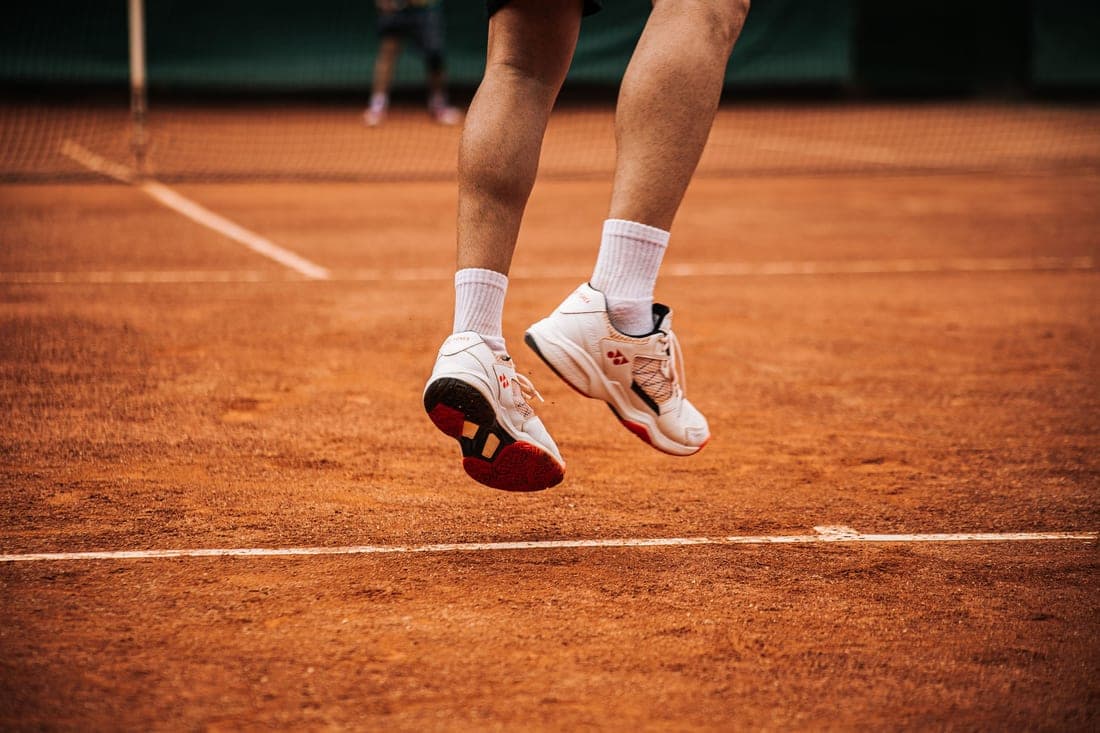 ASICS GEL-Challenger 15Top pick | A first pair with real structure | 8.55 criteria | |
| 2 | 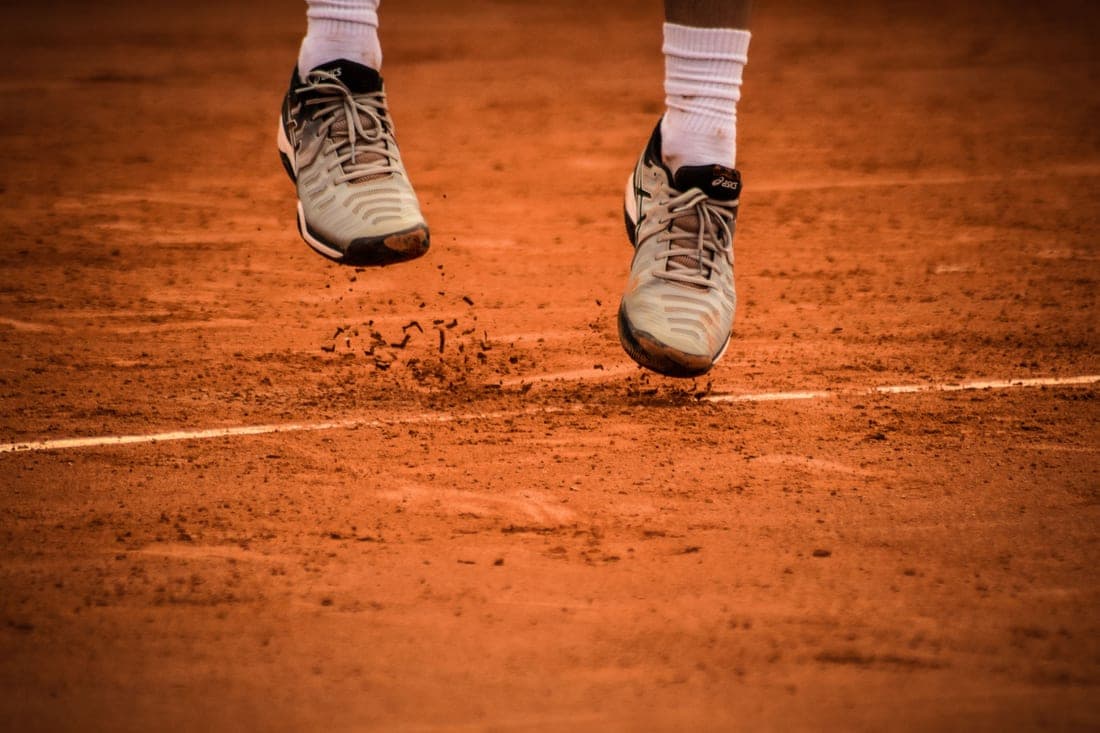 K-Swiss Hypercourt Express 2Best value | Best score per dollar | 8.45 criteria | |
| 3 | Nike NikeCourt Lite 4Most affordable | The cheapest real court shoe | 7.85 criteria | |
| 4 |  K-Swiss Ultrashot LightLightest option | Beginners who find court shoes heavy | 7.75 criteria |
The picks in detail
01ASICS GEL-Challenger 15
Top pickBest for: A first pair with real structure
RunRepeat name this their best hard-court shoe for beginners and score it 83, but the specific numbers behind that are what make it the right first purchase: 5/5 for midsole stiffness and 5/5 for heel counter stiffness. Those are the two properties that stop a foot rolling when you plant hard, and they are the reason a court shoe exists at all.
It also appears in RunRepeat's wide-feet catalog, which widens how many people can actually wear it comfortably — a useful property in a first shoe, when you do not yet know what fit problems you have.
RunRepeat describe it as notably heavier than average. For a new player that is the right trade: structure is worth more than speed while you are still learning to move.
Our score
- Lateral stability
- 9.0
- Cushioning
- 7.5
- Outsole durability
- 7.5
- Fit accommodation
- 8.5
- Lightness
- 5.5
- Overall
- 8.5
Verified specs
- RunRepeat score
- 83 — Best for Beginners
- Midsole stiffness
- 5/5
- Heel counter stiffness
- 5/5
- Weight
- Notably heavier than average
- Width fit
- Listed in RunRepeat's wide-feet catalog
Specs as published by RunRepeat, checked September 2026.
Buy if
- This is your first pair of court shoes
- You want maximum structure for the money
- You have wider feet
Pass if
- You want the lightest possible shoe
- You want flagship cushioning
- You play mostly on clay
02K-Swiss Hypercourt Express 2
Best valueBest for: Best score per dollar
An 86 from RunRepeat at $110, which they note is about 13% below the category average. That is the best score-to-price ratio in their hard-court set and it comes from a brand that has made court shoes for decades.
It is lighter than average and listed for wide feet, so it is an easy shoe to get on with. For a new player who wants a proper court shoe without spending flagship money, this is the efficient answer.
It does not have the structural scores of the GEL-Challenger 15. If you have had ankle trouble in another sport, spend the difference there instead.
Our score
- Lateral stability
- 7.5
- Cushioning
- 7.0
- Outsole durability
- 7.5
- Fit accommodation
- 9.0
- Lightness
- 8.0
- Overall
- 8.4
Verified specs
- RunRepeat score
- 86 — Best Budget, hard court
- Price
- $110, 13% below category typical
- Weight
- Lighter than average
- Width fit
- Listed in RunRepeat's wide-feet catalog
Specs as published by RunRepeat, checked September 2026.
Buy if
- You want the most shoe for around $110
- You play once or twice a week
- You have wider feet
Pass if
- You have a history of ankle injuries
- You play very frequently
- You want maximum cushioning
03Nike NikeCourt Lite 4
Most affordableBest for: The cheapest real court shoe
RunRepeat score the NikeCourt Lite 4 at 84 and list it in their wide-feet catalog. It is Nike's entry court model and, importantly, it is built as a tennis shoe rather than as a lifestyle sneaker wearing tennis styling.
That distinction is the entire point of this page. A shoe that is genuinely constructed for lateral loading — even at the entry tier — is a different object from a trainer.
It does not publish the structural lab figures the ASICS does, and it sits below the others on outsole expectations. It is the floor of what we would recommend, not a compromise below it.
Our score
- Lateral stability
- 7.0
- Cushioning
- 6.5
- Outsole durability
- 7.0
- Fit accommodation
- 8.5
- Lightness
- 8.0
- Overall
- 7.8
Verified specs
- RunRepeat score
- 84
- Width fit
- Listed in RunRepeat's wide-feet catalog
Specs as published by RunRepeat, checked September 2026.
Buy if
- Budget is the binding constraint
- You are trying tennis and not yet committed
- You want a genuine court shoe at entry price
Pass if
- You already play weekly
- You have any ankle history
- You want measured structural data
04K-Swiss Ultrashot Light
Lightest optionBest for: Beginners who find court shoes heavy
RunRepeat name this their best budget tennis shoe and measure it at 11.0 oz / 312 g, which is genuinely light for a court shoe — over 100 g less than the GEL-Resolution X.
That matters for a specific group: players coming from running or from no sport at all, who find proper court shoes clunky and stop wearing them. A light court shoe that gets worn beats a structured one that does not.
You are trading structure for that weight. It is the right call only if the alternative is going back to running shoes.
Our score
- Lateral stability
- 7.0
- Cushioning
- 6.5
- Outsole durability
- 7.0
- Fit accommodation
- 8.0
- Lightness
- 9.5
- Overall
- 7.7
Verified specs
- RunRepeat award
- Best Budget
- Weight
- 11.0 oz / 312 g
Specs as published by RunRepeat, checked September 2026.
Buy if
- Court shoes feel heavy and clumsy to you
- You are coming from running
- You want budget plus low weight
Pass if
- You want maximum stability
- You have rolled an ankle before
- You play several times a week
Why this is the safety purchase
Running shoes are engineered for repeated forward motion. They are deliberately soft, they have a narrow base relative to their stack height, and their upper is built for breathability rather than for containing a foot under lateral load. All three are correct for running and wrong for tennis.
Tennis loads the shoe sideways, repeatedly, with the whole body weight arriving through one edge as you change direction. That is the load case a court shoe is built for: a wider base, a stiff heel counter, a torsional shank through the midfoot, and a durable outsole that grips predictably.
What the structural numbers mean
| Measurement | What it does | What good looks like |
|---|---|---|
| Torsional rigidity | Resists the shoe twisting under lateral load | 5/5 |
| Heel counter stiffness | Holds the heel in place when you plant | 4-5/5 |
| Midsole stiffness | Stops the platform folding sideways | 4-5/5 |
| Outsole hardness | Resists abrasion on hard courts | 85 HC and above |
The GEL-Challenger 15's 5/5 on both midsole and heel counter is the reason it heads this list despite an 83 overall score. For a beginner, those two properties matter more than cushioning or weight.
Fit, and the mistakes that cost you
- 01Try them late in the day. Feet swell; a shoe fitted first thing in the morning will be tight by the end of a match.
- 02Leave a thumb's width at the toe. In tennis your foot slides forward constantly on stops, and a shoe fitted snug at the toe produces black toenails within a month.
- 03Wear the socks you will play in. A thicker sport sock changes the fit by roughly half a size.
- 04Check the heel does not lift. Heel slip is both a blister factory and a sign the heel counter is not doing its job.
- 05Do not size up to compensate for width. A longer shoe with the same width just adds heel slip — buy a wider model instead. See best tennis shoes for wide feet.
What to spend, and on what
If you are building a first kit and the budget is finite, our ordering is: court shoes, then racket, then everything else. A $110 court shoe with a $99 racket is a better setup than a $299 racket with running shoes, and it is not close.
The racket side of that is covered in best tennis rackets under $100, and best tennis rackets for beginners covers the tier above it.
Common questions
Do beginners need proper tennis shoes?
Yes, and more than experienced players do. Beginners move less efficiently and land less predictably, which is exactly when the lateral stability of a court shoe matters. It is the one purchase on this site we would describe as a safety matter.
How much should beginner tennis shoes cost?
Around $110 gets you a genuinely good shoe — RunRepeat score the K-Swiss Hypercourt Express 2 at 86 at that price. Entry models sit lower; flagships go well above. There is no need to spend flagship money on a first pair.
Can I wear my running shoes until I know I like tennis?
We would not. The injury risk is front-loaded: new players move least efficiently and are most likely to plant badly. If the budget is tight, buy the cheapest real court shoe rather than delaying.
What size tennis shoes should I buy?
Leave about a thumb's width at the toe, fit them late in the day, and wear the socks you will play in. Your foot slides forward on every stop, and a shoe fitted snug at the toe will cost you toenails.
How long will my first pair last?
Playing once or twice a week, most of a year is realistic. Replace them when the midsole has compressed flat rather than when the tread looks worn — a bottomed-out midsole passes impact straight to your joints.
Read next
Sources
- 01RunRepeat — Best Hard Court Tennis Shoes
- 02RunRepeat — Best Tennis Shoes
- 03RunRepeat — Wide tennis shoes catalog
Every source above was retrieved while writing this page. Specifications are quoted from the listing or manufacturer page cited, not from memory.