Comparison
Padel vs tennis: what carries over from the tennis court
Padel looks like tennis in a glass box and plays nothing like it. The walls change what a winner is, and that changes everything downstream.
By Janet H.Updated
The short answer
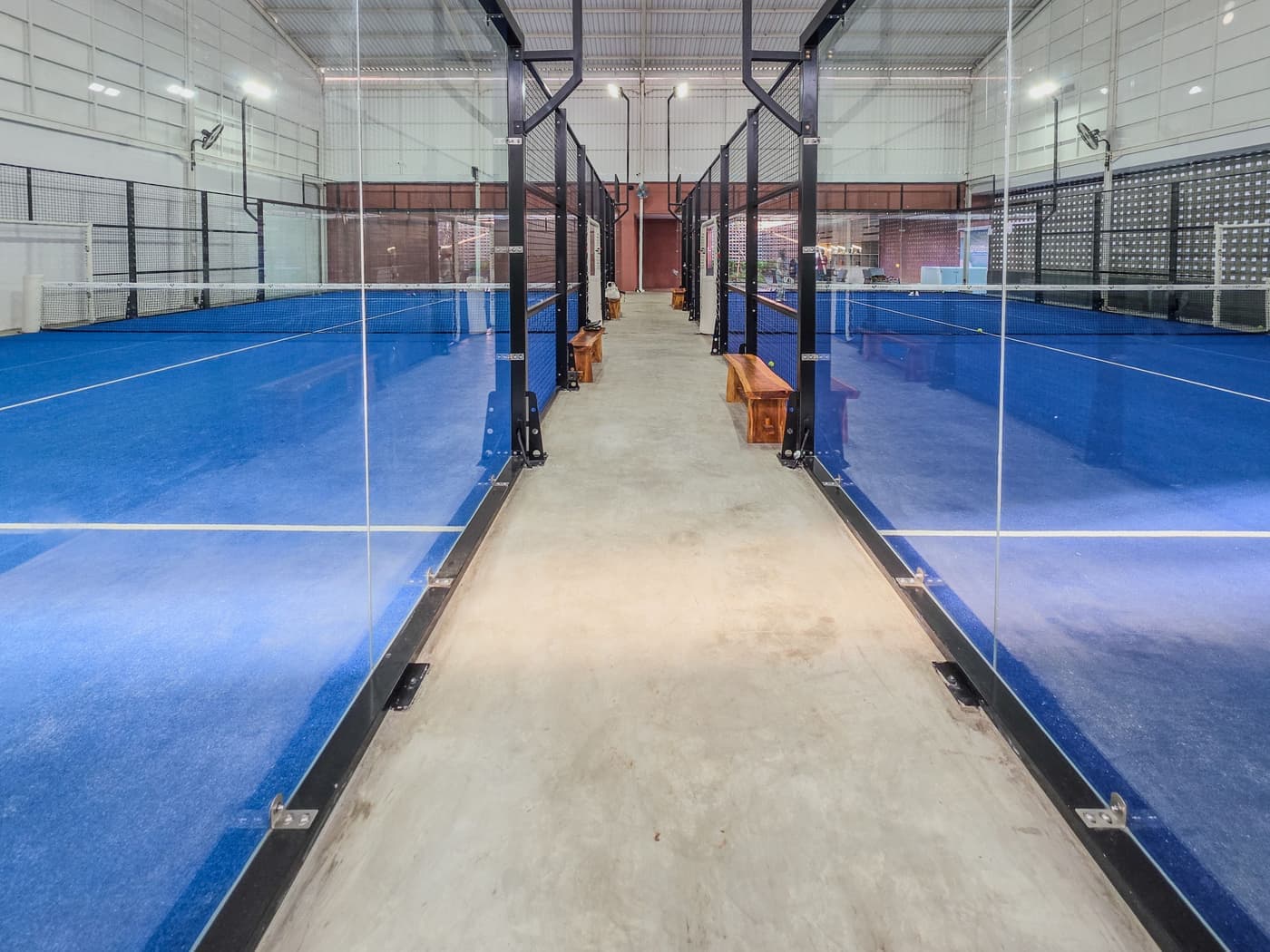
A padel court is 10 m by 20 m — smaller than a tennis court — and enclosed by glass and mesh walls that are in play. Padel uses tennis scoring but an underarm serve, and is played almost exclusively in doubles. Your volley and overhead transfer; your groundstroke swing and your serve do not.
Disclosure — we earn a commission on qualifying purchases made through links on this page, at no extra cost to you. It never changes which product we rank first. How this site is funded.
Our picks
| # | Product | Best for | Score | Price |
|---|---|---|---|---|
| 1 | 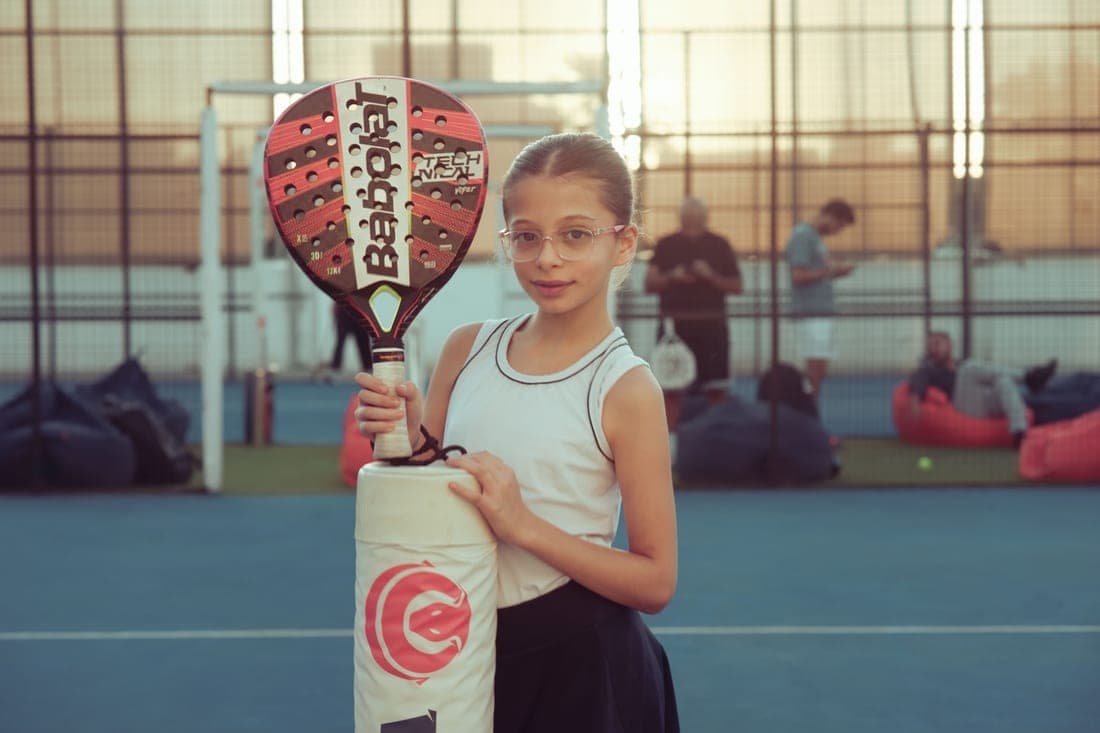 Babolat ContactBest first padel racket | A tennis player starting padel | 8.64 criteria | |
| 2 |  Wilson Clash 100 v3Best tennis racket to keep | Staying with tennis | 8.64 criteria | |
| 3 |  ASICS GEL-Resolution X PadelBest padel shoes | The shoes you will actually need | 8.54 criteria |
The picks in detail
01Babolat Contact
Best first padel racketBest for: A tennis player starting padel
Tennis players starting padel reach for the stiffest, most attacking frame on the shelf, because that is what a tennis racket upgrade looks like. It is the wrong instinct here.
A round head with a soft EVA core at 340 g gives you a centered sweet spot and dwell time — which is what you need while you learn to hit a ball that has already bounced off glass.
It is also cheap enough that if padel does not stick, you have lost very little.
Our score
- Performance
- 8.5
- Comfort
- 9.0
- Durability
- 7.5
- Value
- 9.5
- Overall
- 8.6
Verified specs
- Shape
- Round
- Weight
- 340 g
- Core
- Soft EVA
- Face
- Composite
- Frame
- Composite
Specs as published by Padel Padel, checked September 2026.
Buy if
- You are a tennis player trying padel
- You want maximum forgiveness
- You want to spend under $100
Pass if
- You already play padel regularly
- You want an attacking frame
- You want room to grow immediately
02Wilson Clash 100 v3
Best tennis racket to keepBest for: Staying with tennis
If the conclusion of this comparison is that tennis remains your sport, the Clash 100 v3 is the frame we would put most club players in: 100 sq in, 312 g strung, a 308 swingweight and a 54 RA — the softest mainstream frame sold.
Playing both sports raises the case for a comfortable frame rather than lowering it. Padel adds a lot of repeated short-range impact at the elbow, and the two loads add up.
It is not a cheap racket at $299, and it is one that suits players from a first year through to competitive club level.
Our score
- Performance
- 8.5
- Comfort
- 9.5
- Durability
- 8.5
- Value
- 7.5
- Overall
- 8.6
Verified specs
- Head size
- 100 sq in
- Strung weight
- 11 oz / 312 g
- Balance
- 7 pts head light
- Swingweight
- 308
- Stiffness (RA)
- 54
- Beam
- 24.5 mm uniform
- String pattern
- 16x19
- Length
- 27 in
Specs as published by Tennis Warehouse, checked September 2026.
Buy if
- Tennis is staying your main sport
- You want maximum arm comfort
- You play both sports and want to manage load
Pass if
- You want a control-first tour frame
- Budget is tight
- You are switching to padel
03ASICS GEL-Resolution X Padel
Best padel shoesBest for: The shoes you will actually need
This is the purchase tennis players are most surprised by. Padel is usually on sanded artificial turf, and hard-court tennis tread rides on top of the sand rather than biting through it.
Padel Market describe this as offering superior lateral support with a reinforced GEL system in the high-impact zones, on a hybrid sole that works across different club surfaces.
If you are playing padel more than a few times, this matters more than the racket does.
Our score
- Performance
- 9.0
- Comfort
- 9.0
- Durability
- 8.5
- Value
- 7.5
- Overall
- 8.5
Verified specs
- Sole
- Hybrid
- Cushioning
- GEL, reinforced in high-impact zones
- Aimed at
- Intermediate to advanced
Specs as published by Padel Market, checked September 2026.
Buy if
- You are taking up padel properly
- You play at more than one club
- You want maximum lateral support
Pass if
- You are trying padel once
- You play only on dry carpet-style courts
- You want the lightest option
The numbers
| Tennis | Padel | |
|---|---|---|
| Court (doubles) | 23.77 m x 10.97 m | 10 m x 20 m |
| Walls | None | Glass back walls and corners, mesh sides, in play |
| Net height (center) | Standard tennis net | 88 cm center, 92 cm ends |
| Format | Singles or doubles | Doubles almost always |
| Scoring | Games, sets, 15/30/40 | Same, with an optional golden point |
| Serve | Overhead, two attempts | Underarm after a bounce, at or below waist |
| Racket | Strung, 68.5 cm | Solid, perforated with 9-13 mm holes, tethered |
| Ball | Standard pressure | Slightly smaller, less pressure |
Note the wrist tether. The rules require a non-elastic safety cord of no more than 35 cm around the wrist — in an enclosed court with glass walls, a released racket is a genuine hazard.
The walls rewrite what a winner is
In tennis, hitting the ball past your opponent wins the point. In padel it frequently does not: the ball comes off the back glass and your opponent plays it, from a position where you are now out of shape.
That single change cascades through the whole sport. Power becomes suspect. The lob becomes the primary weapon, because a lob that lands deep pushes the opposing pair off the net and gives you time to take it. Patience beats pace.
It is also why padel rewards a soft, controlled racket and punishes the stiff attacking frame a tennis player instinctively wants.
What transfers from tennis
- Volleys. Directly, and they are worth more in padel than in tennis because the net is where points are won.
- Overheads. The padel smash is a tennis overhead with wall considerations attached.
- Ball striking and timing. General racquet-sport competence arrives with you.
- Doubles court sense. Padel is doubles, and tennis doubles positioning is close enough to be useful.
What does not, and what to unlearn
- 01The serve. Underarm, after a bounce, contact at or below waist level with a foot on the ground. Your tennis serve is not merely useless here — it is illegal.
- 02The full groundstroke. A committed drive off the back wall is a gift to the opposition. Padel groundstrokes are shorter and more controlled.
- 03Taking the ball early. In padel you frequently want to let the ball pass you, bounce off the glass, and hit it on the way back. Every tennis instinct says the opposite.
- 04Winning with pace. The walls absorb and return pace. The player who tries hardest usually loses.
Gear consequences, in order of cost
- 01A racket. Nothing carries over. A padel racket is solid, perforated and tethered. Budget $70-$120 for a proper beginner frame.
- 02Shoes. Your hard-court tennis shoes are the wrong sole for sanded turf. This is the purchase most tennis converts skip and should not.
- 03Balls. Padel balls are slightly smaller and less pressurized. Tennis balls play wrong off the glass.
- 04A wrist tether. Usually supplied with the racket, and required by the rules.
The bag carries over completely — a six-racquet tennis bag holds padel rackets comfortably, since a padel racket is far shorter than a tennis frame. See best padel bags.
Common questions
Is padel easier than tennis?
To start, yes. The court is smaller, the racket is shorter and easier to control, the serve is underarm, and the walls keep the ball in play so rallies survive mistakes. The intermediate skills — particularly playing off the back glass — take longer than their tennis equivalents.
Can I use a tennis racket for padel?
No. Padel rackets are solid, stringless and perforated with holes between 9 and 13 mm, and the rules require a wrist tether. A tennis racket is not legal and would be unmanageable near the walls.
Does tennis experience help in padel?
Yes, particularly at the net. Volleys and overheads transfer almost directly. The serve and the full groundstroke swing do not, and wanting to win with pace actively works against you.
Are padel and tennis scoring the same?
Effectively yes — padel uses the tennis scoring system, with an optional golden point at deuce instead of advantage.
Can I wear tennis shoes for padel?
Not ideally. Most padel is on sanded artificial turf, which needs a clay-pattern or hybrid sole. Hard-court tennis tread rides on top of the sand and slips unpredictably under lateral load.
Read next
Sources
- 01Wikipedia — Padel
- 02the LTA — Tennis vs badminton (tennis court dimensions)
- 03Padel Market — Best Padel Racket for Beginners 2026
- 04Padel Market — Best Padel Shoes buyer's guide
- 05Tennis Warehouse — Wilson Clash 100 v3
Every source above was retrieved while writing this page. Specifications are quoted from the listing or manufacturer page cited, not from memory.