Comparison
Tennis shoes vs pickleball shoes: do you actually need both?
This is the shortest answer on the site. Pickleball is played on hard courts with tennis's movement pattern, so your tennis shoes are correct — with one caveat about the smaller court.
By Janet H.Updated
The short answer
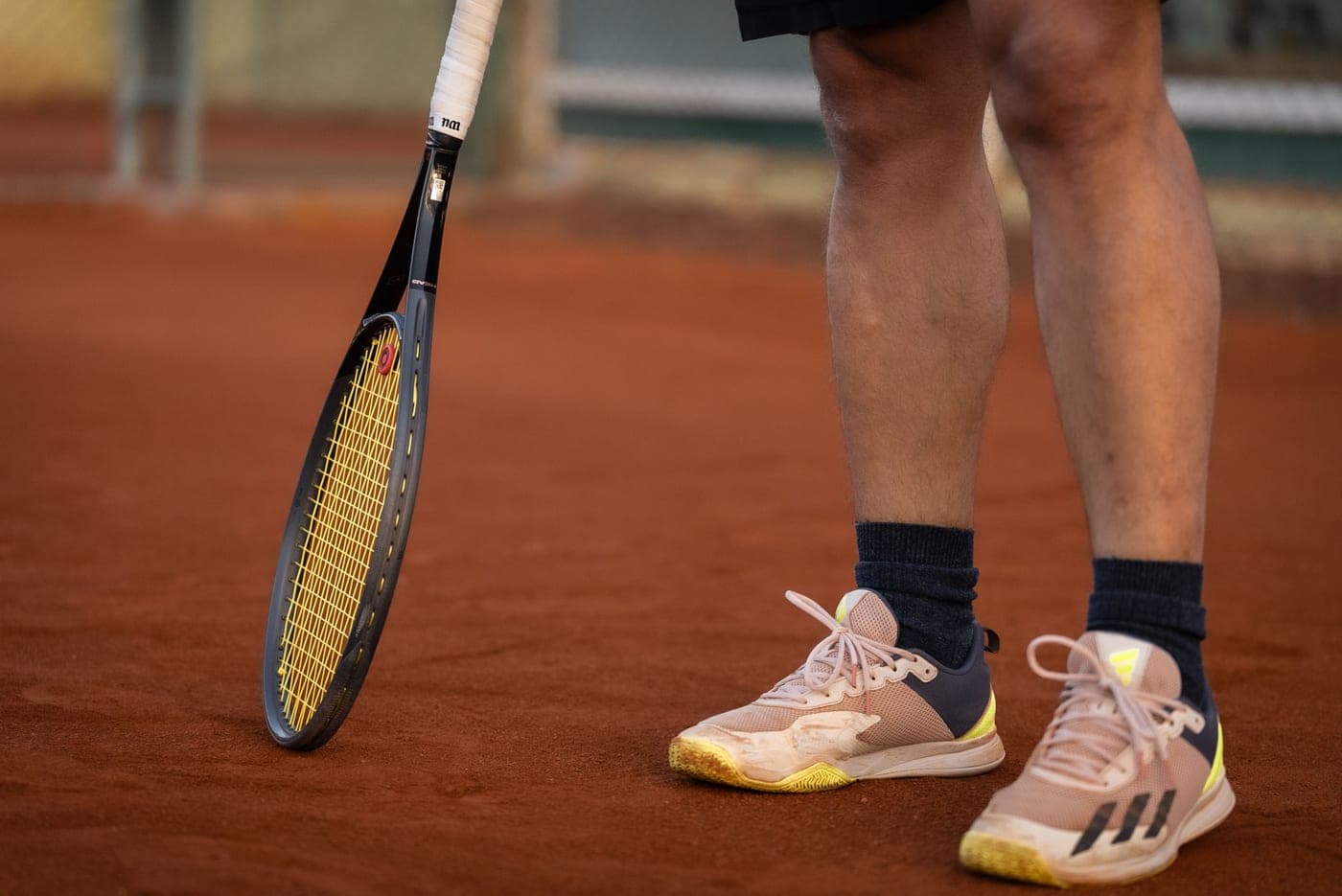
Tennis shoes are the standard recommendation for pickleball. Both sports are played on hard courts with short lateral bursts and hard stops, so the outsole compound, torsional rigidity and heel counter requirements are the same. The one difference worth noting is that a smaller court means more direction changes per minute, which favors a lighter shoe.
Disclosure — we earn a commission on qualifying purchases made through links on this page, at no extra cost to you. It never changes which product we rank first. How this site is funded.
Our picks
| # | Product | Best for | Score | Price |
|---|---|---|---|---|
| 1 | 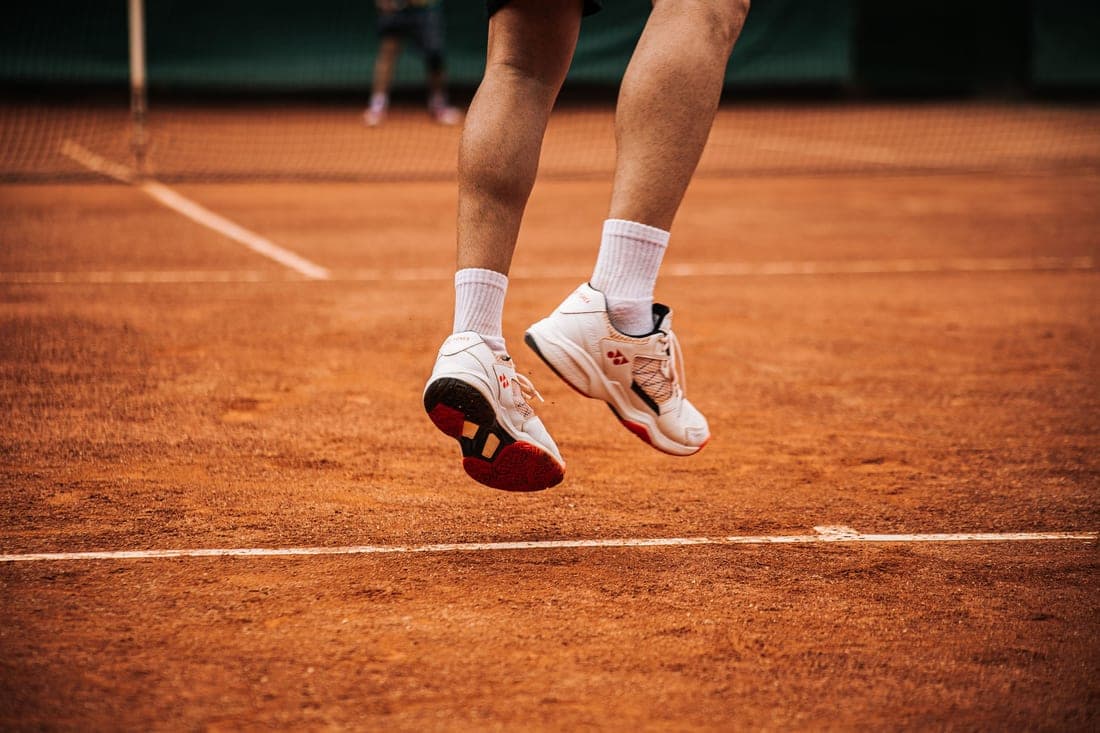 ASICS Court FF 3Top pick | One shoe for both sports | 8.85 criteria | |
| 2 |  ASICS Solution Speed FF 4Best for fast feet | Pickleball's quicker direction changes | 8.55 criteria | |
| 3 | 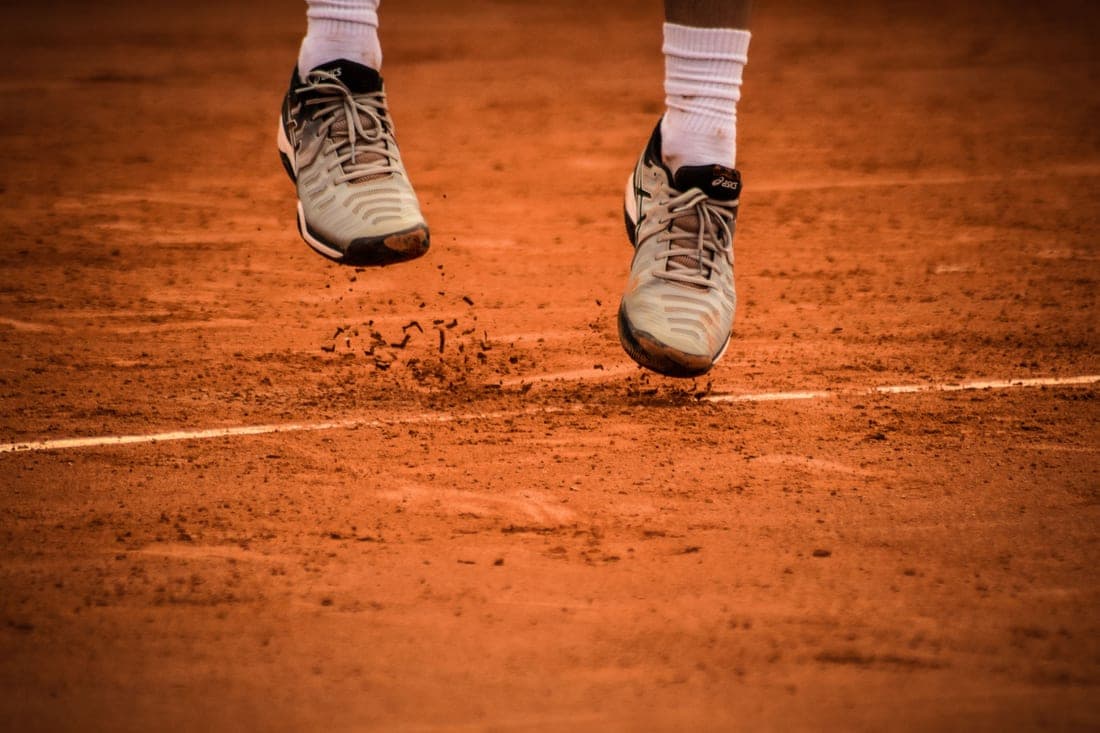 K-Swiss Hypercourt Express 2Best value | A first court shoe for either sport | 8.35 criteria |
The picks in detail
01ASICS Court FF 3
Top pickBest for: One shoe for both sports
RunRepeat's highest-scoring hard-court shoe at 93, with an 85.3 HC outsole, only a 0.4 mm cavity in their abrasion test, and the widest forefoot they have measured at 101.8 mm.
Everything that makes it a good tennis shoe makes it a good pickleball shoe. The surface is identical, the movement pattern is close enough that nothing needs to change, and the abrasion resistance is worth just as much.
It carries no outsole durability guarantee, which RunRepeat flag specifically.
Our score
- Lateral stability
- 8.5
- Cushioning
- 8.0
- Outsole durability
- 8.5
- Fit accommodation
- 9.5
- Lightness
- 6.5
- Overall
- 8.8
Verified specs
- RunRepeat score
- 93 — Best Overall, hard court
- Heel stack
- 28.8 mm
- Forefoot stack
- 20.6 mm
- Toebox width (widest)
- 101.8 mm
- Outsole hardness
- 85.3 HC
- Dremel wear
- 0.4 mm cavity
Specs as published by RunRepeat, checked September 2026.
Buy if
- You play both sports
- You want the best all-round court shoe
- You have a wider forefoot
Pass if
- You want an outsole warranty
- You want the lightest option
- You need maximum ankle structure
02ASICS Solution Speed FF 4
Best for fast feetBest for: Pickleball's quicker direction changes
At 337 g this is 80 g lighter than a maximum-stability model, and RunRepeat measure its traction at 1.11 — 46% above their category average, the highest in their hard-court set.
Pickleball's small court means more direction changes per minute than tennis, and a lighter shoe with high traction is the specification that suits that. You are rarely running far; you are constantly changing direction.
Its outsole also took 0.3 mm less abrasion damage than their average, so the lightness does not come at the cost of durability.
Our score
- Lateral stability
- 7.5
- Cushioning
- 7.5
- Outsole durability
- 9.0
- Fit accommodation
- 8.0
- Lightness
- 8.5
- Overall
- 8.5
Verified specs
- RunRepeat score
- 90 — Best for Speed
- Weight
- 11.9 oz / 337 g
- Traction
- 1.11, 46% above average
- Dremel wear
- 0.3 mm less damage than average
Specs as published by RunRepeat, checked September 2026.
Buy if
- You play more pickleball than tennis
- You want quickness over structure
- You want high traction
Pass if
- You have unstable ankles
- You want maximum cushioning
- You play mostly tennis singles
03K-Swiss Hypercourt Express 2
Best valueBest for: A first court shoe for either sport
RunRepeat score it 86 at $110, about 13% below their category average, and list it in their wide-feet catalog.
For a player arriving at pickleball from no racquet sport at all, this is the sensible purchase — a properly built court shoe at a price that does not feel like a commitment.
It will not match a flagship on outsole hardness. At once or twice a week, that does not matter.
Our score
- Lateral stability
- 7.5
- Cushioning
- 7.0
- Outsole durability
- 7.5
- Fit accommodation
- 9.0
- Lightness
- 8.0
- Overall
- 8.3
Verified specs
- RunRepeat score
- 86 — Best Budget, hard court
- Price
- $110, 13% below category typical
- Weight
- Lighter than average
- Width fit
- Listed in RunRepeat's wide-feet catalog
Specs as published by RunRepeat, checked September 2026.
Buy if
- You are new to court sports
- You play once or twice a week
- You have wider feet
Pass if
- You play four or more times a week
- You want flagship stability
- You wear outsoles out quickly
Why they overlap so completely
| Requirement | Tennis | Pickleball | Same? |
|---|---|---|---|
| Surface | Hard court (acrylic) | Hard court (acrylic) | Yes |
| Movement | Lateral bursts, hard stops | Lateral bursts, hard stops | Yes |
| Outsole compound | Abrasion-resistant | Abrasion-resistant | Yes |
| Torsional rigidity | High | High | Yes |
| Heel counter | Stiff | Stiff | Yes |
| Distance covered | Higher | Lower | No |
| Direction changes per minute | Lower | Higher | No |
Five of seven rows are identical, which is why there is no strong case for a separate pair. The two that differ push in the same direction: pickleball favors a slightly lighter, quicker shoe because you change direction more often and cover less ground.
So what are pickleball-specific shoes?
Mostly court shoes marketed to a different audience. Brands have built pickleball lines because the market grew faster than any other court sport, and the specifications they publish look very like tennis shoes — because that is what the sport needs.
Where genuine differentiation exists, it is usually a slightly lighter build and a little more forefoot cushioning, on the reasoning that pickleball players spend more time on their toes at the kitchen line and less time sprinting.
That is a real but small difference. If a pickleball-branded shoe fits you better, buy it. Do not buy it because you believe your tennis shoes are inadequate.
The one thing that is genuinely different
Pickleball involves a great deal of time standing at the kitchen line in a ready position, making small adjustments and short lunges. Tennis involves more running and more full-extension stretching.
The consequence for footwear is modest: forefoot flexibility and forefoot cushioning matter slightly more in pickleball, and heel cushioning slightly less. If you are choosing between two shoes and one has a notably better forefoot, that is the tiebreaker.
Indoor pickleball
Plenty of pickleball is played indoors on gym floors, and that is the one case where a different shoe is genuinely worth considering. Gym floors need a non-marking sole, and many facilities enforce it.
Most modern court shoes are non-marking, but outdoor-focused models with aggressive tread can be refused. Check the facility's rule before you turn up, and keep an indoor pair if you play both regularly.
What about padel?
Padel is the exception to all of this. It is played on sand-dressed artificial turf rather than hard court, and a hard-court outsole rides on top of the sand instead of biting through it.
So the honest summary across the three sports: tennis and pickleball share shoes completely; padel needs its own. Padel shoes vs tennis shoes covers that case.
Common questions
Do I need pickleball-specific shoes?
No. Pickleball is played on hard courts with the same lateral movement pattern as tennis, so tennis or all-court shoes are the standard recommendation. Pickleball-branded shoes are court shoes marketed to a different audience.
Can I use my tennis shoes for pickleball?
Yes, and you should. The surface, outsole requirement, torsional rigidity requirement and heel counter requirement are all identical between the two sports.
Are pickleball shoes lighter than tennis shoes?
Where they differ at all, slightly — on the reasoning that pickleball involves more direction changes and less running. It is a small difference, and lighter tennis shoes exist: RunRepeat measure the ASICS Solution Speed FF 4 at 337 g.
Can I play pickleball in running shoes?
No more than you can play tennis in them, and arguably less. A smaller court means more direction changes per minute, and lateral instability is exactly what a running shoe is designed to have.
Do I need different shoes for indoor pickleball?
Possibly. Gym floors require non-marking soles and many facilities enforce it. Most modern court shoes qualify, but aggressive outdoor tread can be refused — check before you turn up.
Read next
Sources
- 01RunRepeat — Best Hard Court Tennis Shoes
- 02RunRepeat — Best Tennis Shoes
- 03RunRepeat — Wide tennis shoes catalog
Every source above was retrieved while writing this page. Specifications are quoted from the listing or manufacturer page cited, not from memory.