Best for hard court
Best tennis shoes for hard court in 2026
Abrasion, traction and stability measured in a lab — and what each shoe charges you in weight.
Top pick: ASICS Court FF 3
Tennis Shoes
A running shoe on a tennis court is an ankle injury waiting for a date. Here is what actually separates a court shoe from a sneaker, and which models hold up on your surface.
Shoes are the one piece of racquet-sport equipment where the wrong choice is a safety problem rather than a performance one. Tennis is a lateral sport played with hard stops. A running shoe is built to roll forward and is deliberately soft and unstable side-to-side, which is exactly the wrong property when you plant hard to change direction.
The useful news is that court shoes are one of the few categories where independent lab data exists. RunRepeat cuts shoes in half and measures outsole hardness, torsional rigidity, heel-counter stiffness, stack heights and shock absorption. Where we quote a number on these pages, it comes from that testing and is cited — not from our own hands, because we do not have a lab.
Best for hard court
Abrasion, traction and stability measured in a lab — and what each shoe charges you in weight.
Top pick: ASICS Court FF 3
Best for clay court
Full herringbone outsoles that grip and shed — plus when all-court is genuinely good enough.
Top pick: ASICS GEL-Resolution 9 Clay
Best all-court
One pair for mixed surfaces — what the compromise costs, and when it costs you nothing.
Top pick: ASICS Court FF 3
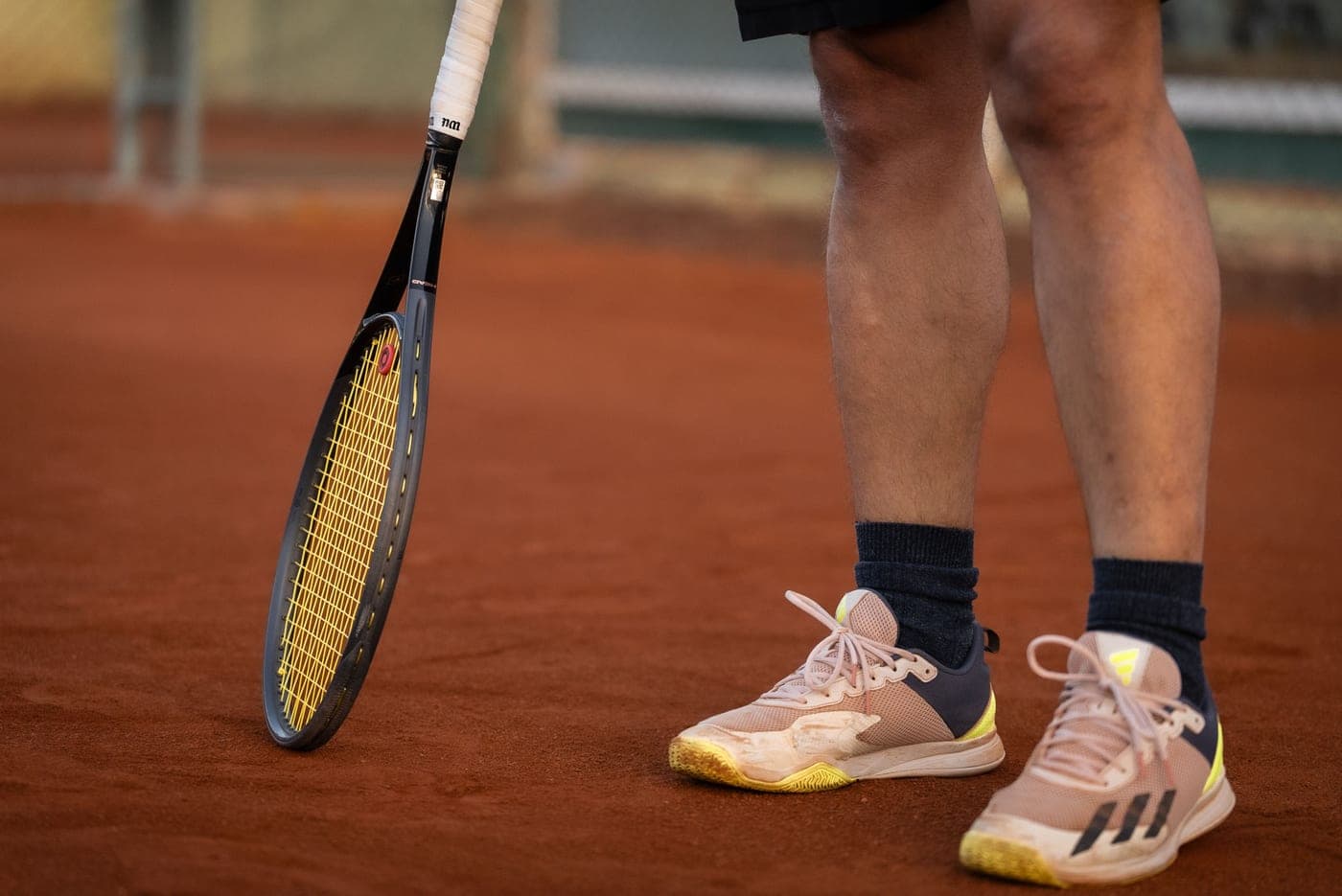
Best for beginners
The safety purchase, done properly — structure measurements and four options from $110 up.
Top pick: ASICS GEL-Challenger 15
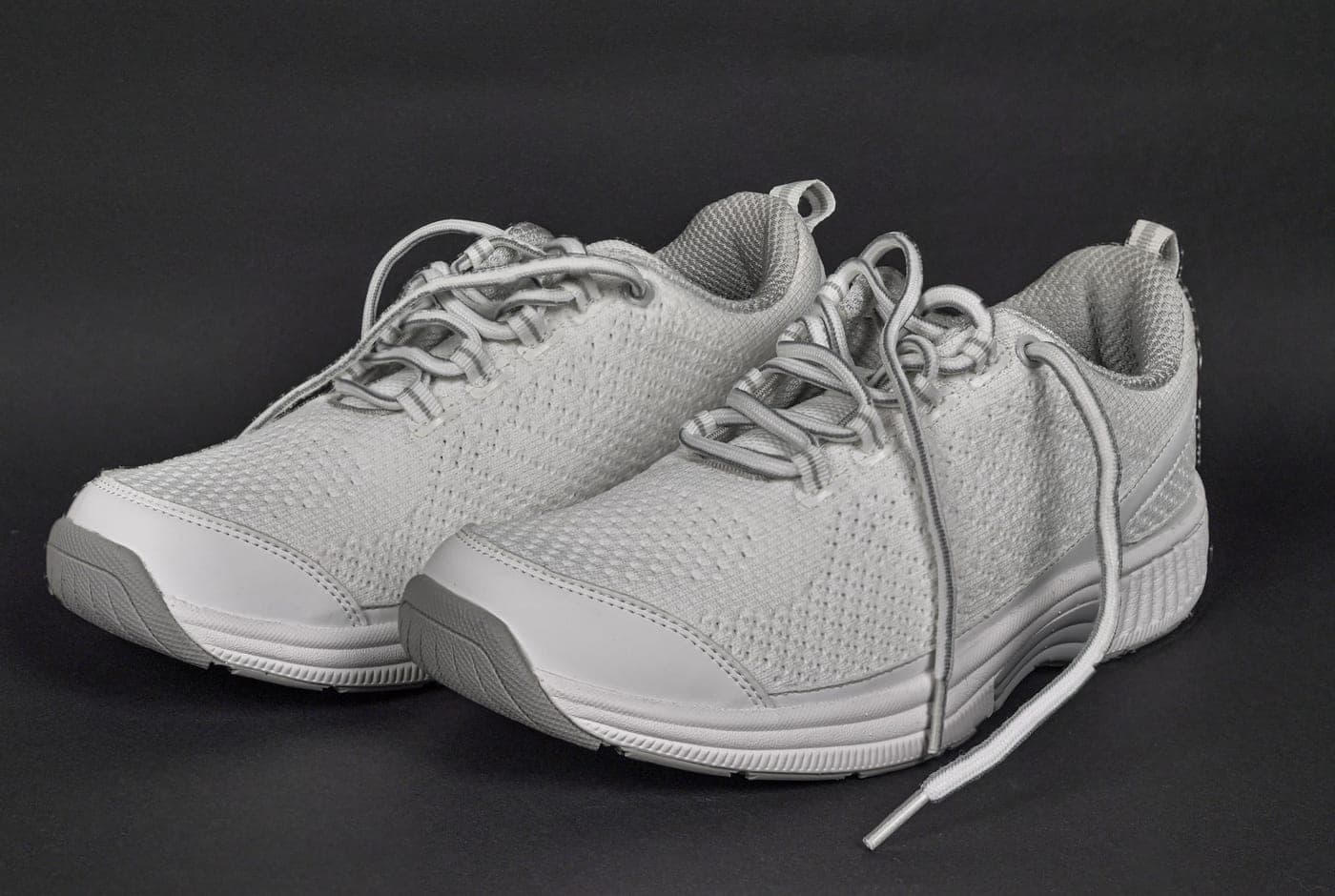
Best for wide feet
Forefoot width and big-toe width are different problems — here is which shoe solves which.
Top pick: ASICS Court FF 3
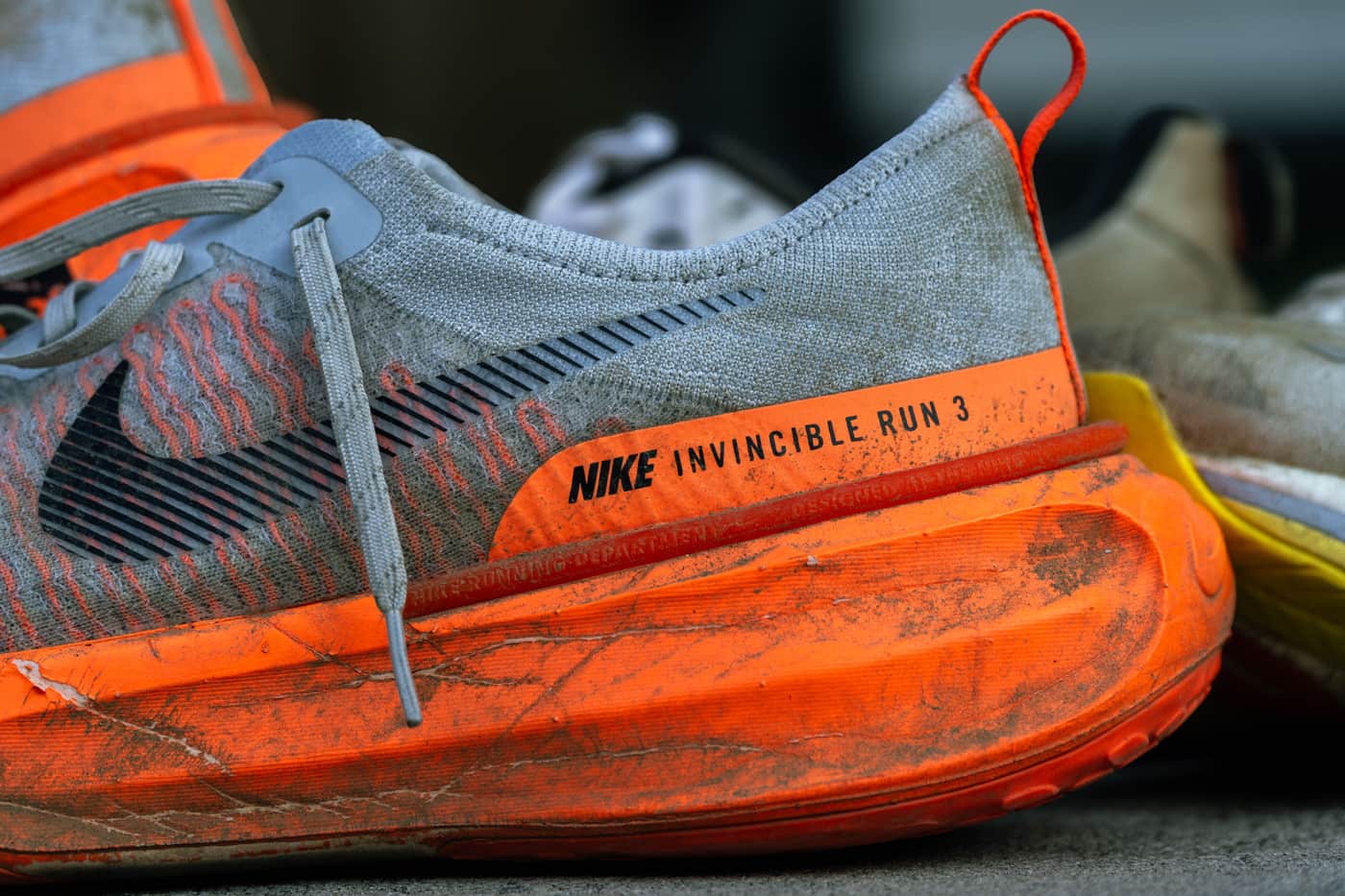
Best for plantar fasciitis
Measured heel shock absorption and drop, ranked — plus an honest note on what shoes cannot fix.
Top pick: New Balance Fresh Foam X CT-Rally v2
Best for ankle support
Torsional rigidity and heel counter stiffness, measured — and the weight every supportive shoe costs.
Top pick: ASICS GEL-Resolution X
| Surface | Outsole pattern | What it must do | Failure mode if wrong |
|---|---|---|---|
| Hard court | Dense modified herringbone or hex | Resist abrasion | Outsole wears smooth in weeks |
| Clay / Har-Tru | Full herringbone | Grip, then shed clay | Clay packs in, you slide unpredictably |
| All-court | Hybrid | Compromise on both | Neither perfect, both acceptable |
| Indoor carpet | Non-marking smooth | Grip without marking | Facility refuses entry |
Abrasion is the real cost driver on hard courts. RunRepeat's Dremel test measures how deep a standard abrasion cuts into the outsole: on the ASICS GEL-Resolution X they recorded a 0.6 mm wear depth with an outsole hardness of 90.4 HC, which is among the most durable results in the category. Several flagship models from ASICS, Nike, K-Swiss and adidas also carry a six-month outsole guarantee — worth checking before you buy, because it is not universal.
The full breakdown of pattern, compound and warranty is in how to choose tennis shoes for your court surface.
Toebox width is where most people's shoe problems live, and it is also where the marketing is least helpful. A shoe can be genuinely wide at the ball of the foot and still pinch at the big toe. RunRepeat measures both points separately: the GEL-Resolution X is roomy across the forefoot but only 66.6 mm at the big toe, while the ASICS Court FF 3 measures 101.8 mm at its widest.
A proper court shoe is heavier than a trainer. The ASICS GEL-Resolution X weighs 417 g in a men's 9, which RunRepeat notes is among the heaviest shoes they have tested. That weight buys you a 5/5 torsional rigidity score and a 5/5 heel counter. The lighter options — the ASICS Solution Speed FF 4 at 337 g, the K-Swiss Ultrashot Light at 312 g — trade some of that structure for speed.
Neither choice is wrong. It depends on whether your problem is being late to the ball or being unsteady when you get there.
You can, and people do, but running shoes are built for forward motion with deliberately soft, unstable sidewalls. Tennis loads the shoe sideways during hard direction changes. It is the single most common way recreational players roll an ankle. Tennis shoes vs running shoes covers the difference in detail.
On abrasive hard courts, the outsole is usually what gives out first. Several brands offer a six-month outsole guarantee on flagship models, which is a reasonable proxy for what they expect. Playing three times a week on rough hard courts, expect less.
If you play clay regularly, yes. Full herringbone tread grips and then releases the clay instead of packing it in. On an occasional clay outing an all-court shoe is fine.
Close, but not identical — padel courts are usually sanded artificial turf, which asks for a clay-style or hybrid sole. See padel shoes vs tennis shoes.
Every source above was retrieved while writing this page. Specifications are quoted from the listing or manufacturer page cited, not from memory.