Comparison
Tennis shoes vs running shoes: the one gear mistake that hurts people
This is the only comparison on the site we would call a safety issue rather than a performance one. A running shoe is engineered for the exact opposite of what tennis asks of it.
By Janet H.Updated
The short answer
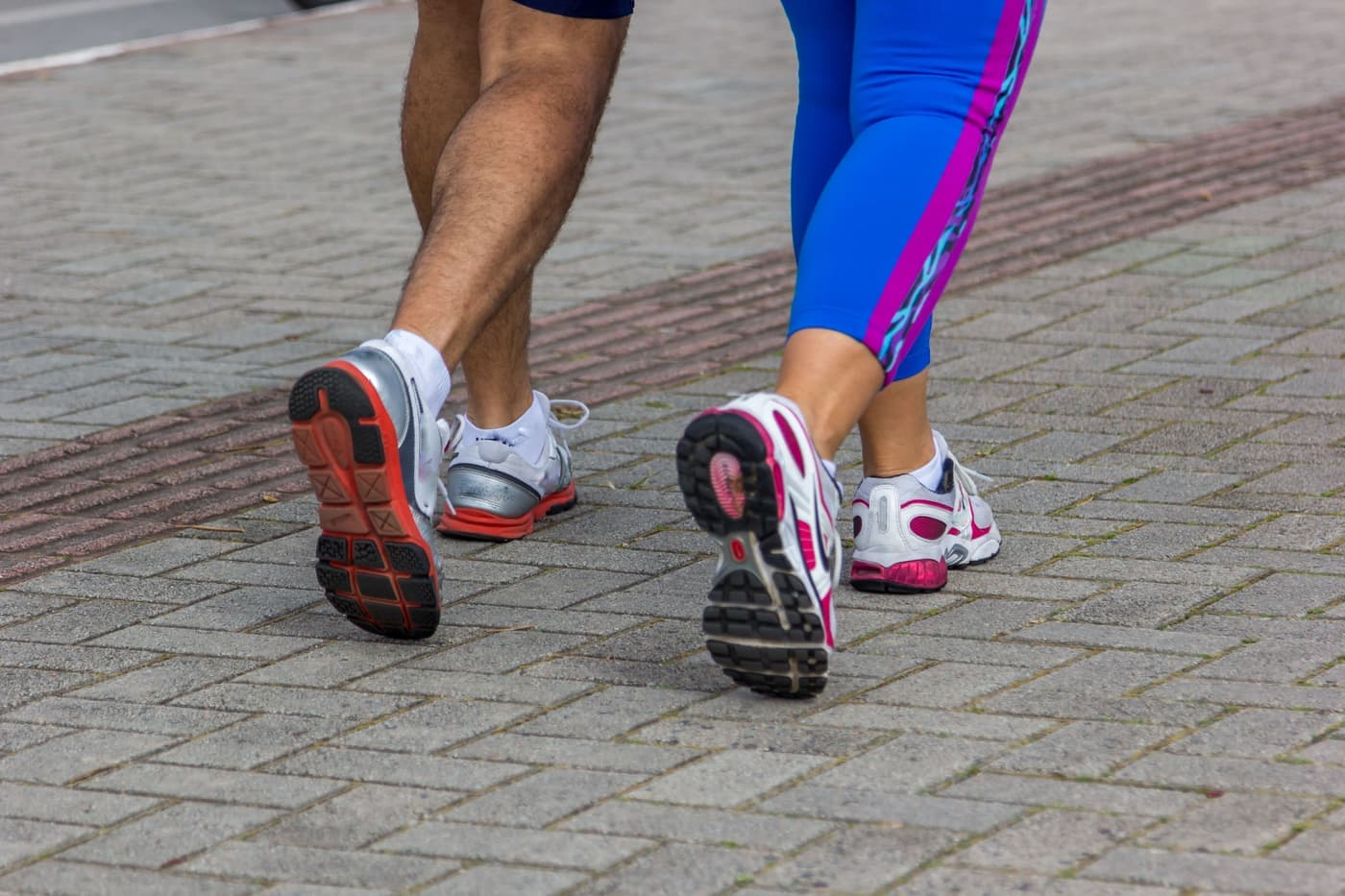
Running shoes are built for repeated forward motion, with soft midsoles, narrow bases and uppers made for breathability rather than containment. Tennis loads the shoe laterally with the body's full weight arriving through one edge. Court shoes answer that with torsional rigidity, a stiff heel counter and a wider base.
Disclosure — we earn a commission on qualifying purchases made through links on this page, at no extra cost to you. It never changes which product we rank first. How this site is funded.
Our picks
| # | Product | Best for | Score | Price |
|---|---|---|---|---|
| 1 | 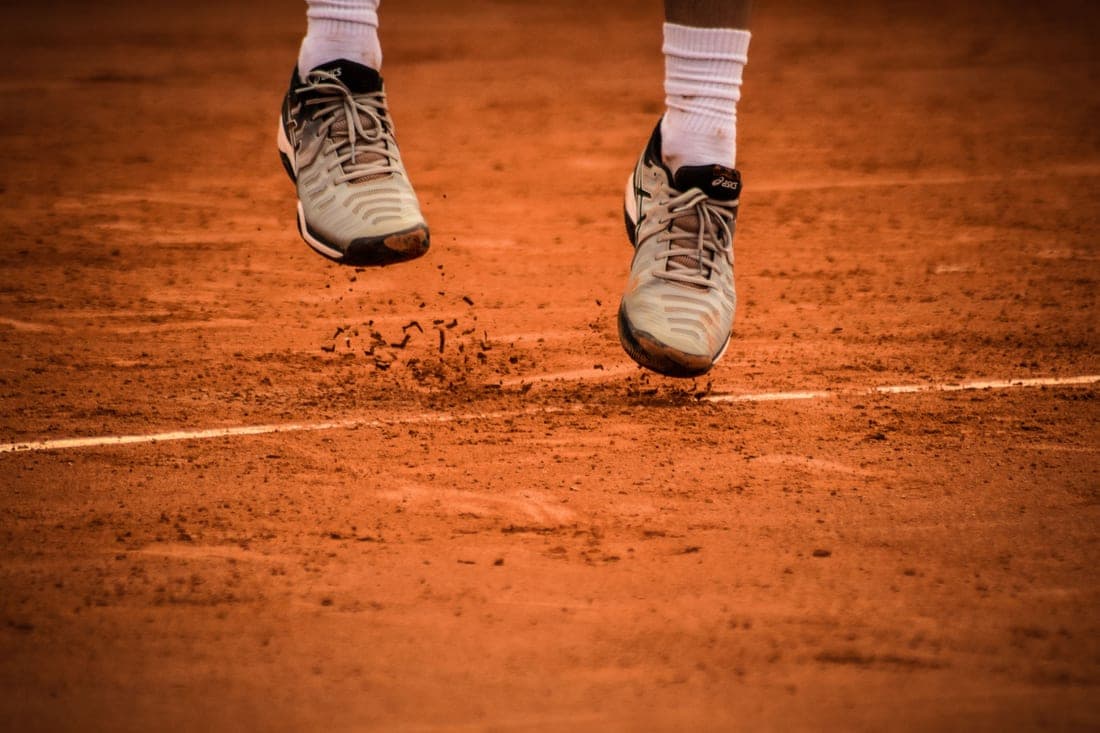 ASICS GEL-Resolution XMost supportive | Maximum lateral protection | 8.95 criteria | |
| 2 | 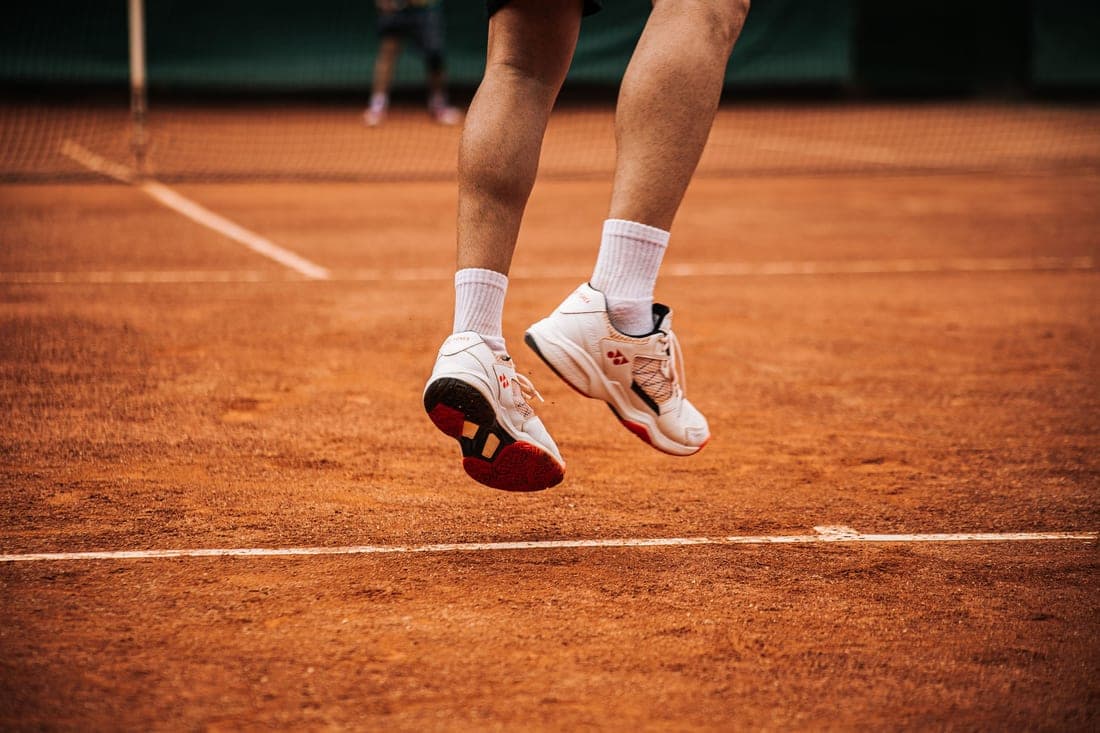 ASICS Court FF 3Best all-round | Runners who want a roomy court shoe | 8.85 criteria | |
| 3 | K-Swiss Hypercourt Express 2Best value | A first court shoe | 8.35 criteria |
The picks in detail
01ASICS GEL-Resolution X
Most supportiveBest for: Maximum lateral protection
If you want to see the difference between a court shoe and a running shoe quantified, this is the shoe to look at: RunRepeat measure 5/5 torsional rigidity and 5/5 heel counter stiffness, with a 90.4 HC outsole that wore only 0.6 mm in their abrasion test.
They also note it suits players needing extra stability for flat feet, overpronation or a past ankle injury — the exact population most at risk in the wrong footwear.
It weighs 417 g in a men's 9, which is roughly 50% more than a typical running shoe. That weight is the structure, and the structure is the point.
Our score
- Lateral stability
- 10.0
- Cushioning
- 8.5
- Outsole durability
- 9.5
- Fit accommodation
- 8.0
- Lightness
- 3.5
- Overall
- 8.9
Verified specs
- RunRepeat score
- 90 — Best Stability
- Weight
- 14.7 oz / 417 g (men's 9)
- Heel / forefoot stack
- 30.8 mm / 21.9 mm
- Drop
- 8.9 mm
- Torsional rigidity
- 5/5
- Heel counter stiffness
- 5/5
- Heel shock absorption
- 98 SA
- Outsole wear
- 0.6 mm depth, 90.4 HC
Specs as published by RunRepeat, checked September 2026.
Buy if
- You have rolled an ankle before
- You are switching from running shoes
- You want maximum measured protection
Pass if
- Weight is a priority
- You have long toes rather than a wide forefoot
- You want a springy, responsive ride
02ASICS Court FF 3
Best all-roundBest for: Runners who want a roomy court shoe
The most common objection from runners is that court shoes feel tight. This one measures 101.8 mm at the widest part of the toebox — the roomiest forefoot RunRepeat have recorded in a tennis shoe.
It is also their highest-scoring hard-court model at 93, with an 85.3 HC outsole and only a 0.4 mm cavity in their abrasion test.
RunRepeat flag that it carries no outsole durability guarantee, where several rival flagships do. Worth knowing before you buy.
Our score
- Lateral stability
- 8.5
- Cushioning
- 8.0
- Outsole durability
- 8.5
- Fit accommodation
- 9.5
- Lightness
- 6.5
- Overall
- 8.8
Verified specs
- RunRepeat score
- 93 — Best Overall, hard court
- Heel stack
- 28.8 mm
- Forefoot stack
- 20.6 mm
- Toebox width (widest)
- 101.8 mm
- Outsole hardness
- 85.3 HC
- Dremel wear
- 0.4 mm cavity
Specs as published by RunRepeat, checked September 2026.
Buy if
- Court shoes normally feel tight on you
- You want the best all-round option
- You play mostly hard court
Pass if
- You want an outsole warranty
- You want maximum ankle structure
- You want the lightest shoe
03K-Swiss Hypercourt Express 2
Best valueBest for: A first court shoe
RunRepeat score it 86 at $110, about 13% below their category average price, and list it in their wide-feet catalog.
The point of including it here is that the budget objection to court shoes does not hold. You can get a properly built, well-scored court shoe for roughly what a mid-range running shoe costs.
It is lighter than average too, which helps if the weight of a court shoe is what has been putting you off.
Our score
- Lateral stability
- 7.5
- Cushioning
- 7.0
- Outsole durability
- 7.5
- Fit accommodation
- 9.0
- Lightness
- 8.0
- Overall
- 8.3
Verified specs
- RunRepeat score
- 86 — Best Budget, hard court
- Price
- $110, 13% below category typical
- Weight
- Lighter than average
- Width fit
- Listed in RunRepeat's wide-feet catalog
Specs as published by RunRepeat, checked September 2026.
Buy if
- You are making the switch on a budget
- You play once or twice a week
- You have wider feet
Pass if
- You play four or more times a week
- You need flagship stability
- You wear outsoles out quickly
Two shoes, two opposite design briefs
| Property | Running shoe | Court shoe | Why |
|---|---|---|---|
| Midsole | Soft, tall, compliant | Firmer, lower | Soft midsoles roll under lateral load |
| Base width | Narrow relative to stack | Wider | Leverage against inversion |
| Torsional stiffness | Deliberately low | Deliberately high | Running wants the foot to flex; tennis does not |
| Heel counter | Light, flexible | Stiff | Holds the heel bone when you plant |
| Outsole | Blown rubber, light | Dense, abrasion-resistant | Court surfaces are sandpaper |
| Upper | Breathable mesh | Reinforced, containing | Has to hold the foot sideways |
Every difference in that table follows from one fact: running is a forward-motion sport and tennis is a lateral one. A running shoe is not a worse shoe — it is a shoe built for the other load case.
What actually goes wrong
A lateral ankle sprain happens when the foot inverts — rolls outward — underneath a leg that is still traveling. It is the most common acute injury in racquet sports.
Three properties of a running shoe make that more likely. A tall, soft midsole raises the foot further from the ground, which increases the leverage available to tip it. A narrow base offers less resistance to that tipping. And a flexible torsional structure lets the forefoot invert while the heel stays planted, which is precisely the sprain mechanism.
RunRepeat's ratings quantify the difference: the court shoes on this page score 5/5 for torsional rigidity. Running shoes are built to score low on that scale on purpose.
The objections, answered
- 01They feel heavy. They are — 417 g for a maximum-stability model against roughly 250-280 g for a running shoe. But lighter court shoes exist: RunRepeat measure the K-Swiss Ultrashot Light at 312 g and the ASICS Solution Speed FF 4 at 337 g.
- 02They feel tight. Some are. The ASICS Court FF 3's 101.8 mm forefoot is the widest RunRepeat have measured, and several models appear in their wide-feet catalog.
- 03They are expensive. An 86-rated court shoe costs $110, which is mid-range running shoe money.
- 04I only play once a week. That is the group most at risk. Infrequent players move least efficiently and plant least predictably.
Where the line actually is
To be fair rather than absolutist: a gentle social hit where nobody is chasing anything is not the scenario this page is about. If you are playing points, changing direction, and running for balls, you want a court shoe.
The same applies to pickleball, where the small court means more direction changes per minute rather than fewer — see tennis shoes vs pickleball shoes. Padel is a separate case because of the surface: padel shoes vs tennis shoes.
What about cross-trainers?
Better than running shoes and worse than court shoes. A cross-trainer has a firmer midsole and a wider base than a running shoe, which addresses part of the problem, but it will not have a court outsole and it typically will not have a tennis shoe's torsional shank.
If a cross-trainer is what you own and you play occasionally, it is a reasonable stopgap. It is not a destination.
Common questions
Can I play tennis in running shoes?
You can, and it is the most common way recreational players roll an ankle. Running shoes have soft, tall midsoles, narrow bases and deliberately low torsional stiffness — all correct for forward motion and all wrong for the lateral loading tennis applies.
What makes a tennis shoe different from a running shoe?
A firmer, lower midsole, a wider base, high torsional rigidity, a stiff heel counter and a dense abrasion-resistant outsole. RunRepeat rate torsional rigidity and heel counter stiffness out of 5, and the flagship court shoes score 5/5.
Are tennis shoes heavier than running shoes?
Usually. A maximum-stability court shoe like the ASICS GEL-Resolution X weighs 417 g against roughly 250-280 g for a running shoe. Lighter court options exist — the K-Swiss Ultrashot Light is 312 g.
Can I use cross-trainers for tennis?
They are better than running shoes and worse than court shoes. A cross-trainer has a firmer midsole and wider base but usually lacks a court outsole and a torsional shank. Acceptable as a stopgap, not as a destination.
Will running shoes wear out faster on a tennis court?
Considerably. Running outsoles use lightweight blown rubber, and acrylic hard courts are deliberately abrasive. A running shoe used for tennis can wear through in weeks.
Read next
Sources
- 01RunRepeat — Best Hard Court Tennis Shoes
- 02RunRepeat — Best Tennis Shoes
- 03RunRepeat — ASICS GEL-Resolution X lab review
- 04RunRepeat — Wide tennis shoes catalog
Every source above was retrieved while writing this page. Specifications are quoted from the listing or manufacturer page cited, not from memory.