Buying guide
Best padel rackets for beginners in 2026
There is a correct answer to this question and it is unusually narrow: round shape, soft core, roughly 350 to 360 grams, balance toward the handle. Everything below sits in that band.
By Janet H.Updated
The short answer
The Babolat Contact is the best first padel racket: a round head, a soft EVA core and 340 g, which puts every variable on the forgiving side. If you want something with a little more room to grow, the HEAD Evo Speed is an oversize teardrop with a soft foam core and a fiberglass face at around 360 to 370 g.
Disclosure — we earn a commission on qualifying purchases made through links on this page, at no extra cost to you. It never changes which product we rank first. How this site is funded.
Our picks
| # | Product | Best for | Score | Price |
|---|---|---|---|---|
| 1 | 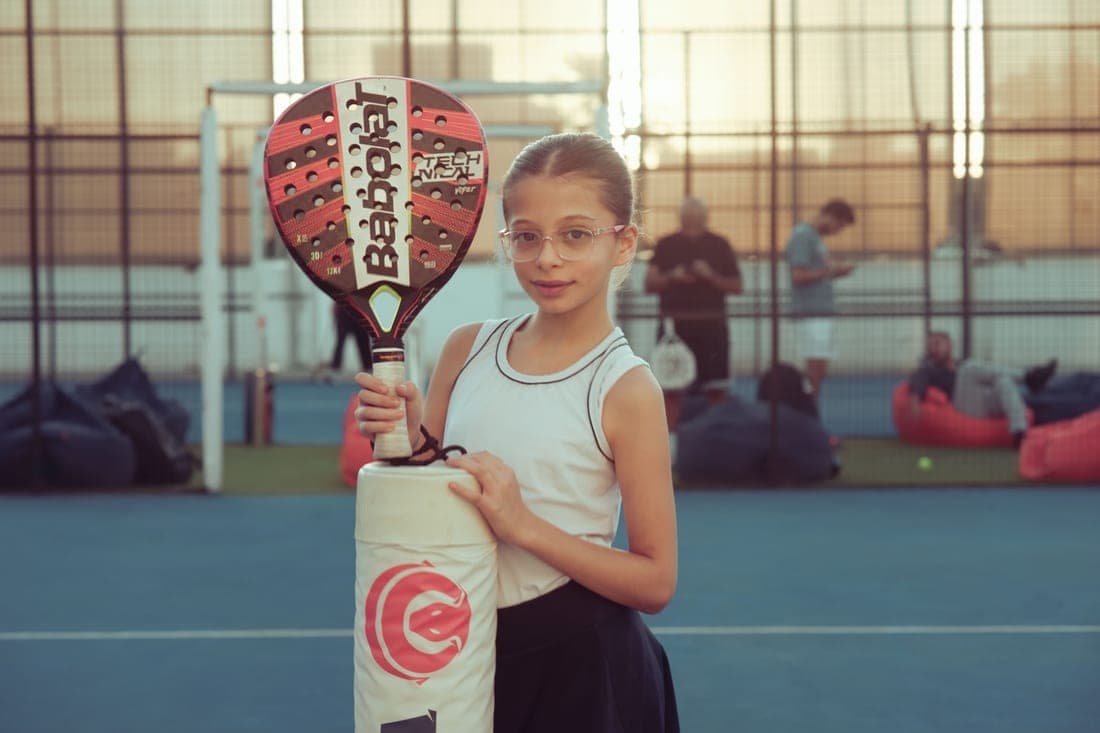 Babolat ContactTop pick | A genuine first racket | 8.75 criteria | |
| 2 | 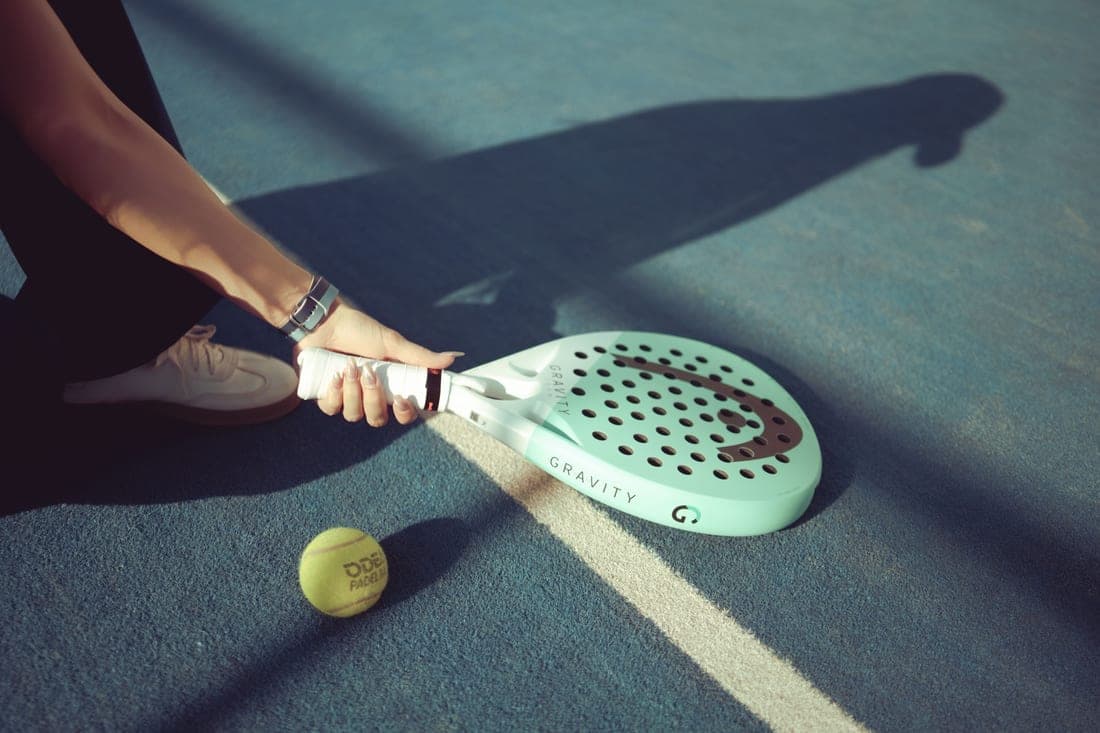 HEAD Evo SpeedBest to grow into | A first racket with room to grow | 8.45 criteria | |
| 3 | adidas RX Series LightMost control-oriented | Control-first learning | 8.35 criteria | |
| 4 | Bullpadel Indiga WLightest option | Players who find 360 g heavy | 8.15 criteria |
The picks in detail
01Babolat Contact
Top pickBest for: A genuine first racket
Every specification on this racket points the same direction. A round head puts the sweet spot in the geometric center of the face, which is where a new player's contact clusters. A soft EVA core deforms on impact, which lengthens dwell time and makes the ball easier to place rather than easier to smash. At 340 g it is at the light end of the recommended beginner band.
That combination is not exciting and it is exactly right. Padel points at club level are won by keeping the ball in play and by placing a lob well, not by hitting through people — and this racket is built for both.
The compromise is a low ceiling on power. Once you are hitting genuine smashes you will feel the soft core absorbing energy you wanted returned. That is a year or two away for most people.
Our score
- Control
- 9.0
- Power
- 5.5
- Sweet spot
- 9.5
- Arm comfort
- 9.0
- Maneuverability
- 8.5
- Overall
- 8.7
Verified specs
- Shape
- Round
- Weight
- 340 g
- Core
- Soft EVA
- Face
- Composite
- Frame
- Composite
Specs as published by Padel Padel, checked September 2026.
Buy if
- This is your first padel racket
- You want the most forgiving option available
- You are coming to padel with no racquet-sport background
Pass if
- You already play regularly and hit hard
- You want a racket to grow into
- You came from tennis with a developed swing
02HEAD Evo Speed
Best to grow intoBest for: A first racket with room to grow
An oversize teardrop is a genuinely clever compromise for a beginner who expects to improve quickly. The teardrop moves the sweet spot slightly up the face, which is where a developing player's contact drifts as their swing gets longer, and the oversize outline keeps the sweet spot large while it does so.
The construction is beginner-appropriate underneath: a soft foam core and a fiberglass hitting face, in a 38 mm profile with a carbon frame. The balance is listed at 270 mm, which is a medium rather than an aggressively head-heavy setup.
At 360 to 370 g it is heavier than the Contact, and that is the trade. More mass means more stability against a hard ball and more fatigue over a long match. If you are physically confident, it is the better long-term buy.
Our score
- Control
- 8.0
- Power
- 7.0
- Sweet spot
- 8.5
- Arm comfort
- 8.5
- Maneuverability
- 7.5
- Overall
- 8.4
Verified specs
- Shape
- Teardrop (oversize)
- Weight
- 360-370 g
- Balance
- 270 mm (medium)
- Core
- Soft foam
- Face
- Fiberglass
- Frame
- Carbon
- Profile
- 38 mm
Specs as published by Padel USA, checked September 2026.
Buy if
- You expect to improve quickly
- You have played other racquet sports
- You want a larger face than a standard round
Pass if
- You want the lightest possible racket
- You are starting from no sporting background
- You want maximum control at the expense of power
03adidas RX Series Light
Most control-orientedBest for: Control-first learning
Padel Market describe this as easy-swinging and control-first, with a round shape, a soft core, a soft face and a head-light balance. Head-light is the specification that matters most here: mass near the handle makes the racket faster to reposition at the net, which is where padel is decided.
For a player learning the volley game — blocking hard drives, dropping the ball into the feet of the opposing pair — a head-light round racket is the right tool and a head-heavy attacking frame is actively unhelpful.
Padel Market's guide lists the shape, core, face and balance rather than a weight figure for this model, so we are not quoting one. Expect it to sit in the standard 350-360 g band that their beginner guidance recommends.
Our score
- Control
- 9.5
- Power
- 5.0
- Sweet spot
- 9.0
- Arm comfort
- 8.5
- Maneuverability
- 9.0
- Overall
- 8.3
Verified specs
- Shape
- Round
- Core
- Soft
- Face
- Soft
- Balance
- Head light
Specs as published by Padel Market, checked September 2026.
Buy if
- You want the fastest racket at the net
- You are learning the volley and block game
- Control matters more than power to you
Pass if
- You want more power available
- You want a published weight before buying
- You are already smashing regularly
04Bullpadel Indiga W
Lightest optionBest for: Players who find 360 g heavy
Padel Market name this as the light, comfortable frame in their beginner set: round shape, soft core, light weight. If the standard 350-360 g band already feels like a lot in your hand after twenty minutes, this is the honest answer.
Weight fatigue is a real and under-discussed problem in padel. Rallies are long, the racket is up at shoulder height a great deal of the time, and a frame that is 20 g too heavy stops being fun in the third game.
The cost is stability. A lighter racket gets pushed around more by a hard ball, so you will feel it on returns of a big smash. That is a fair price if the alternative is not enjoying the session.
Our score
- Control
- 9.0
- Power
- 4.5
- Sweet spot
- 9.0
- Arm comfort
- 9.5
- Maneuverability
- 9.5
- Overall
- 8.1
Verified specs
- Shape
- Round
- Weight
- Light
- Core
- Soft
Specs as published by Padel Market, checked September 2026.
Buy if
- Standard padel rackets feel heavy to you
- You play long social sessions
- You want maximum comfort
Pass if
- You face hard hitters regularly
- You want more mass behind the ball
- You want a racket to grow into
Why beginner padel advice is unusually consistent
In tennis, reasonable people disagree about what a first racket should be. In padel they mostly do not, and Padel Market's beginner guidance states the consensus plainly: round shape, 350-360 g, head-light balance, soft EVA core, soft fiberglass or soft-carbon face.
The reason is that padel's difficulty curve is front-loaded onto contact quality. The walls keep the ball alive, so rallies last, so you hit a lot of balls — including a lot of awkward ones off the glass. A racket that punishes off-center contact turns that into a frustrating hour.
| Variable | Beginner setting | What it buys | What it costs |
|---|---|---|---|
| Shape | Round | Centered, large sweet spot | Top-end smash power |
| Weight | 350-360 g | Stability without fatigue | Nothing much |
| Balance | Head light | Fast hands at the net | Plow-through on drives |
| Core | Soft EVA or foam | Dwell time, comfort, control | Energy return |
| Face | Fiberglass or soft carbon | Forgiveness, comfort | Bite and precision |
Shape is the decision, and it is not a preference
A padel racket's outline determines where the mass sits, and where the mass sits determines where the sweet spot is. That is the whole mechanism, and it is why shape is discussed before anything else.
- Round — mass low, sweet spot centered and large, balance naturally head light. Forgiving, controllable, limited at the top end.
- Teardrop — mass distributed through the middle, sweet spot slightly higher, balance medium. The all-round compromise.
- Diamond — mass high in the head, sweet spot small and high, balance head heavy. Maximum smash power, minimum forgiveness.
Buying a diamond as a first racket is the most common expensive mistake in padel, and it happens because diamonds are what the advertising is built around. Padel racket shapes explained goes through it properly.
Core hardness, and why soft is right first
The EVA foam core is the part of a padel racket that does the work. A soft core deforms further on impact, holds the ball fractionally longer, and returns it with less energy — which reads as control and comfort. A hard core deforms less and returns more, which reads as power and, at club level, as balls flying long.
Soft cores also transmit less shock. Padel produces a lot of repetitive impact at the wrist and elbow, and the sport has a genuine incidence of lateral epicondylitis. A soft core is the cheapest insurance available against it.
If you are coming from tennis
Your instinct will be to take a full swing, and the walls will punish it — a big drive that comes off the back glass is a gift to the opposing pair. The padel shot that wins points at first is the lob, and a control-oriented round racket lobs far better than a stiff attacking frame.
The good news is that your volley and your overhead transfer almost directly, and both are more valuable in padel than in tennis. Padel vs tennis covers what carries over and what does not.
The rest of the kit
Two things matter beyond the racket. Shoes come first: most padel is on sanded artificial turf, which wants a clay-style or hybrid sole rather than a hard-court one — best padel shoes has the detail. Balls come second, and they go dead faster than tennis balls do: best padel balls.
A wrist strap is not optional at most clubs and is usually supplied with the racket. Use it. A racket that leaves your hand in an enclosed court finds glass.
Common questions
What shape padel racket should a beginner use?
Round. A round outline puts the sweet spot in the geometric center of the face, which is where a developing player's contact actually happens, and it makes the balance naturally head light so the racket is quick at the net.
How much should a beginner padel racket weigh?
Padel Market's beginner guidance is 350-360 g with a head-light balance. Lighter than about 350 g starts getting unstable against hard shots; heavier fatigues the shoulder over long rallies.
Should a beginner buy a carbon padel racket?
A soft carbon or fiberglass face is right; a stiff high-modulus carbon face is not. The stiffer the face, the smaller and harsher the sweet spot. Pay for a soft core before you pay for a carbon grade.
How much should a first padel racket cost?
The entry models here sit under $100 and the step-up options around the $100-$120 mark. A $250 competition racket bought as a first frame is money spent on properties you cannot yet use.
Can I use a padel racket for pickleball?
No. Pickleball paddles are shorter, flat-faced and unperforated, and are governed by their own equipment rules. The two sports are far less similar than they are usually made to sound — see padel vs pickleball.
Read next
Sources
- 01Padel Market — Best Padel Racket for Beginners 2026
- 02Padel Padel — Babolat Contact listing
- 03Padel USA — HEAD Evo Speed listing
Every source above was retrieved while writing this page. Specifications are quoted from the listing or manufacturer page cited, not from memory.