Buying guide
Best tennis shoes for ankle support in 2026
Ankle support in a court shoe does not come from a high collar. It comes from a chassis that refuses to twist and a heel cup that holds the heel bone where it belongs.
By Janet H.Updated
The short answer
The ASICS GEL-Resolution X is the most supportive court shoe available: RunRepeat measure 5/5 for both torsional rigidity and heel counter stiffness, plus a 90.4 HC outsole. It costs you 417 g. The ASICS GEL-Challenger 15 gets 5/5 on midsole and heel counter stiffness at a far lower price.
Disclosure — we earn a commission on qualifying purchases made through links on this page, at no extra cost to you. It never changes which product we rank first. How this site is funded.
Our picks
| # | Product | Best for | Score | Price |
|---|---|---|---|---|
| 1 | 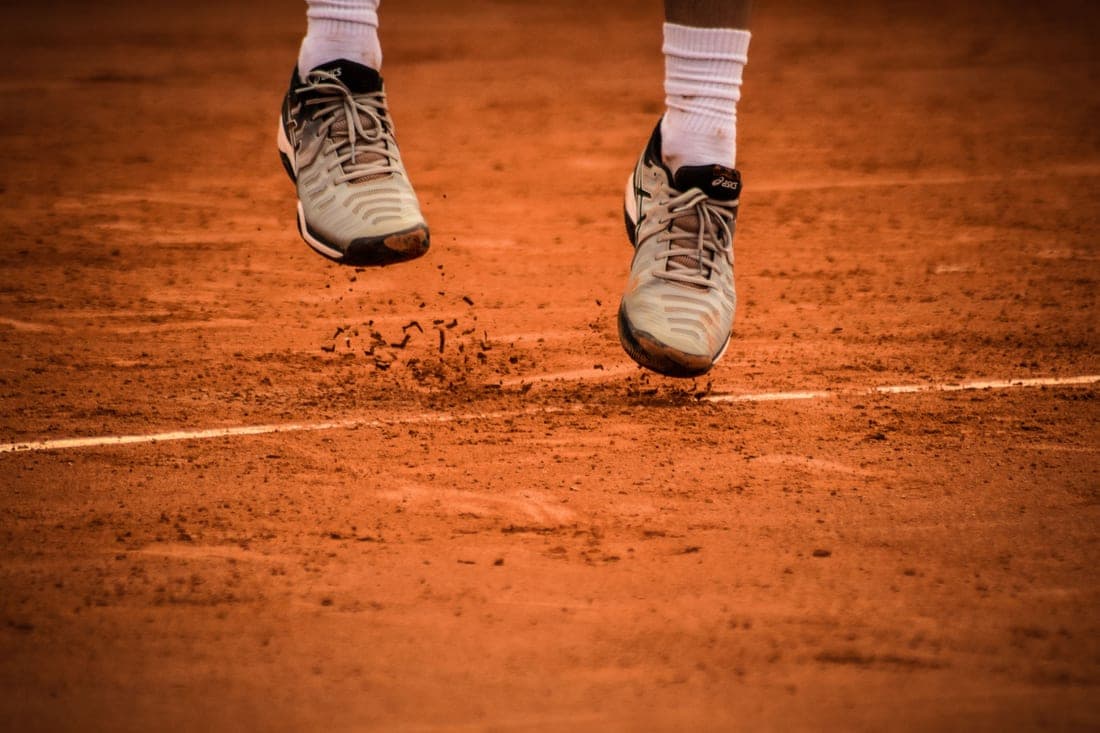 ASICS GEL-Resolution XTop pick | Maximum measured support | 9.05 criteria | |
| 2 |  Nike Zoom GP Challenge 1Most responsive supportive shoe | Rigid chassis with energy return | 8.65 criteria | |
| 3 |  New Balance Fresh Foam X CT-Rally v2Best cushioned supportive shoe | Support plus maximum cushioning | 8.55 criteria | |
| 4 | ASICS GEL-Challenger 15Best value | Support at an accessible price | 8.25 criteria |
The picks in detail
01ASICS GEL-Resolution X
Top pickBest for: Maximum measured support
Perfect scores on both of the measurements that matter: 5/5 torsional rigidity and 5/5 heel counter stiffness. RunRepeat state plainly that the shoe suits players needing extra stability for flat feet, overpronation or a past ankle injury, and the lab data backs it.
The supporting numbers are consistent rather than isolated. A 90.4 HC outsole with only 0.6 mm of abrasion wear means the tread stays predictable through the shoe's life — and unpredictable grip at the end of an outsole's life is itself an ankle risk.
The cost is stark and worth stating: 417 g in a men's 9, one of the heaviest court shoes RunRepeat have tested. This shoe protects you at a real energy price over three sets.
Our score
- Lateral stability
- 10.0
- Cushioning
- 8.5
- Outsole durability
- 9.5
- Fit accommodation
- 8.0
- Lightness
- 3.5
- Overall
- 9.0
Verified specs
- RunRepeat score
- 90 — Best Stability
- Weight
- 14.7 oz / 417 g (men's 9)
- Heel / forefoot stack
- 30.8 mm / 21.9 mm
- Drop
- 8.9 mm
- Torsional rigidity
- 5/5
- Heel counter stiffness
- 5/5
- Heel shock absorption
- 98 SA
- Outsole wear
- 0.6 mm depth, 90.4 HC
Specs as published by RunRepeat, checked September 2026.
Buy if
- You have rolled an ankle before
- You overpronate or have flat feet
- You want the most measured support available
Pass if
- Weight is a priority
- You have long toes — it narrows to 66.6 mm at the big toe
- You want a breathable summer shoe
02Nike Zoom GP Challenge 1
Most responsive supportive shoeBest for: Rigid chassis with energy return
5/5 torsional rigidity and 4/5 heel counter stiffness put this just behind the GEL-Resolution X on structure, and RunRepeat award it best energy return in their hard-court set — so the platform is springy rather than dead.
That combination is rarer than it sounds. Rigid shoes usually feel flat, because the same stiffness that resists twisting also resists compressing. This one does not.
At 14.71 oz / 417 g it weighs the same as the ASICS. Support has a weight, and every shoe on this page pays it.
Our score
- Lateral stability
- 9.5
- Cushioning
- 8.0
- Outsole durability
- 8.0
- Fit accommodation
- 8.5
- Lightness
- 3.5
- Overall
- 8.6
Verified specs
- RunRepeat score
- 88 — Best Energy Return
- Weight
- 14.71 oz / 417 g
- Torsional rigidity
- 5/5
- Heel counter stiffness
- 4/5
- Width fit
- Listed in RunRepeat's wide-feet catalog
Specs as published by RunRepeat, checked September 2026.
Buy if
- You want structure without a dead ride
- You want a wide-fitting supportive Nike
- You play hard court
Pass if
- Weight matters to you
- You want the absolute maximum heel control
- You want a budget option
03New Balance Fresh Foam X CT-Rally v2
Best cushioned supportive shoeBest for: Support plus maximum cushioning
This is the one that solves the usual conflict. A 33.3 mm heel stack with 116 SA of shock absorption is a lot of foam, and a lot of foam normally means a platform that rolls. RunRepeat still measure 5/5 torsional rigidity.
For a player whose ankle history comes with joint pain — which is a common combination in anyone who has played long enough to have both — that is the shoe to look at first.
Outsole durability is the trade rather than stability. It does not reach the ASICS figures on hardness or wear.
Our score
- Lateral stability
- 8.5
- Cushioning
- 10.0
- Outsole durability
- 7.5
- Fit accommodation
- 8.0
- Lightness
- 6.0
- Overall
- 8.5
Verified specs
- RunRepeat score
- 92 — Best Shock Absorption
- Heel stack
- 33.3 mm
- Forefoot stack
- 20.2 mm
- Heel shock absorption
- 116 SA
- Forefoot shock absorption
- 78 SA
- Torsional rigidity
- 5/5
Specs as published by RunRepeat, checked September 2026.
Buy if
- You need both cushioning and stability
- You play on concrete-base hard courts
- Your joints complain as much as your ankles
Pass if
- You want maximum outsole life
- You want court feel
- You want the firmest possible platform
04ASICS GEL-Challenger 15
Best valueBest for: Support at an accessible price
5/5 for midsole stiffness and 5/5 for heel counter stiffness. Those are flagship structural numbers on a shoe RunRepeat position as their beginner hard-court pick, which makes it the most efficient support purchase on this page.
It is also carried in their wide-feet catalog, so it works for broader feet — and broad feet with unstable ankles is a common enough combination to be worth calling out.
It is notably heavier than average, and it does not publish the same torsional figure as the flagships. Treat it as most of the structure for a fraction of the price.
Our score
- Lateral stability
- 9.0
- Cushioning
- 7.5
- Outsole durability
- 7.5
- Fit accommodation
- 8.5
- Lightness
- 5.5
- Overall
- 8.2
Verified specs
- RunRepeat score
- 83 — Best for Beginners
- Midsole stiffness
- 5/5
- Heel counter stiffness
- 5/5
- Weight
- Notably heavier than average
- Width fit
- Listed in RunRepeat's wide-feet catalog
Specs as published by RunRepeat, checked September 2026.
Buy if
- You want support without flagship spend
- You are returning to tennis after an ankle injury
- You have wider feet
Pass if
- You want the absolute maximum structure
- You want a light shoe
- You want top-tier cushioning
Where ankle support actually comes from
Not from a high collar. Basketball-style collars restrict ankle motion at the top of the joint, which is not where a tennis roll happens — a lateral ankle sprain is the foot inverting underneath a leg that is still traveling. Support in a court shoe is about stopping that inversion at the platform.
- Torsional rigidity — how much the shoe resists twisting along its length. A shoe that twists lets the forefoot invert while the heel stays put, which is the sprain mechanism.
- Heel counter stiffness — how firmly the cup holds the heel bone. A soft counter lets the calcaneus tilt before anything else reacts.
- Base width — a wider platform under the foot has more leverage against a roll. Court shoes are wider than running shoes for this reason.
- Outsole predictability — grip that grabs suddenly or lets go suddenly produces the unplanned loads that hurt people. A worn outsole is an ankle risk.
The measured comparison
| Shoe | Torsional rigidity | Heel counter | Weight |
|---|---|---|---|
| ASICS GEL-Resolution X | 5/5 | 5/5 | 417 g |
| Nike Zoom GP Challenge 1 | 5/5 | 4/5 | 417 g |
| New Balance CT-Rally v2 | 5/5 | Not published | Not published |
| ASICS GEL-Challenger 15 | Not published | 5/5 | Heavier than average |
Note what the weight column tells you. Both top-scoring shoes weigh 417 g. There is no light shoe on this list, because there is no light way to build this much structure.
If you have already rolled an ankle
Footwear is one part of a set, and on its own it is the weakest part. The evidence for balance and proprioception training after a lateral ankle sprain is considerably stronger than the evidence for any shoe. If you are coming back from an injury, get a rehabilitation program from a physiotherapist.
Bracing and taping are also worth discussing with them. A lace-up brace inside a structured shoe is a different level of protection from either alone, and plenty of club players use one for a season after an injury and then stop.
Surface changes the risk
Hard courts grip. That is why they wear outsoles, and it is also why a badly timed plant transmits straight into the joint rather than sliding off. Clay lets the foot travel, which removes some of that load — one reason players with joint problems gravitate to it.
If you play clay, the shoe still matters: sliding loads the chassis laterally for longer than a hard-court plant does, which is why the clay roundup leads with a 5/5 torsional shoe too.
Common questions
Do high-top tennis shoes give better ankle support?
Not meaningfully. A tennis ankle sprain is the foot inverting underneath the leg, and that is resisted by torsional rigidity and heel counter stiffness at the platform, not by a collar higher up the leg.
What is torsional rigidity in a tennis shoe?
How much the shoe resists twisting along its length. A shoe that twists lets the forefoot invert while the heel stays planted, which is the sprain mechanism. RunRepeat rate it out of 5, and the shoes here score 5/5.
Are supportive tennis shoes heavy?
Yes, unavoidably. Both of the highest-scoring shoes here weigh 417 g. Structure requires material, and there is currently no light way to build this much of it.
Should I wear an ankle brace as well?
Worth discussing with a physiotherapist, particularly in the season after an injury. A lace-up brace inside a structured shoe gives more protection than either alone, and balance training matters more than both.
Read next
Sources
- 01RunRepeat — Best Hard Court Tennis Shoes
- 02RunRepeat — Best Tennis Shoes
- 03RunRepeat — ASICS GEL-Resolution X lab review
- 04RunRepeat — Wide tennis shoes catalog
Every source above was retrieved while writing this page. Specifications are quoted from the listing or manufacturer page cited, not from memory.