Guide
Tennis racket head size explained
Head size is the spec most people understand least well, because the obvious reading — bigger means easier — is true right up to the point where it stops being.
By Janet H.Updated

The short answer
Head size is the string bed area in square inches. 95-98 is midsize and suits advanced players; 100 is midplus and suits almost everyone; 105-110 is oversize and buys forgiveness at the cost of control; 115-120 is super oversize, forgiving and hard to control once your swing develops.
Disclosure — we earn a commission on qualifying purchases made through links on this page, at no extra cost to you. It never changes which product we rank first. How this site is funded.
What head size actually measures
The area enclosed by the frame's hoop, in square inches. That area is filled with string, and the string bed is what deforms when the ball hits it — so head size is, in effect, a measure of how much deformable surface you have to hit.
More area does three things. It enlarges the sweet spot, so off-center hits lose less energy. It increases the trampoline effect, so the frame returns more energy to the ball. And it raises twisting force on off-center contact, because the impact point can be further from the frame's axis.
The first two are why beginners benefit. The third is why manufacturers have to stiffen very large heads, which is why the Ti.S6 is 71 RA and the Blade 98 is 61.
The bands
| Range | Name | Typical player | Example |
|---|---|---|---|
| 95-98 sq in | Midsize | Advanced, flat hitters | Wilson Blade 98, Babolat Pure Aero 98 |
| 100 sq in | Midplus | Nearly everyone | Yonex EZONE 100, Babolat Pure Drive |
| 105-110 sq in | Oversize | Beginners, comfort-focused | Babolat Boost Drive (105), Wilson Clash 108 |
| 115-120 sq in | Super oversize | First year, arm-conscious | HEAD Ti.S6 (115), Prince O3 Legacy 120 |
The bands are not evenly spaced in practical effect. The difference between 98 and 100 is small; the difference between 100 and 115 is enormous, and it changes what the racket is for.
Head size and length interact
Oversize frames are frequently longer than standard as well. The Wilson Clash 108 is 27.25 inches, the Prince O3 Legacy 120 is 27.25, and the HEAD Ti.S6 is 27.75 against a standard 27.
That extra length adds leverage on the serve and reach on the stretch, and it raises swingweight — the O3 Legacy 120's 330 swingweight is high for a beginner frame precisely because its mass sits out in a very large hoop on a longer frame.
When to go down in head size
One signal, and it is reliable: your misses land long rather than into the net. That means the string bed is returning more energy than you need, and a smaller head with less deformable area returns less.
Before changing frames, try raising string tension by 4-6 lb. It produces a similar effect on launch angle for a fraction of the cost — see string tension explained.
When a bigger head is the right answer
- Your first year. Contact consistency is the limiting factor and more margin helps directly.
- Returning after an injury or a long break. Forgiveness lowers the physical cost of getting back on court.
- You play mostly doubles at a social level. Reaction volleys benefit from a larger face.
- Your arm complains, and a soft frame at 100 sq in has not been enough. Larger heads spread impact over a longer string bed.
What is not a reason: wanting more power in general. Power from head size comes with a control cost you will feel as soon as your swing speed rises. If depth is the problem, a thicker beam at 100 sq in — the Pure Drive approach — is the better solution.
Now pick yours
The specs above are only useful once they resolve into something you can buy. These are the products that match what this page has just explained.
Our picks
| # | Product | Best for | Score | Price |
|---|---|---|---|---|
| 1 | 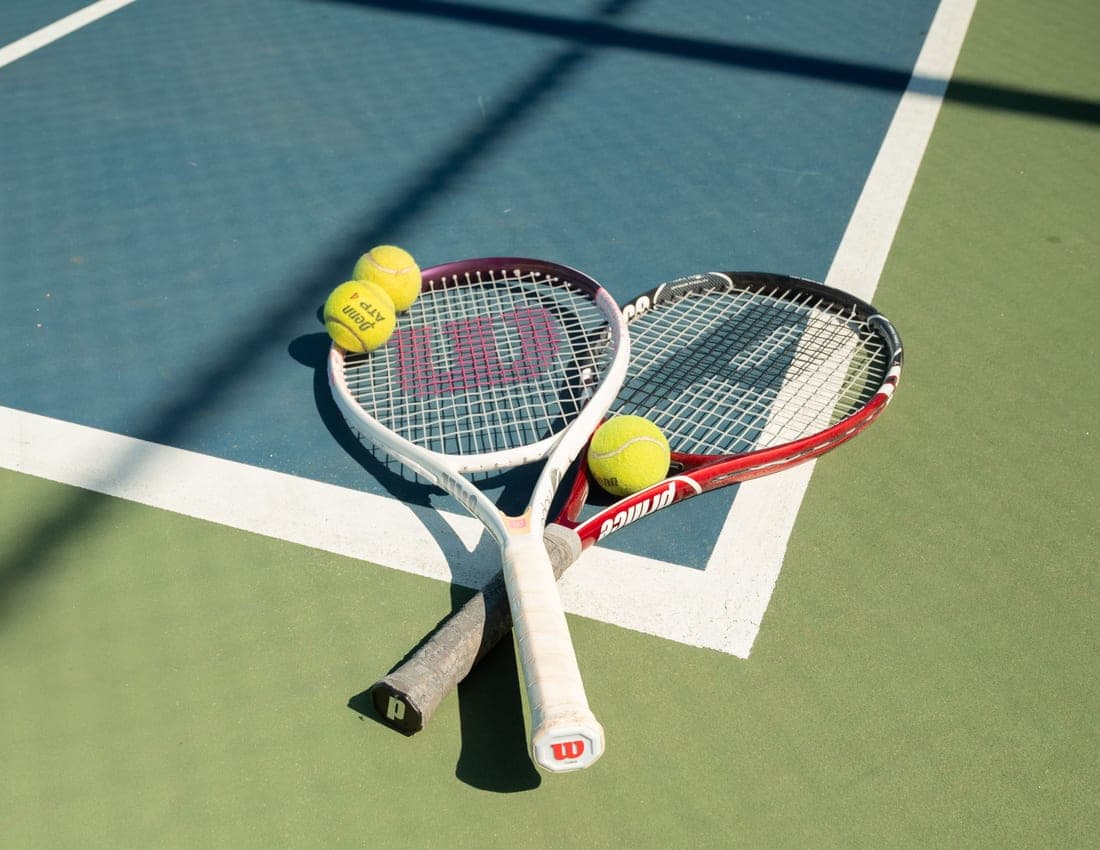 HEAD Titanium Ti.S6115 sq in | Maximum head size | 7.95 criteria | |
| 2 |  Yonex EZONE 100 (2025)100 sq in | The standard midplus | 8.75 criteria | |
| 3 |  Wilson Blade 98 16x19 v1098 sq in | Going below 100 | 8.65 criteria |
01HEAD Titanium Ti.S6
115 sq inBest for: Maximum head size
At 115 sq in this is the largest head in our roundups, and at 244 g strung it is also the lightest — a combination nothing else at any price matches.
It shows what a large head buys and what it costs. Enormous margin for error, plenty of free depth from the 7-points-head-heavy balance and 27.75-inch length, and a control ceiling that arrives as soon as you start swinging properly.
The 71 RA is the other cost. Very large heads need stiffness to stay stable, and stiffness transmits shock.
Our score
- Power
- 9.0
- Control
- 5.0
- Forgiveness
- 9.5
- Arm comfort
- 6.0
- Maneuverability
- 9.0
- Overall
- 7.9
Verified specs
- Head size
- 115 sq in
- Strung weight
- 8.6 oz / 244 g
- Balance
- 7 pts head heavy
- Swingweight
- 309
- Stiffness (RA)
- 71
- Beam
- 27 / 28 / 27 mm
- String pattern
- 16x19
- Length
- 27.75 in
Specs as published by Tennis Warehouse, checked September 2026.
Buy if
- Forgiveness is your binding constraint
- You are in your first year
- You want free depth from the frame
Pass if
- You have elbow sensitivity
- You already generate pace
- You want to develop a competitive game
02Yonex EZONE 100 (2025)
100 sq inBest for: The standard midplus
100 sq in is where most of the market lives, and the EZONE 100 is the clearest demonstration of why: enough margin for a normal player's mishits, enough precision to be controllable.
Yonex's isometric head shape is worth understanding here. Squaring off the hoop lengthens the top main strings, which widens the effective sweet spot vertically without increasing the nominal head size.
That is a useful illustration of a broader point: head size is a rough proxy for sweet-spot area, not a precise one. Shape matters too.
Our score
- Power
- 8.5
- Control
- 8.0
- Forgiveness
- 8.5
- Arm comfort
- 8.0
- Maneuverability
- 7.5
- Overall
- 8.7
Verified specs
- Head size
- 100 sq in
- Strung weight
- 11.2 oz / 318 g
- Balance
- 4 pts head light
- Swingweight
- 315
- Stiffness (RA)
- 68
- Beam
- 24.5 / 26.5 / 23 mm
- String pattern
- 16x19
- Length
- 27 in
Specs as published by Tennis Warehouse, checked September 2026.
Buy if
- You want the standard adult playing shape
- You rally consistently
- You want one frame for singles and doubles
Pass if
- You need maximum forgiveness
- You want a control-first midsize
- You want the lightest frame
03Wilson Blade 98 16x19 v10
98 sq inBest for: Going below 100
98 sq in is the practical floor for most club players, and this is the frame that makes the case for it: less string bed to deform means less trampoline effect, which means a lower launch angle and more predictable placement.
Two square inches does not sound like much, and in isolation it is not. What matters is that frames at 98 sq in are also built with thinner beams and lower stiffness — the Blade's 21.5 mm box beam at 61 RA — so the whole package points the same way.
You lose margin. A 98 sq in head with a thin beam punishes a genuinely bad contact point, which is why it belongs to players whose timing is already consistent.
Our score
- Power
- 7.0
- Control
- 9.5
- Forgiveness
- 7.0
- Arm comfort
- 8.5
- Maneuverability
- 7.5
- Overall
- 8.6
Verified specs
- Head size
- 98 sq in
- Strung weight
- 11.4 oz / 323 g
- Balance
- 4 pts head light
- Swingweight
- 322
- Stiffness (RA)
- 61
- Beam
- 21.5 / 21.5 / 20.5 mm
- String pattern
- 16x19
- Length
- 27 in
Specs as published by Tennis Warehouse, checked September 2026.
Buy if
- Your misses go long rather than into the net
- You want feel and connected feedback
- You play competitive tennis
Pass if
- Your contact point is still variable
- You need the frame to add depth
- You want maximum sweet spot area
Common questions
What head size tennis racket should I get?
100 sq in unless you have a specific reason otherwise. Go to 105-115 sq in if forgiveness is your binding constraint, and to 98 sq in only if your misses are consistently long and flat.
Does a bigger racket head give more power?
Yes, through a larger trampoline effect in the string bed. The cost is a lower control ceiling and more twisting force on off-center hits, which is why very large heads have to be stiffened.
Is 98 or 100 square inches better?
Different. The two square inches matter less than the fact that 98 sq in frames are usually built with thinner beams and lower stiffness — the package points toward control, not just the head size.
What is an oversize tennis racket?
Usually 105-110 sq in, with 115-120 sometimes called super oversize. They buy a large sweet spot and free depth at the cost of precision, and they are often longer than standard as well.
Will I need to change head size as I improve?
Most players move down at some point, typically from an oversize first racket to a 100 sq in midplus once they start generating their own pace. Going below 100 is a choice rather than a progression.
Read next
Sources
- 01Tennis Warehouse — Best Tennis Racquets gear guide
- 02Tennis Warehouse — Best Tennis Racquets for Beginners
- 03Tennis Warehouse — HEAD Titanium Ti.S6
- 04Tennis Warehouse — Yonex EZONE 100 (2025)
- 05Tennis Warehouse — Wilson Blade 98 16x19 v10
- 06Tennis Warehouse — Prince O3 Legacy 120
Every source above was retrieved while writing this page. Specifications are quoted from the listing or manufacturer page cited, not from memory.