Guide
Tennis string gauge explained
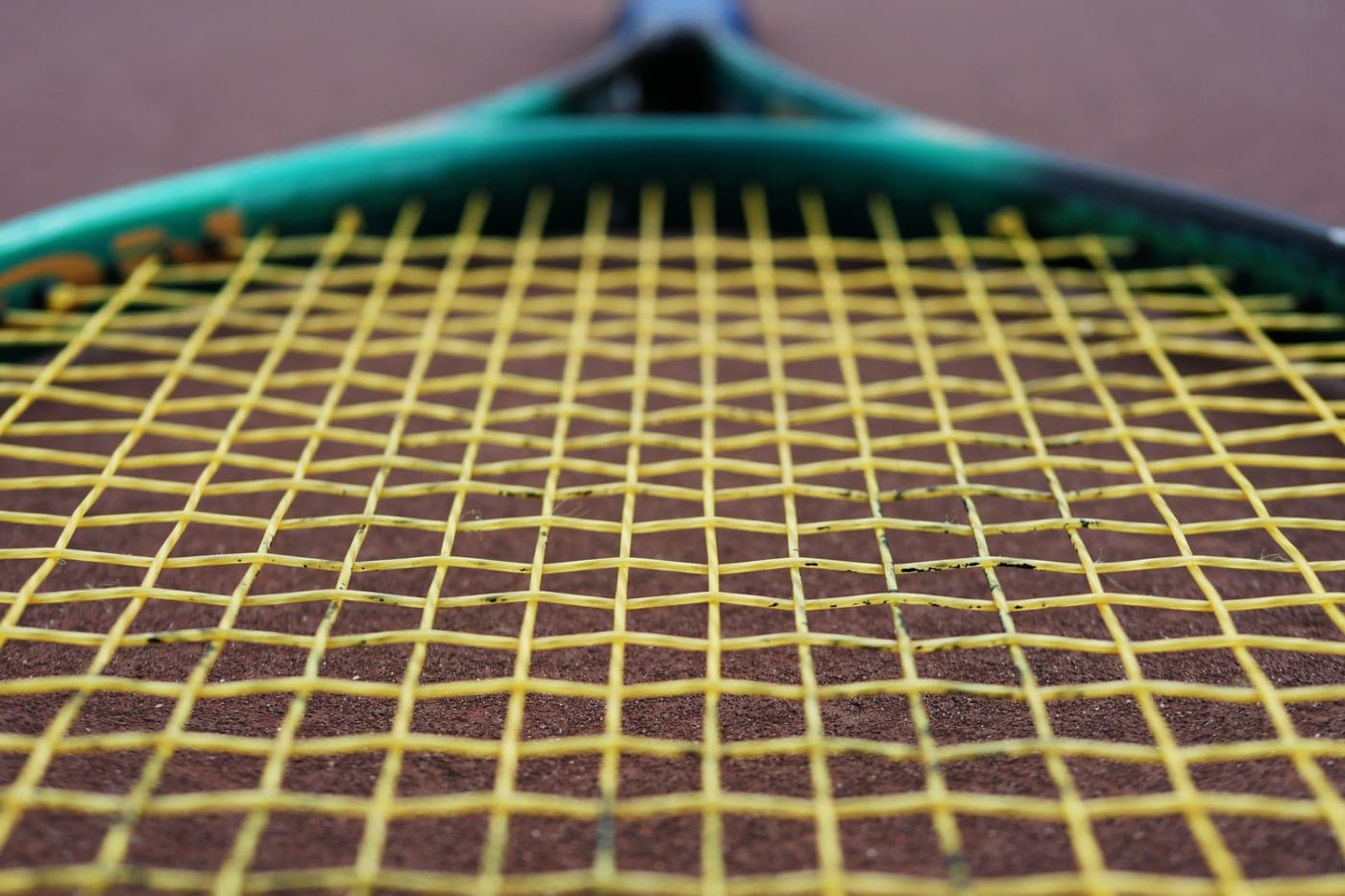
Thinner string bites the ball harder and breaks sooner. The numbering runs backward, which is most of why the topic confuses people.
By Janet H.Updated
The short answer
Gauge is string thickness and the numbers run backward: higher numbers are thinner. 16 gauge is the standard all-round choice, 17 is the usual spin-oriented option, and 15L is for players who break everything. Thinner string generates more spin and more feel; it breaks sooner.
Disclosure — we earn a commission on qualifying purchases made through links on this page, at no extra cost to you. It never changes which product we rank first. How this site is funded.
The numbering, and why it is confusing
Gauge numbers run inversely to thickness: a higher number means a thinner string. The system descends from wire gauge measurement, where the number counted drawing operations rather than diameter.
| Gauge | Approx. diameter | Character |
|---|---|---|
| 15 | 1.41-1.49 mm | Thickest, most durable |
| 15L | 1.33-1.41 mm | Durable, slightly livelier |
| 16 | 1.26-1.34 mm | The standard all-round choice |
| 16L | 1.22-1.30 mm | Slightly thinner than 16 |
| 17 | 1.20-1.24 mm | The usual spin choice |
| 18 | 1.10-1.16 mm | Very thin, maximum feel, fragile |
Diameter ranges vary a little between manufacturers, which is why they are approximate. If you need precision, the specific string's listing will quote its diameter in millimeters.
What thinner gauge buys
- More spin. A thinner string bites into the ball surface more, and it moves and snaps back more freely in the bed. Both increase topspin.
- More feel. Less material between your hand and the ball means more information reaches you.
- Slightly more power. A thinner string stretches further at a given tension, which returns more energy.
- Better comfort, marginally, for the same reason.
What it costs is durability, and not marginally. Moving from 16 to 17 gauge can noticeably shorten string life for a player who generates heavy spin, because spin generation is itself the wear mechanism — the strings sawing against each other is what eventually cuts them.
Which gauge to choose
| You | Gauge | Why |
|---|---|---|
| Are starting out | 16 | Standard, durable enough, no downside |
| Want more spin | 17 | Noticeably more bite, acceptable life |
| Break strings weekly | 15L | The durability option |
| Want maximum feel | 18 | Softest, most responsive, shortest life |
| Use a hybrid setup | Thicker mains, thinner crosses | Mains take the wear |
For most club players 16 gauge is the right default and gauge is not the variable worth agonizing over. String type and tension both matter considerably more — see string tension explained.
Gauge in a hybrid setup
In a hybrid, the mains do most of the moving and take most of the wear. The usual approach is a slightly thicker gauge in the mains for durability and a thinner one in the crosses for feel, though plenty of stringers do the reverse for more spin.
If you are building a hybrid for the first time, keep gauge constant and change only the string types. One variable at a time is the rule here as everywhere.
Now pick yours
The specs above are only useful once they resolve into something you can buy. These are the products that match what this page has just explained.
Our picks
| # | Product | Best for | Score | Price |
|---|---|---|---|---|
| 1 |  Solinco Hyper-GWidest gauge range | Choosing gauge deliberately | 8.34 criteria | |
| 2 | Tecnifibre X-One BiphaseMost gauges in a multifilament | Thin gauge in a soft string | 8.04 criteria |
01Solinco Hyper-G
Widest gauge rangeBest for: Choosing gauge deliberately
Tennis Warehouse list Hyper-G in gauges from 15L through 20 — the widest range in their set — which makes it the string to use if you actually want to experiment with thickness.
That matters because gauge is a small adjustment that only becomes useful when you can hold everything else constant. Changing gauge within one string is a clean experiment; changing string and gauge together is not.
It is a control polyester at $13.99, so it suits a player who is already at the stage of fine-tuning rather than someone choosing their first string.
Our score
- Performance
- 9.0
- Comfort
- 5.5
- Durability
- 9.0
- Value
- 8.5
- Overall
- 8.3
Verified specs
- Type
- Polyester
- Gauges
- 15L to 20
- TW award
- Control
- Listed price
- $13.99 per set
Specs as published by Tennis Warehouse, checked September 2026.
Buy if
- You want to experiment with gauge
- You already know you want a polyester
- You want control and spin
Pass if
- You have arm sensitivity
- This is your first restring
- You want maximum comfort
02Tecnifibre X-One Biphase
Most gauges in a multifilamentBest for: Thin gauge in a soft string
Tennis Warehouse list X-One Biphase in 15L, 16, 17 and 18, which is an unusually wide spread for a multifilament, at $22.95 to $23.95.
Thin multifilament is the softest, most powerful bed available short of natural gut, and an 18 gauge version of an already-soft string is about as comfortable as tennis gets.
It is also the least durable combination on this page. An 18 gauge multifilament in an open 16x19 pattern with a fast swing will not last long, and you should budget accordingly.
Our score
- Performance
- 9.0
- Comfort
- 9.0
- Durability
- 6.0
- Value
- 6.5
- Overall
- 8.0
Verified specs
- Type
- Multifilament
- Gauges
- 15L, 16, 17, 18
- TW award
- Power
- Listed price
- $22.95-$23.95 per set
Specs as published by Tennis Warehouse, checked September 2026.
Buy if
- You want maximum comfort and feel
- You do not break strings quickly
- You want thin gauge in a soft string
Pass if
- You break strings in under a month
- You want the best value
- You need control above all
Common questions
What does string gauge mean?
String thickness, numbered inversely — higher numbers are thinner. 16 gauge is roughly 1.26-1.34 mm and is the standard choice; 17 is around 1.20-1.24 mm and is the usual spin option.
Does thinner string give more spin?
Yes. A thinner string bites into the ball surface more and moves more freely in the bed, both of which increase snapback and therefore topspin. It also breaks sooner, for the same reason.
What gauge should I use?
16 gauge unless you have a reason otherwise. Move to 17 if you want more spin and accept shorter life; move to 15L if you break strings weekly.
What does the L in 16L mean?
Light — a half-step thinner than the base gauge. 16L sits between 16 and 17 in thickness.
Does gauge matter as much as tension?
No. String type matters most, tension second, gauge third. For most club players gauge is a fine-tuning variable rather than a decision to agonize over.
Read next
Sources
Every source above was retrieved while writing this page. Specifications are quoted from the listing or manufacturer page cited, not from memory.