Buying guide
Best padel rackets for intermediate players in 2026
The intermediate upgrade is not about buying a professional's diamond frame. It is about moving one step along each of three axes at once.
By Janet H.Updated
The short answer
The HEAD Evo Speed is the best first step up: an oversize teardrop with a soft foam core and a carbon frame at 360 to 370 g. If you are further along, the Nox Nextgen Pro Hybrid 3K pairs a soft core with a 3K carbon face, and Babolat's Technical Veron 3.0 at 360 g is the versatile competition option.
Disclosure — we earn a commission on qualifying purchases made through links on this page, at no extra cost to you. It never changes which product we rank first. How this site is funded.
Our picks
| # | Product | Best for | Score | Price |
|---|---|---|---|---|
| 1 | 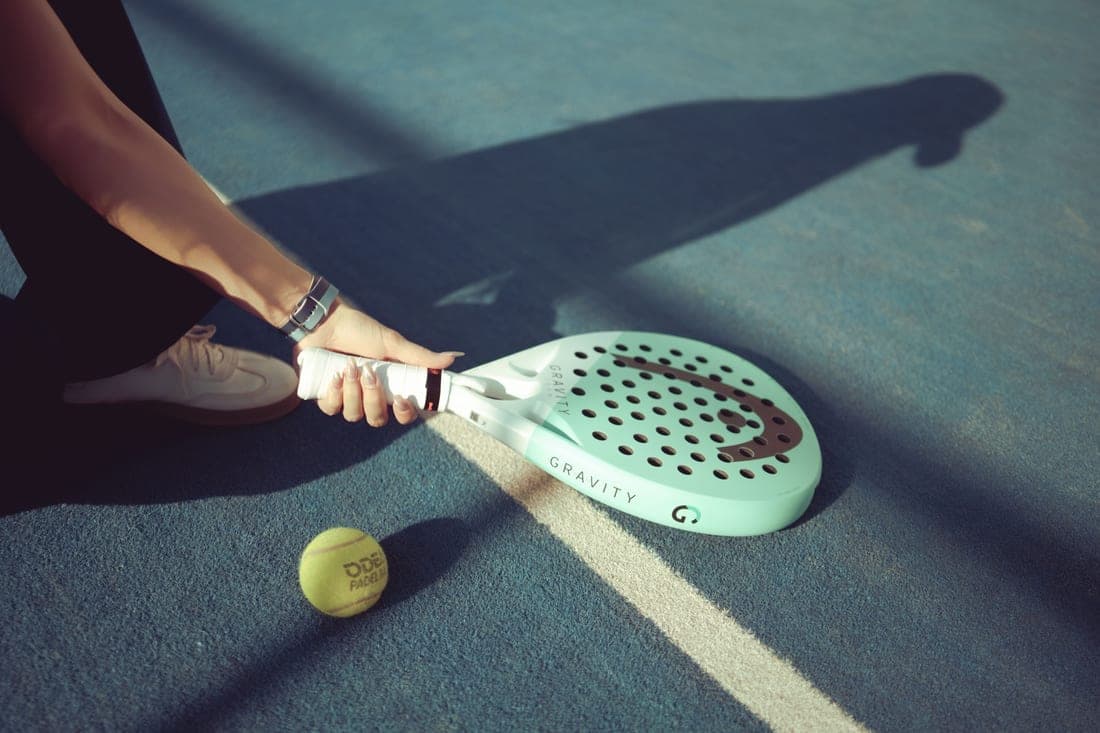 HEAD Evo SpeedTop pick | The first move away from a round frame | 8.55 criteria | |
| 2 |  Nox Nextgen Pro Hybrid 3KBest hybrid | Carbon face, soft core | 8.45 criteria | |
| 3 | Babolat Technical Veron 3.0Best all-round competition frame | Competition play without a punishing frame | 8.35 criteria | |
| 4 | Babolat Technical Viper Soft 3.0Most power available | Attacking players with a sensitive arm | 8.05 criteria |
The picks in detail
01HEAD Evo Speed
Top pickBest for: The first move away from a round frame
Going straight from a soft round beginner racket to a firm diamond is the mistake this frame exists to prevent. The oversize teardrop moves the sweet spot up the face — where your contact is now landing as your swing has lengthened — while keeping the face large enough that the change is not punishing.
Underneath it is still forgiving: a soft foam core and a fiberglass hitting face on a 38 mm profile, with a carbon frame for structure and a medium 270 mm balance.
At 360-370 g it asks for a bit more from your shoulder than a light beginner racket does, which is appropriate at this stage. If that feels like too much, you are not ready to leave the round frames yet, and that is fine.
Our score
- Control
- 8.0
- Power
- 7.0
- Sweet spot
- 8.5
- Arm comfort
- 8.5
- Maneuverability
- 7.5
- Overall
- 8.5
Verified specs
- Shape
- Teardrop (oversize)
- Weight
- 360-370 g
- Balance
- 270 mm (medium)
- Core
- Soft foam
- Face
- Fiberglass
- Frame
- Carbon
- Profile
- 38 mm
Specs as published by Padel USA, checked September 2026.
Buy if
- You have outgrown a soft round racket
- You want more power without losing the sweet spot
- You want one step rather than three
Pass if
- You are already attacking from the net consistently
- You want a competition-grade frame
- You want maximum control
02Nox Nextgen Pro Hybrid 3K
Best hybridBest for: Carbon face, soft core
Padel Market describe this as a soft, forgiving feel with room to grow, and the construction explains it: a 3K carbon hitting face over a soft, forgiving core, in a hybrid teardrop outline.
That combination is the intermediate sweet spot. The carbon face gives you the bite and precision that fiberglass cannot — you can genuinely aim a volley and put shape on a bandeja — while the soft core keeps the racket comfortable and keeps the sweet spot honest.
Padel Market's guide gives shape, core and face for this model rather than a weight figure, so we are not quoting one. Handle it before committing if a specific weight matters to you.
Our score
- Control
- 8.5
- Power
- 7.5
- Sweet spot
- 8.0
- Arm comfort
- 8.0
- Maneuverability
- 7.5
- Overall
- 8.4
Verified specs
- Shape
- Hybrid / teardrop
- Core
- Soft, forgiving
- Face
- 3K carbon
Specs as published by Padel Market, checked September 2026.
Buy if
- You want a carbon face without a harsh core
- You are developing a bandeja and a vibora
- You want a racket that will last through your improvement
Pass if
- You want a published weight figure
- You want maximum smash power now
- You want the softest available feel
03Babolat Technical Veron 3.0
Best all-round competition frameBest for: Competition play without a punishing frame
Babolat position the Technical Veron 3.0 for the versatile competitor and build it around a Carbonflex surface at 360 g, describing it as softer and more tolerant than the rest of their technical range.
That is the right frame for a strong club player who is not a specialist attacker. It gives you enough power for a real smash while remaining controllable on the defensive shots that make up most of a padel point.
It is a competition frame and it prices like one. If your padel is social rather than league, the two rackets above will serve you better for less.
Our score
- Control
- 8.5
- Power
- 8.0
- Sweet spot
- 7.5
- Arm comfort
- 7.5
- Maneuverability
- 7.0
- Overall
- 8.3
Verified specs
- Weight
- 360 g
- Face
- Carbonflex
- Aimed at
- Versatile competitor
Specs as published by Babolat, checked September 2026.
Buy if
- You play league or competitive padel
- You want power without giving up control
- You want a frame that will not be outgrown
Pass if
- You play socially
- You want maximum forgiveness
- Budget is a constraint
04Babolat Technical Viper Soft 3.0
Most power availableBest for: Attacking players with a sensitive arm
Babolat aim the Technical Viper Soft 3.0 at the offensive competitor, at 365 g with a 3K soft carbon surface and a comfort power layer. It is the attacking frame in the range with a deliberate concession to feel.
That concession matters. Padel produces a lot of repeated impact at the elbow, and stiff attacking frames are the ones that provoke it. If you want to smash and your arm has complained before, this is the sensible version of that ambition.
It is genuinely demanding. A 365 g attacking frame rewards a player who is already finishing points at the net and frustrates one who is not. Be honest about which you are.
Our score
- Control
- 7.5
- Power
- 9.0
- Sweet spot
- 6.5
- Arm comfort
- 7.5
- Maneuverability
- 6.5
- Overall
- 8.0
Verified specs
- Weight
- 365 g
- Face
- 3K soft carbon
- Aimed at
- Offensive competitor
Specs as published by Babolat, checked September 2026.
Buy if
- You finish points from the net
- You want power without a harsh frame
- You play competitively
Pass if
- You are still developing your net game
- You want a forgiving sweet spot
- You find 365 g tiring
Three axes, one step each
The intermediate upgrade is best understood as moving one notch along three dials simultaneously, rather than jumping to the end of any one of them.
| Axis | Where you were | One step up | Too far |
|---|---|---|---|
| Shape | Round | Teardrop or hybrid | Diamond |
| Core | Soft EVA or foam | Medium EVA | Hard EVA |
| Face | Fiberglass | Soft or 3K carbon | High-modulus carbon |
Moving all three to the far column at once is how players end up with an expensive racket that makes them worse. You lose the sweet spot, the comfort and the control in a single purchase, and the power you gain is only usable on the shots you already hit well.
What you should be able to do before upgrading
Four honest markers. If most of these are not true yet, a softer round racket is still the faster route to improvement.
- 01You play the back glass deliberately, letting the ball come off the wall rather than reacting to it.
- 02Your lob is a weapon, not an escape — you can put it deep enough to push the opposing pair off the net.
- 03You have a bandeja, or you are actively learning one, rather than smashing everything.
- 04You finish some points at the net. If nothing you hit ends a rally, extra power has nowhere to go.
The arm problem nobody mentions
Padel has a real incidence of lateral epicondylitis, and it is easy to see why: short, sharp impacts, a stiff solid racket, a wrist-led technique on several shots, and long rallies that repeat all of it.
Firming up the core and the face is precisely the change that increases transmitted shock. If your elbow has grumbled before, the Viper Soft's comfort layer or the Nox's soft core under a carbon face are the versions of an upgrade that do not make it worse — and a slightly lower grip pressure will do more than either.
Shoes matter more at this level, not less
As your game gets faster, the surface matters more. Sanded artificial turf is unforgiving of a sole that rides on top of the sand instead of clearing it, and intermediate players move quickly enough for that to be a genuine risk rather than an inconvenience.
Best padel shoes covers herringbone, omni and hybrid soles and which club surface each belongs on.
Common questions
When should I upgrade my padel racket?
When you can play the back glass deliberately, lob with intent, and finish some points at the net. Before that, extra power has nowhere useful to go and a firmer racket just costs you sweet spot.
Should an intermediate player buy a diamond padel racket?
Usually not. Diamond frames put a small sweet spot high in the head and are built for players who finish points with a smash. A teardrop or hybrid gives you most of the extra power with far more margin.
Is a carbon padel racket better than fiberglass?
Different. Carbon is firmer and more precise, fiberglass is softer and more forgiving. A carbon face over a soft core — as on the Nox Nextgen Pro Hybrid 3K — is the combination that suits most improving players.
How heavy should an intermediate padel racket be?
Most competition frames sit between 360 and 370 g, and the rackets here do. That extra mass is what gives a smash weight; the cost is shoulder fatigue over long matches.
Read next
Sources
- 01Padel Market — Best Padel Racket for Beginners 2026
- 02Babolat — Padel Technical Collection 2026
- 03Padel USA — HEAD Evo Speed listing
Every source above was retrieved while writing this page. Specifications are quoted from the listing or manufacturer page cited, not from memory.