Comparison
Padel vs pickleball: which one should you actually play?
They get named in the same breath constantly and they are not similar games. One is a walled doubles sport on a 200 square meter court; the other is a soft-touch game on a badminton-sized court with a no-volley zone.
By Janet H.Updated
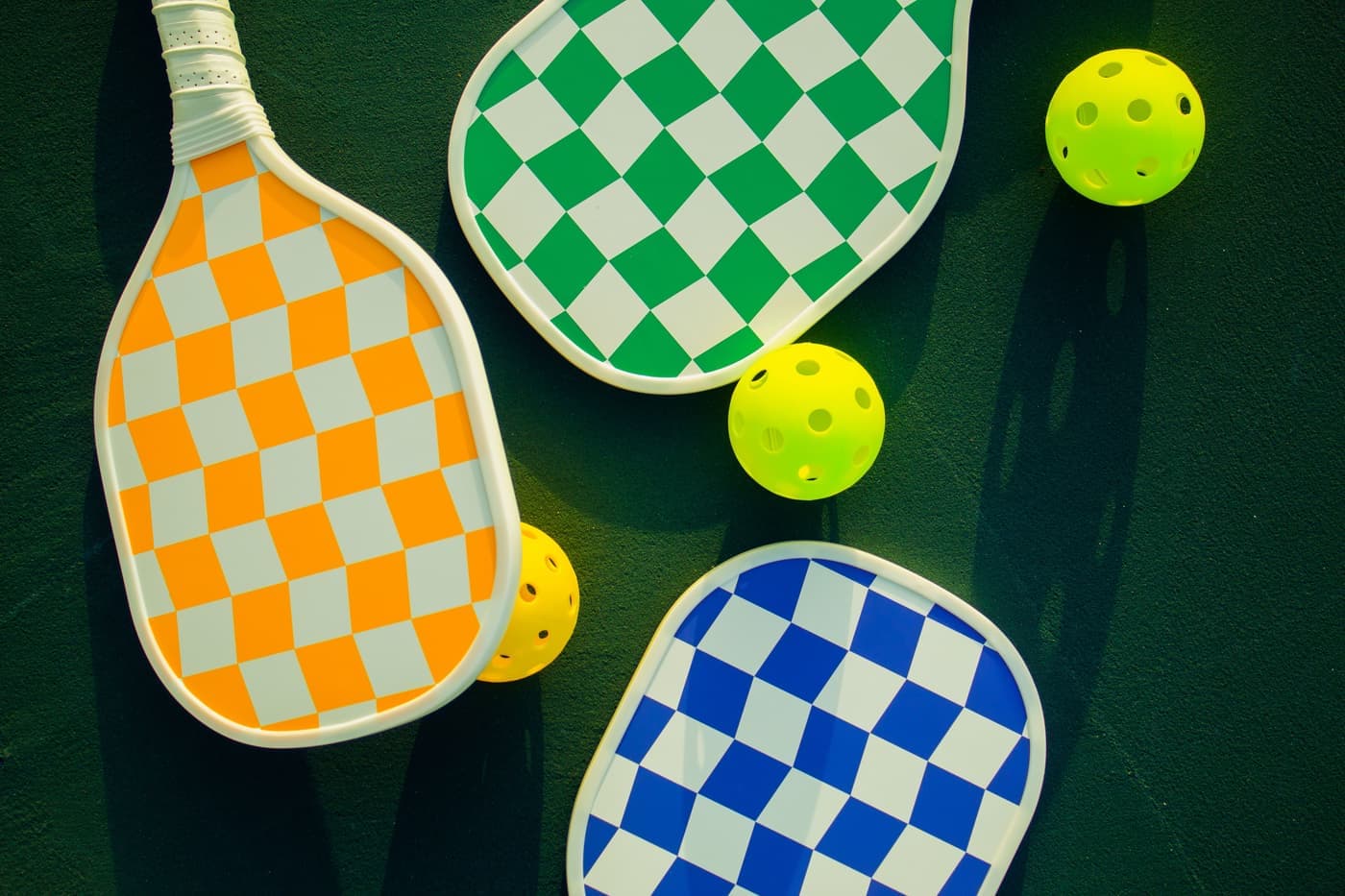
The short answer
Padel is played in doubles on a 10 m by 20 m court enclosed by glass walls that are in play, with tennis scoring and an underarm serve. Pickleball is played on a 20 ft by 44 ft open court with a seven-foot no-volley zone, games to 11, and side-out scoring. Pickleball is far easier to start; padel produces longer rallies.
Disclosure — we earn a commission on qualifying purchases made through links on this page, at no extra cost to you. It never changes which product we rank first. How this site is funded.
Our picks
| # | Product | Best for | Score | Price |
|---|---|---|---|---|
| 1 | 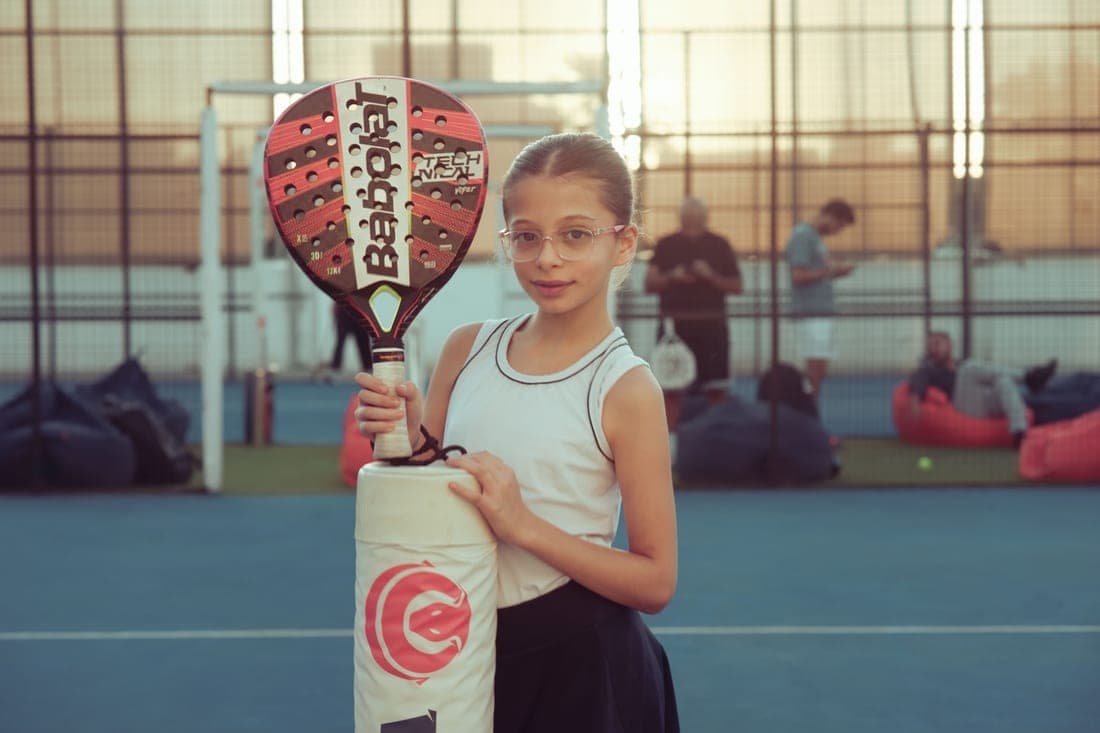 Babolat ContactBest first padel racket | Starting padel | 8.64 criteria | |
| 2 |  Vatic Pro Prism FlashBest first paddle | Starting pickleball | 8.54 criteria | |
| 3 | 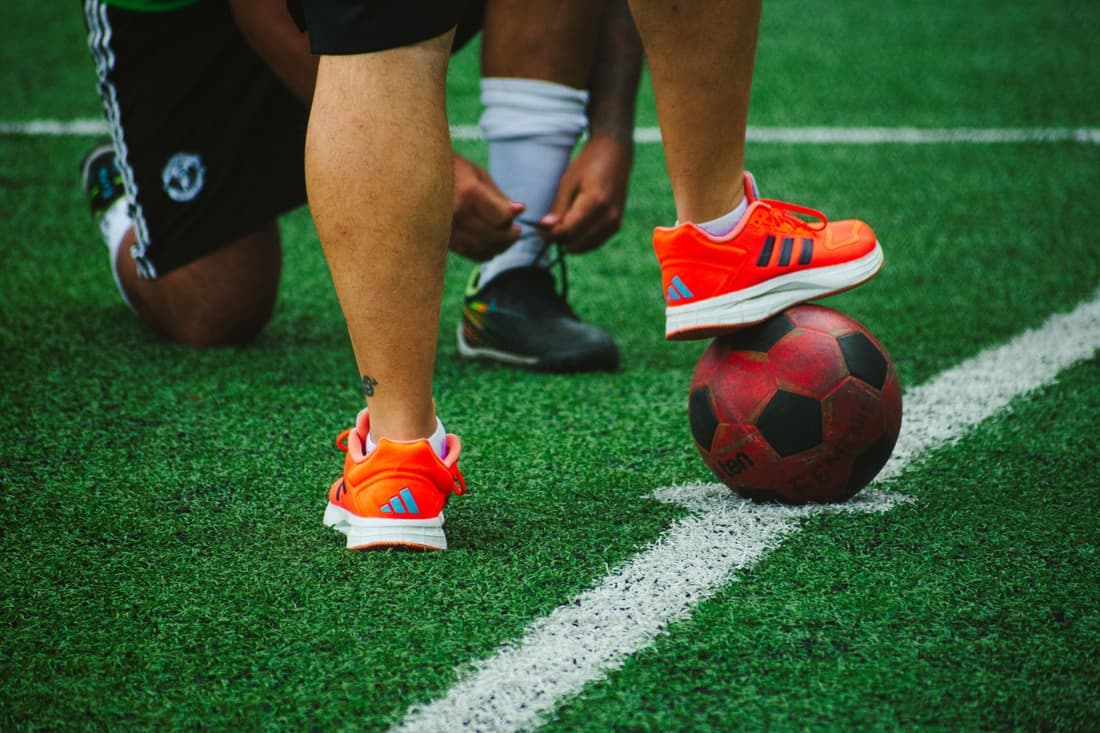 ASICS GEL-Resolution X PadelBest shoes if you choose padel | Padel footwear | 8.54 criteria |
The picks in detail
01Babolat Contact
Best first padel racketBest for: Starting padel
If you choose padel, this is where to start: a round head, a soft EVA core and 340 g, which is every variable set to forgiving.
Padel Market's beginner guidance is a round shape at 350-360 g with a head-light balance and a soft core, and this sits at the light end of that band.
The one thing that is not optional is the wrist tether. The rules require a non-elastic safety cord of no more than 35 cm, and in an enclosed court that requirement is not bureaucratic.
Our score
- Performance
- 8.5
- Comfort
- 9.0
- Durability
- 7.5
- Value
- 9.5
- Overall
- 8.6
Verified specs
- Shape
- Round
- Weight
- 340 g
- Core
- Soft EVA
- Face
- Composite
- Frame
- Composite
Specs as published by Padel Padel, checked September 2026.
Buy if
- You are starting padel
- You want the most forgiving frame
- You want to spend under $100
Pass if
- You already play padel regularly
- You want power for smashing
- You chose pickleball
02Vatic Pro Prism Flash
Best first paddleBest for: Starting pickleball
If you choose pickleball, a 16 mm core with a raw carbon fiber face at 7.8 to 8.2 oz is the right starting specification, and PickleballUS name this their best value all-rounder.
The 16 mm core is the part that matters. Pickleball is won in the soft exchange at the kitchen line, and a thick core absorbs incoming pace so a reset dies on the face instead of popping up.
It is a standard shape, which is more forgiving than an elongated one while your contact point is still variable.
Our score
- Performance
- 8.5
- Comfort
- 8.5
- Durability
- 8.0
- Value
- 9.5
- Overall
- 8.5
Verified specs
- PickleballUS award
- Best Value All-Rounder
- Weight
- 7.8-8.2 oz
- Core
- 16 mm
- Face
- Raw carbon fiber
- Shape
- Standard
Specs as published by PickleballUS, checked September 2026.
Buy if
- You are starting pickleball
- You want a control-first paddle
- You want carbon at a value price
Pass if
- You chose padel
- You hit a two-handed backhand and want reach
- You want maximum power
03ASICS GEL-Resolution X Padel
Best shoes if you choose padelBest for: Padel footwear
This is the gear consequence nobody mentions. Pickleball is played on hard courts, so your tennis shoes work. Padel is played on sanded artificial turf, and hard-court tread rides on top of the sand rather than biting through it.
Padel Market describe this as offering superior lateral support with a reinforced GEL system in the high-impact zones, on a hybrid sole that works across club surfaces.
If you are trying padel once, borrowed shoes are fine. If you are taking it up, this is the purchase that changes both safety and enjoyment.
Our score
- Performance
- 9.0
- Comfort
- 9.0
- Durability
- 8.5
- Value
- 7.5
- Overall
- 8.5
Verified specs
- Sole
- Hybrid
- Cushioning
- GEL, reinforced in high-impact zones
- Aimed at
- Intermediate to advanced
Specs as published by Padel Market, checked September 2026.
Buy if
- You are taking up padel
- You play at more than one club
- You want maximum lateral support
Pass if
- You chose pickleball — your tennis shoes are correct
- You are trying padel once
- You want the lightest shoe
The court is the whole difference
| Padel | Pickleball | |
|---|---|---|
| Court size | 10 m x 20 m | 20 ft x 44 ft (6.1 m x 13.4 m) |
| Walls | Glass and mesh, in play | None |
| Net height (center) | 88 cm | 34 in (86 cm) |
| Format | Doubles almost always | Singles or doubles |
| Scoring | Tennis scoring, optional golden point | To 11, win by 2, side-out scoring |
| Serve | Underarm, after a bounce, at or below waist | Underhand, volley or drop serve |
| Racket | Solid, perforated, 9-13 mm holes | Solid, smooth, max 24 in combined |
| Ball | Like a tennis ball, slightly smaller, less pressure | Perforated plastic, 26-40 holes |
Run those numbers and the picture is clear. A padel court is 200 square meters; a pickleball court is about 82. The padel court is nearly two and a half times the area — and it is enclosed, so a ball that passes you is still live.
What the walls change
This is the single most important difference and it is the one most comparisons understate. In padel the back walls and corner sections are glass, and the ball comes off them at speed and stays in play.
Practically, that means a winner in tennis is often just a rally ball in padel. A hard drive that beats your opponent rebounds off the glass into their strike zone, and the player who hit it is now out of position. It is why padel punishes power and rewards the lob — and why a control-first racket is the correct beginner choice.
Pickleball has no walls. What it has instead is the seven-foot non-volley zone on each side of the net, inside which you cannot volley. That rule forces the soft dinking game at the net and is why absorption, not power, is the paddle property that matters.
Which is easier to start?
Pickleball, clearly. The court is small, the ball is slow, the paddle is light, and most people can rally in their first session. It is the most accessible racquet sport currently played, and the US participation figures reflect that — roughly 19.8 million players in 2024, reported as 311% growth since 2021.
Padel is second, and closer than you would expect for a sport with glass walls. The walls keep the ball in play, which forgives a great deal — a shot that would be a lost point in tennis is often just a longer rally. Global participation was reported at over 35 million players across more than 150 countries as of 2025.
The difference is that padel's ceiling is higher and its intermediate plateau is harder. Learning to play the ball off the back glass — to wait, let it come, and hit it after the rebound — takes months and is the skill that separates players.
Physical demand
- Padel covers more ground per point, rallies last longer because the walls keep balls alive, and the court is larger. It is the harder workout of the two.
- Pickleball is the least physically demanding of the major racquet sports, which is a large part of why it has grown so fast. The court is small and the ball is slow.
- Both are doubles-friendly, which matters more than it sounds — it halves the court you cover and makes the social side of the sport work.
Neither is low-impact. Both involve repeated lateral direction changes with hard stops, which is why court shoes matter in both — see tennis shoes vs pickleball shoes and padel shoes vs tennis shoes.
What each one costs you to start
| Padel | Pickleball | |
|---|---|---|
| Racket or paddle | $70-$120 for a proper beginner frame | Under $100 for a current-spec paddle |
| Shoes | Clay-pattern or hybrid sole needed | Existing tennis or all-court shoes work |
| Balls | Tube of pressurized padel balls | Perforated plastic balls, cheap and durable |
| Court access | Usually a paid booking at a club | Often free at public courts |
Pickleball is meaningfully cheaper to start, mostly because of court access and shoes. Padel courts are purpose-built structures and almost always cost money to book; pickleball is frequently painted onto existing public hard courts.
Which should you choose?
Choose pickleball if you want to be rallying in your first hour, you want cheap or free court access, you already own hard-court shoes, and you want a game that is social from the first session.
Choose padel if you want the harder workout, you enjoy a game with more tactical depth, you have played tennis or squash before, and you have a padel club within reach — that last condition is the binding one for most people in the US.
If you are coming from tennis specifically, read padel vs tennis and tennis vs pickleball, which cover what transfers from a tennis background in each direction.
Common questions
Is padel the same as pickleball?
No. A padel court is 10 m by 20 m with glass walls that are in play; a pickleball court is 20 ft by 44 ft and open. Padel uses tennis scoring and a ball like a tennis ball; pickleball plays to 11 with side-out scoring and a perforated plastic ball.
Which is easier, padel or pickleball?
Pickleball, by a clear margin. The court is small, the ball is slow and most people can rally in their first session. Padel is also forgiving for a beginner — the walls keep the ball alive — but its intermediate skills take longer.
Can I use the same paddle for padel and pickleball?
No. A padel racket is thick, perforated with 9 to 13 mm holes, and has a foam core; a pickleball paddle is a thin flat slab with a smooth surface and no holes. Neither is legal in the other sport.
Which is a better workout, padel or pickleball?
Padel. The court is larger, the rallies last longer because the walls keep the ball in play, and you cover more ground per point. Pickleball is the least physically demanding of the major racquet sports.
Do I need different shoes for padel and pickleball?
Yes. Pickleball is on hard courts, so tennis or all-court shoes are correct. Padel is usually on sanded artificial turf, which needs a clay-pattern or hybrid sole — hard-court tread rides on top of the sand.
Which sport is growing faster?
Pickleball in the United States — reported at roughly 19.8 million US participants in 2024, 311% growth since 2021. Padel globally, with over 35 million players across more than 150 countries as of 2025.
Read next
Sources
- 01Wikipedia — Padel
- 02Wikipedia — Pickleball
- 03Pickleheads — Padel vs Pickleball
- 04Playtomic — Padel vs pickleball
- 05Padel Market — Best Padel Racket for Beginners 2026
- 06PickleballUS — Best Pickleball Paddles for Beginners
Every source above was retrieved while writing this page. Specifications are quoted from the listing or manufacturer page cited, not from memory.