Comparison
Padel vs platform tennis: the two that really are similar
This is the comparison where the confusion is reasonable. Both are enclosed doubles paddle sports with tennis scoring — and the ball, the surface and the climate are all different.
By Janet H.Updated

The short answer
A padel court is 10 m by 20 m with glass walls, played with a perforated composite racket and a low-pressure tennis-style ball. A platform tennis court is 44 ft by 20 ft on a heated raised deck enclosed by 12-foot wire screens, played with an 18-inch solid paddle and a sponge rubber ball. Both use tennis scoring; both play the walls.
Disclosure — we earn a commission on qualifying purchases made through links on this page, at no extra cost to you. It never changes which product we rank first. How this site is funded.
Our picks
| # | Product | Best for | Score | Price |
|---|---|---|---|---|
| 1 | 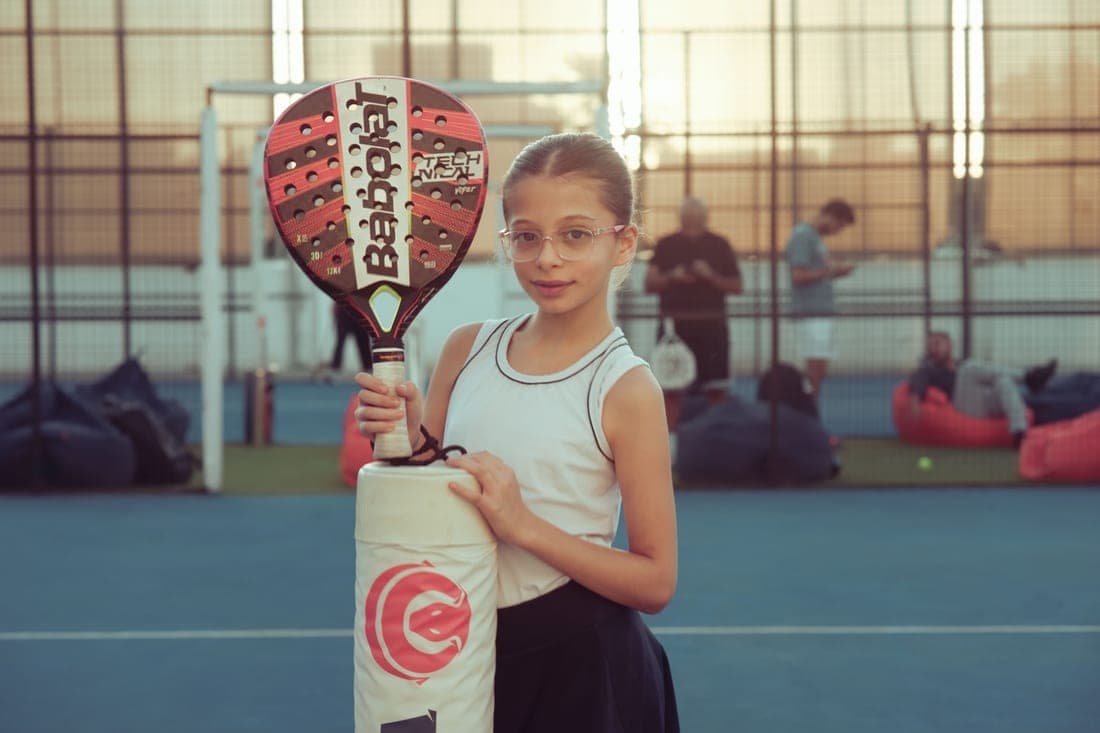 Babolat ContactBest first padel racket | If you choose padel | 8.54 criteria | |
| 2 |  HEAD Padel Pro+Best padel balls | Padel balls | 8.74 criteria |
The picks in detail
01Babolat Contact
Best first padel racketBest for: If you choose padel
Platform tennis players coming to padel have the wall instincts and the doubles positioning already. What changes is the implement: a padel racket is a 38 mm-deep foam-cored composite, not a half-inch slab.
A round head with a soft EVA core at 340 g is the right first padel racket for anyone, and particularly for someone recalibrating from a much thinner paddle.
The wrist tether is required by the padel rules — a non-elastic cord of up to 35 cm. Platform tennis paddles do not use one.
Our score
- Performance
- 8.5
- Comfort
- 9.0
- Durability
- 7.5
- Value
- 9.5
- Overall
- 8.5
Verified specs
- Shape
- Round
- Weight
- 340 g
- Core
- Soft EVA
- Face
- Composite
- Frame
- Composite
Specs as published by Padel Padel, checked September 2026.
Buy if
- You play platform tennis and want to try padel
- You want the most forgiving frame
- You want to spend under $100
Pass if
- You are staying with platform tennis
- You already play padel
- You want an attacking frame
02HEAD Padel Pro+
Best padel ballsBest for: Padel balls
The ball is the biggest difference between these two sports and the one people underestimate. A platform tennis ball is a solid sponge rubber core with a flocked coating; a padel ball is a pressurized tennis-style ball.
Padel Browser rate the HEAD Padel Pro+ best overall, noting that its reformulated 2026 core holds pressure longer than the previous generation, and it is FIP-approved.
Pressurized balls die. Expect three to six matches from a tube, which will surprise anyone used to platform tennis balls that last a season.
Our score
- Performance
- 9.5
- Comfort
- 8.5
- Durability
- 9.0
- Value
- 8.0
- Overall
- 8.7
Verified specs
- Type
- Pressurized
- Approval
- FIP-approved
- Note
- 2026 core reformulated to hold pressure longer
Specs as published by Padel Browser, checked September 2026.
Buy if
- You play padel
- You want the longest pressure life
- You play matches rather than drills
Pass if
- You play platform tennis
- You want the cheapest option
- You are only drilling
The numbers
| Padel | Platform tennis | |
|---|---|---|
| Court | 10 m x 20 m | 44 ft x 20 ft, on a 60 ft x 30 ft deck |
| Enclosure | Glass back walls and corners, mesh sides | 12-foot taut wire screens |
| Surface | Sand-dressed artificial turf | Raised aluminum deck, heated from below |
| Paddle | Composite, perforated with 9-13 mm holes | Solid, 18 in, up to 87 holes of max 9.5 mm |
| Ball | Like a tennis ball, less pressure | Spongy, 2.5 in / 64 mm diameter |
| Serve | Underarm after a bounce, one attempt | Overhead toss; singles two attempts, doubles one |
| Scoring | Tennis scoring, optional golden point | Tennis scoring, no lets |
| Walls in play | Yes | Yes |
In floor area the padel court is roughly 200 square meters against platform tennis's 880 square feet of marked court on a 1,800 square foot deck. Padel is the bigger sport in every dimension, including the implement.
The heated deck, and why it exists
Platform tennis is a winter sport by design. The court sits on a raised aluminum deck with heating equipment beneath it, which melts snow off the grated surface so play continues through the coldest months.
That single design decision explains most of the rest of the sport. The ball is a sponge rubber core with a flocked coating precisely so it behaves predictably in freezing air, where a pressurized ball would go dead. The screens are taut wire rather than glass because glass and ice do not mix.
Padel made the opposite choices — glass walls, a pressurized ball, sand-dressed turf — because it grew in Spain and Latin America rather than in the northeastern United States.
How they play differently
- Ball speed. A sponge rubber platform tennis ball is slow and dies quickly; a padel ball is livelier and sits up more.
- Rebounds. Taut wire screens absorb pace and drop the ball short; glass returns it at speed and deeper. Padel rebounds are much more playable.
- Serve. Platform tennis uses a conventional overhead toss; padel's serve is underarm after a bounce, at or below waist height.
- Paddle. A platform tennis paddle is a thin dense slab about half an inch thick; a padel racket is a 38 mm-deep foam sandwich. They feel nothing alike.
- Climate. Platform tennis is played in the cold by design. Padel is climate-neutral and frequently indoors.
If you play one and want to try the other
The transfer is genuinely good in both directions, better than for any other pairing on this site. Both are enclosed doubles sports with tennis scoring where the walls are in play and patience beats power.
What you will have to relearn: the serve, the implement's weight and depth, and the speed of the rebound. Expect a few sessions rather than a few months.
Availability, honestly
In most of the US this comparison resolves on geography rather than preference. Platform tennis is concentrated in the northeast and the upper midwest, where the cold-weather case is strongest. Padel is growing fastest in warm-weather metros and in commercial club developments.
Check what is actually within driving distance before deciding which you prefer. Both are club sports, and a sport you cannot get a court for is not a sport you play.
Common questions
Is padel the same as platform tennis?
No, though they are the closest pairing in racquet sports. Padel is played on a 10 m by 20 m glass-walled court with a perforated composite racket and a tennis-style ball; platform tennis is played on a heated 44 ft by 20 ft deck enclosed by wire screens, with an 18-inch solid paddle and a sponge rubber ball.
Why are platform tennis courts heated?
Because it is a winter sport. Heating equipment beneath the raised aluminum deck melts snow off the grated surface so play continues through the coldest months — which is also why the ball is sponge rubber rather than pressurized.
Can I use a padel racket for platform tennis?
No. A platform tennis paddle is an 18-inch solid slab about half an inch thick with up to 87 holes of no more than 9.5 mm; a padel racket is a 38 mm-deep foam-cored composite. Each sport's rules specify its own implement.
Which is easier to learn?
They are comparable, and both are easier than tennis for a beginner because the walls or screens keep the ball in play. Padel's underarm serve is simpler than platform tennis's overhead one.
Is paddle tennis the same as platform tennis?
The names are used loosely and inconsistently in the US. Platform tennis is the specific sport played on a heated raised deck with wire screens. Padel is the glass-walled sport. Treat any unqualified use of paddle tennis as ambiguous until you see a court.
Read next
Sources
- 01Wikipedia — Platform tennis
- 02Wikipedia — Padel
- 03Padel Browser — Best Padel Balls 2026
- 04Padel Padel — Babolat Contact listing
Every source above was retrieved while writing this page. Specifications are quoted from the listing or manufacturer page cited, not from memory.