Buying guide
Best tennis shoes for plantar fasciitis in 2026
Heel cushioning is measurable, and the differences between court shoes are large. This page ranks on that data — while being clear that a shoe is not a treatment.
By Janet H.Updated
The short answer
The New Balance Fresh Foam X CT-Rally v2 records 116 SA of heel shock absorption in RunRepeat's testing — the highest figure in their hard-court set — on a 33.3 mm heel stack, while keeping 5/5 torsional rigidity. The ASICS GEL-Resolution X is the more structured alternative at 98 SA.
Disclosure — we earn a commission on qualifying purchases made through links on this page, at no extra cost to you. It never changes which product we rank first. How this site is funded.
Our picks
| # | Product | Best for | Score | Price |
|---|---|---|---|---|
| 1 |  New Balance Fresh Foam X CT-Rally v2Top pick | Maximum measured heel cushioning | 8.95 criteria | |
| 2 | 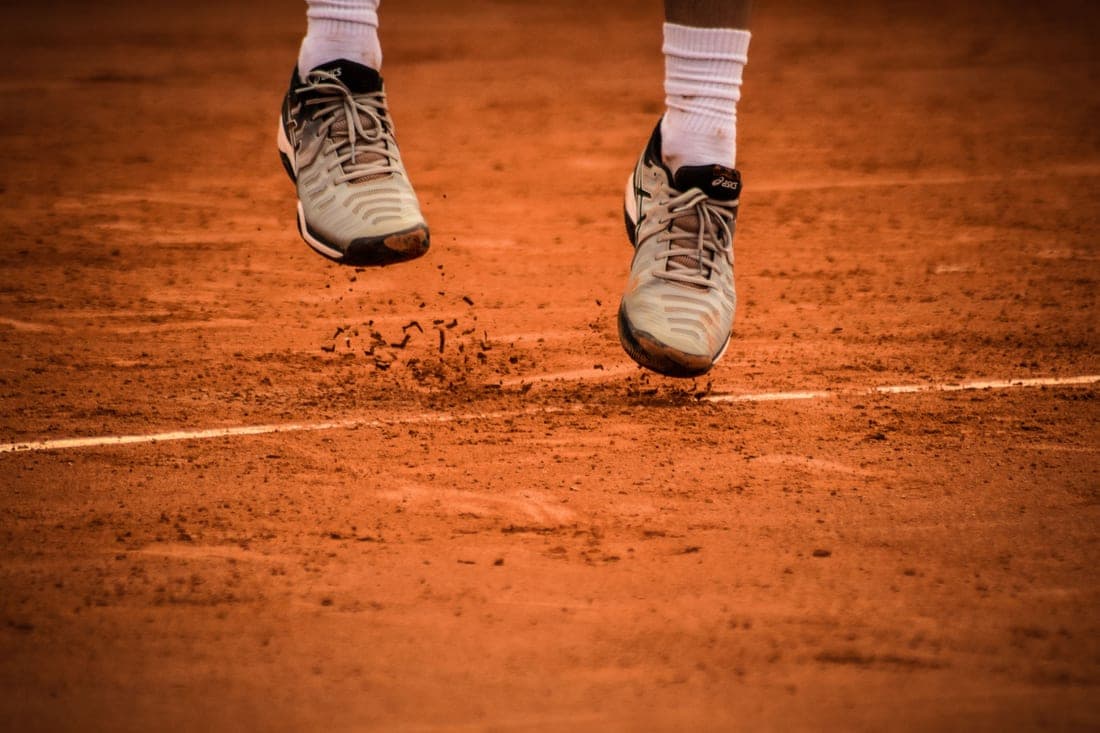 ASICS GEL-Resolution XMost supportive | Cushioning plus maximum structure | 8.75 criteria | |
| 3 | ASICS GEL-Resolution 9 ClayBest clay option | Heel cushioning on clay | 8.45 criteria | |
| 4 | 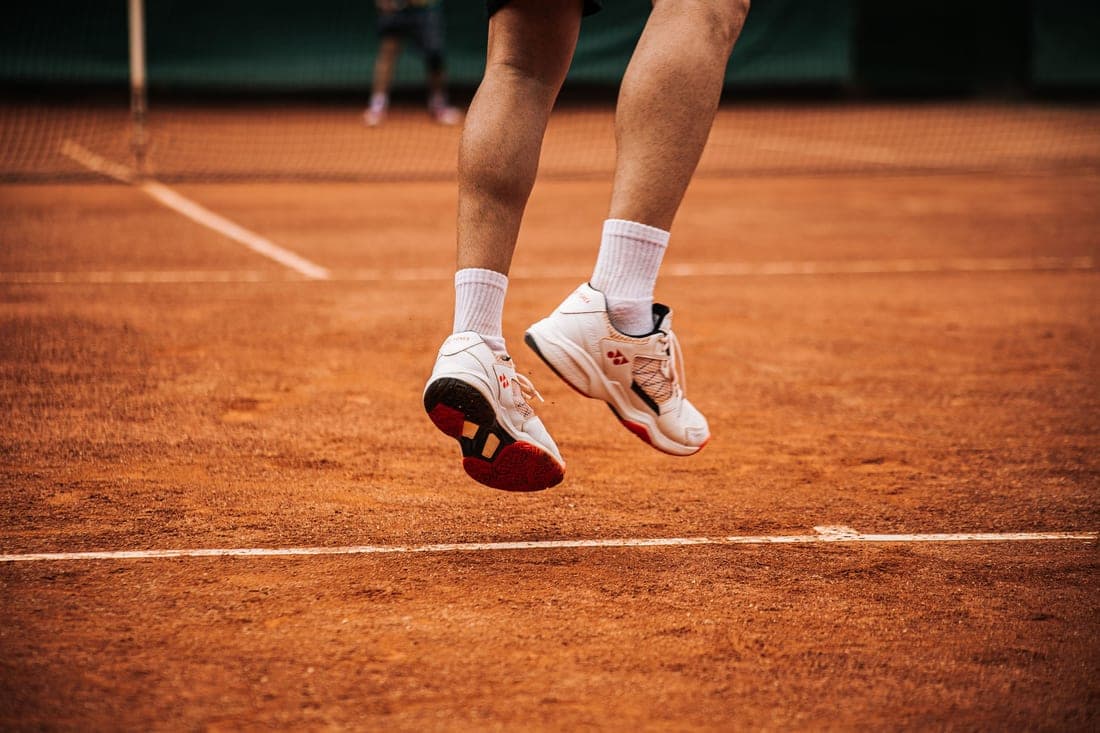 ASICS Court FF 3Best for custom insoles | A balanced option with room to fit an orthotic | 8.35 criteria |
The picks in detail
01New Balance Fresh Foam X CT-Rally v2
Top pickBest for: Maximum measured heel cushioning
116 SA at the heel is the highest shock absorption figure in RunRepeat's hard-court set, sitting on a 33.3 mm heel stack with 20.2 mm at the forefoot. If the impact your heel takes is the thing limiting how much you can play, this is the shoe that reduces it most.
The forefoot figure of 78 SA matters too. Plantar fascia pain is not purely a heel-strike phenomenon — the fascia is loaded through the whole stance phase — and a shoe that cushions only at the back leaves the forefoot loading unchanged.
What makes it recommendable rather than merely soft is that torsional rigidity stays at 5/5. High-stack shoes frequently wobble laterally, and a wobble is its own injury risk on a tennis court.
Our score
- Lateral stability
- 8.5
- Cushioning
- 10.0
- Outsole durability
- 7.5
- Fit accommodation
- 8.0
- Lightness
- 6.0
- Overall
- 8.9
Verified specs
- RunRepeat score
- 92 — Best Shock Absorption
- Heel stack
- 33.3 mm
- Forefoot stack
- 20.2 mm
- Heel shock absorption
- 116 SA
- Forefoot shock absorption
- 78 SA
- Torsional rigidity
- 5/5
Specs as published by RunRepeat, checked September 2026.
Buy if
- Heel impact is what stops you playing
- You play on concrete-base hard courts
- You want cushioning without lateral instability
Pass if
- You want ground feel and court connection
- Outsole life is your main cost
- You prefer a low, firm platform
02ASICS GEL-Resolution X
Most supportiveBest for: Cushioning plus maximum structure
98 SA of heel shock absorption on a 30.8 mm heel stack, and RunRepeat specifically note the shoe suits players who need extra stability for flat feet or overpronation — both of which are associated with plantar fascia strain.
The structural case is the strong one here: 5/5 torsional rigidity and 5/5 heel counter stiffness. A rigid heel counter holds the calcaneus steady, which reduces the fascia's workload in a way that cushioning alone does not.
At 417 g it is heavy, and if your heel pain is aggravated by general fatigue rather than by impact, that weight works against you. Read your own pattern before buying.
Our score
- Lateral stability
- 10.0
- Cushioning
- 8.5
- Outsole durability
- 9.5
- Fit accommodation
- 8.0
- Lightness
- 3.5
- Overall
- 8.7
Verified specs
- RunRepeat score
- 90 — Best Stability
- Weight
- 14.7 oz / 417 g (men's 9)
- Heel / forefoot stack
- 30.8 mm / 21.9 mm
- Drop
- 8.9 mm
- Torsional rigidity
- 5/5
- Heel counter stiffness
- 5/5
- Heel shock absorption
- 98 SA
- Outsole wear
- 0.6 mm depth, 90.4 HC
Specs as published by RunRepeat, checked September 2026.
Buy if
- You overpronate or have flat feet
- You want heel control as well as cushioning
- You also wear outsoles out quickly
Pass if
- Fatigue rather than impact triggers your pain
- You want the softest heel available
- You overheat easily
03ASICS GEL-Resolution 9 Clay
Best clay optionBest for: Heel cushioning on clay
97 SA at the heel and 73 SA at the forefoot, on a 31.7 mm heel stack with a 10.2 mm drop — and a 5/5 torsional rating from the TPU shank.
The higher drop is worth noticing. A 10.2 mm heel-to-toe drop reduces the stretch demand on the Achilles and, indirectly, on the plantar fascia, compared with a flatter platform. That is a genuine consideration for this problem.
Clay is also a softer surface than acrylic over concrete, so if you have the option of playing on it, the surface change may do more than the shoe change.
Our score
- Lateral stability
- 9.5
- Cushioning
- 8.5
- Outsole durability
- 9.5
- Fit accommodation
- 7.5
- Lightness
- 5.5
- Overall
- 8.4
Verified specs
- RunRepeat score
- 89
- Weight
- 13.0 oz / 369 g
- Heel / forefoot stack
- 31.7 mm / 21.5 mm
- Drop
- 10.2 mm
- Traction
- 0.82 coefficient on clay
- Torsional rigidity
- 5/5
- Heel counter stiffness
- 4/5
- Outsole
- 88.5 HC, 0.8 mm wear, 4.6 mm thick
- Toebox at big toe
- 68.4 mm
Specs as published by RunRepeat, checked September 2026.
Buy if
- You play clay and want maximum heel protection
- A higher drop suits your Achilles
- You want structure as well as cushion
Pass if
- You play hard court only
- You run hot — the upper is not breathable
- You want the lightest option
04ASICS Court FF 3
Best for custom insolesBest for: A balanced option with room to fit an orthotic
If you have been prescribed an orthotic, the shoe's job changes: it has to accommodate the device without cramping the foot. The Court FF 3's 101.8 mm forefoot — the widest RunRepeat have measured — gives you the volume to do that.
It is also their highest-scoring hard-court shoe at 93, with a 28.8 mm heel and 20.6 mm forefoot stack, so you are not sacrificing shoe quality to gain room.
Its heel shock absorption is in the average range rather than at the top of it. This is the pick when the orthotic is doing the cushioning work and the shoe needs to house it.
Our score
- Lateral stability
- 8.5
- Cushioning
- 8.0
- Outsole durability
- 8.5
- Fit accommodation
- 9.5
- Lightness
- 6.5
- Overall
- 8.3
Verified specs
- RunRepeat score
- 93 — Best Overall, hard court
- Heel stack
- 28.8 mm
- Forefoot stack
- 20.6 mm
- Toebox width (widest)
- 101.8 mm
- Outsole hardness
- 85.3 HC
- Dremel wear
- 0.4 mm cavity
Specs as published by RunRepeat, checked September 2026.
Buy if
- You wear a prescribed orthotic
- You need volume as well as cushioning
- You want a strong all-round shoe
Pass if
- You need maximum heel shock absorption
- You want an outsole guarantee
- You play mostly clay
First, the part a shoe cannot do
Plantar fasciitis is a medical condition, and footwear is one input among several. If you have heel pain that is worst on your first steps in the morning, that persists for weeks, or that changes how you walk, see a physiotherapist or a doctor. Calf and fascia loading programs have better evidence behind them than any shoe does.
What a shoe can do is reduce the load that provokes it — impact at the heel, strain through the arch, and instability that makes the fascia work harder to control the foot. Those are real, and they are measurable, which is what this page is about.
The three properties that matter
- 01Heel shock absorption (SA). How much impact energy the heel unit absorbs. RunRepeat's figures here range from 89 SA to 116 SA — a large spread.
- 02Heel-to-toe drop. A higher drop shortens the effective length the Achilles and fascia have to stretch through. The GEL-Resolution 9 Clay's 10.2 mm is the highest here.
- 03Rearfoot control. A stiff heel counter and high torsional rigidity keep the heel bone steady, so the fascia is not doing stabilizing work it is not designed for.
| Shoe | Heel SA | Heel stack | Torsional rigidity |
|---|---|---|---|
| New Balance CT-Rally v2 | 116 SA | 33.3 mm | 5/5 |
| ASICS GEL-Resolution X | 98 SA | 30.8 mm | 5/5 |
| ASICS GEL-Resolution 9 Clay | 97 SA | 31.7 mm | 5/5 |
| adidas Barricade 14 | 89 SA | 26.3 mm | Not published |
The Barricade 14 is in that table as a counterexample rather than a pick. It is an excellent shoe with genuine court feel, and its 26.3 mm heel and 47 SA forefoot are exactly what you do not want when the fascia is the limiting tissue.
Insoles and orthotics
Most stock tennis insoles are thin, flat and unremarkable, and replacing them is one of the cheapest interventions available. A supportive aftermarket insole or a prescribed orthotic changes the arch support meaningfully more than swapping between two well-cushioned shoes will.
If you are going that route, buy the shoe for volume and structure rather than for its stock cushioning — which is the specific case for the Court FF 3 above.
Surface, and the variable nobody mentions
Acrylic over concrete is the least forgiving surface in the sport. Clay and Har-Tru absorb a meaningful fraction of impact before it reaches your foot, and indoor hard courts on a sprung base are gentler than outdoor ones on slab.
If heel pain is limiting your tennis and you have access to clay, moving some of your playing time onto it is likely to do more than any shoe on this page. That is not the answer a gear site is supposed to give, but it is the true one.
Common questions
Which tennis shoe has the most cushioning?
Of the shoes RunRepeat has measured, the New Balance Fresh Foam X CT-Rally v2 leads with 116 SA of heel shock absorption on a 33.3 mm stack — the highest figure in their hard-court set.
Does heel drop matter for plantar fasciitis?
A higher heel-to-toe drop reduces how far the Achilles and, indirectly, the plantar fascia have to stretch. The GEL-Resolution 9 Clay's 10.2 mm drop is the highest among the shoes here. It is one factor among several, not a cure.
Should I replace the insole in my tennis shoes?
It is one of the cheapest and most effective changes available. Stock court insoles are usually thin and flat; a supportive aftermarket insole or a prescribed orthotic changes arch support more than swapping between two well-cushioned shoes.
Can tennis shoes cure plantar fasciitis?
No. Footwear reduces the load that provokes it; it does not treat it. Persistent heel pain needs a physiotherapist or doctor, and loading programs have better evidence behind them than any shoe.
Is clay easier on your feet than hard court?
Yes. Clay and Har-Tru absorb a meaningful fraction of impact before it reaches your foot. If heel pain is limiting your play and clay is available, moving some sessions onto it usually does more than a shoe change.
Read next
Sources
- 01RunRepeat — Best Hard Court Tennis Shoes
- 02RunRepeat — Best Tennis Shoes
- 03RunRepeat — ASICS GEL-Resolution X lab review
- 04RunRepeat — ASICS GEL-Resolution 9 Clay lab review
Every source above was retrieved while writing this page. Specifications are quoted from the listing or manufacturer page cited, not from memory.