Guide
Racket balance and swingweight explained
These are the two specs that explain why two rackets of identical weight feel nothing alike — and the pair that most buying guides skip entirely.
By Janet H.Updated

The short answer
Balance is where a racket's mass sits along its length, expressed in points head light or head heavy from the midpoint. Swingweight measures resistance to rotation around the handle. A light, head-heavy frame can swing heavier than a heavier head-light one — which is why swingweight predicts feel better than weight.
Disclosure — we earn a commission on qualifying purchases made through links on this page, at no extra cost to you. It never changes which product we rank first. How this site is funded.
Balance: where the mass sits
Balance is measured as the distance from the butt cap to the racket's balance point. On a standard 27-inch frame the midpoint is 13.5 inches, and balance is quoted as points away from that midpoint — one point is one eighth of an inch.
- Head light (HL) — balance point closer to the handle. Quicker through the air, easier at the net. Most performance frames are 4-8 points HL.
- Even balance — balance point at the midpoint. Rare in modern frames.
- Head heavy (HH) — balance point toward the hoop. More momentum through the ball, slower to reposition. Common on light beginner frames.
The logic manufacturers follow is consistent: light frames are made head heavy so they still carry momentum, and heavy frames are made head light so they remain maneuverable. Balance is the compensating variable.
Swingweight: the number that combines them
Swingweight is the moment of inertia about an axis near the handle, measured on a specialist machine and quoted as a unitless number in the high 200s to low 300s. It combines how much mass there is with how far that mass sits from your hand.
Because distance is squared in the underlying physics, where the mass sits matters disproportionately. That is why a 275 g head-heavy frame can out-swing a 278 g head-light one by 21 points.
| Racket | Strung weight | Balance | Swingweight |
|---|---|---|---|
| HEAD Speed MP UL 2026 | 278 g | 2 pts HL | 291 |
| Babolat Pure Drive Lite 2025 | 283 g | 1 pt HL | 295 |
| Wilson Clash 100 v3 | 312 g | 7 pts HL | 308 |
| Babolat Boost Drive | 275 g | 3 pts HH | 312 |
| HEAD Speed Pro 2026 | 326 g | 7 pts HL | 328 |
| Prince O3 Legacy 120 | 275 g | 5 pts HH | 330 |
Read that table from the bottom up and the point lands: the two highest swingweights belong to two of the three lightest frames, because both are head heavy.
Twistweight, the third number
Less commonly published but worth knowing. Twistweight is resistance to rotation about the racket's long axis — how much the face turns when you hit the ball off-center toward the edge.
It is why two frames with the same swingweight can feel differently stable on a stretched return. Mass at 3 and 9 o'clock raises twistweight; mass at 12 o'clock raises swingweight. That is the basis of the most common customization in the sport — see how much should a tennis racket weigh.
Which number to shop on
- 01Swingweight first. It predicts whether you will be on time. Under 305 for a developing swing, 305-318 for club play, 318-330 for competitive.
- 02Static weight second. It predicts stability against pace and fatigue over three sets.
- 03Balance third. It is mostly a consequence of the first two, but it tells you how the frame will feel at the net specifically.
Changing them yourself
Lead tape is cheap, reversible and the standard tool. Two grams at a time, one session between changes:
- 3 and 9 o'clock — raises twistweight substantially, swingweight modestly. The first thing to try.
- 12 o'clock — raises swingweight sharply. Two grams here is very noticeable.
- Under the grip — raises static weight while lowering swingweight. Used to counterbalance hoop weight.
Play a frame stock for at least a month first. You cannot judge whether a racket needs weight until you know what it does without it.
Now pick yours
The specs above are only useful once they resolve into something you can buy. These are the products that match what this page has just explained.
Our picks
| # | Product | Best for | Score | Price |
|---|---|---|---|---|
| 1 | 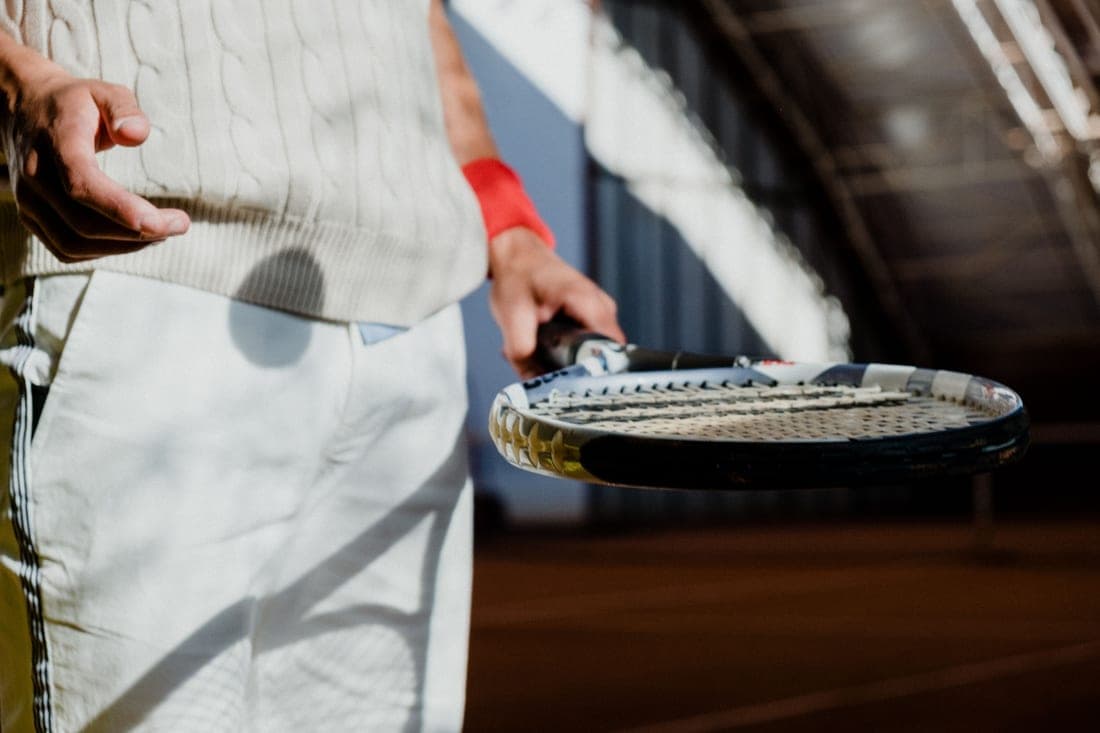 Babolat Boost Drive275 g, 312 swingweight | Head heavy, low weight | 8.05 criteria | |
| 2 | 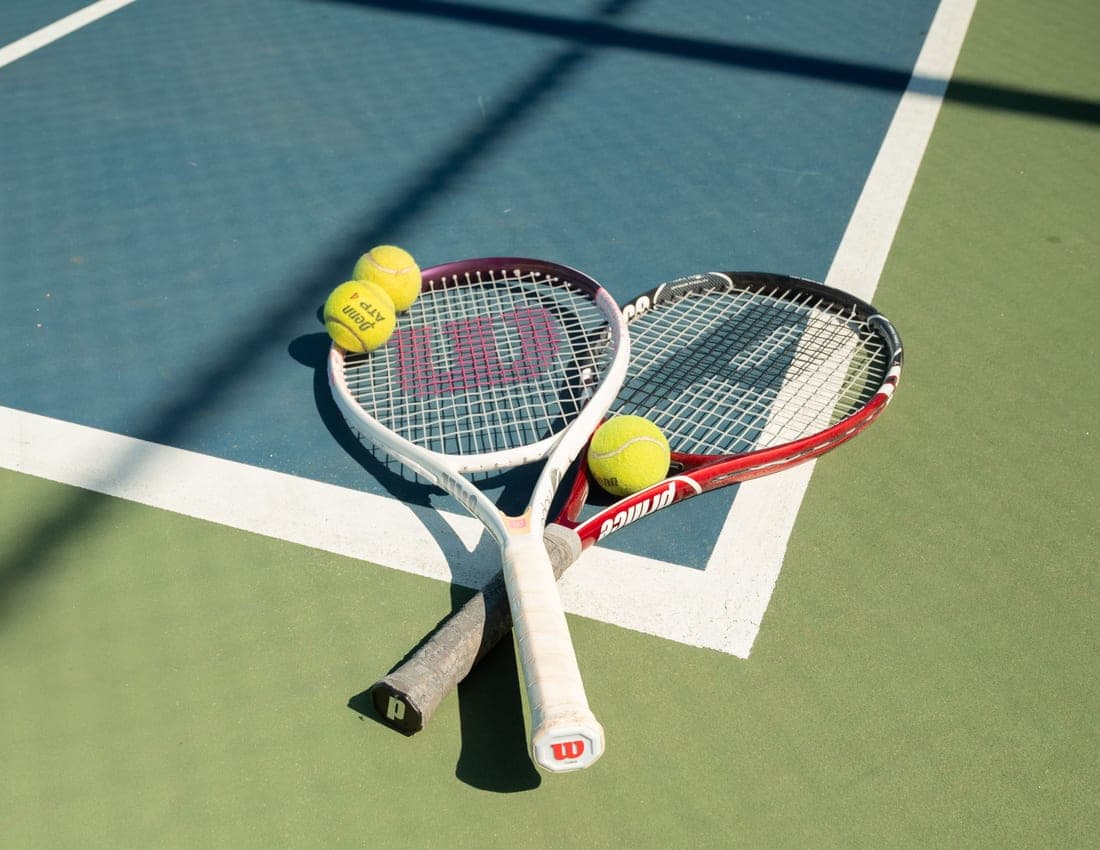 HEAD Speed MP UL 2026278 g, 291 swingweight | Low swingweight | 8.45 criteria | |
| 3 | HEAD Speed Pro 2026326 g, 328 swingweight, 7 pts HL | High swingweight, very head light | 8.45 criteria |
01Babolat Boost Drive
275 g, 312 swingweightBest for: Head heavy, low weight
This frame is the clearest illustration on the site of why static weight misleads. It is the lightest adult racket in our roundups at 275 g strung, and its 312 swingweight is higher than that of frames 40 g heavier.
The reason is the 3-points-head-heavy balance. Mass sitting further up the hoop is mass further from your hand, and distance matters more than quantity when you are rotating the frame.
The practical consequence is free depth. A head-heavy frame carries momentum through the ball even on a tentative swing, which is exactly what a new player needs.
Our score
- Power
- 8.0
- Control
- 6.5
- Forgiveness
- 8.5
- Arm comfort
- 7.0
- Maneuverability
- 8.5
- Overall
- 8.0
Verified specs
- Head size
- 105 sq in
- Strung weight
- 9.7 oz / 275 g
- Balance
- 3 pts head heavy
- Swingweight
- 312
- Stiffness (RA)
- 65
- Beam
- 23 / 26 / 23 mm
- String pattern
- 16x19
- Length
- 27 in
Specs as published by Tennis Warehouse, checked September 2026.
Buy if
- You want the frame to carry the ball for you
- You are learning and swing tentatively
- You want a light frame with free depth
Pass if
- You want fast hands at the net
- You already generate pace
- You want a low swingweight
02HEAD Speed MP UL 2026
278 g, 291 swingweightBest for: Low swingweight
278 g strung — 3 g heavier than the Boost Drive — with a 291 swingweight, 21 points lower. That gap is entirely explained by balance: this frame is 2 points head light.
291 is the lowest swingweight in any of our adult roundups, and it is what makes this the frame for a player who keeps getting to the ball late.
The cost is plow-through. Low swingweight means less momentum behind the ball, so depth has to come from your swing rather than from the racket.
Our score
- Power
- 6.5
- Control
- 8.5
- Forgiveness
- 7.0
- Arm comfort
- 9.0
- Maneuverability
- 9.5
- Overall
- 8.4
Verified specs
- Head size
- 100 sq in
- Strung weight
- 9.8 oz / 278 g
- Balance
- 2 pts head light
- Swingweight
- 291
- Stiffness (RA)
- 61
- Beam
- 23 mm uniform
- String pattern
- 16x19
- Length
- 27 in
Specs as published by Tennis Warehouse, checked September 2026.
Buy if
- You keep getting to the ball late
- You want the quickest frame available
- Arm comfort matters to you
Pass if
- You want free depth
- You face heavy hitters
- You want maximum stability
03HEAD Speed Pro 2026
326 g, 328 swingweight, 7 pts HLBest for: High swingweight, very head light
326 g strung and 7 points head light, with a 328 swingweight. This is the classic tour-derived configuration: substantial total mass, concentrated toward the handle.
That distribution gives you two things at once — enough overall mass to absorb a heavy ball, and enough handle-side weight that the frame is still maneuverable at the net for its mass.
It is still a 328 swingweight, which is demanding. Head-light balance reduces the cost of mass; it does not eliminate it.
Our score
- Power
- 6.5
- Control
- 10.0
- Forgiveness
- 6.5
- Arm comfort
- 8.5
- Maneuverability
- 7.0
- Overall
- 8.4
Verified specs
- Head size
- 100 sq in
- Strung weight
- 11.5 oz / 326 g
- Balance
- 7 pts head light
- Swingweight
- 328
- Stiffness (RA)
- 61
- Beam
- 23 mm uniform
- String pattern
- 18x20
- Length
- 27 in
Specs as published by Tennis Warehouse, checked September 2026.
Buy if
- You want mass without a sluggish feel
- You play competitive tennis
- You want maximum stability against pace
Pass if
- You tire late in matches
- You want a quick, whippy frame
- You need help generating depth
Common questions
What is swingweight in a tennis racket?
Resistance to rotation around an axis near the handle, measured on a specialist machine and quoted as a number in the high 200s to low 300s. It combines how much mass a frame has with how far that mass sits from your hand, which is why it predicts feel better than weight alone.
What does head light mean?
The balance point sits closer to the handle than the racket's midpoint, quoted in points — one point is an eighth of an inch. Head-light frames are quicker to reposition and easier at the net. Most performance rackets are 4-8 points head light.
Why does my lighter racket feel harder to swing?
Because it is head heavy. Mass further from your hand contributes disproportionately to swingweight. The Babolat Boost Drive at 275 g has a 312 swingweight; the HEAD Speed MP UL at 278 g has 291.
What swingweight should I use?
Under 305 for a developing swing, 305-318 for the broad club range, 318-330 for competitive play. If you are consistently late on returns, yours is too high regardless of what the racket weighs.
What is twistweight?
Resistance to the face turning about the racket's long axis when you hit off-center toward the edge. Mass at 3 and 9 o'clock raises it, which is why that is the most common lead-tape placement.
Read next
Sources
- 01Tennis Warehouse — Best Tennis Racquets gear guide
- 02Tennis Warehouse — Best Tennis Racquets for Beginners
- 03Tennis Warehouse — Babolat Boost Drive
- 04Tennis Warehouse — HEAD Speed MP UL 2026
- 05Tennis Warehouse — HEAD Speed Pro 2026
- 06Tennis Warehouse — Prince O3 Legacy 120
Every source above was retrieved while writing this page. Specifications are quoted from the listing or manufacturer page cited, not from memory.