Buying guide
Best tennis rackets for advanced and club players in 2026
At this level the racket's job inverts. It is no longer helping you create pace — it is containing the pace you already produce.
By Janet H.Updated

The short answer
For competitive league play, the Wilson Blade 98 16x19 v10 is the best all-round choice: 323 g, a 61 RA thin beam and a 16x19 pattern that keeps spin accessible. If you want a dense pattern, the HEAD Speed Pro 2026 pairs an 18x20 with a 100 sq in head; for heavy spin, the Babolat Pure Aero 98.
Disclosure — we earn a commission on qualifying purchases made through links on this page, at no extra cost to you. It never changes which product we rank first. How this site is funded.
Our picks
| # | Product | Best for | Score | Price |
|---|---|---|---|---|
| 1 | 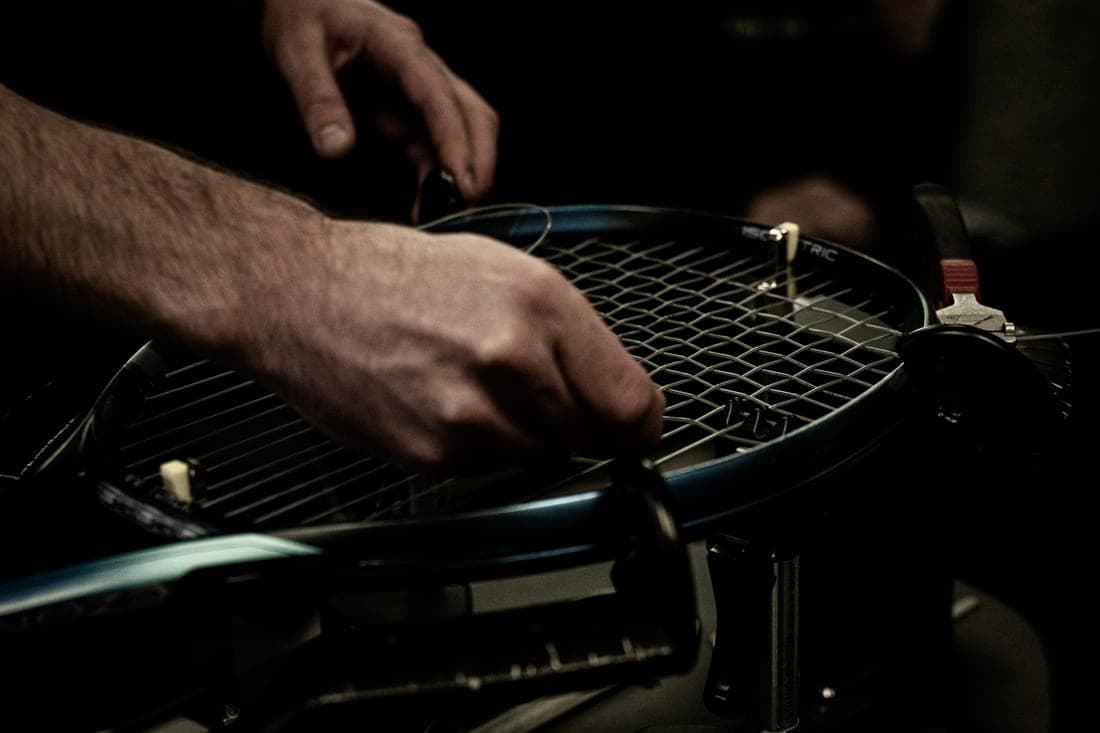 Wilson Blade 98 16x19 v10Top pick | All-court competitive play | 8.85 criteria | |
| 2 | 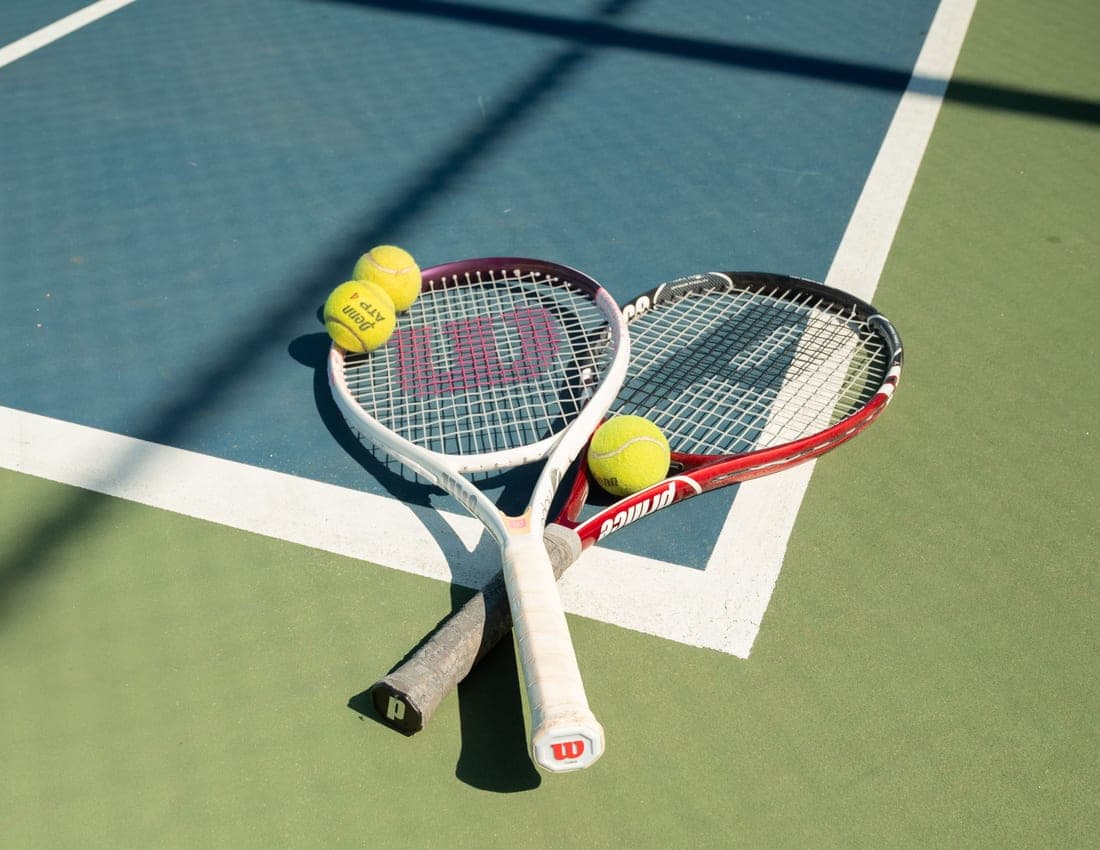 HEAD Speed Pro 2026Most control | Dense-pattern precision | 8.55 criteria | |
| 3 |  Babolat Pure Aero 98 2026Best for spin | Heavy spin with a control bias | 8.45 criteria | |
| 4 |  Yonex VCORE 100 (8th Gen)Most forgiving | Spin with more margin | 8.25 criteria | |
| 5 | HEAD Extreme MP 2026Best beam for racket-head speed | Spin-first baseline play | 8.15 criteria |
The picks in detail
01Wilson Blade 98 16x19 v10
Top pickBest for: All-court competitive play
There is a reason the Blade 98 turns up in more club bags than anything else in this bracket. A 21.5 mm box beam at 61 RA gives you the flex and dwell time that produces feel, and the 16x19 pattern keeps enough string movement that you can still shape the ball heavily. Most control frames make you choose between precision and spin; this one refuses to.
The 322 swingweight at 323 g strung is squarely in the competitive band — enough mass to absorb a heavy ball without being a chore to swing through a three-set match. Wilson's 2026 revision tapers the beam slightly, which adds a small amount of power without moving the frame out of the control category.
It is not the most forgiving frame here. A 98 sq in head with a thin beam punishes a genuinely bad contact point, and if your timing is inconsistent you will notice. That is the trade every control frame asks you to make.
Our score
- Power
- 7.0
- Control
- 9.5
- Forgiveness
- 7.0
- Arm comfort
- 8.5
- Maneuverability
- 7.5
- Overall
- 8.8
Verified specs
- Head size
- 98 sq in
- Strung weight
- 11.4 oz / 323 g
- Balance
- 4 pts head light
- Swingweight
- 322
- Stiffness (RA)
- 61
- Beam
- 21.5 / 21.5 / 20.5 mm
- String pattern
- 16x19
- Length
- 27 in
Specs as published by Tennis Warehouse, checked September 2026.
Buy if
- You play competitive league or tournament tennis
- You want feel without giving up spin
- You take full swings and need the ball to stay in
Pass if
- Your contact point is still inconsistent
- You need the frame to add depth
- You want maximum sweet-spot area
02HEAD Speed Pro 2026
Most controlBest for: Dense-pattern precision
An 18x20 string pattern in a 100 sq in head is an unusual and useful combination. Dense patterns normally come in 95-98 sq in frames, where the small head compounds the low launch angle and leaves very little margin. HEAD's version gives you the tight, predictable string bed without shrinking the target.
At 326 g strung with a 328 swingweight it is the heaviest frame in this roundup, and it plays like it: exceptionally stable against pace, and demanding if your legs are tired. The 61 RA keeps it comfortable despite the mass, which is what the added boron in the shaft is there to manage.
Spin is where you pay. An 18x20 bed moves less, so you generate less snapback and less dip. Flat, precise hitters love this frame; heavy topspin players usually do not.
Our score
- Power
- 6.5
- Control
- 10.0
- Forgiveness
- 6.5
- Arm comfort
- 8.5
- Maneuverability
- 7.0
- Overall
- 8.5
Verified specs
- Head size
- 100 sq in
- Strung weight
- 11.5 oz / 326 g
- Balance
- 7 pts head light
- Swingweight
- 328
- Stiffness (RA)
- 61
- Beam
- 23 mm uniform
- String pattern
- 18x20
- Length
- 27 in
Specs as published by Tennis Warehouse, checked September 2026.
Buy if
- You hit flat and long and want the ball to come down
- You want maximum stability against pace
- You serve big and want predictable placement
Pass if
- Topspin is central to your game
- You find 328 swingweights tiring late in matches
- You need help generating depth
03Babolat Pure Aero 98 2026
Best for spinBest for: Heavy spin with a control bias
The Pure Aero line is built around spin, and the 98 is the version that lets you aim it. A 21/23/22 mm beam is much thinner than the standard Pure Aero profile, and a 16x20 pattern is tighter than the family's usual 16x19 — both changes trade raw launch for predictability.
At 323 g with a 322 swingweight and 6 points head light, the mass distribution is genuinely player-oriented. This is not a club frame wearing a pro paint job; it is a control frame with the Aero family's aerodynamic beam shape.
At 66 RA it is stiffer than the Blade or the Speed Pro, and you feel that on off-center contact. If comfort is a live concern, the Blade covers similar ground more softly.
Our score
- Power
- 8.0
- Control
- 8.5
- Forgiveness
- 7.0
- Arm comfort
- 7.0
- Maneuverability
- 7.5
- Overall
- 8.4
Verified specs
- Head size
- 98 sq in
- Strung weight
- 11.4 oz / 323 g
- Balance
- 6 pts head light
- Swingweight
- 322
- Stiffness (RA)
- 66
- Beam
- 21 / 23 / 22 mm
- String pattern
- 16x20
- Length
- 27 in
Specs as published by Tennis Warehouse, checked September 2026.
Buy if
- You play with heavy topspin and want more precision
- You want an aerodynamic beam for racket-head speed
- You are moving down from a 100 sq in Aero
Pass if
- You have arm sensitivity
- You hit flat
- You want the largest sweet spot in this bracket
04Yonex VCORE 100 (8th Gen)
Most forgivingBest for: Spin with more margin
Plenty of strong club players do not want a 98 sq in head, and there is no reason they should. The VCORE 100 offers the spin orientation of this bracket with the extra margin of a 100 sq in face, and at 65 RA it is softer than the Pure Aero 98 it competes with.
The 325 swingweight tells you this is not a soft option — it is a full-weight frame that happens to be forgiving. Yonex's wider grommets let the mains slide and snap back freely, which is the actual mechanism behind topspin generation.
Where it gives ground is absolute precision. If you are missing long, the Blade or the Speed Pro will help you more.
Our score
- Power
- 8.5
- Control
- 7.5
- Forgiveness
- 8.0
- Arm comfort
- 8.5
- Maneuverability
- 7.0
- Overall
- 8.2
Verified specs
- Head size
- 100 sq in
- Strung weight
- 11.2 oz / 318 g
- Balance
- 4 pts head light
- Swingweight
- 325
- Stiffness (RA)
- 65
- Beam
- 24 / 26 / 23 mm
- String pattern
- 16x19
- Length
- 27 in
Specs as published by Tennis Warehouse, checked September 2026.
Buy if
- You want spin but not a 98 sq in head
- You want a softer frame than the Aero
- You play a lot of doubles and want reach
Pass if
- You want maximum control
- You prefer a dense string pattern
- You hit flat and need the ball contained
05HEAD Extreme MP 2026
Best beam for racket-head speedBest for: Spin-first baseline play
The Extreme MP is HEAD's dedicated spin frame and it is the most aggressive spin geometry here: a 23/26/21 mm beam that tapers sharply at the tip, plus widened spin grommets that maximize string movement. At 318 g with a 318 swingweight it is also the easiest frame in this roundup to swing fast.
For 2026 HEAD added boron fibers to the shaft. The practical effect is that the frame stays connected through impact instead of feeling hollow, which is the usual failure mode of light, spin-oriented frames.
The 67 RA puts it between the Blade and the Pure Aero for comfort. If you want the most spin per unit of effort and can live with a slightly lower control ceiling, this is the value play in the bracket.
Our score
- Power
- 8.5
- Control
- 7.5
- Forgiveness
- 8.0
- Arm comfort
- 7.5
- Maneuverability
- 8.0
- Overall
- 8.1
Verified specs
- Head size
- 100 sq in
- Strung weight
- 11.2 oz / 318 g
- Balance
- 4 pts head light
- Swingweight
- 318
- Stiffness (RA)
- 67
- Beam
- 23 / 26 / 21 mm
- String pattern
- 16x19
- Length
- 27 in
Specs as published by Tennis Warehouse, checked September 2026.
Buy if
- You want maximum topspin from a moderate swing
- You grind from the baseline
- You want a lighter swinging frame at this level
Pass if
- You need the highest control ceiling
- You play a flat, first-strike game
- You want a thin box beam feel
The inversion: what the frame is for at this level
A beginner's racket adds pace and forgiveness because the player cannot yet produce either. A club player's racket removes pace and adds precision because the player produces plenty already. Every spec difference in this bracket follows from that inversion.
- Thinner beams flex more and return less energy — lower launch, more dwell, more feel.
- Denser patterns move less, which lowers the launch angle and makes placement more repeatable.
- Higher swingweights resist twisting when a heavy ball arrives, so the face stays where you aimed it.
- Smaller heads shrink the sweet spot in exchange for a more direct, connected response.
Specs side by side
| Racket | Head | Strung weight | Swingweight | RA | Pattern |
|---|---|---|---|---|---|
| Wilson Blade 98 v10 | 98 sq in | 323 g | 322 | 61 | 16x19 |
| HEAD Speed Pro 2026 | 100 sq in | 326 g | 328 | 61 | 18x20 |
| Babolat Pure Aero 98 2026 | 98 sq in | 323 g | 322 | 66 | 16x20 |
| Yonex VCORE 100 (8th Gen) | 100 sq in | 318 g | 325 | 65 | 16x19 |
| HEAD Extreme MP 2026 | 100 sq in | 318 g | 318 | 67 | 16x19 |
String pattern is the decision most people get wrong
A 16x19 pattern has wider spacing, so the main strings slide sideways on impact and snap back, brushing up the back of the ball. That snapback is the physical mechanism behind topspin. An 18x20 restricts that movement, which lowers your launch angle and makes the ball travel flatter and more predictably.
The practical rule: if your misses are long and flat, a denser pattern helps. If your misses are into the net because you cannot get enough dip, an open pattern helps more. Buying an 18x20 because it sounds more advanced is how good players end up fighting their equipment for a season.
Customization, briefly
Once you are in this bracket, lead tape becomes a legitimate tool rather than an affectation. Two grams at 3 and 9 o'clock raises twistweight and stabilizes the face against off-center contact; the same weight at 12 o'clock raises swingweight and plow-through but slows the frame down noticeably.
Our advice is to play a stock frame for at least a month before adding anything. You cannot tell whether a racket needs weight until you know what it does unweighted, and most customization regret comes from skipping that step.
Buying two of the same frame
If you compete, the second frame is not vanity. Strings break mid-match, and a spare strung to the same tension is the difference between finishing a match and forfeiting it. It also lets you rotate string age, which matters more than people expect — a bed that has lost 8 lb of tension plays like a different racket.
Frames from the same production run vary by a few grams. If matching matters to you, specialist retailers will weight-match a pair on request.
Common questions
What swingweight do advanced players use?
Commonly 320-335 for club and competitive play. All five frames here sit between 318 and 328. Higher swingweights are more stable against pace and more tiring over three sets, so the right number depends as much on your fitness as your level.
Is an 18x20 string pattern better than 16x19?
It is different, not better. An 18x20 lowers launch angle and improves placement repeatability; a 16x19 gives more spin and more margin. Choose based on whether your misses go long or into the net.
Should I use a tour frame if I play at 4.0 level?
Usually not. Genuine tour frames run 330 g and up with swingweights past 335, and they assume you produce all your own pace. The frames here are the competitive-club band, which is where most 4.0 and 4.5 players are better served.
How much does the racket actually matter at this level?
Less than string setup and far less than technique, but enough to notice. The main effect is confidence: a frame whose launch angle matches your swing lets you commit to shots instead of decelerating.
Do I need to match the weight of two frames?
If you compete seriously, yes — switching mid-match to a frame that swings differently is disruptive. For social league play, a few grams of variance is not worth worrying about.
Read next
Sources
- 01Tennis Warehouse — Best Tennis Racquets gear guide
- 02Tennis Warehouse — Best Tennis Racquets for Beginners
- 03Tennis Warehouse — Wilson Blade 98 16x19 v10
- 04Tennis Warehouse — HEAD Speed Pro 2026
- 05Tennis Warehouse — Babolat Pure Aero 98 2026
- 06Tennis Warehouse — Yonex VCORE 100 8th Gen
- 07Tennis Warehouse — HEAD Extreme MP 2026
Every source above was retrieved while writing this page. Specifications are quoted from the listing or manufacturer page cited, not from memory.