Comparison
Padel vs racquetball: a net changes everything
Racquetball is a sealed box with a live ceiling and no net. Padel has a net, a partner and tennis scoring. The shared wall vocabulary hides how different the two actually are.
By Janet H.Updated
The short answer
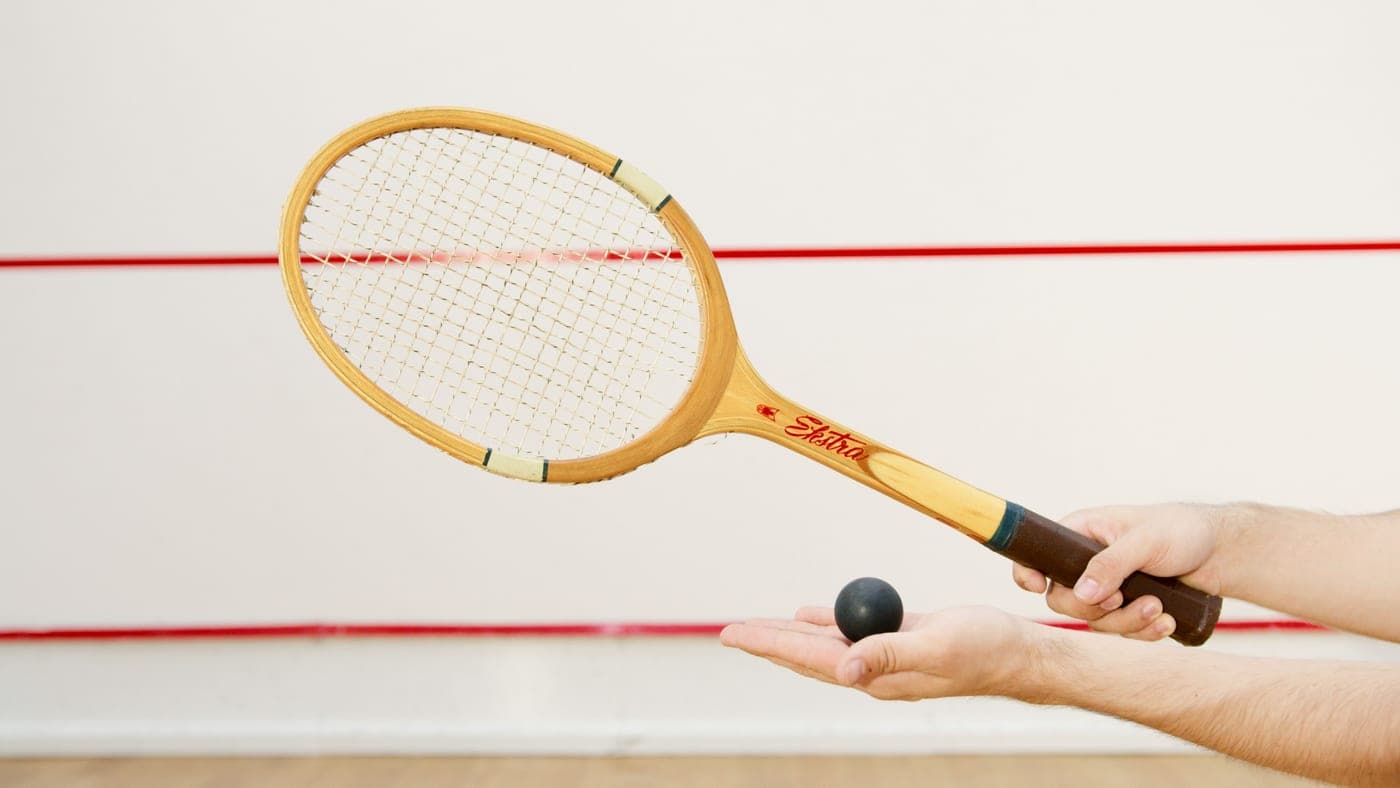
A racquetball court is 20 ft wide, 40 ft long and 20 ft high with a live ceiling and a front wall as the target, played with a strung racquet of up to 22 inches. A padel court is 10 m by 20 m with a net, no live ceiling, tennis scoring and a solid perforated racket. Padel is doubles; racquetball is usually singles.
Disclosure — we earn a commission on qualifying purchases made through links on this page, at no extra cost to you. It never changes which product we rank first. How this site is funded.
Our picks
| # | Product | Best for | Score | Price |
|---|---|---|---|---|
| 1 | 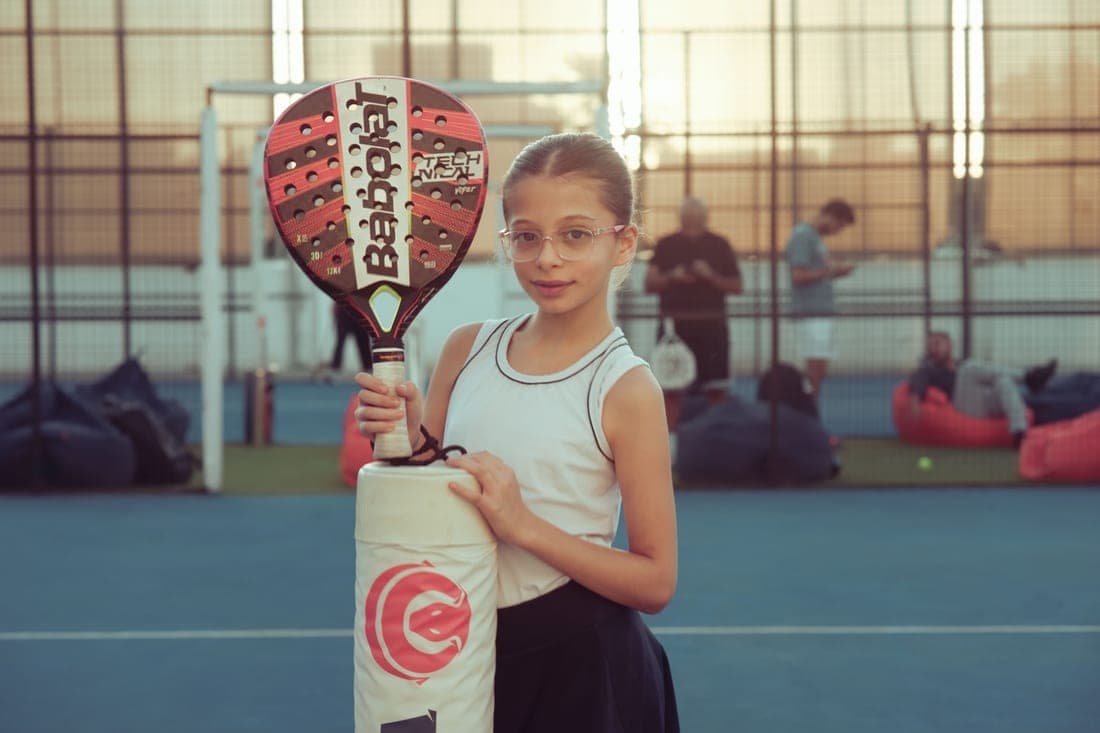 Babolat ContactBest first padel racket | Racquetball players trying padel | 8.54 criteria | |
| 2 | adidas RX Series LightMost control-oriented | Fast hands at the net | 8.24 criteria |
The picks in detail
01Babolat Contact
Best first padel racketBest for: Racquetball players trying padel
Racquetball players bring fast hands, excellent rebound reading and a very wristy stroke. The first two are gifts; the third is the thing to unlearn, and a soft control-first racket helps.
A round head with a soft EVA core at 340 g gives you the biggest centered sweet spot in the beginner band while you recalibrate to a ball that sits up rather than skidding.
Note the tether requirement — padel rules specify a non-elastic wrist cord of no more than 35 cm. Racquetball's thong serves the same purpose, so this will be familiar.
Our score
- Performance
- 8.5
- Comfort
- 9.0
- Durability
- 7.5
- Value
- 9.5
- Overall
- 8.5
Verified specs
- Shape
- Round
- Weight
- 340 g
- Core
- Soft EVA
- Face
- Composite
- Frame
- Composite
Specs as published by Padel Padel, checked September 2026.
Buy if
- You play racquetball and want to try padel
- You want maximum forgiveness
- You want to spend under $100
Pass if
- You are staying with racquetball
- You already play padel
- You want an attacking frame
02adidas RX Series Light
Most control-orientedBest for: Fast hands at the net
Racquetball's tight-quarters reflexes are a real advantage at the padel net, and a head-light racket is the one that lets you use them.
Padel Market describe the RX Series Light as easy-swinging and control-first, with a round shape, soft core, soft face and head-light balance.
If your instinct is to take everything early and volley, this is the frame that rewards it.
Our score
- Performance
- 8.5
- Comfort
- 8.5
- Durability
- 7.5
- Value
- 9.0
- Overall
- 8.2
Verified specs
- Shape
- Round
- Core
- Soft
- Face
- Soft
- Balance
- Head light
Specs as published by Padel Market, checked September 2026.
Buy if
- You want the fastest racket at the net
- You take balls early
- You want control-first characteristics
Pass if
- You want more power available
- You want a current-season model
- You want a heavier, more stable frame
The numbers
| Racquetball | Padel | |
|---|---|---|
| Court | 20 ft wide x 40 ft long x 20 ft high | 10 m x 20 m |
| Ceiling | Live — part of the game | None in play |
| Net | None | 88 cm at center, 92 cm at ends |
| Target | The front wall | Over the net into the opposite court |
| Format | Usually singles | Doubles almost always |
| Racquet | Strung, max 22 in including bumper | Solid, perforated, tethered |
| Ball | About 2.25 in, 1.4 oz, bounces 68-72 in from 100 in | Like a tennis ball, less pressure |
| Eyewear | Required in sanctioned events (ASTM-F803) | Not required |
The eyewear line is worth reading twice. USA Racquetball requires lensed protective eyewear meeting or exceeding the ASTM-F803 standard in sanctioned events, and failing to wear it is a technical foul. That tells you something about ball speed in a sealed 20-foot box.
The net is the fundamental difference
Racquetball has no net. The front wall is the target, every shot must reach it, and the ceiling, side walls and back wall are all live surfaces. It is a sealed environment where the ball is almost never out of play.
Padel has a net, and that makes it a tennis-family sport with wall consequences rather than a wall sport. You hit over the net into the opposite court; the glass only matters after the bounce. Hitting the wall on the full loses the point.
The practical upshot is that padel has a geometry racquetball does not: an attacking position at the net, a defensive position at the back, and the whole strategic game of moving from one to the other.
The ceiling, and what padel replaces it with
In racquetball a ceiling ball is the standard defensive shot: hit the ceiling near the front wall and the ball drops deep into the back court, buying you time to recover position.
Padel has no live ceiling. Its equivalent is the lob — a ball hit high over the opposing pair that lands deep, pushing them off the net and giving you time to take it. The function is identical even though the mechanism is not, which is why racquetball players often take to padel's tactical shape quickly.
What a racquetball background is worth
- Rebound reading. You already judge angles off walls instinctively. Padel's glass is faster and truer than a racquetball wall, but the skill is the same.
- Hand speed. Racquetball at close quarters is a reflex sport, and that is the single most valuable thing at the padel net.
- Tolerance for enclosed courts. Padel courts feel small to tennis players and enormous to racquetball players.
- Comfort letting a ball pass you. Tennis players find this deeply unnatural; you will not.
Physical demand and injury profile
Racquetball in a 20 by 40 foot box with a fast ball is an intense, short-burst sport with a genuine impact load and a real risk of eye injury — hence the mandatory protective eyewear in sanctioned play.
Padel is a longer-rally, lower-intensity sport played in doubles with a slower ball and no eyewear requirement. Its characteristic injury is lateral epicondylitis at the elbow, from repeated short impacts with a stiff solid racket — which is why a soft core is the sensible beginner choice.
Common questions
Is padel like racquetball?
Both use walls, and that is roughly where it ends. Racquetball has no net, a live ceiling and the front wall as the target; padel has a net, tennis scoring and walls that only matter after the bounce. Racquetball is usually singles; padel is doubles.
Is padel faster than racquetball?
No. A racquetball is small, light and struck in a sealed 20-foot-high box — fast enough that USA Racquetball mandates ASTM-F803 protective eyewear in sanctioned events. Padel's ball is slower and its rallies are longer.
Can I use a racquetball racquet for padel?
No. A racquetball racquet is strung and up to 22 inches long; a padel racket is solid, perforated and shorter. Each sport's rules specify its own implement.
Does racquetball help you play padel?
Yes — rebound reading and hand speed transfer directly, and you will be comfortable letting a ball pass you, which tennis players find unnatural. The wristy stroke is the habit to break.
Read next
Sources
- 01USA Racquetball — Rules: Courts and Equipment
- 02Wikipedia — Padel
- 03Padel Market — Best Padel Racket for Beginners 2026
Every source above was retrieved while writing this page. Specifications are quoted from the listing or manufacturer page cited, not from memory.