Guide
Padel racket shapes: round vs teardrop vs diamond
Three outlines, one mechanism. Shape moves the mass, the mass moves the sweet spot, and the sweet spot decides whether the racket helps you or fights you.
By Janet H.Updated

The short answer
Round rackets put the sweet spot in the geometric center with a naturally head-light balance — forgiving and controllable. Teardrop shifts it slightly higher with a medium balance — the all-round compromise. Diamond puts it high in the head with a head-heavy balance — maximum smash power and the smallest sweet spot.
Disclosure — we earn a commission on qualifying purchases made through links on this page, at no extra cost to you. It never changes which product we rank first. How this site is funded.
One mechanism, three outcomes
A padel racket is a solid slab with a fixed maximum area. The only meaningful variable in its outline is how much of that area sits high in the head versus low near the throat — and that distribution decides where the mass is.
Mass high in the head means the sweet spot is high in the head, the balance is head heavy, and the racket carries more momentum through a smash. Mass low means the sweet spot is central, the balance is head light, and the racket is faster to reposition.
| Shape | Sweet spot | Balance | Power | Forgiveness |
|---|---|---|---|---|
| Round | Centered, large | Head light | Lower | Highest |
| Teardrop | Slightly high, medium | Medium | Medium | Medium |
| Diamond | High, small | Head heavy | Highest | Lowest |
Round
The widest point is around the middle of the face, and the outline is close to circular. Mass is distributed low, so the sweet spot sits in the geometric center — which is where a developing player's contact clusters.
The head-light balance is a consequence rather than a separate feature, and it is what makes round frames quick at the net. Padel is decided at the net, so that speed is worth a great deal.
Round is the correct beginner shape and it is also a legitimate permanent choice. A control-first player who wins points by placing lobs and blocking drives has no reason to leave it.
Teardrop
The widest point sits slightly above the middle, tapering toward the throat. Mass moves up a little, so the sweet spot rises and the balance becomes medium.
This is the all-round shape and the sensible first step away from round. It suits a player whose swing has lengthened and whose contact point has consequently drifted upward — which is what happens as technique develops.
Oversize teardrops, like the HEAD Evo Speed, keep the face large while making the distribution change, which is why they are our preferred step-up shape.
Diamond
The widest point is high in the head, near the top. Mass concentrates there, the sweet spot moves with it, and the balance becomes distinctly head heavy.
That configuration maximizes the weight behind a smash, which is the shot a diamond exists for. The cost is that the sweet spot is both small and high — so ordinary rally balls struck in the middle of the face feel dead, and off-center contact is punished hard.
How to know when you are ready to move
- 01You play the back glass deliberately, letting the ball come off the wall rather than reacting to it.
- 02Your lob is a weapon, deep enough to push the opposing pair off the net.
- 03You have a bandeja, or you are actively learning one, rather than smashing everything.
- 04You finish some points at the net. If nothing you hit ends a rally, extra power has nowhere to go.
If most of those are not yet true, a firmer, higher-balanced racket will cost you more in sweet spot than it gives you in power. How to choose a padel racket covers the other four decisions.
Now pick yours
The specs above are only useful once they resolve into something you can buy. These are the products that match what this page has just explained.
Our picks
| # | Product | Best for | Score | Price |
|---|---|---|---|---|
| 1 | 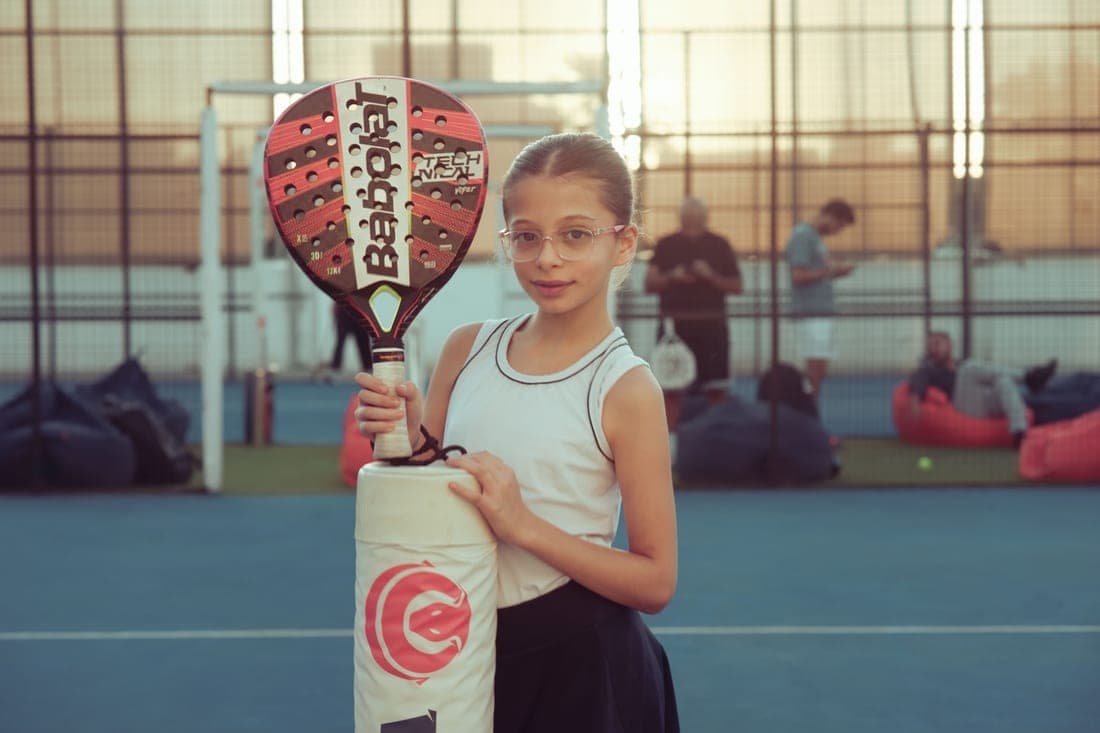 Babolat ContactRound shape | Round | 8.55 criteria | |
| 2 | 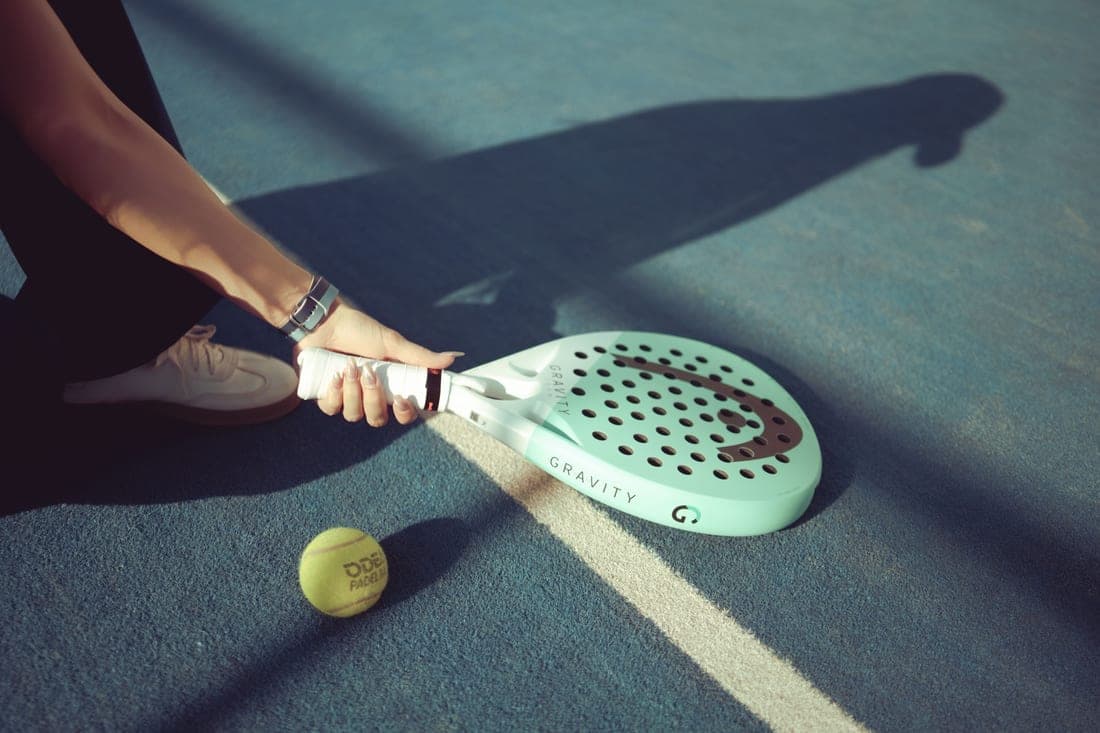 HEAD Evo SpeedTeardrop shape | Teardrop | 8.45 criteria | |
| 3 | Babolat Technical Viper Soft 3.0Attacking frame | Diamond-adjacent attacking | 8.05 criteria |
01Babolat Contact
Round shapeBest for: Round
A round head with a soft EVA core at 340 g is the textbook round-shape racket: centered sweet spot, naturally head-light balance, and every variable pointing at forgiveness.
This is what a round shape is for. It is not a compromise or a beginner's consolation prize — plenty of strong control players stay on round frames permanently.
The ceiling is on power. Once you are hitting genuine smashes you will feel the soft round configuration absorbing energy you wanted back.
Our score
- Control
- 9.0
- Power
- 5.5
- Sweet spot
- 9.5
- Arm comfort
- 9.0
- Maneuverability
- 8.5
- Overall
- 8.5
Verified specs
- Shape
- Round
- Weight
- 340 g
- Core
- Soft EVA
- Face
- Composite
- Frame
- Composite
Specs as published by Padel Padel, checked September 2026.
Buy if
- You are starting padel
- Control matters more than power to you
- You want the largest sweet spot
Pass if
- You finish points from the net
- You want smash power
- You have outgrown a round frame
02HEAD Evo Speed
Teardrop shapeBest for: Teardrop
An oversize teardrop is the shape that keeps most of a round frame's forgiveness while moving the sweet spot up toward where an improving player's contact drifts.
The oversize outline is the useful part. A standard teardrop shrinks the sweet spot slightly compared with a round; an oversize one does not, so you get the mass distribution change without the forgiveness cost.
At 360 to 370 g with a 270 mm medium balance, it is a genuine step up in mass rather than only in shape.
Our score
- Control
- 8.0
- Power
- 7.0
- Sweet spot
- 8.5
- Arm comfort
- 8.5
- Maneuverability
- 7.5
- Overall
- 8.4
Verified specs
- Shape
- Teardrop (oversize)
- Weight
- 360-370 g
- Balance
- 270 mm (medium)
- Core
- Soft foam
- Face
- Fiberglass
- Frame
- Carbon
- Profile
- 38 mm
Specs as published by Padel USA, checked September 2026.
Buy if
- You have outgrown a round frame
- You want more power with margin
- You want one step rather than three
Pass if
- You are in your first month
- You want maximum control
- You want a competition-grade frame
03Babolat Technical Viper Soft 3.0
Attacking frameBest for: Diamond-adjacent attacking
Babolat aim the Technical Viper Soft 3.0 at the offensive competitor, at 365 g with a 3K soft carbon surface and a comfort power layer.
It is the honest version of the attacking frame: the power configuration with a deliberate concession to feel, which matters because stiff attacking rackets are the ones that provoke padel elbow.
It is genuinely demanding, and it rewards a player who is already finishing points at the net. If you are not, it will frustrate you.
Our score
- Control
- 7.5
- Power
- 9.0
- Sweet spot
- 6.5
- Arm comfort
- 7.5
- Maneuverability
- 6.5
- Overall
- 8.0
Verified specs
- Weight
- 365 g
- Face
- 3K soft carbon
- Aimed at
- Offensive competitor
Specs as published by Babolat, checked September 2026.
Buy if
- You finish points from the net
- You want power without a harsh frame
- You play competitively
Pass if
- You are still developing your net game
- You want a forgiving sweet spot
- You find 365 g tiring
Common questions
What padel racket shape is best for beginners?
Round. The sweet spot sits in the geometric center of the face, which is where a developing player's contact actually lands, and the naturally head-light balance makes the racket quick at the net.
What is the difference between teardrop and diamond padel rackets?
Where the mass sits. A teardrop's widest point is slightly above center, giving a medium balance and a moderately sized sweet spot. A diamond's is high in the head, giving a head-heavy balance, maximum smash power and the smallest sweet spot.
Should I buy a diamond padel racket?
Only if you already finish points at the net. Diamonds concentrate mass high in the head for smash power and pay for it with a small, high sweet spot that punishes ordinary rally contact.
Can I stay on a round racket permanently?
Yes, and plenty of good control players do. Round is the correct beginner shape and also a legitimate permanent choice for a player who wins with placement rather than power.
Does shape matter more than weight?
Yes. Weight in padel varies within a narrow band — roughly 350 to 370 g — while shape changes where the sweet spot is, which is the single most consequential property of a padel racket.
Read next
Sources
- 01Padel Market — Best Padel Racket for Beginners 2026
- 02Babolat — Padel Technical Collection 2026
- 03Padel USA — HEAD Evo Speed listing
Every source above was retrieved while writing this page. Specifications are quoted from the listing or manufacturer page cited, not from memory.