Buying guide
Best tennis shoes for hard court in 2026
Abrasion is the enemy on hard courts, and it is the one property you can actually see measured. Here is what the lab data says, and what each shoe charges you for it.
By Janet H.Updated
The short answer
The ASICS Court FF 3 is RunRepeat's highest-scoring hard-court shoe at 93, with the widest forefoot they measured at 101.8 mm — but it ships without an outsole guarantee. For maximum durability and stability, the ASICS GEL-Resolution X records a 90.4 HC outsole and perfect 5/5 torsional rigidity.
Disclosure — we earn a commission on qualifying purchases made through links on this page, at no extra cost to you. It never changes which product we rank first. How this site is funded.
Our picks
| # | Product | Best for | Score | Price |
|---|---|---|---|---|
| 1 | 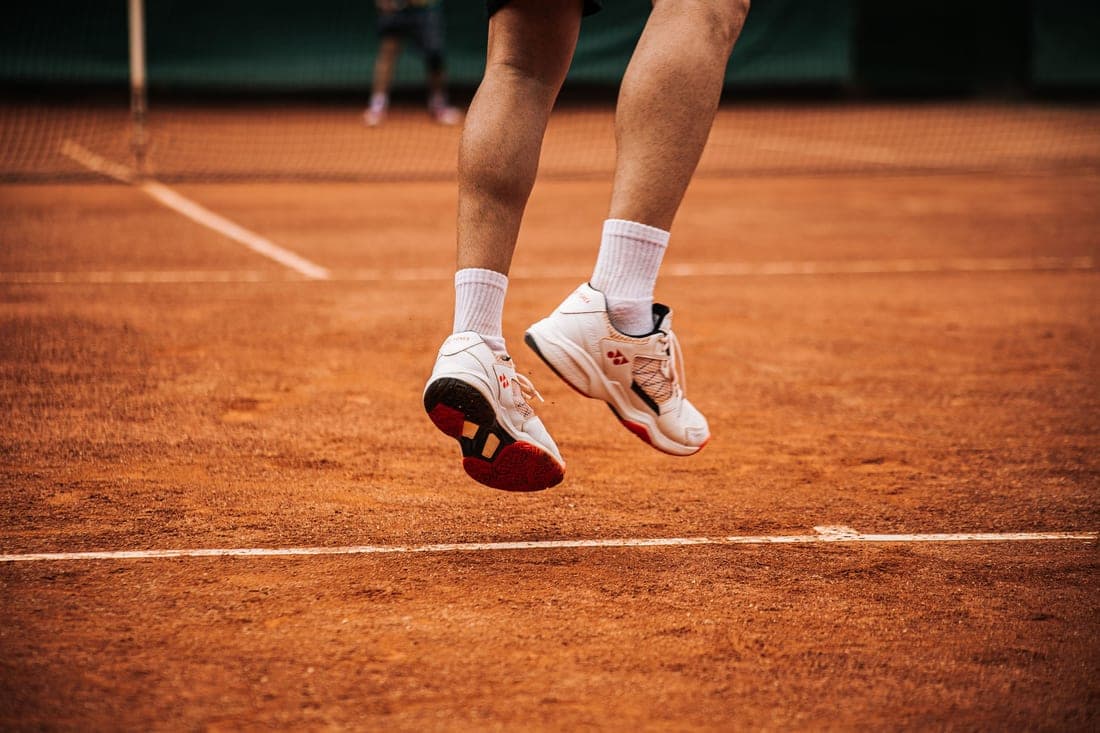 ASICS Court FF 3Top pick | All-round hard-court play | 9.05 criteria | |
| 2 | 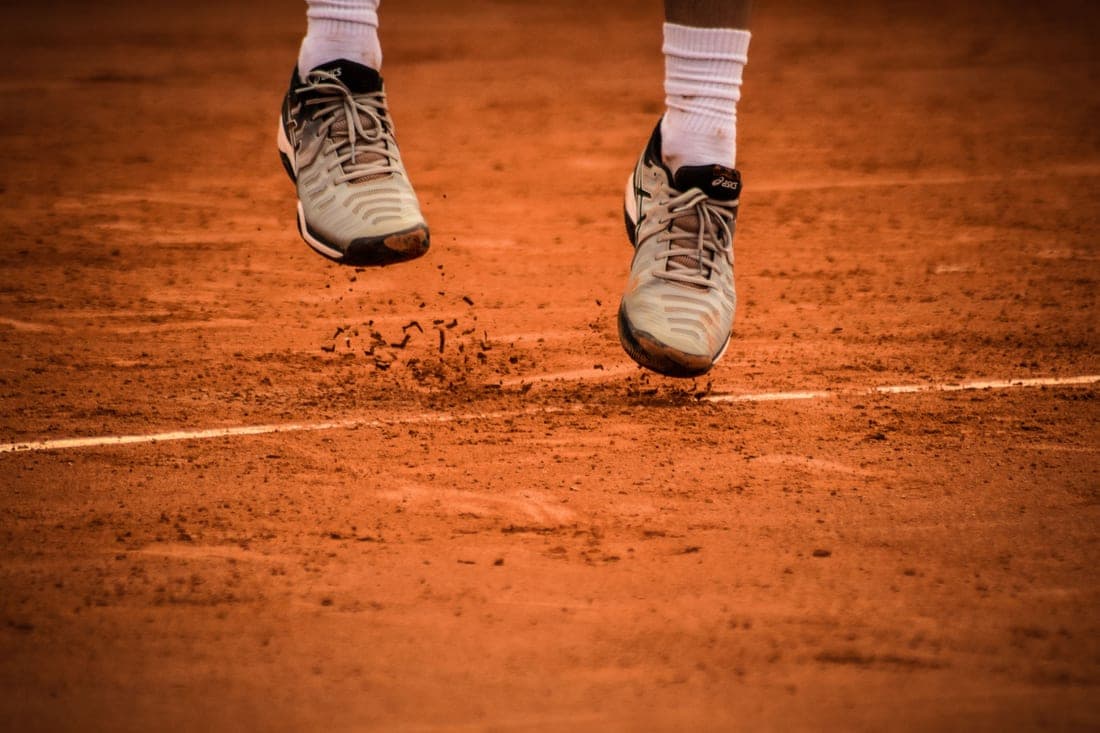 ASICS GEL-Resolution XMost durable | Stability and outsole life | 8.85 criteria | |
| 3 |  ASICS Solution Speed FF 4Best for fast players | Speed without losing grip | 8.65 criteria | |
| 4 | New Balance Fresh Foam X CT-Rally v2Best cushioning | Joint protection on hard courts | 8.75 criteria | |
| 5 | K-Swiss Hypercourt Express 2Best value | A first real court shoe | 8.35 criteria |
The picks in detail
01ASICS Court FF 3
Top pickBest for: All-round hard-court play
RunRepeat scores the Court FF 3 at 93, the highest in their hard-court set, and the measurements behind that are consistent rather than spiky: an 85.3 HC outsole with only a 0.4 mm cavity after their Dremel abrasion test, a 28.8 mm heel and 20.6 mm forefoot stack, and a toebox that measures 101.8 mm at its widest — the roomiest forefoot in the group.
That fit number is the reason it is our first pick rather than simply the highest-scoring one. Forefoot width is where most players' shoe problems live, and 101.8 mm is genuinely accommodating without the shoe being a clog.
The caveat is worth stating plainly, because RunRepeat states it: this model does not carry an outsole durability guarantee, where several rival flagships do. It is a durable shoe by measurement, without a warranty to back it up.
Our score
- Lateral stability
- 8.5
- Cushioning
- 8.0
- Outsole durability
- 8.5
- Fit accommodation
- 9.5
- Lightness
- 6.5
- Overall
- 9.0
Verified specs
- RunRepeat score
- 93 — Best Overall, hard court
- Heel stack
- 28.8 mm
- Forefoot stack
- 20.6 mm
- Toebox width (widest)
- 101.8 mm
- Outsole hardness
- 85.3 HC
- Dremel wear
- 0.4 mm cavity
Specs as published by RunRepeat, checked September 2026.
Buy if
- You have a wide forefoot
- You want the best-measured all-round hard-court shoe
- You play two or three times a week
Pass if
- You specifically want an outsole warranty
- You want a light shoe
- You need maximum ankle stability
02ASICS GEL-Resolution X
Most durableBest for: Stability and outsole life
This is the most thoroughly measured shoe on the site and the numbers are emphatic. A perfect 5/5 for torsional rigidity and 5/5 for heel counter stiffness, an outsole at 90.4 HC that wore only 0.6 mm in RunRepeat's abrasion test, and 98 SA of heel shock absorption. If you want a shoe that does not move under you and does not wear out, this is it.
The forefoot is genuinely roomy — it appears in RunRepeat's wide-feet catalog — but note the shape: the big toe measurement is only 66.6 mm, so it is wide at the ball of the foot and tapers. If your issue is toe length rather than forefoot girth, try before you buy.
The price is weight. At 417 g in a men's 9 it is one of the heaviest tennis shoes RunRepeat has tested, and you will feel that in the third set. This is a baseline grinder's shoe, not a serve-and-volleyer's.
Our score
- Lateral stability
- 10.0
- Cushioning
- 8.5
- Outsole durability
- 9.5
- Fit accommodation
- 7.5
- Lightness
- 3.5
- Overall
- 8.8
Verified specs
- RunRepeat score
- 90 — Best Stability
- Weight
- 14.7 oz / 417 g (men's 9)
- Heel / forefoot stack
- 30.8 mm / 21.9 mm
- Drop
- 8.9 mm
- Torsional rigidity
- 5/5
- Heel counter stiffness
- 5/5
- Heel shock absorption
- 98 SA
- Outsole wear
- 0.6 mm depth, 90.4 HC
Specs as published by RunRepeat, checked September 2026.
Buy if
- You have rolled an ankle before
- You wear outsoles out quickly
- You grind from the baseline
Pass if
- Weight matters to you
- You have long toes rather than a wide forefoot
- You want a responsive, springy ride
03ASICS Solution Speed FF 4
Best for fast playersBest for: Speed without losing grip
Light shoes usually give up traction and durability, and this one does neither. RunRepeat measured its traction at 1.11 — 46% above their category average, the highest figure in the hard-court set — and its outsole took 0.3 mm less abrasion damage than average.
At 337 g it is 80 g lighter than the GEL-Resolution X, which is an enormous difference in a court shoe. If your game depends on the first step rather than on holding a position, this is the better buy.
You are giving up stability structure. There is no 5/5 torsional rating here; the chassis is built to move rather than to resist. That is the right trade for some players and the wrong one for anyone with a history of ankle trouble.
Our score
- Lateral stability
- 7.5
- Cushioning
- 7.5
- Outsole durability
- 9.0
- Fit accommodation
- 8.0
- Lightness
- 8.5
- Overall
- 8.6
Verified specs
- RunRepeat score
- 90 — Best for Speed
- Weight
- 11.9 oz / 337 g
- Traction
- 1.11, 46% above average
- Dremel wear
- 0.3 mm less damage than average
Specs as published by RunRepeat, checked September 2026.
Buy if
- You cover a lot of court and value quickness
- You want grip without a heavy shoe
- You play singles
Pass if
- You have unstable ankles
- You want maximum cushioning
- You land hard and need heel protection
04New Balance Fresh Foam X CT-Rally v2
Best cushioningBest for: Joint protection on hard courts
Hard courts are unforgiving and cumulative impact is what ends most club careers. The CT-Rally v2 records 116 SA of heel shock absorption in RunRepeat's testing — the highest figure in the set — on a 33.3 mm heel stack, with 78 SA at the forefoot.
Crucially it does that without going soft laterally: torsional rigidity is still 5/5. High-stack cushioned shoes often wobble; this one does not.
Where it gives ground is outsole durability, which does not reach the ASICS figures. If your knees and back are the limiting factor rather than your outsole budget, that is an easy trade.
Our score
- Lateral stability
- 8.5
- Cushioning
- 10.0
- Outsole durability
- 7.5
- Fit accommodation
- 8.0
- Lightness
- 6.0
- Overall
- 8.7
Verified specs
- RunRepeat score
- 92 — Best Shock Absorption
- Heel stack
- 33.3 mm
- Forefoot stack
- 20.2 mm
- Heel shock absorption
- 116 SA
- Forefoot shock absorption
- 78 SA
- Torsional rigidity
- 5/5
Specs as published by RunRepeat, checked September 2026.
Buy if
- Your knees, hips or back complain after matches
- You play mostly on concrete-base hard courts
- You want cushioning without instability
Pass if
- Outsole life is your main cost
- You want ground feel and court connection
- You prefer a low, firm platform
05K-Swiss Hypercourt Express 2
Best valueBest for: A first real court shoe
RunRepeat scores it 86 at $110, which they note is about 13% below the category average price. Nothing else in their hard-court set gets close to that score at that money.
It is also lighter than average and appears in their wide-feet catalog, which makes it one of the few genuinely accommodating shoes at the budget end — most cheap court shoes are narrow.
It does not match the flagship shoes on outsole hardness or stability structure, and you should not expect it to. What it does is get you into a proper court shoe rather than a running shoe, which is the single biggest safety upgrade available.
Our score
- Lateral stability
- 7.5
- Cushioning
- 7.0
- Outsole durability
- 7.5
- Fit accommodation
- 9.0
- Lightness
- 8.0
- Overall
- 8.3
Verified specs
- RunRepeat score
- 86 — Best Budget, hard court
- Price
- $110, 13% below category typical
- Weight
- Lighter than average
- Width fit
- Listed in RunRepeat's wide-feet catalog
Specs as published by RunRepeat, checked September 2026.
Buy if
- This is your first court shoe
- You play once or twice a week
- You have wider feet and a tight budget
Pass if
- You play four times a week on rough courts
- You need maximum ankle support
- You want flagship cushioning
Why hard courts are the hardest test
Acrylic over concrete or asphalt is a deliberately abrasive surface — the grit in the paint is what stops the ball skidding. It also functions as sandpaper on your outsole, and as an unyielding platform under your joints. Those two facts drive every design decision in a hard-court shoe.
The good news is that abrasion is measurable, and RunRepeat measures it. Their Dremel test cuts into the outsole with a standard abrasive for a standard time and reports the cavity depth, alongside a Shore C hardness figure. Harder compounds with shallower wear last longer, and now you can compare them rather than guess.
The measured comparison
| Shoe | RunRepeat score | Key measurement | Weight |
|---|---|---|---|
| ASICS Court FF 3 | 93 | 101.8 mm toebox, 85.3 HC outsole | Heavier than average |
| ASICS GEL-Resolution X | 90 | 5/5 torsional, 0.6 mm wear, 90.4 HC | 417 g |
| ASICS Solution Speed FF 4 | 90 | 1.11 traction, 46% above average | 337 g |
| New Balance CT-Rally v2 | 92 | 116 SA heel, 33.3 mm stack | Not published |
| K-Swiss Hypercourt Express 2 | 86 | $110, listed for wide feet | Lighter than average |
The pattern worth noticing: nothing is best at everything. The most durable shoe is the heaviest, the fastest shoe has the least structure, and the most cushioned one does not lead on outsole life. Pick the axis that is currently costing you something.
The outsole guarantee, and who has one
Several major brands offer a six-month outsole durability guarantee on their flagship models — RunRepeat notes it as a category norm. It is a genuine consumer protection and it is also a signal: a brand that guarantees an outsole has confidence in the compound.
It is not universal. RunRepeat call it out specifically on the Court FF 3, which is their highest-scoring shoe and has no such guarantee. If you are hard on outsoles, check the warranty before you check the reviews — and keep the receipt.
What wears out first, and what it tells you
- Outside edge of the forefoot — normal wear from lateral pushing off. Expected.
- Toe drag on the trailing foot — very common on serves. This is what toe guards are for; check yours has one.
- Inside heel — often a sign the shoe is too large and your foot is sliding.
- Midsole compressed flat — the cushioning is gone even if the tread looks fine. This is when most players should replace, and most do not.
Tread looking acceptable is not the same as the shoe still working. A midsole that has bottomed out transmits everything to your joints while the outsole still looks new.
Picking by what is currently hurting
- Ankle rolls → GEL-Resolution X, or see best for ankle support.
- Heel pain in the morning → CT-Rally v2, or best for plantar fasciitis.
- Pinched forefoot → Court FF 3 or Hypercourt Express 2, and best for wide feet.
- Outsoles gone in six weeks → GEL-Resolution X.
- Late to the ball → Solution Speed FF 4.
If you play on more than one surface, best all-court tennis shoes covers the compromise, and how to choose tennis shoes for your court surface explains the outsole patterns in detail.
Common questions
How long should hard court tennis shoes last?
It depends on the court and on how you move, but the six-month outsole guarantee several brands offer on flagship models is a reasonable expectation for regular play. On rough, abrasive hard courts three times a week, expect less.
What is the most durable tennis shoe outsole?
Among shoes RunRepeat has measured, the ASICS GEL-Resolution X leads with a 90.4 HC hardness and only 0.6 mm of wear in their abrasion test. The Solution Speed FF 4 also took 0.3 mm less damage than their category average.
Do I need a hard court specific shoe?
If you play exclusively on hard courts, yes — the denser outsole compound is the whole point. If you split time across surfaces, an all-court shoe is a sensible compromise.
Are heavier tennis shoes better?
Heavier usually means more structure, which means more stability and more outsole material. The GEL-Resolution X at 417 g is the clearest example. The cost is fatigue over a long match, which is a real trade rather than a theoretical one.
How do I know when to replace my tennis shoes?
When the midsole has compressed flat, not when the tread looks worn. A bottomed-out midsole transmits impact straight to your joints while the outsole can still look serviceable.
Read next
Sources
- 01RunRepeat — Best Hard Court Tennis Shoes
- 02RunRepeat — Best Tennis Shoes
- 03RunRepeat — ASICS GEL-Resolution X lab review
Every source above was retrieved while writing this page. Specifications are quoted from the listing or manufacturer page cited, not from memory.