Guide
Can you wear clay court shoes on hard court?
Technically yes, and the shoes will tell you it was a mistake within a few sessions. Here is exactly what a clay outsole is doing differently, what it costs on hard court, and when one pair really can cover both.
By Janet H.Updated
The short answer
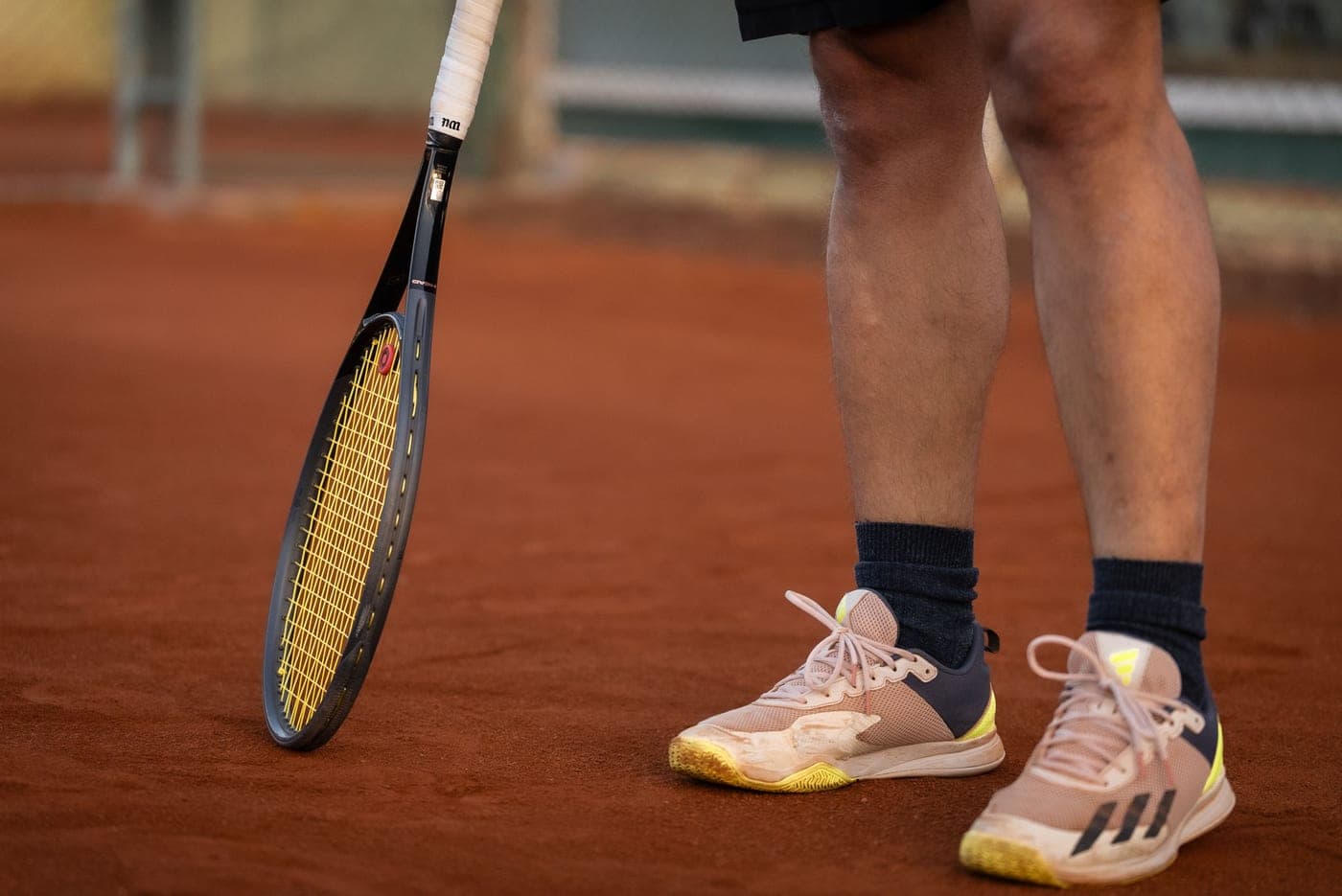
You can, but you should not do it regularly. A clay outsole is a dense full-coverage herringbone in a relatively soft compound, designed to shed loose granules and allow a controlled slide. On abrasive hard court it wears down quickly, and most clay shoes carry no outsole durability guarantee for hard-court use. If you play both surfaces, buy an all-court shoe.
Disclosure — we earn a commission on qualifying purchases made through links on this page, at no extra cost to you. It never changes which product we rank first. How this site is funded.
What a clay outsole is actually doing
A clay court is a loose surface sitting on a hard base. The crushed brick or shale on top moves under you, which is the whole character of the surface, and it means the shoe has two jobs no hard-court shoe has: it has to grip through a layer of loose material, and it has to shed that material rather than packing it into the tread.
The answer to both is a full-coverage herringbone - tight parallel zigzag ribs across the entire outsole, with no large smooth zones. The ribs bite into the loose layer and reach the firmer base beneath it; the channels between them let granules escape as the shoe flexes. The compound is typically softer than a hard-court compound, because grip on a loose surface comes from deformation and bite rather than from friction against a flat plane.
A hard-court outsole solves a different problem. The surface is fixed, abrasive and unforgiving, so the outsole is harder and more wear-resistant, the pattern is usually a modified herringbone with reinforced high-wear zones at the forefoot and the pivot point, and the tread is shallower. ASICS put a six-month outsole guarantee behind several hard-court models - a commitment that only makes sense when the rubber is built for abrasion.
What happens if you wear clay shoes on hard court
Three things, in roughly this order.
- 01The tread wears flat, fast. A softer compound in a deep pattern against an abrasive surface is the worst-case combination for wear. The ribs round off at the forefoot and the pivot zone first, and a rounded herringbone no longer bites or releases predictably.
- 02The grip becomes inconsistent. A full herringbone on a clean hard court grips hard in some directions and skates in others, because the pattern was designed to interact with a loose layer that is not there. That inconsistency is more dangerous than either too much grip or too little, because you cannot predict it.
- 03Your warranty and your money evaporate. Clay models generally carry no hard-court outsole guarantee, and a pair you would have had for a season on clay can be finished in a couple of months. The cost of using the wrong shoe is paid in shoes.
What does not happen, for the record, is any special injury risk from cushioning or support - a clay shoe's midsole and chassis are built to the same standard as its hard-court sibling, and in several cases they share a chassis outright. The ASICS GEL-Resolution 9 Clay and the adidas Barricade 13 Clay are the clay versions of the stability platforms their lines are known for. The problem is confined to the rubber.
The three outsole types, side by side
| Outsole type | Pattern | Compound | Best on | Fails on |
|---|---|---|---|---|
| Clay | Full-coverage herringbone, deep, no smooth zones | Softer, built to bite and shed | Red clay, green clay, har-tru | Abrasive hard court - wears flat fast |
| Hard court | Modified herringbone with reinforced wear zones | Hard, abrasion-resistant | Outdoor hard court, concrete, asphalt | Clay - smooth zones pack and skate |
| All-court | Moderate-depth herringbone across most of the sole | Mid-hardness compromise | Both, acceptably | Neither, excellently |
The specific figures are worth reading because they show the gap is real. RunRepeat measured the clay-specific GEL-Resolution 9 Clay at 88.5 HC with a 4.6 mm thick outsole and 0.8 mm of Dremel wear, and a 0.82 traction coefficient on clay; the hard-court GEL-Resolution X comes in at 90.4 HC with 0.6 mm of wear. Those are close - ASICS build both to last - but the pattern and the depth differ, and the pattern is what decides behavior on a surface it was not cut for.
When one pair genuinely does cover both
There is a legitimate single-pair answer, and it is the all-court outsole. A moderate-depth herringbone across most of the sole in a mid-hardness compound shifts clay out of the tread well enough to stay predictable, and survives hard court well enough to last a season. It is a compromise by construction, and that is exactly what you want when you genuinely split your time.
Two situations where the compromise is the wrong call. If you play 80 percent or more of your sessions on one surface, buy that surface's shoe and treat the occasional session on the other as acceptable wear - a surface-specific shoe is better at its job than any all-court shoe. And if you compete on clay, buy clay: a controlled slide into a wide ball is a shot, and an all-court sole releases less cleanly than a full herringbone.
Our all-court roundup ranks the single-pair options, the hard court page covers the abrasive-surface case, and the clay court page covers the loose-surface case. If you are not sure which surface you mostly play on, count your last ten sessions rather than guessing - most players are more lopsided than they think.
How this guide was put together
We do not run a test lab and nothing here is written as though we did. This page is built from published specification sheets, from the independent measurements and governing-body rules cited at the foot of the article, and from the physical reasoning that connects them. Where a figure is not published anywhere we can cite, the page says so rather than filling the gap.
The picks are existing products from our own registry, so each one carries a source you can check. Our full selection criteria set out the method, and the editorial policy covers corrections and how often pages are revisited. We earn a commission if you buy through our links, which is disclosed on every page and never changes a ranking.
Now pick yours
The specs above are only useful once they resolve into something you can buy. These are the products that match what this page has just explained.
Our picks
| # | Product | Best for | Score | Price |
|---|---|---|---|---|
| 1 | 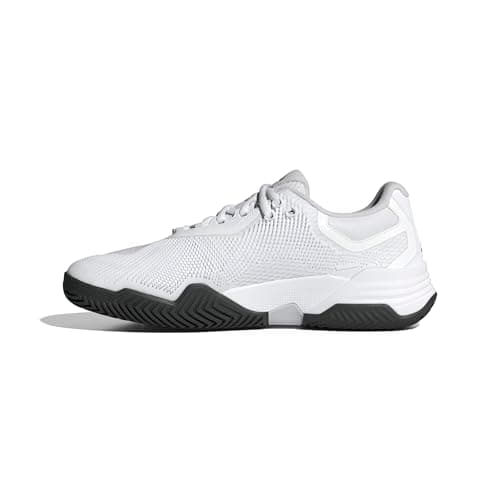 adidas SoleMatch Control 2Best all-court | Genuinely splitting time between surfaces | 8.15 criteria | $94.01 · View on Amazon Price as of October 17, 2026 · was $130.00, 28% off |
| 2 | 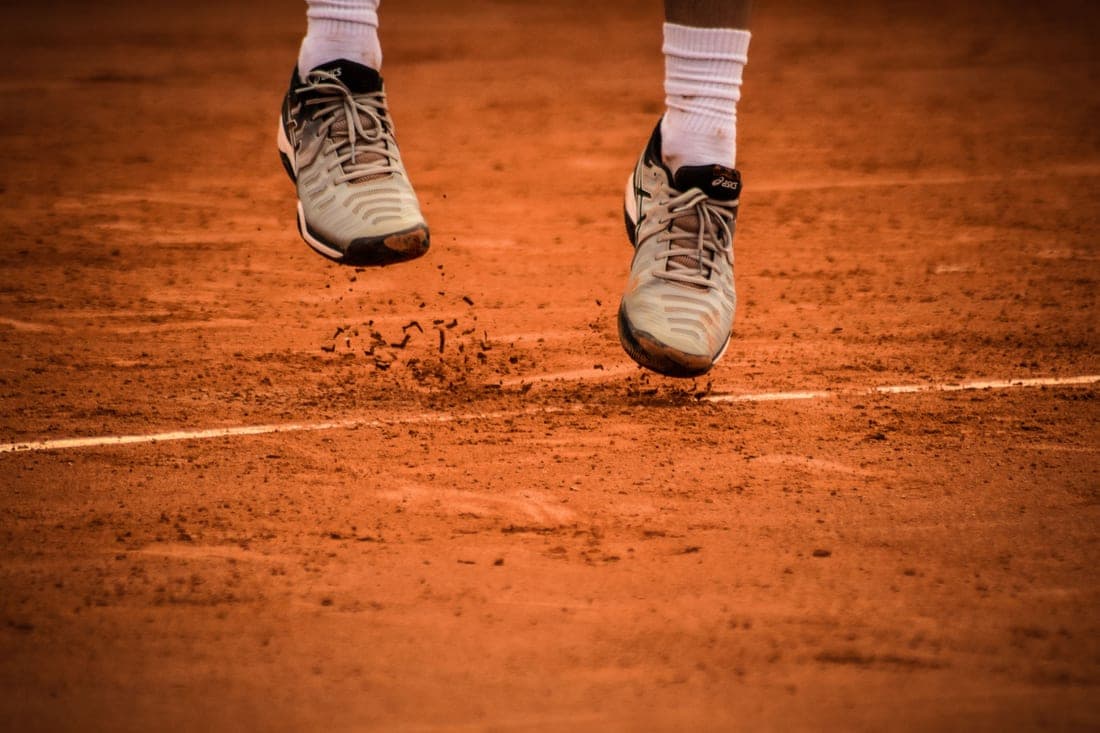 ASICS GEL-Resolution 9 ClayBest clay outsole | Clay players who want the real thing | 8.65 criteria | |
| 3 | 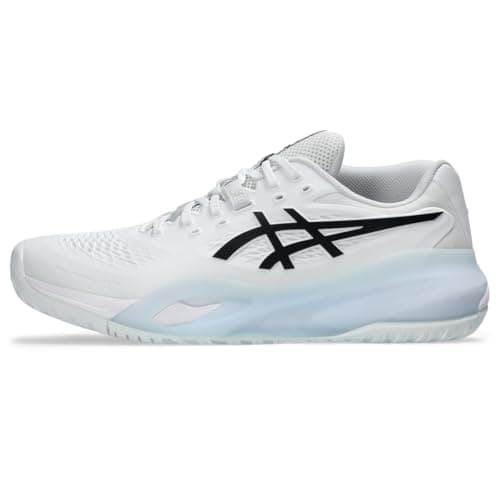 ASICS GEL-Resolution XBest hard-court outsole | Hard court, if that is where you really play | 8.65 criteria | $139.95 · View on Amazon Price as of October 17, 2026 · was $164.95, 15% off |
01adidas SoleMatch Control 2
Best all-courtBest for: Genuinely splitting time between surfaces
The honest answer for the player who asked this question because they play on both. An all-court adidas scored 84 by RunRepeat at a mid-tier price, and one of the more accommodating options in the range - RunRepeat carry it in their wide-feet catalog, which matters because a single pair has to fit well enough to live in.
The all-court pattern is the whole point: deep enough to shed clay granules and stay predictable, hard enough to survive a hard court without rounding off in a month. You give up a little slide quality on clay and a little outsole life on concrete, and you gain not owning two pairs.
The honest costs are the ones inherent to a compromise. It is not the stability chassis adidas puts in the Barricade, and it is not a clay-specific sole, so a competitive clay player will want the real thing. adidas publish no weight or stack figure for this model.
Our score
- Lateral stability
- 8.0
- Cushioning
- 7.5
- Outsole durability
- 8.0
- Fit accommodation
- 8.5
- Lightness
- 8.0
- Overall
- 8.1
Verified specs
- RunRepeat score
- 84
- Width fit
- Listed in RunRepeat's wide-feet catalog
Specs as published by RunRepeat, checked September 2026.
Buy if
- You split your sessions roughly evenly between clay and hard court
- You want one pair rather than two
- You want an accommodating fit at a mid price
Pass if
- You play one surface 80 percent of the time
- You compete on clay and slide into shots
- You want a stability chassis
Price as of October 17, 2026 · was $130.00, 28% off
02ASICS GEL-Resolution 9 Clay
Best clay outsoleBest for: Clay players who want the real thing
The most thoroughly measured clay shoe in the category: a 0.82 traction coefficient on clay, 5/5 torsional rigidity, a 4/5 heel counter, an 88.5 HC outsole 4.6 mm thick that lost 0.8 mm in the Dremel test, and a six-month outsole guarantee. RunRepeat score it 89.
It is the shoe that makes the argument on this page concrete. A dedicated clay outsole is not a marketing variant - it is a different pattern in a different compound with a measured traction figure on the surface it was cut for, and that is what you lose when you take it onto a hard court.
The costs: at 13.0 oz / 369 g it is substantial, the 68.4 mm toebox at the big toe is snug rather than roomy, and the 10.2 mm drop is high if you prefer a flat ride. It is also a premium-priced shoe you should not be wearing on hard court, which is the whole point.
Our score
- Lateral stability
- 9.0
- Cushioning
- 8.5
- Outsole durability
- 8.5
- Fit accommodation
- 7.5
- Lightness
- 7.5
- Overall
- 8.6
Verified specs
- RunRepeat score
- 89
- Weight
- 13.0 oz / 369 g
- Heel / forefoot stack
- 31.7 mm / 21.5 mm
- Drop
- 10.2 mm
- Traction
- 0.82 coefficient on clay
- Torsional rigidity
- 5/5
- Heel counter stiffness
- 4/5
- Outsole
- 88.5 HC, 0.8 mm wear, 4.6 mm thick
- Toebox at big toe
- 68.4 mm
Specs as published by RunRepeat, checked September 2026.
Buy if
- You play mostly or entirely on clay
- You slide into shots and want a clean release
- You want measured traction figures on the surface you play on
Pass if
- You play mostly on hard court
- You want a roomy forefoot
- You want one pair for both surfaces
03ASICS GEL-Resolution X
Best hard-court outsoleBest for: Hard court, if that is where you really play
The hard-court half of the same platform, and the shoe to buy if counting your last ten sessions tells you that you are a hard-court player who occasionally visits clay. 90.4 HC on the outsole with 0.6 mm of Dremel wear is the most durable rubber we have a figure for.
The structure is the best measured in the category too: 5/5 for both torsional rigidity and heel counter stiffness, 98 SA of heel shock absorption, a 30.8 mm heel on an 8.9 mm drop. On abrasive concrete, this is the shoe that is still usable at the end of a season.
The costs are weight and price: 14.7 oz / 417 g at the top of the category. And it is the wrong shoe on clay - the reinforced pattern packs, which is the failure mode this page warns about in the other direction.
Our score
- Lateral stability
- 9.5
- Cushioning
- 8.5
- Outsole durability
- 9.5
- Fit accommodation
- 8.0
- Lightness
- 6.5
- Overall
- 8.6
Verified specs
- RunRepeat score
- 90 — Best Stability
- Weight
- 14.7 oz / 417 g (men's 9)
- Heel / forefoot stack
- 30.8 mm / 21.9 mm
- Drop
- 8.9 mm
- Torsional rigidity
- 5/5
- Heel counter stiffness
- 5/5
- Heel shock absorption
- 98 SA
- Outsole wear
- 0.6 mm depth, 90.4 HC
Specs as published by RunRepeat, checked September 2026.
Buy if
- Hard court is where most of your sessions happen
- You want the most abrasion-resistant outsole available
- You want the best measured structure in the category
Pass if
- You play mostly on clay
- You want a light shoe
- You want one pair for both surfaces
Price as of October 17, 2026 · was $164.95, 15% off
Common questions
Can you use clay tennis shoes on a hard court?
For a session or two, yes. Regularly, no - a clay outsole is a deep full herringbone in a softer compound, and abrasive hard court rounds those ribs off quickly. Once the pattern is flattened the grip becomes inconsistent, and most clay models carry no hard-court outsole guarantee.
Are all-court tennis shoes good enough for clay?
Yes, for recreational and club play. An all-court herringbone is deep enough to shed clay granules and stay predictable. What you give up is release quality on a slide, which matters if you compete on clay - a full clay herringbone lets go more cleanly.
Can I wear hard-court shoes on clay?
This is the worse direction. The smooth reinforced zones on a hard-court outsole pack with clay and stop shedding, which turns the sole into a plate that slides when you meant to plant. It also marks up the court surface, which is why many clay clubs ask for clay shoes.
How can I tell a clay outsole from a hard-court one?
Turn the shoe over. A clay outsole is a dense zigzag herringbone covering the entire sole with no large smooth areas and relatively deep channels. A hard-court outsole has shallower tread, a modified pattern, and visible reinforced smooth zones at the forefoot and the pivot point.
Will clay shoes mark an indoor court?
Court shoes in all three categories use non-marking rubber, so a clay shoe will not mark an indoor floor the way a street sole would. What it may do is drop clay residue from the tread, which is why clubs ask you to change shoes rather than brush them off at the door.
Is it worth owning two pairs?
If you play 80 percent or more of your tennis on one surface, buy that surface's shoe and accept the wear on the occasional visit. If you are genuinely split, one all-court pair costs less and performs acceptably on both. Two pairs only pays off if you compete on both surfaces.
Read next
Sources
- 01RunRepeat - ASICS GEL-Resolution 9 Clay
- 02RunRepeat - clay court tennis shoes catalog
- 03RunRepeat - best hard court tennis shoes
- 04RunRepeat - ASICS GEL-Resolution X
- 05RunRepeat - wide tennis shoes catalog
Every source above was retrieved while writing this page. Specifications are quoted from the listing or manufacturer page cited, not from memory.