Buying guide
Best tennis shoes for women in 2026
Unlike rackets, court shoes genuinely differ by gender — a narrower last, a different standard width, and in one case a women's-only model that was measured on a women's pair. Here is what that changes.
By Janet H.Updated
The short answer
The New Balance Coco CG2 is our pick. RunRepeat scores it 92 and it is the only shoe here whose lab teardown used a women's pair, recording 60.4% forefoot energy return and 5/5 torsional rigidity. For stability and outsole life instead, the ASICS GEL-Resolution X.
Disclosure — we earn a commission on qualifying purchases made through links on this page, at no extra cost to you. It never changes which product we rank first. How this site is funded.
Our picks
| # | Product | Best for | Score | Price |
|---|---|---|---|---|
| 1 | 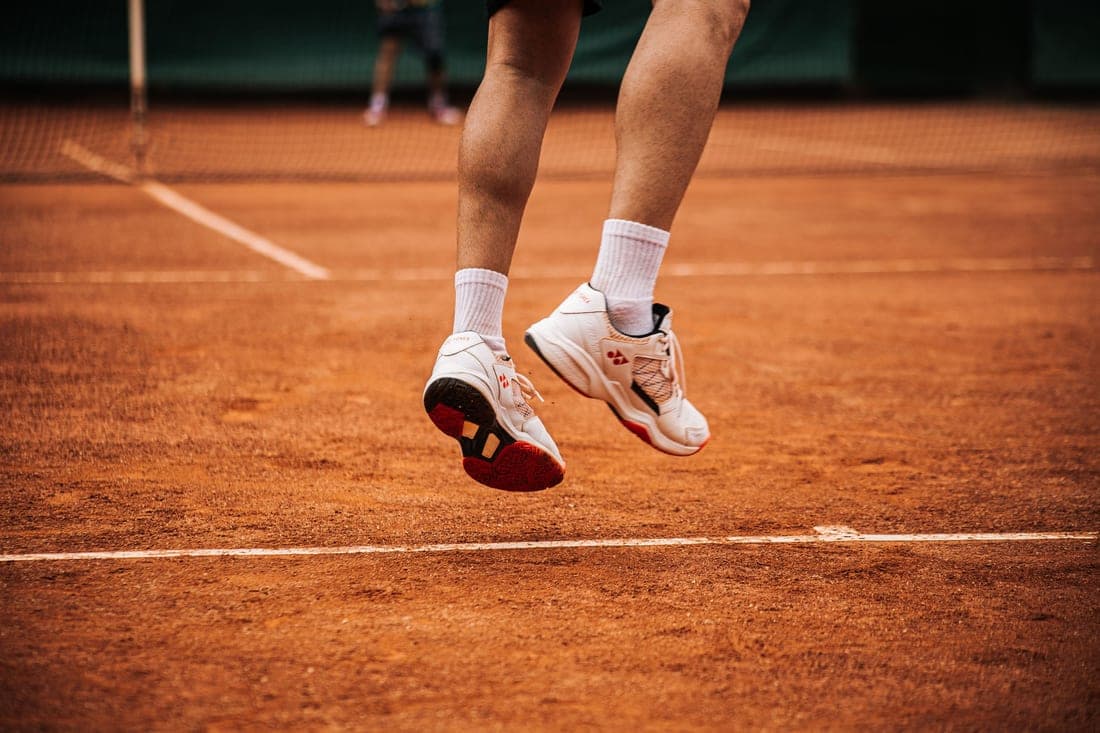 New Balance Coco CG2Top pick | Attacking players who want the shoe to give something back | 9.05 criteria | |
| 2 | 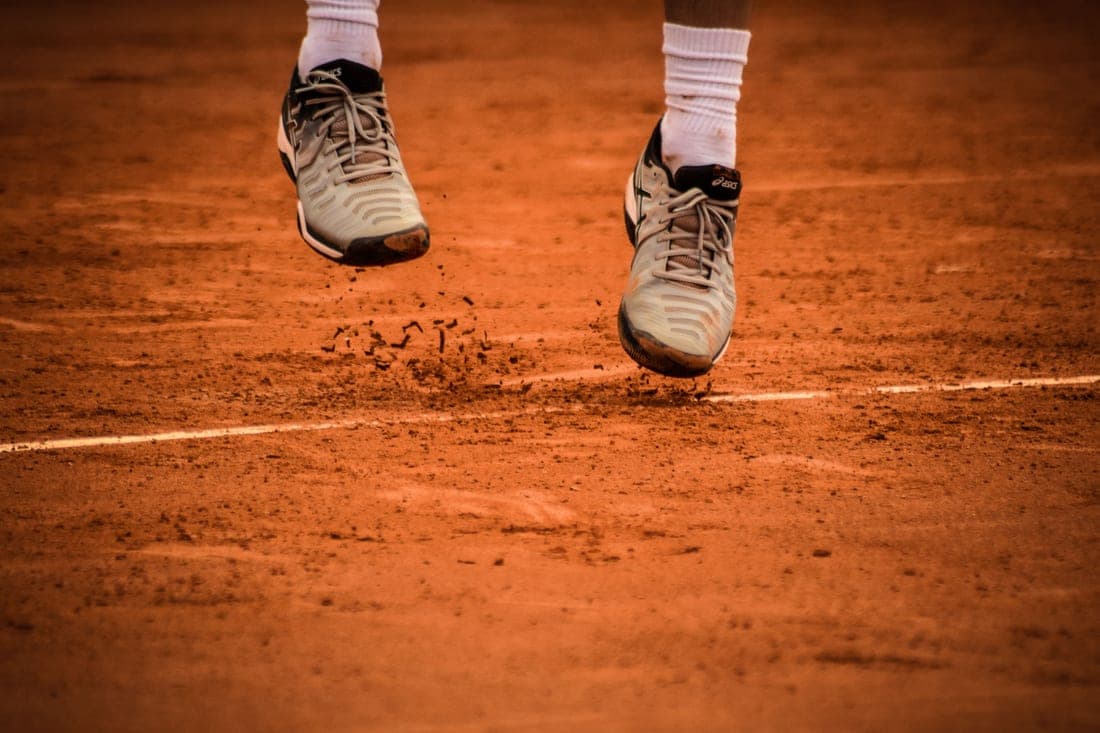 ASICS GEL-Resolution XMost stable | Baseline grinders and anyone with ankle history | 8.95 criteria | |
| 3 |  New Balance Fresh Foam X CT-Rally v2Best cushioning | Knees, hips and backs that complain after matches | 8.75 criteria | |
| 4 | ASICS Solution Speed FF 4Best for speed | Players whose problem is being late to the ball | 8.65 criteria | |
| 5 | Mizuno Wave Exceed Tour 7 ACMost responsive | Narrow feet that swim in mainstream court shoes | 8.35 criteria | |
| 6 | K-Swiss Ultrashot LightBest value | A first or second real court shoe on a budget | 8.05 criteria |
The picks in detail
01New Balance Coco CG2
Top pickBest for: Attacking players who want the shoe to give something back
This is the one shoe on this page whose numbers were taken from a women's pair — RunRepeat tested a women's US 9.5 — and that alone is a reason to start here rather than with a relabeled men's list. It scores 92, their highest in the women's set, and leads their women's guide as Best Overall.
The standout figure is 60.4% forefoot energy return, which is what the Energy Arc carbon plate and FuelCell midsole are for. The midsole measures 17.1 HA, around 70% softer than RunRepeat's average, while the chassis still records 5/5 torsional rigidity — soft underfoot, rigid across. Impact protection is genuinely high at 113 SA in the heel and 72 SA at the forefoot, on a 28.2 mm / 22.0 mm stack and a low 6.2 mm drop.
The honest cost is durability at the edges. RunRepeat measured 1.9 mm of Dremel wear against a 89.4 HC outsole, and they are blunt that the exposed foam is easily destroyed by toe drags and that the translucent rubber lacks abrasion resistance. The heel counter is also only 3/5, so this is a propulsive shoe rather than a containment shoe. New Balance does back it with a six-month outsole guarantee, which Tennis Warehouse lists on every colorway.
Our score
- Lateral stability
- 9.0
- Cushioning
- 9.0
- Outsole durability
- 6.5
- Fit accommodation
- 7.0
- Lightness
- 7.5
- Overall
- 9.0
Verified specs
- RunRepeat score
- 92 — Best Overall, women's
- Tested pair
- Women's US 9.5
- Weight
- 12.6 oz / 356 g
- Heel / forefoot stack
- 28.2 mm / 22.0 mm
- Drop
- 6.2 mm
- Torsional rigidity
- 5/5
- Heel counter stiffness
- 3/5
- Forefoot energy return
- 60.4%
- Shock absorption
- 113 SA heel / 72 SA forefoot
- Outsole
- 89.4 HC, 1.9 mm Dremel wear
- Traction
- 0.63
- Widths at retail
- B and D
- Outsole warranty
- 6 months
Specs as published by RunRepeat, checked September 2026.
Buy if
- You want measured data from a women's pair, not a men's one
- You push off hard and want the shoe to return energy
- You need a B or a D width — both are stocked
Pass if
- You drag your toe on serves
- You have rolled an ankle and want a stiff heel counter
- You want the longest-wearing outsole in the group
02ASICS GEL-Resolution X
Most stableBest for: Baseline grinders and anyone with ankle history
RunRepeat's Best Stability pick in their women's guide, at 90. The two measurements that matter for containment are both maximal or near it: 5/5 torsional rigidity and a 5/5 heel counter, which is exactly the pairing that stops a foot inverting when you plant to change direction.
It is also the hardest-wearing shoe here. Only 0.6 mm of wear in the Dremel abrasion test against a 90.4 HC outsole, with traction measured at 0.89. If you are the player at your club who goes through outsoles while everyone else complains about cushioning, this is the answer.
The cost is weight, and it is not marginal — RunRepeat put it about 14% above their category average, and the men's pair they weighed came in at 417 g. They also flag unusual sizing and a long break-in. Tennis Warehouse stocks the women's version in both B and an explicit D wide fitting, which makes it one of the easier shoes here to actually fit.
Our score
- Lateral stability
- 10.0
- Cushioning
- 8.5
- Outsole durability
- 9.5
- Fit accommodation
- 8.5
- Lightness
- 3.0
- Overall
- 8.9
Verified specs
- RunRepeat score
- 90 — Best Stability
- Weight
- 14.7 oz / 417 g (men's 9)
- Heel / forefoot stack
- 30.8 mm / 21.9 mm
- Drop
- 8.9 mm
- Torsional rigidity
- 5/5
- Heel counter stiffness
- 5/5
- Heel shock absorption
- 98 SA
- Outsole wear
- 0.6 mm depth, 90.4 HC
Specs as published by RunRepeat, checked September 2026.
Buy if
- You have rolled an ankle before
- You wear outsoles out faster than your friends
- You want a genuine wide fitting rather than a roomy standard width
Pass if
- You feel heavy shoes in the third set
- You want a shoe that works out of the box
- You serve and volley rather than grind
03New Balance Fresh Foam X CT-Rally v2
Best cushioningBest for: Knees, hips and backs that complain after matches
The highest shock-absorption figures RunRepeat has recorded in this category: 116 SA at the heel and 78 SA at the forefoot, on a 33.3 mm heel and 20.2 mm forefoot stack. If cumulative impact rather than outsole cost is what limits how often you play, nothing else here is close.
High-stack cushioned shoes often wobble, and this one does not. RunRepeat measured 18.0 Nm of torsional rigidity — at their category average — with a 5/5 heel counter, which is why it is also their Best Shock Absorption pick in the women's guide rather than just a soft shoe. Traction came in at 0.60, which is modest but adequate on hard court.
Two honest caveats. It is heavy — the pair RunRepeat weighed came in at 405 g — and they note a low toebox height, so if your problem is foot depth rather than width this may press on the top of your toes. Outsole wear measured 0.8 mm, which is good rather than class-leading. The women's version is stocked in B and D widths.
Our score
- Lateral stability
- 9.0
- Cushioning
- 10.0
- Outsole durability
- 7.5
- Fit accommodation
- 8.5
- Lightness
- 3.5
- Overall
- 8.7
Verified specs
- RunRepeat score
- 92 — Best Shock Absorption
- Heel stack
- 33.3 mm
- Forefoot stack
- 20.2 mm
- Heel shock absorption
- 116 SA
- Forefoot shock absorption
- 78 SA
- Torsional rigidity
- 5/5
Specs as published by RunRepeat, checked September 2026.
Buy if
- You get joint soreness the day after playing
- You play on concrete-base hard courts
- You want cushioning without losing lateral support
Pass if
- You want a light, connected shoe
- You have high-volume feet and need toebox height
- Outsole life is your main running cost
04ASICS Solution Speed FF 4
Best for speedBest for: Players whose problem is being late to the ball
Light court shoes normally give up grip, and this one does the opposite. RunRepeat measured its traction at 1.11 — 46% above their average and the highest figure in their women's set — on a shoe that weighs 337 g, about 7% below their category average.
It is not a stripped-out racing shoe either. Shock absorption at the heel measured 113 SA, which is well into the protective range, and the forefoot is about 3% more flexible than average, so the shoe bends where your foot does. RunRepeat rate it 90 and make it their Best for Speed pick in the women's guide.
The compromises are fit and ventilation. They note a low toebox height and what they describe as a serious breathability deficit — a real consideration if you play summer afternoons on hard court. There is also no maximal stability structure here; the chassis is built to move rather than resist.
Our score
- Lateral stability
- 7.5
- Cushioning
- 8.5
- Outsole durability
- 9.0
- Fit accommodation
- 6.5
- Lightness
- 8.5
- Overall
- 8.6
Verified specs
- RunRepeat score
- 90 — Best for Speed
- Weight
- 11.9 oz / 337 g
- Traction
- 1.11, 46% above average
- Dremel wear
- 0.3 mm less damage than average
Specs as published by RunRepeat, checked September 2026.
Buy if
- You cover a lot of court and value the first step
- You want grip without carrying weight
- You play singles
Pass if
- Your feet run hot
- You have deep or long toes
- You have unstable ankles
05Mizuno Wave Exceed Tour 7 AC
Most responsiveBest for: Narrow feet that swim in mainstream court shoes
The most consistently springy shoe in the group. RunRepeat measured above-average energy return at both ends — 55.7% at the heel and 58.5% at the forefoot — and a 1.04 traction coefficient, which they describe as tacky grip on hard court. It scores 90, and the outsole gave up only 0.7 mm in the abrasion test with a six-month guarantee behind it.
It is the pick here specifically for narrow feet. RunRepeat state plainly that it is not for wide feet, and that snugness is the reason the lockdown feels as secure as it does. If every mainstream court shoe leaves you cranking the laces to stop your foot sliding, this is the one to try.
Be clear about what you are giving up. Torsional rigidity measured 12.9 Nm against a 18.1 Nm average, so it is a flexible chassis — quick, but less resistant to a foot rolling. Shock absorption is ordinary at 100 SA heel and 67 SA forefoot, the drop is a tall 11.1 mm, and RunRepeat's teardown was performed on a men's pair; Mizuno sells the women's Wave Exceed Tour 7 AC separately, and RunRepeat list the model in their women's catalog at the same score.
Our score
- Lateral stability
- 7.0
- Cushioning
- 7.5
- Outsole durability
- 8.5
- Fit accommodation
- 5.5
- Lightness
- 8.0
- Overall
- 8.3
Verified specs
- RunRepeat score
- 90
- Tested pair
- Men's — women's AC version sold separately
- Weight
- 12.1 oz / 343 g
- Heel / forefoot stack
- 30.4 mm / 19.3 mm
- Drop
- 11.1 mm
- Energy return
- 55.7% heel / 58.5% forefoot
- Shock absorption
- 100 SA heel / 67 SA forefoot
- Traction
- 1.04
- Torsional rigidity
- 12.9 Nm (average 18.1 Nm)
- Heel counter stiffness
- 4/5
- Outsole wear
- 0.7 mm
- Fit note
- RunRepeat: not for wide feet
- Outsole warranty
- 6 months
Specs as published by RunRepeat, checked September 2026.
Buy if
- Standard court shoes are too wide for you
- You want a bouncy, responsive ride
- You want strong traction and a guaranteed outsole
Pass if
- You have wide or high-volume feet
- You need maximum torsional stiffness
- You want the lab figures taken from a women's pair
06K-Swiss Ultrashot Light
Best valueBest for: A first or second real court shoe on a budget
RunRepeat's Best Budget pick in the women's guide, scored 84 at a list price of $85 — around half what the flagships here ask. At that money the sensible question is what has been removed, and the answer is less than you would expect.
It is the lightest shoe on this page at 312 g, about 14% below RunRepeat's average, with a forefoot roughly 38% more flexible than average, which is what makes it feel quick rather than cheap. Outsole wear measured 0.6 mm — matching the GEL-Resolution X — and wet traction came in at 1.01, 36% above their average. Tennis Warehouse and Tennis Express both list the women's version around $90.
The two real limits are fit and containment. RunRepeat describe the toebox as borderline narrow and lateral support as limited, which is the honest trade at this price. If you have wide feet or an ankle history, spend the extra; see [best tennis shoes for wide feet](/tennis-shoes/best-for-wide-feet) and [best for ankle support](/tennis-shoes/best-for-ankle-support).
Our score
- Lateral stability
- 6.5
- Cushioning
- 7.0
- Outsole durability
- 8.0
- Fit accommodation
- 6.0
- Lightness
- 9.5
- Overall
- 8.0
Verified specs
- RunRepeat award
- Best Budget
- Weight
- 11.0 oz / 312 g
Specs as published by RunRepeat, checked September 2026.
Buy if
- This is your first proper court shoe
- You play once or twice a week
- You want the lightest option here
Pass if
- You have wide feet
- You have unstable ankles
- You play four times a week on abrasive courts
Where women's court shoes genuinely differ
On this site we are usually the ones arguing that a category is marketing rather than engineering. Rackets are the clearest case: no manufacturer designs a distinct women's frame, which is why our lighter-frame roundup refuses to call those rackets women's rackets at all.
Shoes are the exception, and the difference is structural rather than cosmetic. Women's athletic shoes are built on a different last — the foot-shaped form the shoe is made around — and the standard width is not the same. FitVille state the convention plainly: D is the standard width for men's shoes, while B is standard for women's and is narrower. A women's size 10 in B is a materially different shoe from a men's size 10 in D, not the same shoe with a different logo.
There is also at least one genuinely women's-only court shoe in this group. The New Balance Coco CG2 is sold as a women's model, which is why RunRepeat's lab measurements for it were taken from a women's US 9.5 rather than the men's US 9 they use as a default. That makes it the only shoe on this page whose published numbers describe the pair you would actually be buying.
What does not differ: the properties that make a court shoe a court shoe. Lateral containment, outsole compound and impact protection matter in exactly the same way regardless of who is wearing them, and they are the things we ranked on.
What we ranked on, and where the numbers come from
Criteria first, because a ranking is only as good as the thing it is ranking on. Every shoe below was judged on five properties, in this order of weight:
- 01Lateral containment — torsional rigidity and heel counter stiffness. This is the safety axis: it is what stops the foot inverting when you plant hard to change direction.
- 02Impact protection — measured shock absorption at the heel and forefoot. Hard courts are unyielding and the damage is cumulative rather than dramatic.
- 03Outsole life — measured hardness and how deep a standard abrasion cuts in. On abrasive hard courts this is the actual running cost of playing.
- 04Fit accommodation — toebox dimensions, plus whether a real wide fitting exists in women's sizing rather than only in men's.
- 05Lightness — last, because weight is usually what you pay for the first three, and paying it is often correct.
Where a specific figure appears on this page it is cited, and it is not ours.
What that leaves us doing is the ranking and the trade-off reasoning: deciding that a 1.9 mm wear figure is an acceptable price for 60.4% energy return, or that 405 g is not acceptable for most players however good the cushioning is. That judgment is ours and you should disagree with it where your game differs.
The measured comparison
| Shoe | Score | Measured standout | Weight | Wide (D) in women's |
|---|---|---|---|---|
| New Balance Coco CG2 | 92 | 60.4% forefoot energy return, 5/5 torsional | 356 g | Yes |
| ASICS GEL-Resolution X | 90 | 5/5 torsional + 5/5 heel counter, 0.6 mm wear | 417 g | Yes |
| New Balance CT-Rally v2 | 92 | 116 SA heel / 78 SA forefoot | 405 g | Yes |
| ASICS Solution Speed FF 4 | 90 | 1.11 traction, 46% above average | 337 g | Not on the listings we checked |
| Mizuno Wave Exceed Tour 7 | 90 | 55.7% / 58.5% energy return, 1.04 traction | 343 g | Not on the listings we checked |
| K-Swiss Ultrashot Light | 84 | 312 g with 1.01 wet traction, 0.6 mm wear | 312 g | Not on the listings we checked |
The pattern is the same one that runs through every shoe page on this site: nothing is best at everything. The two shoes with the best impact protection are the two heaviest. The lightest shoe has the least lateral support. The most propulsive shoe has the softest exposed foam and the shortest expected outsole life. Pick the axis that is currently costing you something and accept the bill on the others.
Width is the fit variable that decides this purchase
If one thing on this page saves you money, let it be this: do not solve a width problem by buying a longer shoe. A longer shoe in the same width gains a little room across the ball of the foot and costs you heel slip, which is both a blister source and a sign the heel counter has stopped doing its job.
Because B is the women's standard rather than D, a women's shoe that a brand calls wide is often a D — the same letter that means standard in men's sizing. That is confusing and worth checking on the specific listing rather than assuming. Of the six shoes here, three are currently stocked in an explicit women's D: the Coco CG2, the GEL-Resolution X and the CT-Rally v2.
- Wide across the ball of the foot — the three D-width options above, and best tennis shoes for wide feet for the measured comparison.
- Narrow feet sliding inside the shoe — the Mizuno Wave Exceed Tour 7, which RunRepeat explicitly say is not for wide feet.
- Toes pressing on the upper rather than the sides — that is toebox height, not width, and RunRepeat flag it as low on both the CT-Rally v2 and the Solution Speed FF 4.
- Fit late in the day and in the socks you play in; a sport sock is worth roughly half a size.
- Fit to the larger foot. Most people have one, and the smaller foot tolerates a slightly roomy shoe better than the larger one tolerates a tight one.
Buying men's in a smaller size is a workable fallback when a model you want has no women's version, and the usual conversion is to subtract roughly one and a half sizes. It does not fix the width or the heel-to-forefoot proportion, so treat it as a compromise rather than an equivalent.
The honest caveat: whose foot was in the lab
Almost every women's tennis shoe list online is a men's list with the colorways changed. We would rather tell you that than quietly do it. RunRepeat maintain a women's guide and a women's catalog, and both are real — but for most models the underlying teardown was performed on a men's US 9, because that is the reference pair the lab uses.
In practice that affects some figures and not others. Absolute weight, stack heights and toebox dimensions are size-dependent and will differ on a women's pair. Outsole hardness, abrasion depth, traction coefficient and torsional rigidity describe the compound and the chassis and travel across sizes far better, though a smaller shoe is always somewhat stiffer for its length.
This is the single biggest reason the Coco CG2 leads this page rather than simply tying with the CT-Rally v2 on score. Both record 92. Only one of them was measured on the pair a woman would buy.
We do not run a lab and we have not put any of these shoes on a court. What we have done is read the measurements, check what each model is currently sold in, and rank the trade-offs. Our method is set out in full in how we choose.
Picking by what is currently costing you something
- You have rolled an ankle → GEL-Resolution X, or the full set in best for ankle support.
- Your knees ache the day after → CT-Rally v2, and best for plantar fasciitis if the pain is in your heel.
- Outsoles gone in six weeks → GEL-Resolution X or Solution Speed FF 4.
- You are late to the ball → Solution Speed FF 4, or the Ultrashot Light if the budget is tight.
- Your foot slides inside every shoe you try → Mizuno Wave Exceed Tour 7.
- You want the shoe to push back → Coco CG2.
- First pair, playing once a week → Ultrashot Light, and read best tennis shoes for beginners first.
If you play on clay or split your week across surfaces, surface beats everything on this page — start at best clay court tennis shoes or best all-court tennis shoes instead, then come back to width. The outsole patterns and why they differ are explained in how to choose tennis shoes for your surface.
And if you are putting a first kit together, our ordering is court shoes before racket. A sound court shoe with a modest frame is a better and safer setup than a flagship racket worn with running shoes, and it is not a close call.
Common questions
Are women's tennis shoes actually different from men's?
Yes, unlike rackets. Women's shoes are built on a narrower last and the standard width is B rather than the men's D, so the heel-to-forefoot proportion differs too. Some models, such as the New Balance Coco CG2, are sold only as women's shoes.
What is the best women's tennis shoe in 2026?
On measured data, the New Balance Coco CG2. RunRepeat score it 92 and make it their Best Overall women's pick, with 60.4% forefoot energy return and 5/5 torsional rigidity — and it is the only model here whose lab figures came from a women's pair.
Can I just buy men's tennis shoes in a smaller size?
You can, and it is a reasonable fallback when a model has no women's version. Subtract roughly one and a half sizes. It does not change the width or the heel-to-forefoot proportion, so it is a compromise rather than an equivalent fit.
Do women's tennis shoes come in wide widths?
Some do, and the letter is confusing: a women's wide is often a D, which is the standard width in men's sizing. Of the shoes on this page, the Coco CG2, the GEL-Resolution X and the CT-Rally v2 are currently stocked in women's D.
How much should I spend on women's tennis shoes?
You do not need flagship money. RunRepeat score the K-Swiss Ultrashot Light at 84 against a $85 list price, and its outsole wore no faster than the GEL-Resolution X in their abrasion test. What you buy with the extra is lateral support and fit options.
When should I replace them?
When the midsole has compressed flat, not when the tread looks worn. A bottomed-out midsole passes impact straight into your joints while the outsole can still look serviceable — which is why most players replace court shoes later than they should.
Read next
Sources
- 01RunRepeat — Best Tennis Shoes for Women
- 02RunRepeat — Women's tennis shoes catalog
- 03RunRepeat — New Balance Coco CG2 lab review
- 04RunRepeat — New Balance Fresh Foam X CT-Rally v2 lab review
- 05RunRepeat — Mizuno Wave Exceed Tour 7 lab review
- 06RunRepeat — ASICS GEL-Resolution X lab review
- 07Tennis Warehouse — New Balance Coco CG2 (widths and prices)
- 08FitVille — men's and women's shoe width standards
- 09RunRepeat — Best Hard Court Tennis Shoes
- 10RunRepeat — Best Tennis Shoes
Every source above was retrieved while writing this page. Specifications are quoted from the listing or manufacturer page cited, not from memory.