Comparison
Padel racket vs tennis racket: every difference that matters
These are not two versions of the same tool. One is a strung hoop on a long handle; the other is a solid perforated slab you hold close to your hand - and almost nothing transfers between them.
By Janet H.Updated
The short answer
A padel racket is a solid, stringless composite face over a foam core, no more than 45.5 cm long with no handle strap option omitted, and typically 340 to 370 g. A tennis racket is a strung hoop on a longer handle, 27 inches overall and usually 280 to 325 g strung. You cannot substitute one for the other in either sport.
Disclosure — we earn a commission on qualifying purchases made through links on this page, at no extra cost to you. It never changes which product we rank first. How this site is funded.
Our picks
| # | Product | Best for | Score | Price |
|---|---|---|---|---|
| 1 | 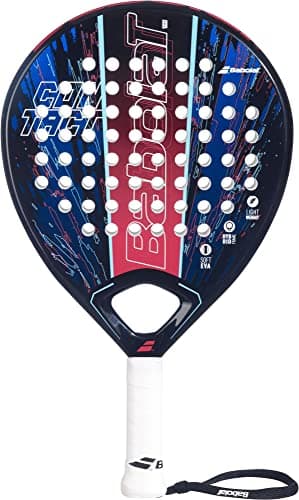 Babolat ContactBest padel starting point | A first padel racket | 8.74 criteria | |
| 2 | 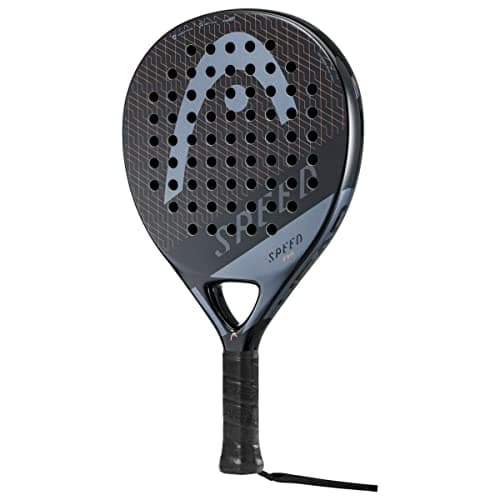 HEAD Evo SpeedBest for tennis converts | Tennis players who want to attack | 8.24 criteria | $87.80 · View on Amazon Price as of October 11, 2026 · was $99.95, 12% off |
| 3 | 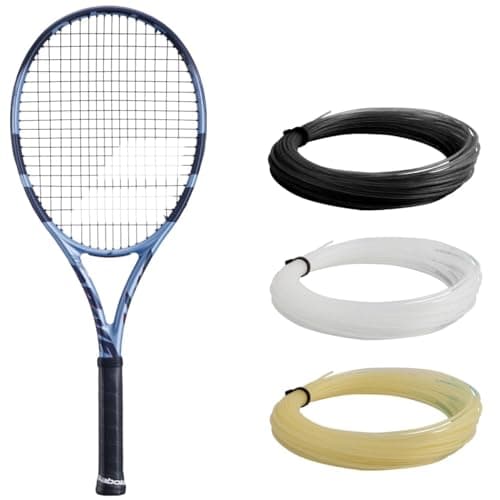 Babolat Pure Drive 2025Best tennis frame | If tennis is the sport you are buying for | 8.64 criteria |
The picks in detail
01Babolat Contact
Best padel starting pointBest for: A first padel racket
If the answer to this comparison is that you need a padel racket, this is the one we recommend most often: a round head, a soft EVA core and 340 g, which sets every variable to forgiving at once.
For someone arriving from tennis, the round head is the important part. Your instinct will be to swing like a tennis player, which means a longer stroke and contact slightly later than a padel player would take it, and a round head is the shape that tolerates that while you adjust.
The 340 g sits at the light end of the padel range, which also helps the transition. A tennis player used to a 318 g frame on a longer handle will find 340 g at padel length feels heavier in the hand than the numbers suggest.
Our score
- Control
- 9.0
- Power
- 7.0
- Sweet spot
- 9.5
- Value
- 9.0
- Overall
- 8.7
Verified specs
- Shape
- Round
- Weight
- 340 g
- Core
- Soft EVA
- Face
- Composite
- Frame
- Composite
Specs as published by Padel Padel, checked September 2026.
Buy if
- You are buying your first padel racket
- You are coming from tennis
- You want the most forgiving shape
Pass if
- You already play padel at club level
- You want to attack from the net
- You want the lightest frame available
02HEAD Evo Speed
Best for tennis convertsBest for: Tennis players who want to attack
An oversize teardrop with a soft foam core and a fiberglass face, specified at 360 to 370 g with a 270 mm medium balance and a 38 mm profile. It is the bridge frame between a first round racket and a real attacking one.
A tennis player's smash already works, and this is the shape that rewards it: the oversize teardrop lifts the sweet spot toward the top of the face without shrinking it, which is where an overhead makes contact.
The honest caution is that 360 to 370 g on a padel handle asks more of the wrist than a tennis frame does, because you hold it closer to the mass. If your wrist or elbow is already a problem, start with the Contact above.
Our score
- Control
- 7.5
- Power
- 8.5
- Sweet spot
- 8.0
- Value
- 8.0
- Overall
- 8.2
Verified specs
- Shape
- Teardrop (oversize)
- Weight
- 360-370 g
- Balance
- 270 mm (medium)
- Core
- Soft foam
- Face
- Fiberglass
- Frame
- Carbon
- Profile
- 38 mm
Specs as published by Padel USA, checked September 2026.
Buy if
- Your tennis overhead already works
- You want a frame with room to grow into
- You want published weight and balance figures
Pass if
- You have wrist or elbow trouble
- This is your first racket sport
- You want maximum forgiveness
Price as of October 11, 2026 · was $99.95, 12% off
03Babolat Pure Drive 2025
Best tennis frameBest for: If tennis is the sport you are buying for
On the tennis side of the comparison, the Pure Drive remains the reference for easy power in a standard adult frame: 318 g strung, a 317 swingweight, a 100 sq in head and a 23/26/23 mm beam.
It is here to make the contrast concrete. 318 g of strung tennis racket on a 27 inch handle swings nothing like 340 g of padel racket at 45.5 cm, because the mass sits much further from your hand and a strung bed absorbs energy the padel face does not.
The caveat is the same one we give on every page that lists it: the 69 RA is stiff, and a stiff frame plus a stiff polyester string is the combination most associated with arm complaints. Pair it with a multifilament.
Our score
- Control
- 7.5
- Power
- 9.5
- Sweet spot
- 8.0
- Value
- 7.5
- Overall
- 8.6
Verified specs
- Head size
- 100 sq in
- Strung weight
- 11.2 oz / 318 g
- Balance
- 4 pts head light
- Swingweight
- 317
- Stiffness (RA)
- 69
- Beam
- 23 / 26 / 23 mm
- String pattern
- 16x19
- Length
- 27 in
Specs as published by Tennis Warehouse, checked September 2026.
Buy if
- Tennis is the sport you are actually buying for
- You want the frame to supply depth
- You rally consistently
Pass if
- You have had tennis elbow
- You want precision above power
- You are buying for padel
The four differences that matter
People ask this question for one of two reasons: either they are about to play padel for the first time and want to know whether the racket in the cupboard will do, or they are trying to work out which sport to buy into. The answer to the first is no, and the reasons are worth setting out because they also explain why the two games feel so different.
1. Strings versus a solid face
This is the big one. A tennis racket is a hoop with a woven string bed in tension, and that bed stretches on impact and returns most of the stored energy to the ball. It also displaces sideways and snaps back, which is where racket-generated spin comes from. A padel racket has no strings at all: the hitting surface is a solid composite face bonded over a foam core, drilled with holes for air flow and weight.
Three consequences follow. Padel gives you less free power for the same swing, because there is no tensioned bed storing energy. It transmits more impact shock to your arm, because the string bed is the main shock absorber in a tennis setup. And padel spin has to come from face friction rather than snapback, which is why the material of the face matters more than any other surface property.
2. Length and where the mass sits
A standard adult tennis racket is 27 inches long - roughly 68.6 cm - with a few extended frames running to 27.75. A padel racket is capped by the rules of the sport at 45.5 cm. That is a difference of more than 20 cm, and it changes everything about how the frame behaves in your hand.
The practical effect is that a heavier padel racket can still feel quicker than a lighter tennis frame, because the mass is closer to your wrist. It is also why padel swings are shorter and more wrist-driven, and why a tennis player's first few sessions feel like the ball is arriving before the racket does.
3. Weight bands that barely overlap
Padel rackets cluster between about 340 and 370 g. Adult tennis frames run from roughly 244 g for the lightest oversize up to about 326 g for a competition stick, with most club frames between 280 and 320 g strung. The padel band sits almost entirely above the tennis band - and it has to, because without strings the frame itself needs mass to resist the ball.
4. Shape language
Tennis talks about head size in square inches and string pattern. Padel talks about round, teardrop and diamond, and about core hardness in EVA grades. Neither vocabulary translates. The nearest equivalence is that a round padel head plays the forgiving role a large tennis head does, and a diamond plays the demanding role a small, dense-patterned tennis frame does.
Side by side
| Padel racket | Tennis racket | |
|---|---|---|
| Hitting surface | Solid composite face over foam core, perforated | Woven string bed under tension |
| Maximum length | 45.5 cm by rule | No sport cap; 27 in standard, 27.75 in extended |
| Typical weight | 340-370 g | 244-326 g strung |
| Strings | None | Type, gauge and tension all chosen |
| Spin mechanism | Face friction | String snapback plus friction |
| Shape vocabulary | Round, teardrop, diamond | Head size in square inches |
| Shock absorption | Foam core only | String bed plus frame flex |
| Tunable after purchase | Grip and overgrip | String, tension, grip, lead tape |
Can you use a tennis racket for padel, or the other way round?
No, in both directions, and for different reasons.
A tennis racket in padel is illegal under the rules, which cap frame length at 45.5 cm. Even setting the rules aside, it would play badly: the strings would launch the ball off the back glass, the length would catch the side walls in a sport played inside an enclosure, and the hoop would not survive contact with a wall.
A padel racket in tennis is not illegal, because tennis does not specify a minimum racket size, but it is useless. A 45.5 cm frame on a full-size court gives you nothing - no reach, no leverage on the serve, and a solid face that returns far less energy than a strung bed. You would lose depth on every shot.
If you are weighing up the two sports rather than the two implements, padel vs tennis covers the court, the rules and what actually carries over between the games.
How we compared them
Everything above is read from published specification sheets and the rules of each sport, cited at the foot of the page. We do not run a test lab and nothing here is written as though we had hit with anything ourselves.
The three products listed are all existing registry entries, each with a cited retailer or manufacturer source. Our selection criteria set out the method and the editorial policy covers corrections. No price is written into this page - the figure on each buy button is the live one.
Common questions
What is the difference between a padel racket and a tennis racket?
A padel racket is a solid, stringless composite face over a foam core, capped at 45.5 cm long and usually 340 to 370 g. A tennis racket is a strung hoop on a longer handle, 27 inches overall and typically 244 to 326 g strung. The absence of strings is the difference everything else follows from.
Can you use a tennis racket to play padel?
No. The rules of padel cap racket length at 45.5 cm, so a 27 inch tennis frame is not legal. It would also play poorly: the strings launch the ball too hard off the back glass and the extra length catches the side walls.
Is a padel racket heavier than a tennis racket?
Usually yes in absolute terms - padel frames cluster at 340 to 370 g against 280 to 320 g for most strung club tennis rackets. But the padel racket is much shorter, so the mass sits closer to your hand and it can still feel quicker to swing.
Why do padel rackets have holes?
The perforations do two jobs: they reduce air resistance through the swing and they remove weight from the face without removing structural material from the frame edges. They are not there to grip the ball.
Do padel rackets have strings?
No. The hitting surface is a solid composite face bonded over an EVA or foam core. That means there is no tension, no gauge and no string type to choose - core hardness does the job string selection does in tennis.
Is padel easier than tennis if I already play?
The footwork and court sense transfer and the underarm serve is simpler, so most tennis players rally on day one. What does not transfer is the swing length - padel contact is shorter and more wrist-driven - and playing the walls, which has no tennis equivalent at all.
Read next
Sources
- 01Wikipedia - Padel
- 02Padel Padel - Babolat Contact padel racket
- 03Padel USA - HEAD Evo Speed padel racket
- 04Tennis Warehouse - Babolat Pure Drive 2025
Every source above was retrieved while writing this page. Specifications are quoted from the listing or manufacturer page cited, not from memory.