Comparison
Padel vs paddle tennis
Two sports, four names between them, and a decade of people turning up to the wrong court. Padel has glass walls and a 10 by 20 meter court; paddle tennis is open, 50 feet long, and was renamed POP Tennis to end exactly this confusion.
By Janet H.Updated
The short answer
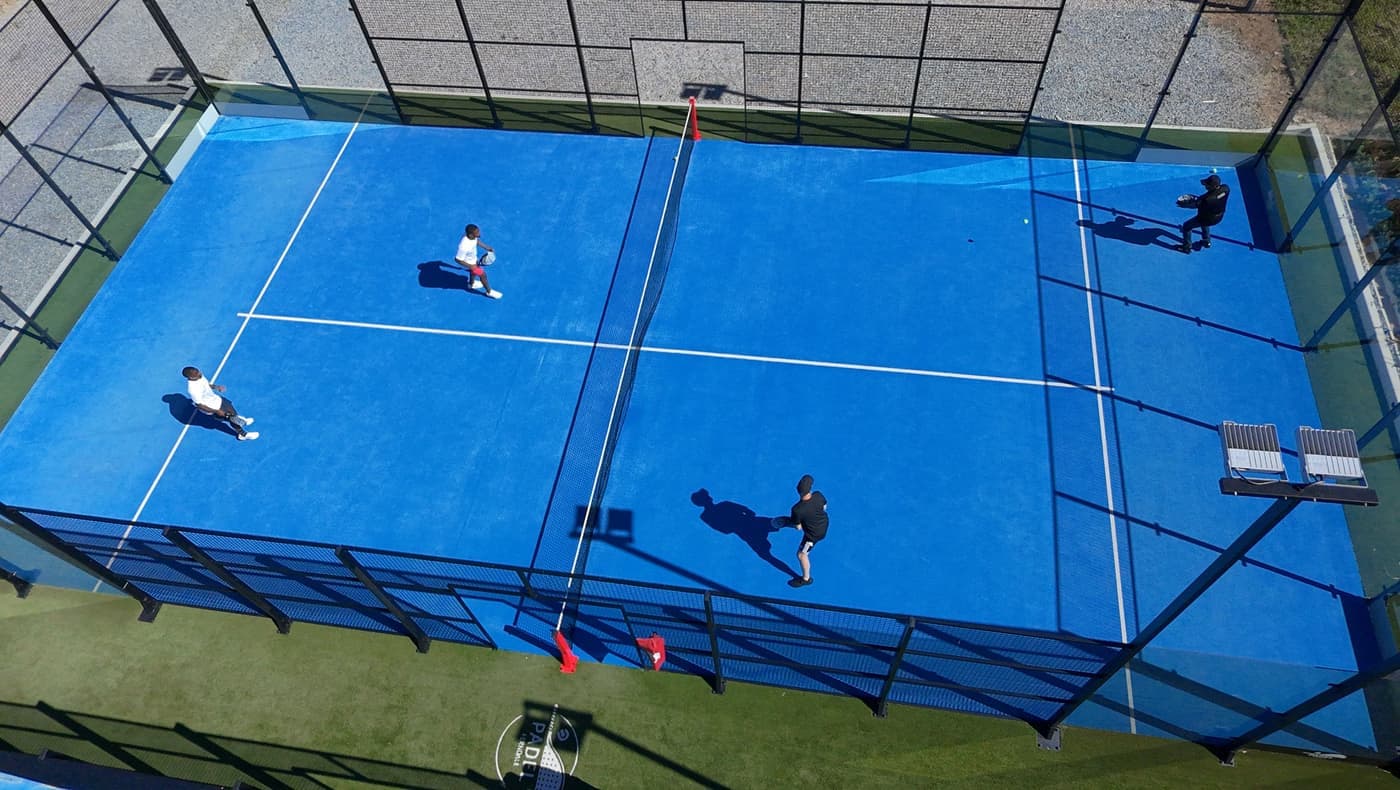
They are separate sports. Padel is played in doubles on an enclosed court 10 m wide by 20 m long with glass and mesh walls in play and a net 88 cm at the center, using a stringless perforated racket. Paddle tennis - officially renamed POP Tennis in 2015 and 2016 - uses an open 50 by 20 foot court with a 31 inch net, no walls, a solid paddle and a reduced-pressure tennis ball.
Disclosure — we earn a commission on qualifying purchases made through links on this page, at no extra cost to you. It never changes which product we rank first. How this site is funded.
Our picks
| # | Product | Best for | Score | Price |
|---|---|---|---|---|
| 1 | 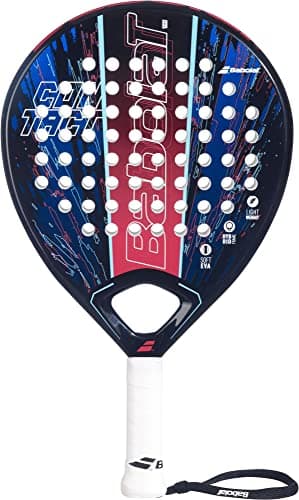 Babolat ContactMost forgiving | A first padel racket | 8.45 criteria | |
| 2 | 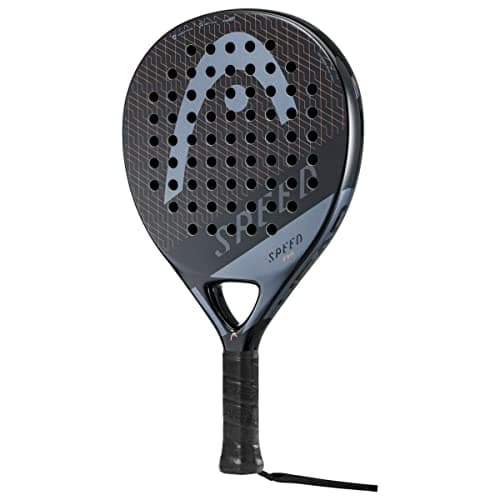 HEAD Evo SpeedBest for tennis converts | Players coming from tennis | 8.65 criteria | $90.23 · View on Amazon Price as of October 17, 2026 · was $99.95, 10% off |
| 3 | 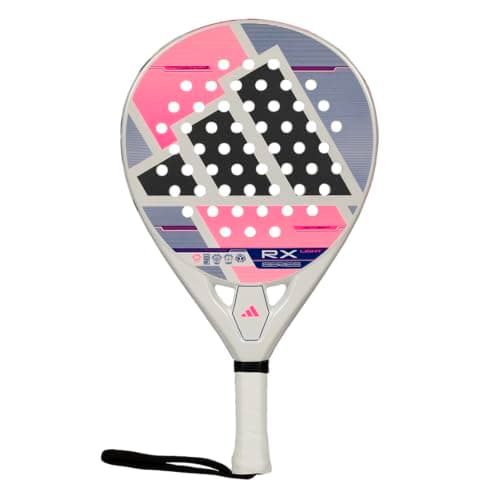 adidas RX Series LightLightest | A light, control-first start | 8.35 criteria |
The picks in detail
01Babolat Contact
Most forgivingBest for: A first padel racket
Every variable set to forgiving: a round head, a soft EVA core, a composite face, a published 340 g. Round means the sweet spot sits in the middle of the face and is as large as the sport allows, and 340 g is the light end of the normal padel range.
It is the default first padel racket for a reason, and it is the right one for somebody who has just worked out which of these two sports they are going to play. A round racket gives you a season of hitting the middle while you learn the walls and shorten your swing.
The honest cost is a ceiling. A soft core and a composite face will not give you the put-away power off a high ball that a carbon teardrop will, and you will feel that once your technique catches up - probably within a year of weekly play. Our [beginner roundup](/padel/best-rackets-for-beginners) covers the rest of the entry field.
Our score
- Control
- 8.5
- Power
- 7.0
- Sweet spot
- 9.5
- Arm comfort
- 9.0
- Maneuverability
- 8.5
- Overall
- 8.4
Verified specs
- Shape
- Round
- Weight
- 340 g
- Core
- Soft EVA
- Face
- Composite
- Frame
- Composite
Specs as published by Padel Padel, checked September 2026.
Buy if
- You are starting padel rather than paddle tennis
- You want the largest effective sweet spot
- You would rather spend less now and upgrade knowingly
Pass if
- You already play padel regularly
- You want power from the frame
- You want a carbon hitting surface
02HEAD Evo Speed
Best for tennis convertsBest for: Players coming from tennis
An oversize teardrop at a published 360 to 370 g with a 270 mm medium balance, a 38 mm profile, a soft foam core and a fiberglass face over a carbon frame. The teardrop puts the sweet spot higher up the face than a round racket does - closer to where a tennis player's eye already expects contact.
The fiberglass face is the other half of the argument. It is softer and more elastic than carbon, so it adds depth to a shot you have under-hit, which is most shots in a tennis player's first month of padel because a ball off the glass arrives slower and lower than anything in tennis.
Two honest costs. 360 to 370 g sits at the top of the normal padel range and a tennis player used to a 300 g frame will feel it in the wrist at first - our [padel racket weight guide](/guides/padel-racket-weight) explains why padel rackets are heavy by design. And a teardrop is a compromise: less forgiving than round, less punishing than diamond.
Our score
- Control
- 8.0
- Power
- 8.5
- Sweet spot
- 8.5
- Arm comfort
- 8.5
- Maneuverability
- 7.5
- Overall
- 8.6
Verified specs
- Shape
- Teardrop (oversize)
- Weight
- 360-370 g
- Balance
- 270 mm (medium)
- Core
- Soft foam
- Face
- Fiberglass
- Frame
- Carbon
- Profile
- 38 mm
Specs as published by Padel USA, checked September 2026.
Buy if
- You play tennis and are starting padel
- You want a large face with a higher contact point
- You want a soft face while your swing shortens
Pass if
- You have never played a racquet sport
- You want the lightest racket available
- You are already competing in padel
Price as of October 17, 2026 · was $99.95, 10% off
03adidas RX Series Light
LightestBest for: A light, control-first start
Round, soft-cored, soft-faced and head-light, which is Padel Market's easy-swinging recommendation for a player still building a padel technique. Head-light balance is the spec that matters here: it puts the mass nearer your hand, so the racket is quicker to move and asks less of the wrist.
It is the pick if 360 g already sounds like a lot. Padel rackets are heavier than tennis frames and the wrist is the first thing to complain in a new player's first month, so a light head-light frame removes the most common early barrier.
The honest costs: adidas publish no weight figure for this model that we can cite, only that it is light and head-light, and a control-first soft racket gives you the least free power of the three here. It is a frame to learn on rather than a frame to compete with.
Our score
- Control
- 9.0
- Power
- 6.5
- Sweet spot
- 9.0
- Arm comfort
- 9.0
- Maneuverability
- 9.5
- Overall
- 8.3
Verified specs
- Shape
- Round
- Core
- Soft
- Face
- Soft
- Balance
- Head light
Specs as published by Padel Market, checked September 2026.
Buy if
- You want the quickest, least demanding racket to swing
- Your wrist or forearm complains easily
- You are focused on control rather than power
Pass if
- You want published weight and balance figures
- You want power from the frame
- You already have a settled padel technique
Why the names collide
Padel was invented in 1969 in Acapulco, Mexico, by Enrique Corcuera, who modified a squash court to include elements of platform tennis and initially called it Padel Corcuera. Paddle tennis is older and American, and for decades both sports were commonly called paddle tennis in English-language coverage. Add platform tennis, pickleball and the loose use of paddleball for any solid-bat game and you have a genuine mess.
The sport that did something about it was paddle tennis. In 2015 and 2016 the USPTA rebranded it as POP Tennis and renamed its own governing body the International POP Tennis Association, explicitly to improve marketability and to distinguish the sport from similar paddle-based games. The name refers to the pop sound the paddle makes on the ball. If you have heard of POP Tennis and wondered what it was, it is paddle tennis.
Padel kept its name and, in the US market at least, has become the one most people mean when they say padel. It is also the one growing fastest. Our padel vs pickleball and padel vs platform tennis pages cover the other two corners of the same naming tangle.
The courts are the clearest difference
A padel court is an enclosed box. The playing area is 10 m wide by 20 m long with a 0.5 percent tolerance; the walls are 3 m panels, with the back walls and the adjacent service corners reaching 4 m thanks to an extra meter of mesh on top; glass is usually used for the back walls and the adjacent corner sections, with metal mesh for the rest of the sides. The rules also require a minimum 6 m of clear height above the surface with no lighting or ceiling structures in the way, lines 5 cm wide, and service lines 3 m from the back wall.
A paddle tennis court is open. It measures 50 ft from baseline to baseline and 20 ft wide, with no doubles lanes - so unlike tennis, the singles and doubles court are the same width. The service line sits 3 ft in from the baseline, making a service box of 10 by 22 ft. There are two recognized court styles, East Coast and West Coast, though the reference we used does not set out how they differ.
The net heights are the fastest way to tell the two apart in a photo. Padel's net is 88 cm at the center and 92 cm at the ends, with a 0.5 cm tolerance - roughly waist height. Paddle tennis uses a 31 inch net, which is lower, about 79 cm. A low net over a short open court is a fundamentally different geometry from a waist-high net inside a glass box.
Rackets, balls and rules
| Padel | Paddle tennis / POP Tennis | |
|---|---|---|
| Court | 10 m wide x 20 m long, enclosed | 20 ft wide x 50 ft long, open |
| Walls | In play - 3 m panels, 4 m at the back with mesh, glass at the back and corners | None |
| Net height | 88 cm center, 92 cm ends | 31 in |
| Minimum clear height | 6 m above the surface, no obstructions | Not stated in the source we used |
| Implement | Composite, no strings, perforated with 9-13 mm cylindrical holes | Solid and unstrung, may be perforated |
| Wrist cord | Required - non-elastic, maximum 35 cm | Not stated in the source we used |
| Ball | Similar to a tennis ball, slightly smaller, less pressure, uniformly yellow or white | A tennis ball with reduced pressure - lower compression |
| Serve | Underarm, after a bounce, at or below waist level, one foot on the ground, into the diagonal box; two attempts | The source we used is internally inconsistent on whether a second serve is allowed |
| Format | Doubles is the standard format | Singles and doubles |
| Scoring | Tennis scoring, with an optional golden point at deuce | Tennis scoring with advantage - 15, 30, 40, advantage, game |
Two rows deserve a second look. The implement is a solid unstrung paddle in both sports, which is why they get bundled together - but padel's rules specify cylindrical perforations of 9 to 13 mm and a mandatory non-elastic wrist cord of no more than 35 cm, and a padel racket is longer and heavier than a paddle tennis paddle. The ball is reduced-pressure in both cases, which is the one genuine point of similarity.
And the walls row is the whole game. In padel a ball that passes you is not necessarily lost: it comes off the glass and you play it, which is what produces the long rallies the sport is known for and what makes positioning so different from tennis. Paddle tennis has no walls at all, so a ball past you is gone - it plays much more like compressed tennis.
Which one can you actually play?
In most of the US this is settled by facilities rather than by preference. Padel is the one being built: enclosed glass courts have gone up in major metros over the past few years and the sport has a professional circuit with mainstream sponsorship behind it. POP Tennis courts exist, concentrated in California and parts of the East Coast, and the sport is smaller.
If both are available to you, pick on what kind of game you want. Padel is a doubles game of positioning and patience where the walls keep the ball alive and points are constructed; it is forgiving to start and has a long tactical ceiling. Paddle tennis is closer to tennis played small - faster exchanges, a low net, no second chances when a ball goes past you - and it transfers more directly if you already play tennis.
If you are coming from tennis specifically, the thing to know about padel is that your swing is the problem rather than your eye. The ball arrives slower and lower, the racket has no strings, and a full tennis groundstroke sends the ball into the back glass. We wrote best padel rackets for tennis players for exactly that transition, and padel vs tennis covers the rest of the differences.
How this comparison was put together
We do not run a test lab, and nothing here is written as though we had played either sport competitively. Every dimension, ball specification and racket limit on this page was read from the governing-body rule page or reference entry cited at the foot of the article, retrieved on 2026-10-17. Where a sport's published rules do not state a figure, this page says so rather than converting or estimating one.
Our full selection criteria set out the method, and the editorial policy covers corrections and how often pages are revisited. We earn a commission if you buy through our links, which is disclosed on every page and never changes what we recommend.
Common questions
Are padel and paddle tennis the same thing?
No. Padel is played in an enclosed 10 by 20 meter court with glass and mesh walls in play and a net 88 cm at the center. Paddle tennis uses an open 50 by 20 foot court with no walls and a 31 inch net. Both use a solid unstrung implement and a reduced-pressure ball, which is why the names get confused.
What is POP Tennis?
It is paddle tennis, renamed. The USPTA rebranded the sport as POP Tennis across 2015 and 2016 and renamed its governing body the International POP Tennis Association, explicitly to improve marketability and to distinguish it from similar paddle-based sports. The name refers to the pop sound of the paddle on the ball.
Is padel the same as paddleball?
No. Paddleball is used loosely in American English for several solid-bat games, including wall games that are not related to padel at all, so it is a name rather than a specification. If you came here searching for paddleball and meant the enclosed glass-court doubles game, that is padel, and this page covers it.
Which is closer to tennis?
Paddle tennis. It is an open court with a low net, tennis scoring with advantage, and a reduced-pressure tennis ball, so it plays like compressed tennis. Padel's walls change positioning and shot selection fundamentally, which is why a tennis player's instincts work against them in their first month.
Can I use a padel racket for paddle tennis?
They are different implements. A padel racket is longer and heavier with specified cylindrical perforations of 9 to 13 mm and a mandatory wrist cord; a paddle tennis paddle is a shorter solid bat that may be perforated. Each sport's governing body specifies its own implement, so use the one for the court you are on.
Does padel use a tennis ball?
No, though they look alike. A padel ball is similar to a tennis ball but slightly smaller and carries less pressure, and it must be uniformly yellow or white. We go through what that changes on padel balls vs tennis balls.
Is padel always doubles?
Doubles is the standard format and the one the court is built around - a 10 by 20 meter enclosed box is cramped for singles. Singles padel exists on narrower purpose-built courts but it is rare, and almost every club court you will find is a doubles court.
Read next
Sources
- 01Wikipedia - Padel (court, racket, ball, serve and scoring)
- 02Wikipedia - Paddle tennis (court, net, paddle, ball and the POP Tennis rename)
- 03Padel Market - best padel racket for beginners 2026
- 04Padel Padel - Babolat Contact
- 05Padel USA - HEAD Evo Speed
Every source above was retrieved while writing this page. Specifications are quoted from the listing or manufacturer page cited, not from memory.