Comparison
Racquetball vs squash
Same building, same four walls, completely different games. One has a fast bouncy ball and a short racket in a tall wide box; the other has a dead ball and a long racket in a narrow one - and the published numbers tell you why they feel so unalike.
By Janet H.Updated
The short answer
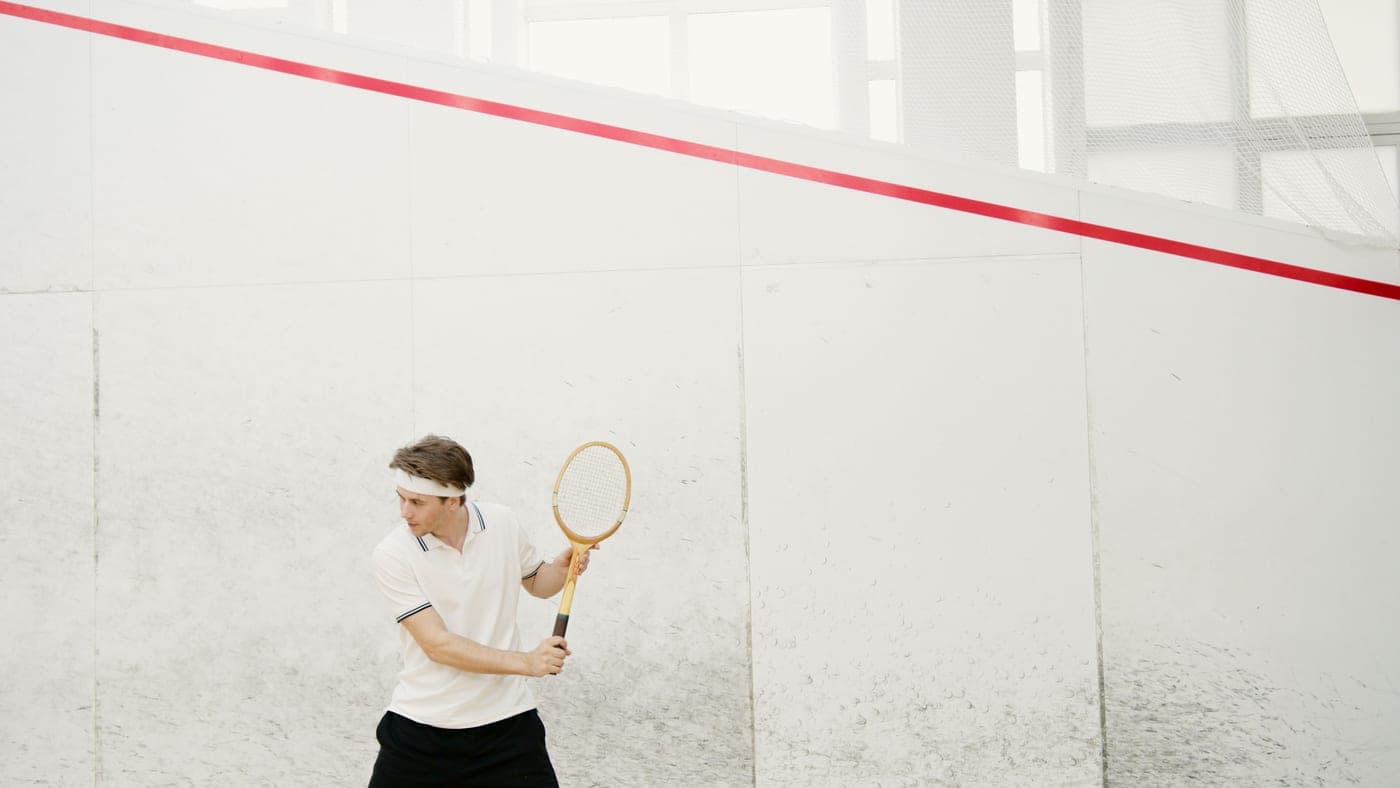
Racquetball is played on a 20 by 40 foot court 20 feet high, with a 2 1/4 inch ball that bounces 68 to 72 inches from a 100 inch drop and a racquet no longer than 22 inches. Squash is played on a narrower 9.75 by 6.4 meter court with a 40 mm ball that barely bounces and a racket up to 686 mm long. Racquetball is faster and easier to start; squash is more tactical and harder to master.
Disclosure — we earn a commission on qualifying purchases made through links on this page, at no extra cost to you. It never changes which product we rank first. How this site is funded.
Our picks
| # | Product | Best for | Score | Price |
|---|---|---|---|---|
| 1 | 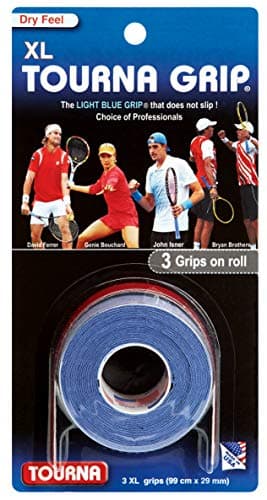 Tourna Grip OriginalBest crossover grip | Sweaty hands in any indoor court sport | 8.64 criteria | |
| 2 | 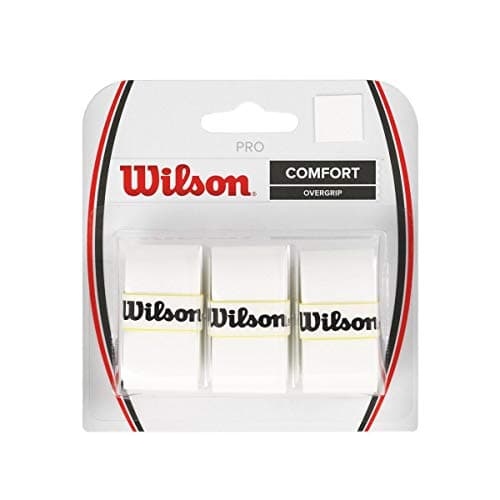 Wilson Pro OvergripBest all-round grip | A tacky grip on any handle | 8.64 criteria | |
| 3 | 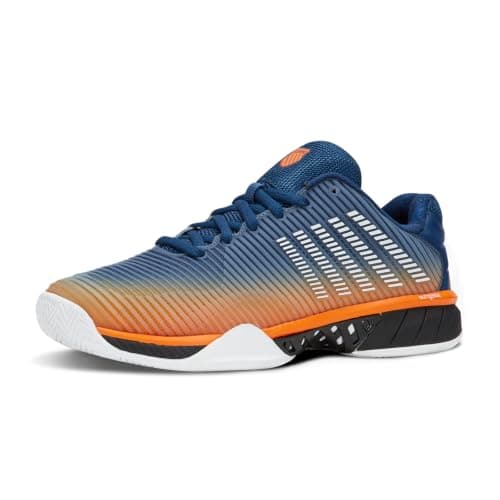 K-Swiss Hypercourt Express 2Best crossover shoe | Indoor court footwear for either sport | 8.54 criteria |
The picks in detail
01Tourna Grip Original
Best crossover gripBest for: Sweaty hands in any indoor court sport
An enclosed indoor court with no airflow is the sweatiest environment in racket sport, and both of these games are played in one. Tourna Grip is the dry-feel overgrip that works when your hands are wet rather than when they are dry, which is the opposite of how a tacky grip behaves, and it goes on a squash or racquetball handle exactly as it goes on a tennis one.
It is also the cheapest meaningful equipment change in either sport. A handle you do not have to squeeze is a handle that costs you less forearm fatigue over a long match - and in squash, where rallies of 30 shots are normal, that compounds.
The honest cost is durability and feel. Tourna Grip is a thin, dry, slightly abrasive material that wears faster than a tacky synthetic and feels unpleasant to players who like a soft grip. If your hands stay dry, the Wilson below is the better choice.
Our score
- Performance
- 9.0
- Comfort
- 8.0
- Durability
- 7.0
- Value
- 9.5
- Overall
- 8.6
Verified specs
- Type
- Dry / absorbent
- Strength
- Sweat absorption
- Listed price
- From $6.75
Specs as published by Tennis Warehouse, checked September 2026.
Buy if
- Your hands sweat in an enclosed court
- You want a dry-feel grip rather than a tacky one
- You want the cheapest useful upgrade
Pass if
- Your hands stay dry
- You prefer a soft, cushioned grip
- You want maximum grip life per wrap
02Wilson Pro Overgrip
Best all-round gripBest for: A tacky grip on any handle
The default tacky overgrip across racket sport, and the right call if your hands do not flood. It adds a little cushioning as well as tack, which takes some of the impact out of a hard-hit ball - relevant in racquetball, where the ball is fast and the racquet is short and stiff.
It also builds up a handle, which matters in both sports: squash and racquetball handles are generally slimmer than tennis handles, and a handle that is too thin forces you to grip harder. Adding a wrap is the standard fix and it costs very little.
The honest cost is that tack fails in sweat. Once a tacky grip is wet it is slicker than a dry-feel grip, which is why both of these are on this page rather than one. Our [overgrip picks](/gear/best-tennis-overgrips) cover the whole category, and [overgrip vs replacement grip](/guides/overgrip-vs-replacement-grip) explains which layer you are actually changing.
Our score
- Performance
- 8.5
- Comfort
- 9.0
- Durability
- 8.0
- Value
- 8.5
- Overall
- 8.6
Verified specs
- Type
- Tacky
- TW status
- Best Seller
- Profile
- Thin — keeps grip size minimal
- Listed price
- $9.00 for 3
Specs as published by Tennis Warehouse, checked September 2026.
Buy if
- Your hands stay reasonably dry
- You want cushioning as well as tack
- You need to build up a thin handle
Pass if
- Your hands sweat heavily
- You want the thinnest possible grip
- You want a dry-feel surface
03K-Swiss Hypercourt Express 2
Best crossover shoeBest for: Indoor court footwear for either sport
Both of these sports are played on a sprung indoor floor with hard stops, lunges and a lot of sideways loading, which is the exact brief a court shoe is built for. RunRepeat score this one 86 and name it their budget hard-court pick at a listed $110, 13 percent below category typical.
What makes it the crossover pick is that it is a court shoe rather than a sport-specific one: a dense non-marking outsole, a reinforced upper, a real heel counter and a toe guard. Tennis Warehouse also carry it in their pickleball catalog, and RunRepeat list it in their wide-feet catalog, so it fits a broad range of feet.
The honest cost is that it is a tennis shoe and not a squash shoe. Dedicated indoor shoes for these sports are lighter with gum-rubber outsoles tuned for a wood floor; this has more rubber and more weight than either sport strictly needs. It is still a far better answer than running shoes - see [what are court shoes](/guides/what-are-court-shoes) for why.
Our score
- Performance
- 8.5
- Comfort
- 8.0
- Durability
- 8.5
- Value
- 9.0
- Overall
- 8.5
Verified specs
- RunRepeat score
- 86 — Best Budget, hard court
- Price
- $110, 13% below category typical
- Weight
- Lighter than average
- Width fit
- Listed in RunRepeat's wide-feet catalog
Specs as published by RunRepeat, checked September 2026.
Buy if
- You play an indoor wall sport in running shoes right now
- You also play tennis or pickleball
- You want a court shoe without premium pricing
Pass if
- You compete and want a sport-specific indoor shoe
- You want the lightest possible shoe
- You play four or more times a week
The two courts are not the same room
The single biggest difference is the box you stand in. A racquetball court, under USA Racquetball's rules, is 20 feet wide, 40 feet long and 20 feet high, with the back wall required to be at least 12 feet high. The whole volume is in play, including the ceiling, and the service zone is a 5 foot by 20 foot band across the middle of the floor.
A squash singles court is 9,750 mm long by 6,400 mm wide and 5,640 mm high, with a tolerance of 10 mm on the length and width - roughly 32 feet by 21 feet, and under 19 feet tall. It is a touch longer than a racquetball court is wide, a foot or so wider, and substantially shorter in length and height. The front wall also carries the tin, described in the rules as a half-meter-high metal area at the bottom, and a ball that strikes it is out.
That tin is the most consequential piece of architecture in either sport. In racquetball the front wall is live all the way to the floor, so a ball driven low and hard is a winner. In squash the bottom half-meter of the front wall is a penalty, which means every attacking shot has to clear a line and then die - and that single constraint is why squash rewards precision while racquetball rewards power.
The balls are the real difference
A racquetball is close to 2 1/4 inches in diameter, weighs approximately 1.4 ounces, measures 55 to 60 on the durometer scale, and is required to bounce 68 to 72 inches when dropped from 100 inches at 70 to 74 degrees Fahrenheit. Read that bounce figure again: roughly 70 percent of the drop height. It is a genuinely lively ball.
A squash ball is 39.5 to 40.5 mm across and weighs 23 to 25 g, and it is graded by a dot on the surface rather than by a bounce percentage. A double-yellow dot - the competition standard - is described as extra slow with very low bounce; a single yellow is slow with low bounce; green is medium; red is medium speed with high bounce; blue is fast with very high bounce and is sold for beginners and juniors. A squash ball also has to be warmed up by hitting before it behaves properly at all.
| Racquetball | Squash | |
|---|---|---|
| Court | 20 ft wide x 40 ft long x 20 ft high | 6,400 mm wide x 9,750 mm long x 5,640 mm high |
| Back wall | At least 12 ft high | Not stated in the source we used |
| Front wall penalty area | None - the wall is live to the floor | The tin, a half-meter-high metal area at the base |
| Ball diameter | Close to 2 1/4 in | 39.5-40.5 mm |
| Ball weight | Approximately 1.4 oz | 23-25 g |
| Ball bounce | 68-72 in from a 100 in drop at 70-74F | Graded by dot color, from blue (fast, very high) to double yellow (extra slow, very low) |
| Racket length limit | 22 in including bumper guard and handle | 686 mm (27.0 in) |
| Racket weight limit | Not stated in the source we used | 255 g (9.0 oz) maximum; most 90-150 g |
| Protective eyewear | Mandatory, ASTM F803 or better | Not stated in the source we used |
| Scoring | Not covered on the rules page we used | Point-a-rally to 11, win by two, usually best of five |
The consequence of that bounce gap is everything. A racquetball comes off the wall at you, so the game is reaction, retrieval and power, and a beginner can keep a rally going on their first visit because the ball does the work. A squash ball dies, so the game is about getting the ball to a corner it cannot come out of, and a beginner's first session is mostly picking the ball off the floor.
The rackets tell you how each game is played
Racquetball limits the racquet frame, including the bumper guard and all solid parts of the handle, to 22 inches. That is a short implement with a wide head and typically a very short handle, built for a compact, wristy swing in a tall box where the ball is often above your shoulder.
Squash allows up to 686 mm - 27.0 inches, the same as a tennis racket - with a maximum width of 215 mm, a maximum strung area of 500 cm² and a maximum weight of 255 g, though most sit between 90 and 150 g and get strung at 25 to 30 lb. A long, light, narrow-headed racket is built for reach into corners and for a swing that comes from the shoulder.
Which should you take up?
Take up racquetball if you want a game you can enjoy on day one. The lively ball keeps rallies alive without technique, the court is bigger and taller so there is room to flail, and the swing is intuitive for anybody who has played any racket sport. It is the better social option and the better option if your main goal is to get out of breath for an hour.
Take up squash if you want a game with a long ceiling. Wikipedia's squash entry notes that rallies between experienced players may involve 30 or more shots, that the game places heavy demands on both aerobic and anaerobic fitness, and that points often become a war of attrition as players get better at retrieving. It also cites a figure of roughly 600 to 1,000 food calories per hour, tied to the older English scoring system rather than to modern point-a-rally play.
Two practical considerations. Court availability decides this for a lot of people: in the US, racquetball courts are more common in general-purpose gyms while squash courts cluster around clubs and universities - and many facilities have converted one to the other over the past two decades. And safety: racquetball's rules require lensed protective eyewear meeting or exceeding ASTM F803 from every competitor, worn whenever the ball is in play or about to be, with a technical foul for a first violation and forfeiture for a second. That is a rule worth knowing before you book a court.
If you are weighing either of these against the racquet sports this site actually covers, we have the direct comparisons: padel vs squash and padel vs racquetball both run the court, ball and gear differences, and padel is the one of the three growing fastest in the US.
How this comparison was put together
We do not run a test lab, and nothing here is written as though we had played either sport competitively. Every dimension, ball specification and racket limit on this page was read from the governing-body rule page or reference entry cited at the foot of the article, retrieved on 2026-10-17. Where a sport's published rules do not state a figure, this page says so rather than converting or estimating one.
Our full selection criteria set out the method, and the editorial policy covers corrections and how often pages are revisited. We earn a commission if you buy through our links, which is disclosed on every page and never changes what we recommend.
Common questions
What is the difference between racquetball and squash?
Court, ball and racket. Racquetball is played in a 20 by 40 foot court 20 feet high with a lively 2 1/4 inch ball and a racquet capped at 22 inches. Squash uses a narrower 9.75 by 6.4 meter court with a 40 mm ball that barely bounces, a racket up to 686 mm long, and a tin - a half-meter penalty area at the base of the front wall.
Which is harder, racquetball or squash?
Squash is harder to learn and harder to master, because the ball dies and has to be warmed up, and because the tin removes the easiest attacking shot. Racquetball is easier on day one because the ball comes back to you. Physically both are demanding; squash's long rallies are famously attritional.
Can I use a squash racket for racquetball?
No. Racquetball limits the frame including the bumper guard and all solid handle parts to 22 inches, and a squash racket is up to 686 mm - about 27 inches. It is outside the legal limit, and it is also the wrong shape and swingweight for the compact wristy stroke racquetball uses.
Can I use a racquetball racquet for squash?
It would be legal on length but it is the wrong tool. A 22-inch racquet gives up a lot of reach into the corners where squash is played, and a squash ball needs a swing from the shoulder rather than a wrist flick. You would be giving away the two things that decide squash rallies.
Do I need protective eyewear?
In racquetball, yes - the rules require lensed eyewear designed for racquet sports and meeting or exceeding the ASTM F803 standard, worn whenever the ball is in play or about to be put into play, including warm-up. A first violation is a technical foul and a second in the same match forfeits. The squash reference we used does not state an equivalent requirement.
What squash ball should a beginner buy?
A blue dot, which is graded fast with very high bounce and is sold for beginners and juniors - it keeps a rally going while you learn. Double yellow is the competition ball and is extra slow with very low bounce, which is why it is miserable for a first session.
How is squash scored?
Point-a-rally to 11: the winner of the rally scores whether or not they served, games must be won by two points so play continues past 10-10, and competition matches are usually best of five games.
Read next
Sources
- 01USA Racquetball - official rules, Courts and Equipment
- 02Wikipedia - Squash (court, ball, racket and scoring)
- 03RunRepeat - best hard court tennis shoes
- 04Tennis Warehouse - best overgrips
Every source above was retrieved while writing this page. Specifications are quoted from the listing or manufacturer page cited, not from memory.