Buying guide
Best pickleball shoes in 2026
A pickleball shoe has one job a running shoe cannot do: hold your foot still when it stops going forward and starts going sideways. These six are the ones worth your money, and each one gives something up.
By Janet H.Updated
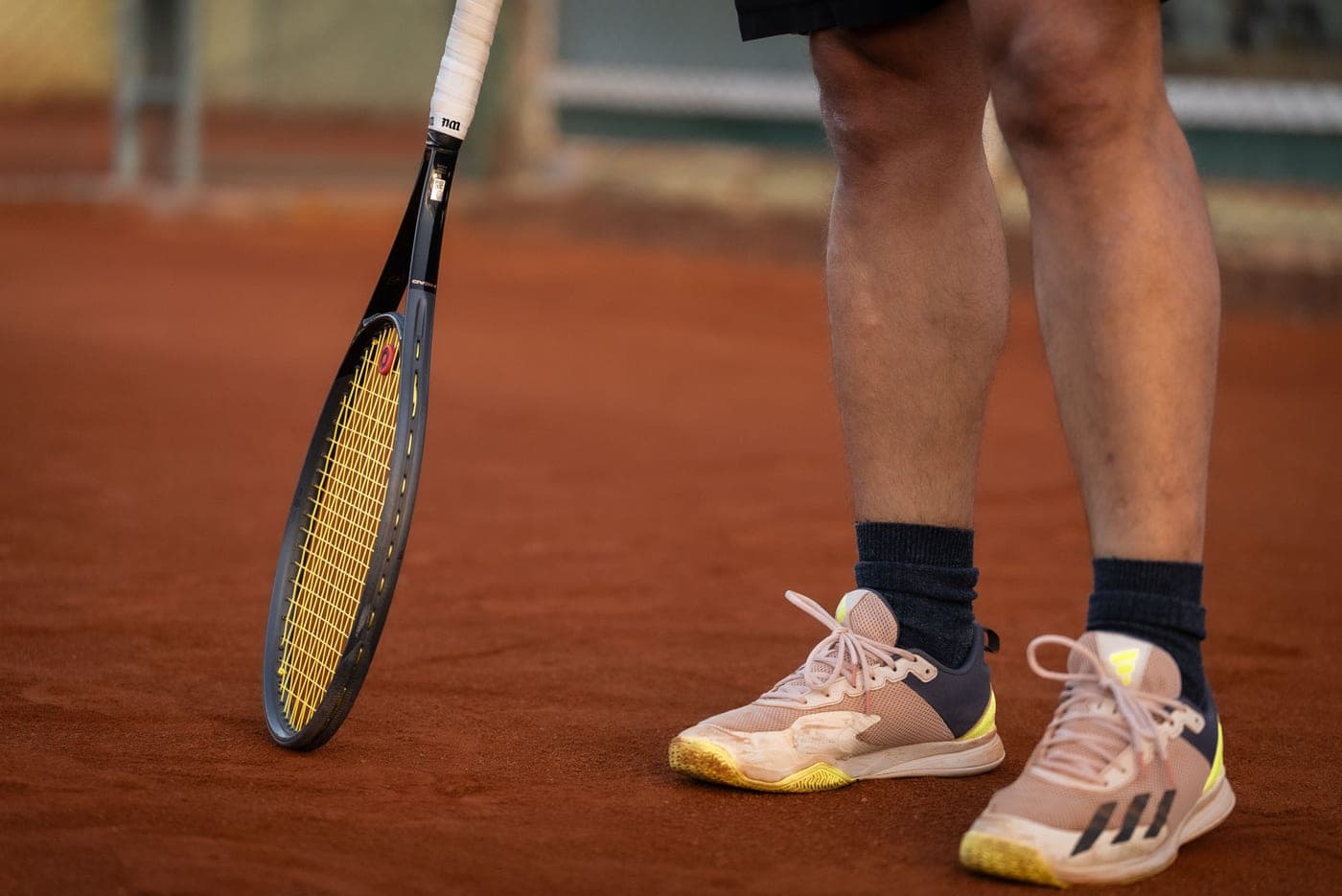
The short answer
The Skechers Viper Court Pro 2.0 is the best pickleball shoe for most players: a Goodyear rubber outsole, a roomy forefoot and an Arch Fit insole, well below the premium court-shoe price. If your foot is broad, buy the K-Swiss Express Light Pickleball 2 instead - it is the only pick here sold in medium, wide and 2E.
Disclosure — we earn a commission on qualifying purchases made through links on this page, at no extra cost to you. It never changes which product we rank first. How this site is funded.
Our picks
| # | Product | Best for | Score | Price |
|---|---|---|---|---|
| 1 | 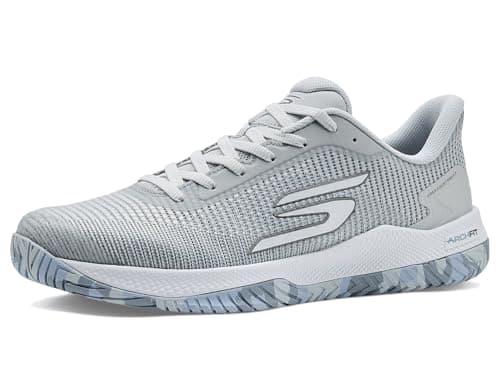 Skechers Viper Court Pro 2.0Top pick | Most recreational and club players | 8.65 criteria | $89.99 · View on Amazon Price as of October 15, 2026 · was $120.00, 25% off |
| 2 | 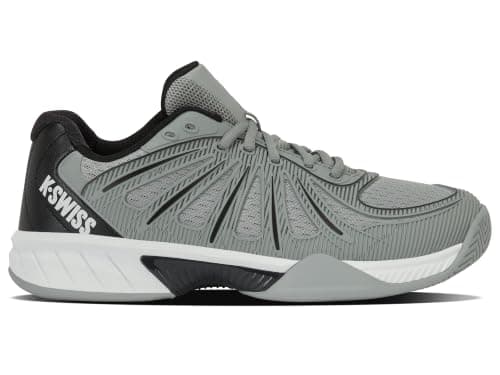 K-Swiss Express Light Pickleball 2Best for wide feet | Broad or high-volume feet | 8.45 criteria | |
| 3 | 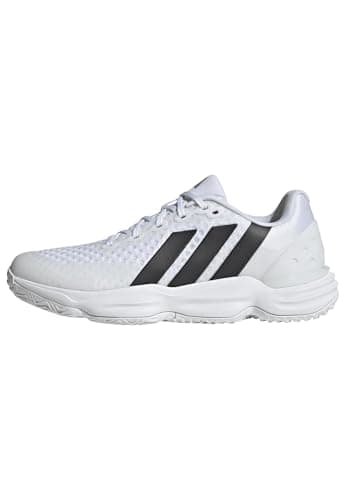 adidas Court Pickleball 2Most stable | Hard, repeated lateral loading | 8.45 criteria | $93.52 · View on Amazon Price as of October 15, 2026 · was $120.00, 22% off |
| 4 | 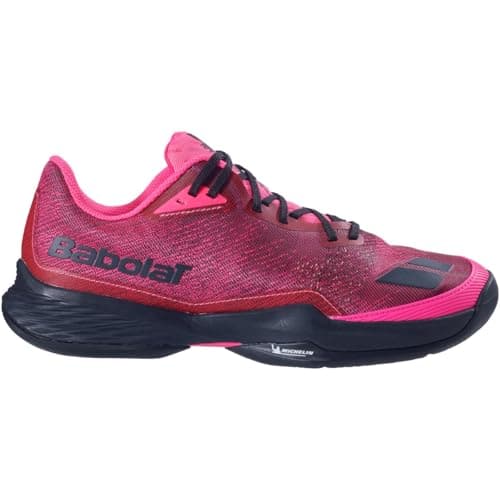 Babolat Jet Mach PickleballMost durable | Outdoor concrete that eats outsoles | 8.55 criteria | $104.30 · View on Amazon Price as of October 15, 2026 · was $149.00, 30% off |
| 5 | 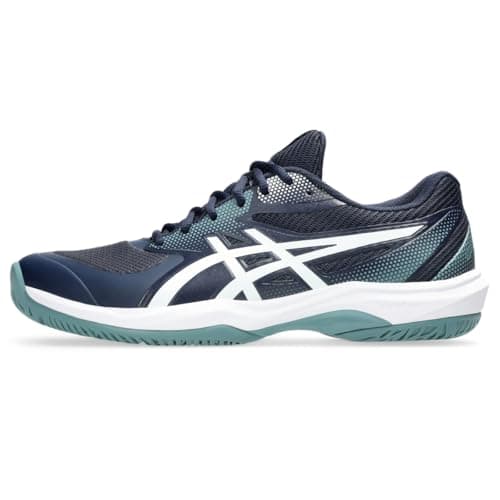 ASICS GAME FF PickleballBest value | A first pickleball-specific shoe | 7.85 criteria | $79.95 · View on Amazon Price as of October 15, 2026 · was $89.95, 11% off |
| 6 | 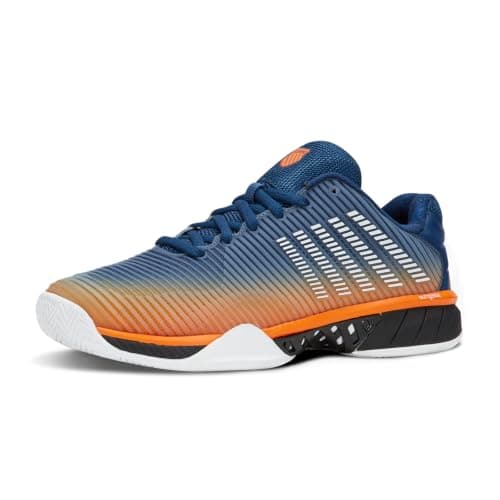 K-Swiss Hypercourt Express 2Best double-duty | Players who also play tennis | 8.25 criteria |
The picks in detail
01Skechers Viper Court Pro 2.0
Top pickBest for: Most recreational and club players
This is the shoe you see most often on a busy public court, and the reason is the outsole. Skechers specifies a Goodyear Gold rubber compound here, which is the same partnership the brand uses on its walking and work lines, and it is built for the quick stop and the controlled slide rather than for rolling forward. On top of that sits an ULTRA GO foam midsole and a removable Arch Fit EVA insole, so the cushioning under the heel is genuinely soft rather than nominally present.
The fit is the second reason it leads. Skechers lists this model as Relaxed Fit, meaning a roomier toe box and forefoot than a tennis-derived court shoe gives you, and in a game where you are pushing off the inside edge of the forefoot over and over that extra room is the difference between a long session and a blister. A rubber toe guard covers the drag point, and the published heel height is 1 1/4 inches.
The honest cost is support at the top end. A mesh upper with a toe guard is not the same as the TPU cage on a tennis shoe built for a full-court sprint, so a heavy, aggressive mover who covers a lot of ground will feel the upper give before the outsole wears out. If your foot is narrow, the relaxed last works against you too - a loose forefoot slides inside the shoe, which is its own blister. Skechers does not publish a weight for this model, so we are not going to invent one.
Our score
- Lateral stability
- 8.0
- Cushioning
- 8.5
- Outsole durability
- 8.5
- Fit accommodation
- 9.0
- Lightness
- 8.0
- Overall
- 8.6
Verified specs
- Outsole
- Goodyear Gold rubber
- Midsole
- ULTRA GO foam
- Insole
- Arch Fit, removable EVA
- Upper
- Mesh with rubber toe guard
- Fit
- Relaxed Fit — roomy toe and forefoot
- Heel height
- 1 1/4 in
- Brand list price
- $115 at Skechers
Specs as published by Skechers, checked September 2026.
Buy if
- You play two or more times a week on outdoor concrete or indoor hardwood
- You want a roomy forefoot rather than a snug tennis last
- You want a court-specific outsole without paying premium court-shoe money
Pass if
- You have a narrow foot that swims in a relaxed last
- You are a heavy, aggressive mover who wants a caged upper
- You need a published weight figure before you buy
Price as of October 15, 2026 · was $120.00, 25% off
02K-Swiss Express Light Pickleball 2
Best for wide feetBest for: Broad or high-volume feet
K-Swiss is the only brand in this roundup that treats width as a spec rather than an afterthought: the Express Light Pickleball 2 is listed in medium, in wide and in 2E, and Tennis Warehouse stocks the 2E alongside the standard width. If you have spent years sizing up a length to buy width, that single fact matters more than any outsole compound on this page.
The build is straightforward and sensible. A synthetic upper reinforced in the high-wear zones holds its shape better under lateral load than an open mesh does, the midsole is CMEVA, and the outsole is molded rubber. K-Swiss has been making court shoes since before pickleball had a tournament circuit, and the chassis here is a court chassis - it resists the inward roll at the end of a hard sidestep rather than compressing into it.
Two honest cautions. CMEVA is a firm foam, so this is a supportive shoe rather than a plush one, and a player with heel pain will prefer the Skechers above. And K-Swiss describes the outsole only as molded rubber without naming the compound or quoting an abrasion warranty, which is a real gap next to Babolat's Michelin outsole below - a synthetic upper also runs warmer than mesh in July.
Our score
- Lateral stability
- 8.5
- Cushioning
- 7.5
- Outsole durability
- 8.0
- Fit accommodation
- 9.5
- Lightness
- 7.5
- Overall
- 8.4
Verified specs
- Upper
- Synthetic, reinforced in high-wear zones
- Midsole
- CMEVA
- Outsole
- Molded rubber
- Widths
- Medium, wide and 2E
- Brand list price
- $115 at K-Swiss
Specs as published by K-Swiss, checked September 2026.
Buy if
- You wear a wide or 2E width in street shoes
- You want a reinforced upper rather than open mesh
- You want a court chassis from a court-shoe brand
Pass if
- You want the softest underfoot feel in the category
- You play outdoors in high heat and want maximum ventilation
- You want a named outsole compound with a stated durability claim
03adidas Court Pickleball 2
Most stableBest for: Hard, repeated lateral loading
This is the most structured shoe in the roundup. adidas puts TPU overlays over a breathable mesh upper, which is the construction that stops a foot from rolling over the edge of the midsole when you lunge for a dink wide of the kitchen line, and the outsole is a reengineered Adiwear with a multidirectional pattern cut for hard courts. Cushioning comes from Repetitor foam, the same family adidas uses in its tennis shoes.
It is the pick for a player whose knees and ankles have started complaining about the stop, not the step. In a sport where most of the work happens inside a 20-foot box, nearly all the force goes sideways through the forefoot and the medial wall, and TPU overlays plus a hard-court outsole pattern is the honest engineering answer to that load.
The costs are fit and silence on specs. adidas lists this model in a regular fit only, so a wide foot should go to the K-Swiss above, and the structure that makes it stable also makes it the least forgiving shoe here in the first week - expect a short break-in. adidas publishes neither a weight nor a stack height for this model, and its own category page describes a Lightstrike midsole without tying it to this shoe, so we do not claim one. It also sits at the top of the mid-price band.
Our score
- Lateral stability
- 9.0
- Cushioning
- 8.0
- Outsole durability
- 8.5
- Fit accommodation
- 7.5
- Lightness
- 7.5
- Overall
- 8.4
Verified specs
- Outsole
- Adiwear, multidirectional hard-court pattern
- Cushioning
- Repetitor foam
- Upper
- Breathable mesh with TPU overlays
- Fit
- Regular
- Brand list price
- $120 at adidas
Specs as published by adidas, checked September 2026.
Buy if
- You move hard and want the upper to hold you in place
- You want a hard-court outsole pattern designed for multidirectional play
- You have had an ankle roll and want structure over softness
Pass if
- You need a wide width
- You want a shoe that feels right out of the box
- You want published weight and midsole figures
Price as of October 15, 2026 · was $120.00, 22% off
04Babolat Jet Mach Pickleball
Most durableBest for: Outdoor concrete that eats outsoles
Babolat's pickleball shoe uses a Michelin Premium outsole, and that is not a sticker - Babolat and Michelin have co-developed court outsoles for years, and it is the one compound in this category with a tire maker's rubber science behind it. If you play outdoors on rough concrete, the outsole is the part of the shoe that fails first, and this is the pick that addresses it directly.
It is also the only shoe here with a published weight: 325 g in the men's version. That is a real number rather than a marketing adjective, and it tells you what kind of shoe this is - substantial, planted, built to be stood on rather than skipped in. Babolat lists it for indoor and outdoor pickleball, so the compound is not so soft that it marks a gym floor.
The honest cost is that 325 g is the heaviest shoe on this page, and a light, quick player at the net will feel it on the first step. It is also the most expensive pick here by brand list price, and Babolat's US width range is thinner than K-Swiss's - there is no 2E. Buy it because your last pair wore through at the forefoot, not because it is the priciest option.
Our score
- Lateral stability
- 8.5
- Cushioning
- 8.0
- Outsole durability
- 9.5
- Fit accommodation
- 7.5
- Lightness
- 7.0
- Overall
- 8.5
Verified specs
- Outsole
- Michelin Premium rubber
- Weight
- 325 g, men's
- Surface
- Indoor and outdoor pickleball
- Brand list price
- $149 at Babolat
Specs as published by Babolat, checked September 2026.
Buy if
- You play mostly outdoors on abrasive concrete
- Your previous shoes failed at the outsole, not the upper
- You want a published weight figure you can compare
Pass if
- You want the lightest shoe on your feet
- You need a 2E width
- You play exclusively indoors on wood
Price as of October 15, 2026 · was $149.00, 30% off
05ASICS GAME FF Pickleball
Best valueBest for: A first pickleball-specific shoe
This is the cheapest pickleball-specific shoe on the page and the one we would recommend to somebody who has played six weeks and is not yet sure the sport will stick. ASICS calls the GAME FF a multi-functional all-court shoe and built the current version around ventilation and flexibility, with an open mesh upper and synthetic leather overlays at the wear points.
The value case is simple. It is a court shoe from a brand whose court shoes are the reference at the top of the market, built to a price - and a cheap court shoe beats an expensive running shoe for this sport every single time, because the sole does not roll you off its edge when you push sideways. If you are replacing a pair of trainers, this is already a large upgrade.
Be clear about what it is not. GAME sits at the entry end of the ASICS court range, well below the GEL-Resolution line, so the support and the outsole durability are entry-level too - a heavy player who slides will wear it out in a season. ASICS does not publish an outsole compound or a durability guarantee at this tier, and the flexibility that makes it comfortable out of the box is less lateral structure than the adidas above.
Our score
- Lateral stability
- 7.0
- Cushioning
- 7.0
- Outsole durability
- 7.0
- Fit accommodation
- 8.0
- Lightness
- 8.5
- Overall
- 7.8
Verified specs
- Upper
- Open mesh with synthetic leather overlays
- Category
- Multi-functional all-court
- Brand list price
- $90 at ASICS
Specs as published by ASICS, checked September 2026.
Buy if
- This is your first pickleball-specific shoe
- You play once or twice a week
- You want a court shoe from a court-shoe brand at the lowest sensible price
Pass if
- You play four or more times a week
- You are heavy on your feet or slide into shots
- You want maximum lateral structure
Price as of October 15, 2026 · was $89.95, 11% off
06K-Swiss Hypercourt Express 2
Best double-dutyBest for: Players who also play tennis
If you play both sports, one shoe can do both jobs, and this is that shoe. It is a hard-court tennis shoe - RunRepeat scores it 86 and calls it their budget pick for hard court - and Tennis Warehouse also sells it under its pickleball shoe catalog, which tells you the trade is real rather than theoretical.
The reason a tennis shoe crosses over cleanly in this direction and not the other is coverage. A tennis outsole is built for longer slides and a bigger court, so it has more rubber and more lateral wall than a pickleball shoe needs, and nothing about pickleball asks less of a shoe than tennis does. RunRepeat also lists it in their wide-feet catalog, so the fit is accommodating for a tennis last.
The caution is that it is a tennis shoe, and that means more shoe than this game strictly requires: a touch heavier underfoot and slightly slower on the first step than a purpose-built pickleball shoe. If pickleball is the only sport you play, buy the Skechers at the top of this page instead. We cover the whole trade in detail on [tennis shoes vs pickleball shoes](/compare/tennis-vs-pickleball-shoes).
Our score
- Lateral stability
- 8.0
- Cushioning
- 7.5
- Outsole durability
- 8.5
- Fit accommodation
- 8.0
- Lightness
- 8.0
- Overall
- 8.2
Verified specs
- RunRepeat score
- 86 — Best Budget, hard court
- Price
- $110, 13% below category typical
- Weight
- Lighter than average
- Width fit
- Listed in RunRepeat's wide-feet catalog
Specs as published by RunRepeat, checked September 2026.
Buy if
- You play tennis and pickleball in the same week
- You want one pair of court shoes rather than two
- You want a wide-friendly fit at a budget price
Pass if
- Pickleball is the only sport you play
- You want the quickest possible first step
- You want a pickleball-specific outsole pattern
What a pickleball shoe actually has to do
Pickleball is played inside a box 20 feet wide and 44 feet long, and most of the points end within a few steps of the kitchen line. That geometry decides everything about the footwear. You are not running; you are shuffling sideways, stopping hard, reaching, and then recovering a step and a half. The forces go across the foot rather than along it, and they arrive in short, sharp doses hundreds of times a session.
A running shoe is engineered for the opposite case. It has a tall, soft, narrow heel built to absorb a straight-line impact and roll you forward, and a sole that deliberately gives in order to cushion. Ask it to hold a sideways load and it folds over its own edge - which is why ankles turn in running shoes on court and almost never turn in court shoes. We go through that in full on tennis shoes vs running shoes; the summary is that the difference is structural, not a matter of degree.
So a pickleball shoe is defined by four things: a flat, wide, grippy outsole that stays under you; a low stack height so there is less lever to tip over; a reinforced upper and medial wall that keep the foot above the midsole; and a toe guard, because the drag of the front foot on a push-off is what destroys the front of a normal sneaker. Everything below is ranked against those four, not against looks or brand.
The five criteria we ranked on
Every shoe here is scored on the same five axes, so a score means the same thing in each entry. These are our editorial judgments drawn from published specs - they are not user ratings and we do not present them as lab results.
- Lateral stability - how well the upper and the midsole walls keep your foot above the sole when you load the outside or inside edge. TPU overlays, a reinforced synthetic upper and a low stack all help here.
- Cushioning - the real softness underfoot, from the midsole foam and the insole. Pickleball is less punishing than tennis on this axis because there is less running, but a hard court plus a firm foam is a real source of heel pain.
- Outsole durability - how long the rubber survives. This is the single biggest difference between indoor and outdoor play: concrete is abrasive and will shred a soft compound in a season.
- Fit accommodation - whether the shoe comes in the width your foot actually is, and whether the last gives the forefoot room. The best outsole on the market does not help a foot that is being pinched.
- Lightness - how little the shoe asks of your first step. It is the least important of the five, and we weight it last on purpose: in this category a light shoe usually got light by removing structure.
The specs side by side
Read this table across rather than down. The useful comparison is not which shoe has the most features but which gap matters for the surface you play on and the shape of your foot.
| Shoe | Outsole | Widths | Published weight | Brand list price |
|---|---|---|---|---|
| Skechers Viper Court Pro 2.0 | Goodyear Gold rubber | Relaxed Fit last | Not published | $115 |
| K-Swiss Express Light Pickleball 2 | Molded rubber | Medium, wide, 2E | Not published | $115 |
| adidas Court Pickleball 2 | Adiwear, multidirectional | Regular only | Not published | $120 |
| Babolat Jet Mach Pickleball | Michelin Premium | Standard | 325 g, men's | $149 |
| ASICS GAME FF Pickleball | Not published | Standard | Not published | $90 |
| K-Swiss Hypercourt Express 2 | Molded rubber (tennis) | Wide-friendly last | Not published | Not applicable - tennis line |
Two things fall out of that table. The first is how little this category publishes: four of six shoes have no stated weight, and one has no stated outsole compound, which is why the ranking above leans on construction and fit rather than on numbers nobody prints. The second is that the price spread from cheapest to dearest is modest, so the decision is genuinely about fit and surface rather than about budget tiers.
Indoor wood or outdoor concrete: the one spec that changes
Most people play on whatever court is nearest, so this decision is usually made for you. If that court is outdoor concrete or asphalt, outsole durability moves to the top of the list and stays there. Outdoor surfaces are abrasive by design - they have to be, for grip in the wet - and they take rubber off a sole in a way a sanded indoor floor never does.
Indoors on hardwood or a cushioned sport court, the opposite is true. The floor will not wear your outsole out, so you can buy for fit and feel, and the thing to watch for instead is a compound soft or dark enough to mark the floor - many clubs post a non-marking rule at the door. Every shoe on this page is a court shoe with a non-marking court outsole, which is one more reason not to arrive in running shoes.
If you play on both
Buy for the abrasive surface. A durable outsole is slightly heavier and slightly less grippy on polished wood than a softer compound, and that is a far smaller penalty than wearing through a sole in three months. The Babolat is the strongest pick in that case, and the Skechers is the sensible compromise if you want the roomier fit.
How to narrow it to one
Work in this order and you will land on a single shoe without trying anything on.
- 01Start with width. If you wear a wide or 2E in street shoes, buy the K-Swiss Express Light Pickleball 2 and stop here - no other pick on this page is sold in 2E.
- 02Then look at your surface. If you play outdoors on concrete more than twice a week, the Babolat's Michelin outsole is worth the extra money and the extra weight.
- 03Then ask what failed last time. If your old shoes gave way at the upper or your ankle has rolled, take the structured adidas. If the forefoot got hot and tight, take the relaxed-fit Skechers.
- 04If you also play tennis, buy the K-Swiss Hypercourt Express 2 and use one pair for both. The crossover works in that direction.
- 05If you are new and not yet committed, take the ASICS GAME FF. It is the cheapest honest court shoe here, and it is a bigger upgrade over trainers than any of the rest are over it.
Can you just wear your tennis shoes?
Yes, and for a lot of players that is the right answer. A tennis shoe is built for a bigger court and longer slides, so it is more shoe than pickleball needs rather than less - more outsole rubber, more lateral wall, often a stiffer chassis. Nothing about this sport asks for support a tennis shoe does not already have, which is why a used pair of hard-court tennis shoes is a perfectly good way to start.
The trade runs one way only. A pickleball shoe is generally lighter and lower with a smaller outsole, and that is fine in a 20-foot box but thin for a full tennis court, where you cover more ground and slide further. So tennis shoes work for pickleball; pickleball shoes are a compromise for tennis. The full breakdown is on tennis shoes vs pickleball shoes, and if your tennis shoes are the ones you are thinking of using, the first question is whether they are worn out - when to replace tennis shoes has the tread test.
Where it stops working is running shoes, cross-trainers and anything built for walking. That is not brand snobbery - it is the shape of the sole and the height of the heel. If you are going to spend money on one piece of pickleball equipment and you already own a paddle, spend it here rather than on a paddle upgrade; our paddle roundups can wait until the shoes are right.
How these picks were made
Racket & Rally does not run a test lab. Nothing on this page is written as though we had played in, worn or measured anything ourselves, because we have not. What we do is read the published specification sheets and the retailer listings cited at the foot of the page, set them against each other, and say which differences change something you will actually notice on court.
Every shoe here was confirmed on sale on the brand's own US site on the day this page was published, and every claim traces to one of the sources listed at the bottom. Our full selection criteria set out the method, and the editorial policy covers corrections and how often pages are revisited. Where a brand does not publish a weight, a drop or an outsole compound, we say that instead of filling the gap.
Common questions
Do I need pickleball-specific shoes?
You need court shoes. A pickleball-specific shoe is the best fit because its last and outsole are cut for a small, lateral game, but a hard-court tennis shoe does the same job well. What you cannot use safely is a running shoe, a cross-trainer or a walking shoe - their soles are built to roll forward and they fold over sideways.
Can I wear tennis shoes for pickleball?
Yes. A tennis shoe is built for a larger court and longer slides, so it carries more outsole and more lateral support than pickleball needs. The reverse is not true: a pickleball shoe is usually lighter and lower, and it is a compromise on a full tennis court.
What is the best pickleball shoe for wide feet?
The K-Swiss Express Light Pickleball 2, because it is sold in medium, wide and 2E rather than in one last. Width is the one fit problem you cannot solve with lacing or an insole, so if you wear a wide street shoe, start with the brand that lists widths.
How long do pickleball shoes last?
It depends on surface far more than on brand. Outdoor concrete is abrasive and will take the outsole down in a few months of frequent play, while an indoor wood or cushioned court may leave the upper as the thing that fails first. Check the forefoot outsole for smooth, shiny patches - that is the signal, not a date.
Are indoor and outdoor pickleball shoes different?
The shoe is the same category; the compound is what matters. Outdoor play rewards a harder, more abrasion-resistant outsole such as Babolat's Michelin rubber, while indoor play rewards grip and a non-marking compound. If you play on both, buy for the abrasive surface - it is the one that destroys shoes.
Is a heavier pickleball shoe worse?
Not automatically. In this category a light shoe usually got light by removing structure or outsole rubber, both of which you want. The Babolat here is the heaviest pick at a published 325 g and also the most durable. Weight only becomes the deciding factor once fit, stability and outsole are settled.
Read next
Sources
- 01Skechers - Viper Court Pro 2.0 Pickleball
- 02K-Swiss - Express Light Pickleball 2
- 03adidas - Court Pickleball 2
- 04Babolat - Jet Mach Pickleball (men's)
- 05ASICS - GAME FF Pickleball
- 06Tennis Warehouse - men's pickleball shoes
- 07Pickleheads - pickleball shoe guide
- 08RunRepeat - best hard court tennis shoes
Every source above was retrieved while writing this page. Specifications are quoted from the listing or manufacturer page cited, not from memory.