Guide
Extra duty vs regular duty tennis balls
The words describe the felt, not the ball inside it. Get the match right and a can lasts as long as it should; get it wrong and you either shred the felt or fluff it into a balloon.
By Janet H.Updated
The short answer
Extra duty balls have a thicker, more tightly woven felt built to survive abrasive hard courts. Regular duty balls have a thinner felt that stays compact on clay and indoor surfaces instead of picking up material and fluffing. The rubber core and the pressure are the same - duty describes the covering only.
Disclosure — we earn a commission on qualifying purchases made through links on this page, at no extra cost to you. It never changes which product we rank first. How this site is funded.
Duty is a felt specification
This is the single fact that makes the rest obvious, and it is the one most commonly misunderstood. Extra duty and regular duty balls are not different pressures, not different bounce heights and not different core compounds. The difference is the woven felt covering: how thick it is and how tightly it is bonded to the rubber.
Extra duty felt is thicker and more densely woven. It is designed for an acrylic hard court, which is a deliberately abrasive surface - the grit is what gives the court its grip. A thin felt on that surface wears through quickly and the ball starts going bald, which is when it starts flying.
Regular duty felt is thinner and more compact. On clay and on indoor surfaces there is very little abrasion to resist, but there is loose material to pick up. A thick, open felt on clay absorbs dust and moisture and swells, and a swollen ball is heavier, slower and plays several inches bigger than it should.
Which to buy for which surface
| Surface | Buy | Why |
|---|---|---|
| Outdoor hard court | Extra duty | Abrasive acrylic grit shreds thin felt |
| Clay | Regular duty | Thick felt absorbs clay dust and swells |
| Indoor hard or carpet | Regular duty | Low abrasion; thick felt fluffs and slows |
| Grass | Regular duty | Low abrasion; felt stays compact |
| Mixed - mostly hard court | Extra duty | Match the surface you play most |
| Ball machine or basket feeding | Extra duty | High shot volume favors durable felt |
If you play on more than one surface, match the duty to whichever you play most and accept the compromise on the other. The penalty for getting it wrong is shorter life and slightly off behavior, not an unplayable ball.
What goes wrong when you mismatch
Regular duty on a hard court
The felt wears through faster than the pressure drops. You end up with a ball that still feels lively but has patches of bare rubber, and a bald ball has less air resistance, so it travels faster and dips less. That is a ball that goes long on shots you have hit a thousand times, which is confusing in a way a simply dead ball is not.
Extra duty on clay
The thicker, more open felt picks up clay dust and moisture. The ball gets heavier and visibly fluffier, which increases air resistance and slows it noticeably. It also starts playing larger off the bounce. Nobody is going to get hurt, but a fluffed extra duty ball on clay is a worse ball than a fresh regular duty one from the same can.
The thing that does not change
Internal pressure. Both duty types are pressurized balls and both lose pressure at the same rate once the can is opened, because the loss is through the rubber wall rather than through the felt. That is why duty has no bearing on how long a can lasts in storage - our how long do tennis balls last guide covers the opened and sealed timelines.
The two things that matter more than duty
Duty is worth getting right and it is not the biggest variable in how a can of balls performs.
- 01Whether the can is still sealed. A pressurized ball loses pressure continuously once the can is opened, regardless of whether you play with it. An unopened can is good for a long time; an opened one is on a clock measured in weeks.
- 02How many hours it has been hit. Felt wear and pressure loss both accumulate with play, and the point at which a ball stops being worth hitting arrives much sooner than most club players assume.
Pressureless balls exist and sidestep the pressure problem entirely at the cost of a heavier, deader feel - they are a ball machine and practice-basket product rather than a match ball.
The four balls below cover the practical decision: the ball most US clubs already use, the value option for basket feeding, the durability option, and the long-life alternative.
How this guide was put together
We do not run a test lab and nothing here is written as though we did. This guide is built from the published specification sheets and retailer listings cited at the foot of the page, plus the physical reasoning that connects them. Where a figure is not published we say so rather than estimating it.
The picks below are drawn from our product registry, so every one carries a cited source and a verified listing. Our full selection criteria set out the method and the editorial policy covers corrections. No price is written into this page as a recommendation - the figure on each buy button is the live one.
Now pick yours
The specs above are only useful once they resolve into something you can buy. These are the products that match what this page has just explained.
Our picks
| # | Product | Best for | Score | Price |
|---|---|---|---|---|
| 1 | 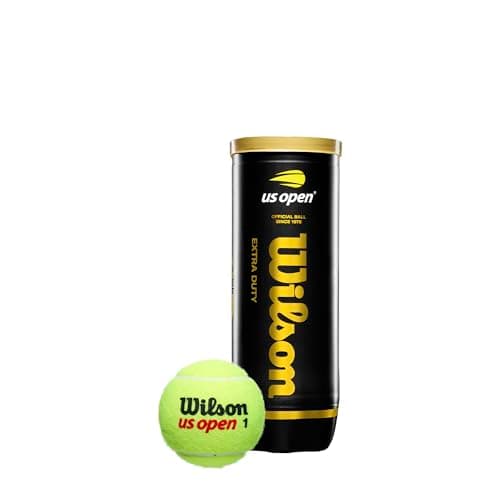 Wilson US OpenTop pick | The default match ball | 9.04 criteria | |
| 2 | 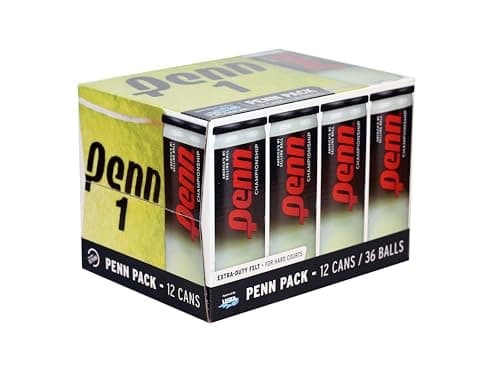 Penn ChampionshipBest value | Basket feeding and practice | 8.24 criteria | |
| 3 | 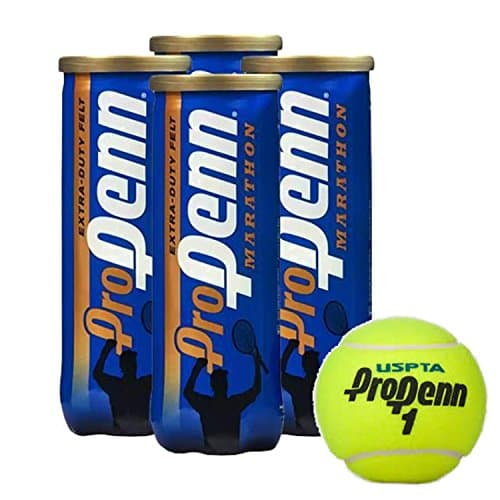 Penn Pro MarathonMost durable | A can that has to survive several sessions | 8.54 criteria | |
| 4 | 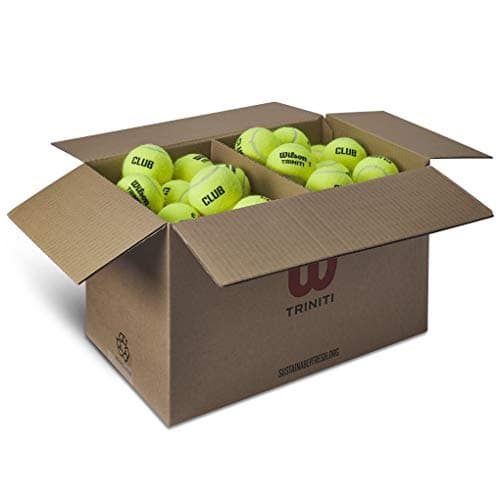 Wilson TrinitiLongest bounce life | Fewer dead cans in the bin | 8.34 criteria |
01Wilson US Open
Top pickBest for: The default match ball
The Tennis Tribe rate the US Open as their best overall ball and report that it holds its bounce longer than rival balls. It is offered in both regular and extra duty, which is the practical reason it leads: you can match your surface without changing brand.
It is also the ball most US club players already recognize, and that matters more than it sounds. If your league or your club uses it, matching the ball you practice with to the ball you compete with removes a variable for free.
It is not the cheapest can on the shelf. If you are feeding baskets rather than playing points, the Penn Championship below does the job for less and the difference will not show up in a drill.
Our score
- Performance
- 9.5
- Comfort
- 8.5
- Durability
- 9.0
- Value
- 8.0
- Overall
- 9.0
Verified specs
- Duty
- Regular and extra duty
- Type
- Pressurized
- Award
- Best Overall — The Tennis Tribe
- Reported life
- Holds bounce longer than rival balls
Specs as published by The Tennis Tribe, checked September 2026.
Buy if
- You play matches or league tennis
- You want both duty options from one brand
- You want the longest bounce life in a standard ball
Pass if
- You are feeding baskets and buying by volume
- Cost per can is the deciding factor
- You want an eco-packaging option
02Penn Championship
Best valueBest for: Basket feeding and practice
The Tennis Tribe give the Penn Championship their best value award, and it comes in both regular and extra duty. For drills, feeds and social hitting, it is the sensible purchase.
The trade-off is stated plainly by the source: it goes flat faster than the US Open ball. For a practice ball that is close to irrelevant - you are hitting it for pattern and rhythm, not judging a tight depth margin off it.
It is the wrong ball for a competitive match, especially a long one, because the pressure loss shows up as a ball that plays differently in the third set than it did in the first.
Our score
- Performance
- 7.5
- Comfort
- 8.0
- Durability
- 7.0
- Value
- 10.0
- Overall
- 8.2
Verified specs
- Duty
- Regular and extra duty
- Type
- Pressurized
- Award
- Best Value — The Tennis Tribe
- Trade-off
- Goes flat faster than the US Open ball
Specs as published by The Tennis Tribe, checked September 2026.
Buy if
- You feed baskets or run drills
- You buy balls by the case
- You want both duty options cheaply
Pass if
- You are playing a competitive match
- You want the longest life per can
- You need consistent behavior over a long session
03Penn Pro Marathon
Most durableBest for: A can that has to survive several sessions
Penn's durability line, reported to maintain bounce and quality for weeks, and available in both regular and extra duty. If you open a can and expect it to still be good next week, this is the one designed for that.
It is the right answer for a player who plays twice a week with the same partner and does not want to open a fresh can each time. Extended usable life is the whole product here.
It costs more than the Championship and it will not transform your tennis. What it buys is fewer cans, which for a regular player is a genuine saving rather than a marketing line.
Our score
- Performance
- 8.5
- Comfort
- 8.0
- Durability
- 9.5
- Value
- 8.0
- Overall
- 8.5
Verified specs
- Duty
- Regular and extra duty
- Type
- Pressurized
- Reported life
- Maintains bounce and quality for weeks
Specs as published by The Tennis Tribe, checked September 2026.
Buy if
- You want one can to cover several sessions
- You play regularly with the same group
- You want extra duty in a durability-focused ball
Pass if
- You open a fresh can each match
- Cost per can is the deciding factor
- You are buying for a ball machine
04Wilson Triniti
Longest bounce lifeBest for: Fewer dead cans in the bin
The Tennis Tribe categorize the Triniti as the eco-friendly option and report that it maintains bounce longer than most balls. Wilson list it as all court rather than as regular or extra duty.
That all-court designation is why it is on this page. If you genuinely split your play between a hard court and a clay or indoor surface, a middle-ground felt is a reasonable answer to a decision you cannot make cleanly.
It feels different from a standard pressurized ball - a little heavier off the string bed - and not everyone likes it. If you are matching the ball your league uses, this is not it.
Our score
- Performance
- 8.0
- Comfort
- 8.5
- Durability
- 9.0
- Value
- 7.5
- Overall
- 8.3
Verified specs
- Duty
- All court
- Type
- Pressurized
- Category
- Eco-friendly — The Tennis Tribe
- Reported life
- Maintains bounce longer than most balls
Specs as published by The Tennis Tribe, checked September 2026.
Buy if
- You split play between surfaces
- You dislike throwing out dead cans
- You want the longest bounce life available
Pass if
- You need to match a league ball
- You want a conventional feel
- You play exclusively on one surface
Common questions
What is the difference between extra duty and regular duty tennis balls?
The felt. Extra duty has a thicker, more tightly woven covering built to survive abrasive hard courts. Regular duty has a thinner felt that stays compact on clay and indoors. The rubber core and the internal pressure are the same.
Should I use extra duty or regular duty on a hard court?
Extra duty. An acrylic hard court is deliberately abrasive and a thin regular duty felt wears through quickly, leaving patches of bare rubber. A bald ball meets less air resistance, so it travels faster and dips less.
Can you use extra duty balls on clay?
You can, and the ball will not last as well as a regular duty one. The thicker, more open felt picks up clay dust and moisture, so the ball swells, gets heavier and slows noticeably.
Does duty affect the bounce or pressure of a tennis ball?
No. Both types are pressurized to the same specification and both lose pressure at the same rate once the can is opened, because the loss happens through the rubber wall rather than the felt.
What does all court mean on a tennis ball?
It is a felt specification aimed between regular and extra duty, intended for players who split their time across surfaces. The Wilson Triniti is listed this way rather than as either duty grade.
Which lasts longer, extra duty or regular duty?
It depends entirely on the surface. On a hard court, extra duty lasts considerably longer. On clay or indoors, regular duty lasts longer because it does not swell. Neither is inherently more durable than the other.
Read next
Sources
Every source above was retrieved while writing this page. Specifications are quoted from the listing or manufacturer page cited, not from memory.