Guide
How long do tennis balls last?
A tennis ball dies of pressure loss, not of wear. That is why a can left open in a hot car is finished before a ball you have hit for three hours.
By Janet H.Updated
The short answer
A pressurised tennis ball holds competitive bounce for roughly one to three matches of serious play after the can is opened, and loses pressure steadily from then on whether you use it or not. Sealed cans are pressurised and last for years on a shelf, though not indefinitely. Wear on the felt is almost never what finishes a ball.
Disclosure — we earn a commission on qualifying purchases made through links on this page, at no extra cost to you. It never changes which product we rank first. How this site is funded.
What actually kills a tennis ball
Almost all tennis balls sold for play are pressurised: the rubber core is filled with air or nitrogen at a pressure above the outside atmosphere, and that internal pressure is what produces the lively bounce. Every ball in our registry is a pressurised ball.
The rubber is slightly permeable, so the gas escapes slowly through the core wall from the moment the ball is made. The sealed can is pressurised to match, which is why opening one makes the hiss — you are removing the equilibrium that was holding the pressure in. From that point, the ball is on a one-way path regardless of whether you hit it.
This is the single most useful fact about tennis balls, because it reorders everything. A can opened a month ago and played with twice is in worse shape than a can opened yesterday and played with hard for two hours. Time out of the can matters more than hours of use, and nothing about the felt tells you what the pressure is doing.
- Pressure loss — the real failure mode. Gradual, invisible, and it continues in the bag between sessions.
- Felt wear — cosmetically obvious and the thing people judge by. Worn felt makes a ball fly faster and take less spin, but it rarely arrives before the pressure has gone.
- Heat — accelerates pressure loss. A can left in a hot car loses bounce faster than one in a cupboard, which is the most common way people kill balls without playing with them.
- Being flattened or split — a visible mechanical failure, and rare outside ball machines.
How long, honestly
The honest answer involves fewer numbers than most pages on this subject offer, because the numbers are not published by anybody we can cite. What we can give you is the ordering, the mechanism, and the one thing the sources we do have actually say about ball life.
The Tennis Tribe, whose ball testing is the source for our ball registry, rate the Wilson US Open as holding its bounce longer than rival balls, describe the Penn Pro Marathon as maintaining bounce and quality for weeks, and note that the Penn Championship goes flat faster than the US Open ball. Those are comparative statements rather than durations, and treating them as comparative is the honest reading.
| Situation | Realistic expectation | What is happening |
|---|---|---|
| Sealed can on a shelf | Years, not indefinitely | Can pressure holds the ball pressure; both decay slowly |
| Opened can, competitive play | One to three serious matches | Pressure drops fast once equilibrium is broken |
| Opened can, social hitting | Several sessions | Lower demands tolerate lower pressure |
| Opened can, left in a bag | Weeks at most | Pressure goes whether you play or not |
| Opened can, left in a hot car | Days | Heat accelerates the loss substantially |
| Basket feeding and drills | Until the bounce drops | High volume, low standard — use the cheap ball |
If you want a single rule: for anything competitive, open a fresh can. For everything else, use the ball until the bounce visibly drops and do not feel bad about it.
Pressureless balls are a different product
Pressureless balls have no internal pressure at all. Their bounce comes from a thicker, stiffer rubber wall instead, which means there is nothing to leak and nothing to go flat. They last until the felt and the rubber physically wear out, which can be years.
The trade is how they play. A pressureless ball feels heavier and duller off the strings, takes less spin, and transmits more shock to your arm — which is a real consideration if you have had elbow trouble. They also get livelier as the felt wears rather than deader, which is the opposite of what players expect.
Where they make sense is unambiguous: ball machines, basket feeding, practice walls, teaching baskets, anywhere the ball is being hit hundreds of times and nobody is judging the bounce. Where they do not make sense is any match you care about.
Every ball in our registry is pressurised, which is deliberate — we carry what the sources we cite have assessed, and The Tennis Tribe's testing covers pressurised balls. If you want pressureless for a machine, buy them, and do not use them for your league matches.
Regular duty, extra duty and what the label means
The other label on a can of balls is duty, and it is about the felt rather than the pressure. Three of the four balls in our registry are offered in both regular and extra duty, and the choice is set by surface rather than by how hard you hit.
- Extra duty — a thicker, more tightly woven felt built for abrasive hard courts. On clay it picks up material and fluffs up, which slows the ball down.
- Regular duty — a thinner felt for clay and indoor courts, where there is nothing abrasive to resist. On hard court it wears through quickly.
- All court — a middle specification. The Wilson Triniti in our registry is listed as all court.
Getting duty wrong does not change how long the pressure lasts, which is what this page is about. It changes how the ball plays and how fast the felt goes. Buy extra duty for hard court, regular duty for clay, and do not overthink it beyond that.
Our best tennis balls page covers the four balls in full, including which to buy for practice volume versus for matches.
How this guide was put together
We do not run a test lab and nothing here is written as though we did. This guide is built from the published specification sheets and third-party lab measurements cited at the foot of the page, plus the physical reasoning that connects them. Where a figure is not published we say so rather than estimating it.
The picks below are drawn from our product registry, so every one carries a cited source and a verified listing. Our full selection criteria set out the method and the editorial policy covers corrections. No price is written into this page — the figure on each buy button is the live one.
Now pick yours
The specs above are only useful once they resolve into something you can buy. These are the products that match what this page has just explained.
Our picks
| # | Product | Best for | Score | Price |
|---|---|---|---|---|
| 1 | 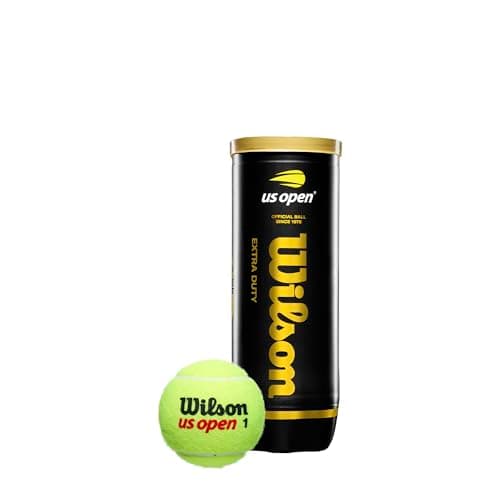 Wilson US OpenBest overall | Matches, and the longest bounce life | 8.94 criteria | |
| 2 | 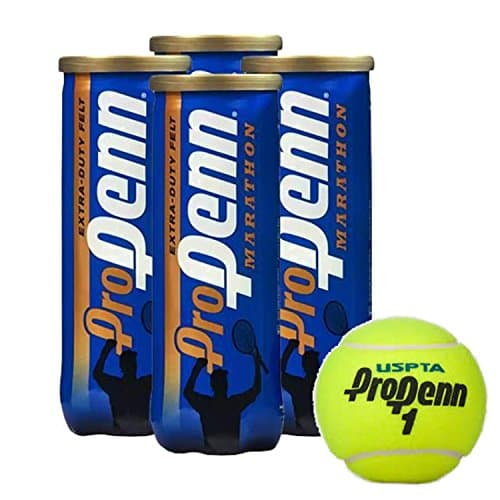 Penn Pro MarathonLongest reported life | A can that has to survive several sessions | 8.84 criteria | |
| 3 | 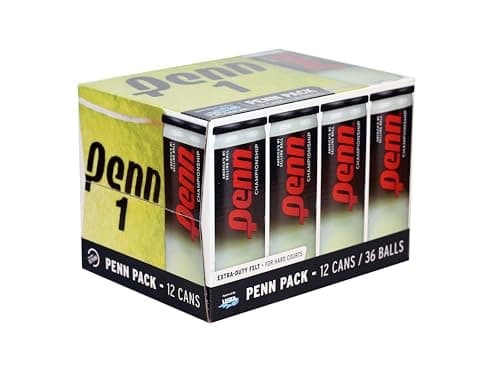 Penn ChampionshipBest value | Practice volume and basket feeding | 7.84 criteria | |
| 4 | 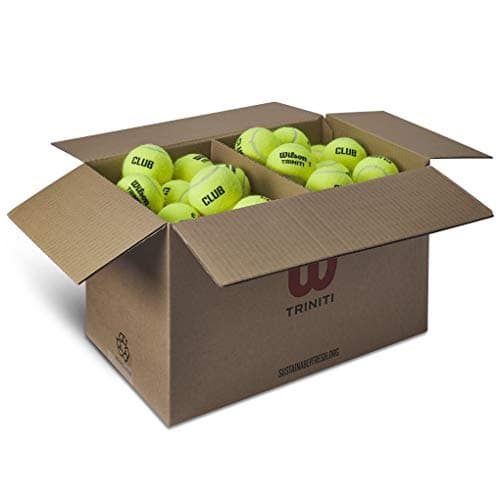 Wilson TrinitiLongest life with less waste | Not throwing out dead cans | 8.44 criteria |
01Wilson US Open
Best overallBest for: Matches, and the longest bounce life
The Tennis Tribe name this their best overall ball and specifically report that it holds its bounce longer than rival balls, which on a page about ball life is the relevant finding. It is offered in both regular and extra duty.
It is also the ball most US club players already recognise, which matters more than it sounds: if your league or your club uses it, matching the ball you practise with to the ball you compete with removes a variable for free.
It is a pressurised ball, so the mechanism in this guide applies in full — holding bounce longer means a slower decay, not no decay. Open a fresh can for anything that counts.
Our score
- Performance
- 9.5
- Comfort
- 8.5
- Durability
- 9.0
- Value
- 7.5
- Overall
- 8.9
Verified specs
- Duty
- Regular and extra duty
- Type
- Pressurized
- Award
- Best Overall — The Tennis Tribe
- Reported life
- Holds bounce longer than rival balls
Specs as published by The Tennis Tribe, checked September 2026.
Buy if
- You are playing matches
- You want the longest bounce life in a pressurised ball
- Your club or league already uses it
Pass if
- You are feeding baskets
- Cost per ball is the binding constraint
- You need a ball machine ball
02Penn Pro Marathon
Longest reported lifeBest for: A can that has to survive several sessions
Penn's durability line, which The Tennis Tribe report maintains bounce and quality for weeks. That is the strongest statement about longevity any source in our registry makes about a pressurised ball.
The use case is specific and common: a can that gets opened on Monday and has to still be acceptable on Saturday, rather than a can opened for one match. If you play several times a week with the same balls, this is the ball that tolerates it best.
It is a premium-tier ball and offered in both regular and extra duty. Weeks is still a comparative claim rather than a measurement, and heat will shorten it regardless of which ball you buy.
Our score
- Performance
- 9.0
- Comfort
- 8.5
- Durability
- 9.5
- Value
- 7.0
- Overall
- 8.8
Verified specs
- Duty
- Regular and extra duty
- Type
- Pressurized
- Reported life
- Maintains bounce and quality for weeks
Specs as published by The Tennis Tribe, checked September 2026.
Buy if
- One can has to last several sessions
- You play multiple times a week
- You want the longest-lasting pressurised ball
Pass if
- You open a fresh can per match
- You want the cheapest practice ball
- You are feeding from a basket
03Penn Championship
Best valueBest for: Practice volume and basket feeding
The Tennis Tribe's best value pick, and they state the trade-off plainly: it goes flat faster than the US Open ball. On this page that is exactly the information you need, because it tells you where the ball belongs.
Where it belongs is practice. If you are feeding baskets, drilling, or hitting against a wall, you are not judging the bounce and the ball is being hit far more times per session than in a match. Buying a premium ball for that is spending money on a property you are not using.
Do not take it into a match you care about. Going flat faster is a real property, and a flat ball changes how everything plays.
Our score
- Performance
- 7.0
- Comfort
- 8.0
- Durability
- 6.5
- Value
- 10.0
- Overall
- 7.8
Verified specs
- Duty
- Regular and extra duty
- Type
- Pressurized
- Award
- Best Value — The Tennis Tribe
- Trade-off
- Goes flat faster than the US Open ball
Specs as published by The Tennis Tribe, checked September 2026.
Buy if
- You are drilling or feeding baskets
- Cost per ball matters most
- You go through balls quickly
Pass if
- You are playing competitive matches
- You want one can to last weeks
- You want the liveliest ball available
04Wilson Triniti
Longest life with less wasteBest for: Not throwing out dead cans
Wilson's recyclable-packaging ball, which The Tennis Tribe categorise as the eco-friendly option and report maintains bounce longer than most balls. It is listed as all court rather than regular or extra duty.
It is on this page because the honest consequence of everything above is waste: pressurised balls die on a clock and get thrown away. A ball built to last longer in packaging designed to be recycled is a direct answer to that, and it does not ask you to accept a shorter life to get it.
All-court felt is a compromise rather than a specialist choice, so on a heavily abrasive hard court an extra duty ball will hold its felt better. It is also a mid-tier price rather than a value one.
Our score
- Performance
- 8.0
- Comfort
- 8.5
- Durability
- 9.0
- Value
- 8.0
- Overall
- 8.4
Verified specs
- Duty
- All court
- Type
- Pressurized
- Category
- Eco-friendly — The Tennis Tribe
- Reported life
- Maintains bounce longer than most balls
Specs as published by The Tennis Tribe, checked September 2026.
Buy if
- You dislike throwing out dead cans
- You want long bounce life
- You play on mixed surfaces
Pass if
- You want surface-specific felt
- You want the cheapest practice ball
- Your club mandates a specific match ball
Common questions
How long do tennis balls last after opening?
Roughly one to three matches of serious play, and then they continue losing pressure whether you use them or not. For social hitting they remain acceptable for several sessions. The clock starts when the can is opened, not when you first hit the ball.
How long do tennis balls last in a sealed can?
Years on a shelf, though not indefinitely. The can is pressurised to match the balls, which is what the hiss on opening is, so the pressure gradient that drives the loss is largely neutralised until you break the seal.
Do tennis balls go bad if you do not use them?
Once the can is open, yes. The rubber core is slightly permeable and the gas escapes continuously, so a can opened a month ago and barely used is in worse shape than one opened yesterday and played with hard.
What makes a tennis ball go flat?
Gas escaping through the rubber core wall. It is a pressure failure, not a wear failure, which is why a ball can look almost new and bounce badly. Heat accelerates it substantially — a can in a hot car can be finished in days.
Are pressureless tennis balls better?
For ball machines, basket feeding and practice walls, yes — they have no internal pressure to lose and last until the rubber physically wears out. For matches, no: they feel duller, take less spin and transmit more shock to your arm.
What is the difference between regular and extra duty balls?
Felt thickness, and it is a surface choice rather than a durability one. Extra duty has a thicker, tighter felt for abrasive hard courts; regular duty is thinner for clay and indoor courts. Neither affects how long the internal pressure lasts.
Read next
Sources
Every source above was retrieved while writing this page. Specifications are quoted from the listing or manufacturer page cited, not from memory.