Buying guide
Best padel rackets for power in 2026
Power in padel is a shape, not a brand. Moving mass to the top of the head buys you a finishing smash and charges you the sweet spot for it - so the real question is how much of that trade your technique can currently afford.
By Janet H.Updated
The short answer
The HEAD Coello Pro is the best power padel racket for most players who want one: a 370 g diamond balanced around 272 mm that Padel Browser call the most stable diamond in their 2026 set, with a throat design that makes mishits hurt less. For maximum power take the Bullpadel Hack 04; if your technique is still settling, the head-light Wilson Bela Pro V3 gives you most of the pace and keeps a usable sweet spot.
Disclosure — we earn a commission on qualifying purchases made through links on this page, at no extra cost to you. It never changes which product we rank first. How this site is funded.
Our picks
| # | Product | Best for | Score | Price |
|---|---|---|---|---|
| 1 | 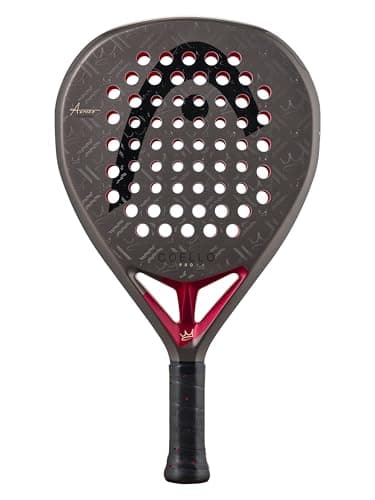 HEAD Coello ProTop pick | A first real power frame | 8.75 criteria | $345.55 · View on Amazon Price as of October 22, 2026 · was $374.95, 8% off |
| 2 | 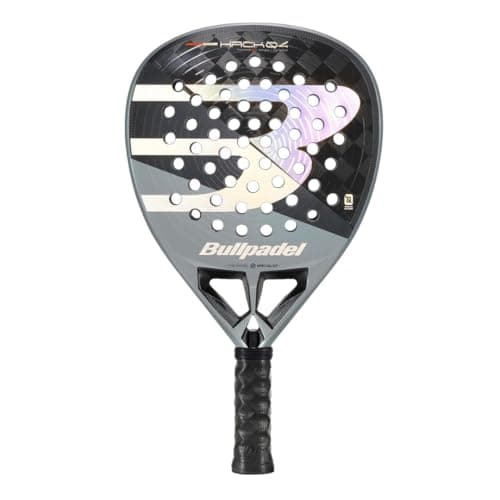 Bullpadel Hack 04Most power | Maximum smash power | 8.45 criteria | |
| 3 | 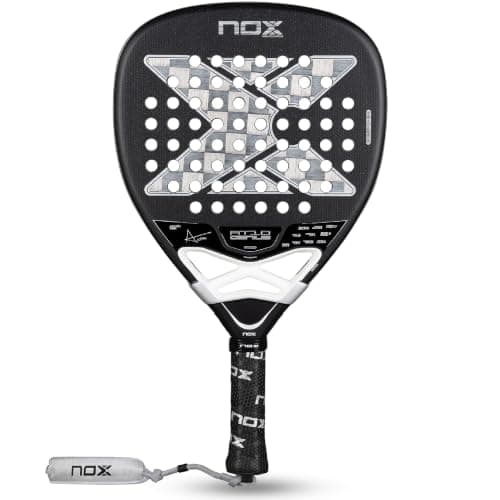 Nox AT10 Genius Attack 18KMost demanding | Advanced players who finish at the net | 8.25 criteria | $279.00 · View on Amazon Price as of October 22, 2026 · was $420.00, 34% off |
| 4 | 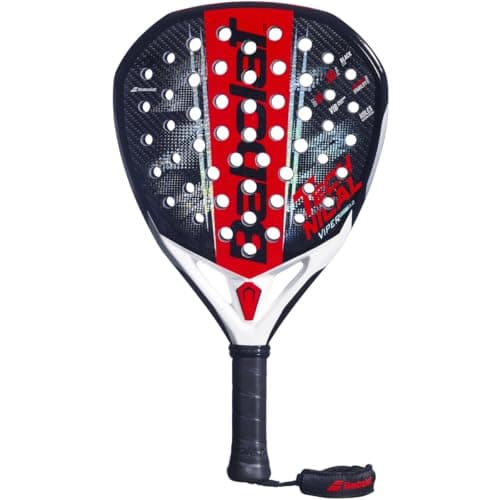 Babolat Technical Viper Soft 3.0Best for arm comfort | Attacking play without the arm punishment | 8.35 criteria | $210.00 · View on Amazon Price as of October 22, 2026 · was $300.00, 30% off |
| 5 | 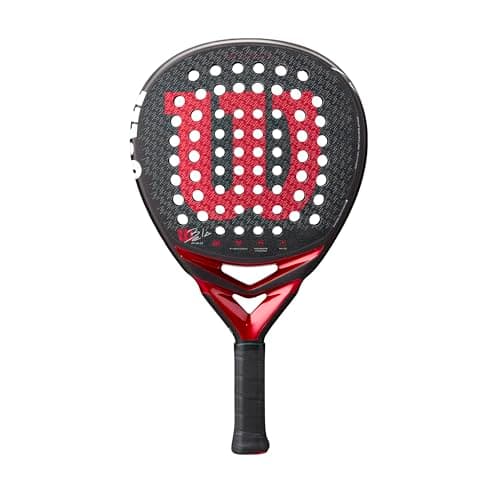 Wilson Bela Pro V3Most forgiving power frame | Players whose technique is still settling | 8.45 criteria | $369.00 · View on Amazon Price as of October 22, 2026 · was $399.00, 8% off |
The picks in detail
01HEAD Coello Pro
Top pickBest for: A first real power frame
Padel Browser call this the most stable diamond on their 2026 power list, and stability is the property that decides whether a power racket is usable or just impressive. They specifically credit its throat design with making mishits hurt less than most diamonds - which is the sentence that matters, because mishits are not an occasional event with this head shape, they are a daily one.
The published numbers put it squarely in the pro power band without pushing to the extreme: 370 g with the balance at about 272 mm, which is head-heavy by the normal convention that anything above 270 mm counts as head-heavy. The core is HEAD's firm Power Foam. A firm core transfers more of your swing speed into the ball and gives you less free help, which is the correct arrangement for a player who generates their own pace.
Two honest costs. Padel Browser do not state the face material for this frame, so we are not going to name one - if the carbon weave matters to you, check the current listing. And it is still a diamond: 370 g with the mass up top is slower to turn at the net than any round racket, and if you are regularly late on volleys this is the wrong shape rather than the wrong racket. Our [padel racket shapes guide](/guides/padel-racket-shapes) is the honest place to start if you are not sure.
Our score
- Control
- 8.0
- Power
- 9.0
- Sweet spot
- 8.5
- Arm comfort
- 8.0
- Maneuverability
- 7.5
- Overall
- 8.7
Verified specs
- Shape
- Diamond
- Weight
- 370 g
- Balance
- About 272 mm (head heavy)
- Core
- Power Foam (firm)
- Face
- Not stated by the source we used
- Generation
- 2026
Specs as published by Padel Browser, checked September 2026.
Buy if
- You can already finish a point with a smash and want more from it
- You want the most forgiving diamond rather than the most powerful one
- You play at the net and want a stable head on contact
Pass if
- You are still learning the bandeja and the vibora
- You need a published face material before you buy
- You are often late on volleys
Price as of October 22, 2026 · was $374.95, 8% off
02Bullpadel Hack 04
Most powerBest for: Maximum smash power
This is Paquito Navarro's frame and Padel Browser's maximum-power pick, and it is the only racket here we would describe as built for one job. Diamond head, 365 to 375 g, a TriCarbon 18K face and a MultiEVA core: a hard face over a multi-density core is the construction that returns the most of your swing speed and absorbs the least of it.
The balance figure is the interesting one. At about 264 mm it is the lowest of the diamonds here - below the 270 mm head-heavy threshold - which on paper reads as more manageable than the Nox below it. In practice what that combination gives you is a frame that accelerates slightly more easily into the smash while the hard face does the work at contact, rather than a frame that relies purely on top-end mass.
The honest cost is everything that is not a smash. Padel Browser point readers who want a more forgiving option to Bullpadel's own Vertex 05, noting its lower balance and more even mass distribution - which is their way of saying the Hack 04 punishes mistimed contact. A hard 18K face also transmits more to the arm than a softer layup, so if you have any history of elbow trouble, read our [padel rackets for tennis elbow](/padel/best-rackets-for-tennis-elbow) page before this one.
Our score
- Control
- 7.5
- Power
- 9.5
- Sweet spot
- 6.5
- Arm comfort
- 7.0
- Maneuverability
- 7.0
- Overall
- 8.4
Verified specs
- Shape
- Diamond
- Weight
- 365-375 g
- Balance
- About 264 mm
- Face
- TriCarbon 18K
- Core
- MultiEVA
- Generation
- 2026
Specs as published by Padel Browser, checked September 2026.
Buy if
- Your smash is already your best shot
- You want the hardest face and the most direct response here
- You play competitively and accept a small sweet spot
Pass if
- You have any history of elbow or shoulder pain
- Your contact point varies from day to day
- You want a racket that helps on defense
03Nox AT10 Genius Attack 18K
Most demandingBest for: Advanced players who finish at the net
Agustin Tapia's attacking frame tops Padel Browser's 2026 power list, and they attach a condition to it that we are going to repeat rather than bury: it is for advanced players who already finish with smashes, and anybody else should take the 12K version instead. That is a reviewer telling you the racket will not improve your game, which is unusual and useful.
The specification explains the restriction. A diamond head at 360 to 375 g with the balance around 275 mm - the most head-heavy figure on this page - an 18K aluminized carbon face that Padel Browser describe as firmer than the 12K, and a hard multi-density EVA core. Every one of those choices moves in the same direction: more of your energy into the ball, less of the racket's own help. It also ships with a counterweight for adjusting balance and an aggressive grip texture, which are real features for a player who tunes their setup.
The honest cost is that this is the least forgiving racket on the page and it is not close. Mass at 275 mm with a hard face and a hard core means a ball struck even slightly off center gives you very little, and a long session asks a lot of the shoulder. If you are reading this page because you want more power rather than because you already have it, take the Coello Pro above or the Bela Pro V3 below - and if you are not sure which side of that line you are on, [racquet sports skill levels explained](/guides/racquet-sports-skill-levels-explained) is a straighter answer than a spec sheet.
Our score
- Control
- 7.5
- Power
- 9.5
- Sweet spot
- 6.0
- Arm comfort
- 6.5
- Maneuverability
- 6.5
- Overall
- 8.2
Verified specs
- Shape
- Diamond
- Weight
- 360-375 g
- Balance
- About 275 mm
- Face
- 18K aluminized carbon
- Core
- Hard multi-density EVA
- Extras
- Counterweight for adjusting balance, aggressive grip texture
Specs as published by Padel Browser, checked September 2026.
Buy if
- You finish points with a smash several times a match
- You want the firmest face available and will tune the balance
- You are genuinely an advanced player
Pass if
- You want a racket to raise your ceiling rather than match it
- You play long sessions and feel your shoulder afterwards
- You want any help on a mishit
Price as of October 22, 2026 · was $420.00, 34% off
04Babolat Technical Viper Soft 3.0
Best for arm comfortBest for: Attacking play without the arm punishment
Babolat's 2026 Technical collection splits the Viper platform into a hard version and a comfort version, and this is the comfort one: 365 g aimed at the offensive competitor, with a 3K soft carbon face. A softer carbon layup over an attacking frame geometry is the one combination on this page that tries to give you the shot without the shock, and it is why this frame sits here rather than on our control page.
For most club players who want more power, this is a more honest recommendation than a pro diamond. You get an offensive weight and an offensive platform with a face that absorbs rather than punches straight back - and if you play twice a week and have ever felt your forearm after a long session, that trade is worth more than the last ten percent of smash pace.
The honest cost is the ceiling. A soft face returns less of your swing speed than the TriCarbon 18K on the Hack 04 or the aluminized 18K on the AT10, so the biggest smash on this page is not this racket. Babolat state the weight and the face material and describe the frame's intent, but no shape or balance figure is published for it in the source we used, which is why it is not ranked above the frames whose geometry we can quote.
Our score
- Control
- 8.0
- Power
- 8.5
- Sweet spot
- 7.5
- Arm comfort
- 8.5
- Maneuverability
- 7.0
- Overall
- 8.3
Verified specs
- Weight
- 365 g
- Face
- 3K soft carbon
- Aimed at
- Offensive competitor
Specs as published by Babolat, checked September 2026.
Buy if
- You want to attack and you have an arm to protect
- You play two or more times a week
- You want a softer face on an offensive frame
Pass if
- You want the absolute maximum power
- You need published shape and balance figures
- You want the cheapest route to more pace
Price as of October 22, 2026 · was $300.00, 30% off
05Wilson Bela Pro V3
Most forgiving power frameBest for: Players whose technique is still settling
Fernando Belasteguin's frame is the deliberate outlier on this page, and it is the one most readers of this page should probably buy. Padel Browser list it as a hybrid rather than a diamond, 365 g with the balance at 260 mm - head-light - with a 24K carbon face and a firm core, and describe it as more forgiving than the AT10 or the Hack 04 and suited to all-court play.
A head-light hybrid with a 24K face is a specific trade, and it is a good one. The firm, high-count carbon face still returns a lot of your swing speed, so the ball leaves quickly; the head-light balance keeps the racket turning at the net and keeps the sweet spot in a place you can find under pressure. For a player who wants more pace but is not yet reliably finishing points from above the net, that is more power delivered per match than a diamond will actually give them.
The honest cost is stated plainly by the source: head-light balance means less pure smash power. If your smash is already the shot you win points with, this is not the frame - take the Hack 04 or the AT10. It is also worth being clear that this is still a premium competitive racket and not a step up from a beginner frame; if you are moving on from your first racket, [best padel rackets for intermediate](/padel/best-rackets-for-intermediate) is the right page.
Our score
- Control
- 8.5
- Power
- 8.0
- Sweet spot
- 8.5
- Arm comfort
- 8.0
- Maneuverability
- 8.5
- Overall
- 8.4
Verified specs
- Shape
- Hybrid
- Weight
- 365 g
- Balance
- 260 mm (head light)
- Face
- 24K carbon
- Core
- Firm
Specs as published by Padel Browser, checked September 2026.
Buy if
- You want more pace but mishit a diamond
- You play all-court rather than net-and-finish
- You want a head-light frame that still hits through the ball
Pass if
- Your smash is your main weapon
- You want the most head-heavy frame you can handle
- You are replacing a beginner racket
Price as of October 22, 2026 · was $399.00, 8% off
What actually produces power in a padel racket
Four variables decide how much pace a padel frame gives you, and only one of them is the thing most buyers look at. Padel Browser set them out in the same order we rank on, and the hierarchy is worth internalizing before you read a single product page.
- Shape. A diamond concentrates mass at the top of the head, which is where a smash is struck - more mass behind contact means more ball speed. Teardrop and round shapes distribute that mass lower and are more versatile and easier to control. This is the dominant variable and it is a geometry decision, not a materials one.
- Balance. Measured in millimeters from the grip, and anything above 270 mm counts as head-heavy. The frames on this page run from 260 mm on the head-light Wilson to about 275 mm on the Nox, and that 15 mm spread is the difference between a racket that turns at the net and one that does not.
- Weight. Pro power frames generally sit between 365 and 375 g. More is not better: Padel Browser are explicit that a racket which is too heavy slows your swing and costs you power at contact, which is the paradox most first-time buyers of a power frame walk into.
- Core density. A harder core transfers more of your swing speed to the ball and gives you less easy power - so a hard core rewards a player who generates their own pace and punishes a player who was hoping the racket would supply it.
The fifth variable is the one no spec sheet lists: your technique. Padel Browser recommend power rackets mainly for players with reliable contact, because a frame built to amplify a clean strike also amplifies a bad one. That is the reason this page is ranked the way it is - the most powerful racket here is third, and the most forgiving one is not last.
The five criteria we ranked on
Every racket here is scored on the same five axes this site uses across padel, so a score means the same thing on every page. These are our editorial judgments drawn from the published shape, weight, balance, face and core figures cited at the foot of the page - they are not user ratings and they are not our own measurements.
- Power - head shape and balance first, then core and face stiffness. The spread on this axis is deliberately narrow, because every racket on this page is a power frame; the interesting differences are on the other four axes.
- Sweet spot - how much usable area sits around the ideal contact point. This is the axis a diamond pays for its power with, and it is where the Coello Pro's throat design earns its ranking.
- Control - whether you can place the ball rather than just hit it hard. A head-light hybrid scores high here and a 275 mm diamond does not, which is the whole argument for the Bela Pro V3.
- Arm comfort - face and core stiffness read against each other. A hard 18K face over a hard EVA core transmits the most; a soft carbon face over an attacking frame transmits the least. This is a comfort judgment, never a medical one.
- Maneuverability - how quickly the head turns when you need a reflex volley. Balance drives this almost entirely, which is why the numbers in that column track the millimeter figures so closely.
The specs side by side
Read this across. The useful comparison is not which racket has the biggest numbers but which combination of shape, balance and core matches what your arm and your timing can currently deliver.
| Racket | Shape | Weight | Balance | Face | Core |
|---|---|---|---|---|---|
| HEAD Coello Pro | Diamond | 370 g | About 272 mm | Not stated by our source | Power Foam (firm) |
| Bullpadel Hack 04 | Diamond | 365-375 g | About 264 mm | TriCarbon 18K | MultiEVA |
| Nox AT10 Genius Attack 18K | Diamond | 360-375 g | About 275 mm | 18K aluminized carbon | Hard multi-density EVA |
| Babolat Technical Viper Soft 3.0 | Not published | 365 g | Not published | 3K soft carbon | Not published |
| Wilson Bela Pro V3 | Hybrid | 365 g | 260 mm (head light) | 24K carbon | Firm |
Two things fall out of that table. The first is how little the weight column separates these rackets - every frame here sits between 365 and 375 g, which is the band Padel Browser identify for pro power frames, so weight is not the variable to shop on. The second is that the balance column separates them enormously: 260 mm to 275 mm is a 15 mm swing in where the mass sits, and that single number predicts more about how a racket will feel in your hand than anything else on the row.
The honest case against buying a power racket
This site is built around picking gear for the level you actually play at rather than the level you watch, and a power roundup is where that principle gets tested hardest. So here is the argument against the page you are reading.
A diamond-shaped frame amplifies whatever you do with it. A clean smash from above the net becomes a winner; a slightly late forehand becomes a ball that goes nowhere, and a ball struck near the frame returns almost nothing and sends a jolt into your forearm. The players these frames were designed around - Tapia, Navarro, Coello - make clean contact at the top of the head many times per match. If you make clean contact some of the time, a diamond does not give you a percentage of their power; it gives you their power on your good shots and a penalty on the rest.
There is also a technique argument. Padel's attacking shots - the bandeja, the vibora, the smash out of the glass - are learned shots, and most of the pace in them comes from contact point and timing rather than from the racket. A player who buys power before learning those shots tends to swing harder, lose the contact point, and then blame the frame. The frames on this page that we rank highest are the ones that cost you the least when that happens.
How to narrow it to one
Work in this order and you will land on a single racket.
- 01If you finish points with a smash several times a match and want the most pace available, take the Bullpadel Hack 04 - and if you also tune your own setup, the Nox AT10 Genius Attack 18K with its counterweight instead.
- 02If you want real diamond power and the most forgiveness available inside that shape, take the HEAD Coello Pro. It is the top pick on this page for a reason.
- 03If you have an arm to protect, take the Babolat Technical Viper Soft 3.0 - an offensive frame with a soft carbon face is the one combination here that attacks without punishing.
- 04If your contact point is not yet reliable, take the Wilson Bela Pro V3 and come back to a diamond when your smash is the shot you trust. This is the right answer for more readers of this page than the ranking order suggests.
Two things worth settling before you spend anything. Padel racket shapes explains what diamond, teardrop and round actually do to the sweet spot, and how long does a padel racket last is worth reading if the frame you are replacing simply went dead rather than being wrong for you - a tired core feels exactly like a lack of power.
How these picks were made
Racket & Rally does not run a test lab. Nothing on this page is written as though we had played with, hit or measured anything ourselves, because we have not. What we do is read the published specifications, the independent measurements and the retailer listings cited at the foot of the page, set them against each other, and say which differences change something you will actually notice on court.
Every product here was confirmed on sale when its registry entry was built, and every claim traces to one of the sources listed at the bottom. Our full selection criteria set out the method, and the editorial policy covers corrections and how often pages are revisited. Where a brand or a reviewer does not publish a figure, we say that rather than filling the gap.
Common questions
What shape of padel racket gives the most power?
A diamond. It concentrates mass at the top of the head, which is where a smash is struck, so there is more mass behind contact and the ball leaves faster. The cost is a smaller usable sweet spot - teardrop and round shapes spread the mass lower and are more versatile and easier to control.
How heavy should a power padel racket be?
Pro power frames generally sit between 365 and 375 g, and every racket on this page falls in that band. Going heavier is counterproductive: a racket that is too heavy slows your swing and costs you power at the moment of contact, which is the opposite of what you bought it for.
What balance counts as head-heavy in padel?
Anything above 270 mm, measured from the grip. The diamonds on this page run from about 264 mm to about 275 mm, and the Wilson Bela Pro V3 at 260 mm is head-light. That 15 mm spread predicts how the racket feels in your hand better than any other number on the spec sheet.
Does a hard core give more power?
It transfers more of your swing speed to the ball and gives you less easy power - which means it rewards a player who generates their own pace and punishes one who was hoping the racket would supply it. A softer core gives more free help and absorbs more of the impact, which is also why it is gentler on the arm.
Will a power racket make me hit harder?
Only if your contact is already reliable. A diamond amplifies what you do with it in both directions: clean strikes go faster, and off-center ones return very little and send more through your forearm. If you mishit near the top of the head more than a couple of times a game, a head-light hybrid will put more balls away over a season.
Are power padel rackets bad for tennis elbow?
A hard carbon face over a hard core transmits more of the impact to your arm than a soft layup does, so as a category they ask more of the elbow. That is a comfort observation rather than medical advice. If you have a history of elbow pain, start with our padel rackets for tennis elbow picks and talk to a professional about the pain itself.
Can a beginner use a diamond padel racket?
You can, and we would not recommend it. Padel Browser restrict their top power pick to advanced players who already finish with smashes, and point everybody else to a softer version of the same frame. A beginner gets more out of a round or teardrop racket - our beginner padel picks cover that properly.
Read next
Sources
- 01Padel Browser - best padel rackets for power players 2026
- 02Babolat - Padel Technical collection 2026
- 03Padel Market - best padel rackets for beginners (shape reference)
Every source above was retrieved while writing this page. Specifications are quoted from the listing or manufacturer page cited, not from memory.