Guide
Padel racket weight explained
The entire padel weight range spans about thirty grams. That is narrow enough that balance does as much work as weight — and most advice ignores it.
By Janet H.Updated
The short answer
Padel rackets run from roughly 340 g to 370 g. Lighter is quicker to reposition at the net and easier on the arm; heavier is more stable against a hard-hit ball and gives more on the smash. Because the range is only about thirty grams, balance — head light or head heavy — changes how a racket feels at least as much as its weight does.
Disclosure — we earn a commission on qualifying purchases made through links on this page, at no extra cost to you. It never changes which product we rank first. How this site is funded.
The range is narrower than you think
A tennis racket can be 244 g or 320 g, a spread of about 30%. Padel rackets live in a much tighter band: the frames in our registry run from the 340 g Babolat Contact to the 365 g Babolat Technical Viper Soft 3.0, with the HEAD Evo Speed listed at 360 to 370 g. Call it 340 to 370 and you have the market.
That narrowness is a consequence of the equipment. A padel racket is short, has no strings, and is a solid composite slab with a perforated face. There is a floor on how little a structure like that can weigh and still be stiff enough to hit with, and a ceiling on how much weight you can swing on a short handle in a confined court.
So the practical question is not whether you want a light or heavy racket in the way a tennis player would mean it. It is where inside a thirty-gram window you want to sit, and which end of the court your game is played from.
| Racket | Weight as published | Shape | Who it suits |
|---|---|---|---|
| Babolat Contact | 340 g | Round | Beginners and most improvers |
| adidas RX Series Light | Not published (head light) | Round | Control-first, quick hands |
| Bullpadel Indiga W | Light (no figure published) | Round | The lightest option here |
| Nox Nextgen Pro Hybrid 3K | Not published | Hybrid / teardrop | Stepping up from a first racket |
| Babolat Technical Veron 3.0 | 360 g | Competitor frame | Club and league play |
| HEAD Evo Speed | 360-370 g | Teardrop (oversize) | Learning to attack |
| Babolat Technical Viper Soft 3.0 | 365 g | Offensive frame | Advanced, smash-led play |
Several of these frames do not have a published gram figure, and we have left those cells as not published rather than estimating from a sibling model. If an exact number matters to your decision, the Babolat frames are the ones with complete specifications.
What weight actually changes
Weight in padel does three things, and only one of them is about power. Separating them is what makes the choice tractable.
- Stability against incoming pace. More mass resists being pushed around when a hard ball arrives, which matters most on blocks and defensive volleys. This is the benefit most people underrate.
- Smash power. More mass arriving at the ball means more ball, especially with a head-heavy balance that puts the mass up the frame. This is the benefit most people overrate.
- Arm load. Every gram is a gram your shoulder and forearm accelerate, hundreds of times a session. A heavy racket on an unconditioned arm is the shortest route to padel elbow.
What weight does not change is the size of the sweet spot. That is set by head shape, which is a separate specification and a more consequential one — padel racket shapes covers round, teardrop and diamond properly. A heavy round racket is still forgiving; a light diamond racket is still unforgiving.
Balance does as much work as weight
This is the part most padel weight advice skips, and in a thirty-gram market it is the more useful lever of the two. Balance is where the mass sits along the frame, and two rackets of identical weight with different balance feel nothing alike.
HEAD publish a 270 mm balance for the Evo Speed and describe it as medium. Padel Market describe the adidas RX Series Light as head light and single it out as easy-swinging for a player still building technique. Those are the two ends of the useful range as our registry represents them.
- Head light — mass toward your hand. Much faster to reposition for the same total weight. The right default for net play and quick exchanges.
- Medium — a compromise, and what most frames are. Predictable rather than specialised.
- Head heavy — mass toward the tip. More on the smash and more stability through the ball, slower to move. This is where diamond-shaped attacking frames sit.
The combination most improving players want is moderate weight with a head-light balance: enough mass to be stable, placed where it does not slow your hands. The combination to avoid early is heavy and head heavy, which is what an attacking diamond frame is and which punishes a developing player twice over.
Picking your number
| If this is you | Aim for | Why |
|---|---|---|
| First padel racket | Lighter end, round, soft core | Everything set to forgiving while technique is forming |
| Quick hands are your strength | Lighter end, head light | Reposition speed beats mass in a net exchange |
| You get pushed around by hard hitters | Heavier end | Mass is what resists incoming pace |
| You finish points overhead | Heavier end, head heavy | Where smash power comes from |
| You have had elbow or shoulder trouble | Lighter end, soft core | Less mass to accelerate, less shock returned |
| You play three or more times a week | Lighter end | Cumulative arm load is the binding constraint |
If two of those rows apply and point in opposite directions — you get pushed around but you have had elbow trouble — take the lighter answer and fix the other problem with positioning rather than mass. An injured arm costs you more matches than a soft block does.
Where to go next: how to choose a padel racket puts shape, core and weight in order, best padel rackets covers the range with picks, and how long does a padel racket last explains the failure modes — which are core compression and frame cracking rather than anything weight-related.
How this guide was put together
We do not run a test lab and nothing here is written as though we did. This guide is built from the published specification sheets and third-party lab measurements cited at the foot of the page, plus the physical reasoning that connects them. Where a figure is not published we say so rather than estimating it.
The picks below are drawn from our product registry, so every one carries a cited source and a verified listing. Our full selection criteria set out the method and the editorial policy covers corrections. No price is written into this page — the figure on each buy button is the live one.
Now pick yours
The specs above are only useful once they resolve into something you can buy. These are the products that match what this page has just explained.
Our picks
| # | Product | Best for | Score | Price |
|---|---|---|---|---|
| 1 | 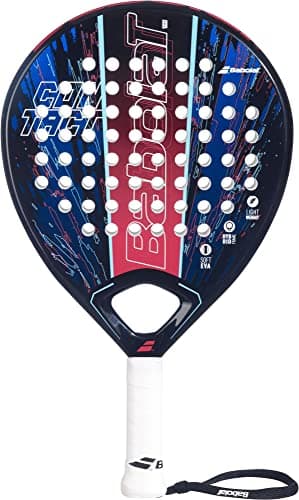 Babolat ContactBest lightweight pick | The lighter end with a published figure | 8.85 criteria | |
| 2 | 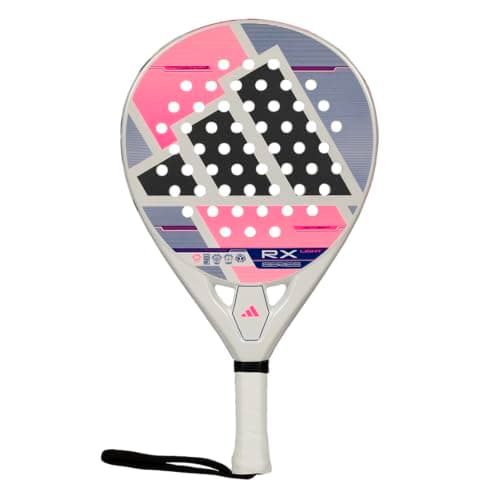 adidas RX Series LightBest balance | A head-light balance | 8.65 criteria | |
| 3 | 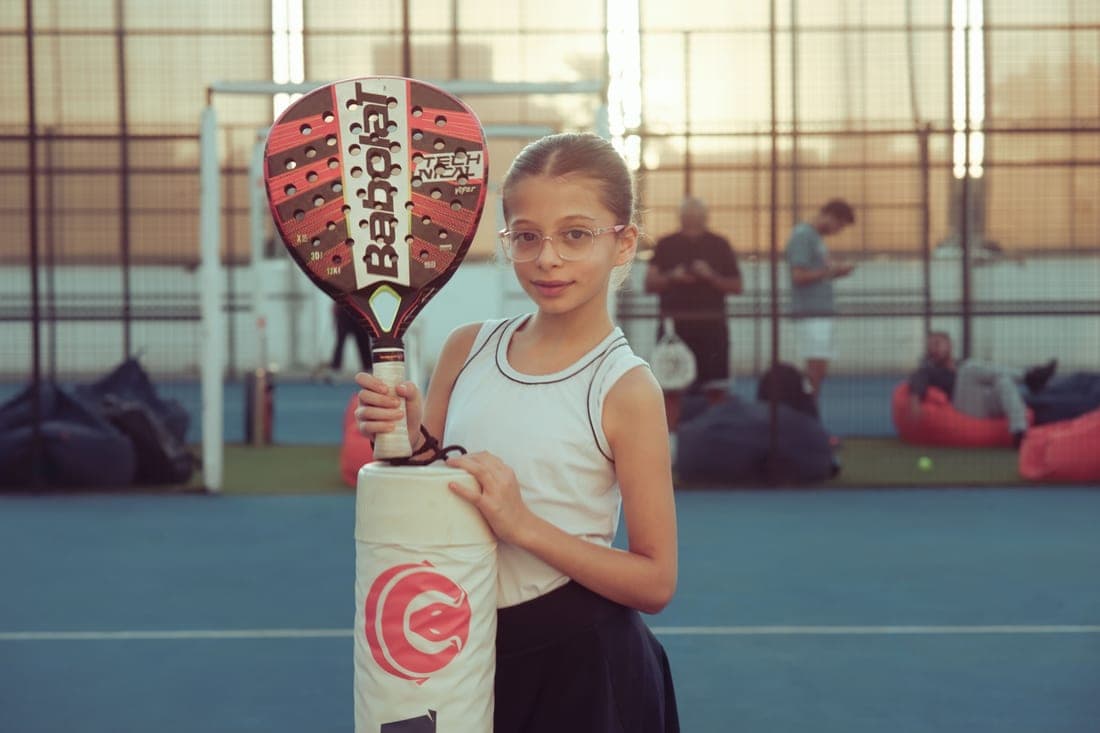 Nox Nextgen Pro Hybrid 3KBest step-up | Moving up without going to 365 g | 8.45 criteria | |
| 4 | 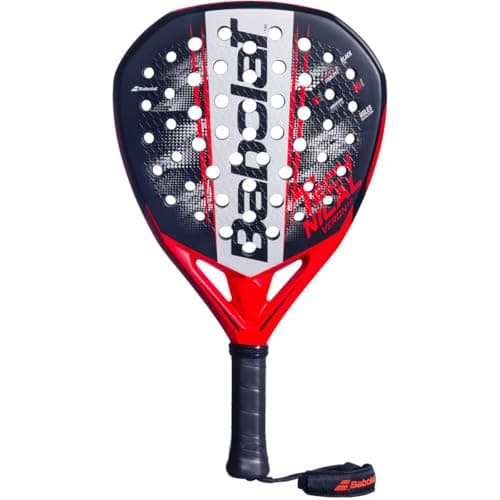 Babolat Technical Veron 3.0Best heavier pick | The heavier end for club competition | 8.75 criteria | $168.00 · View on Amazon Price as of October 10, 2026 · was $240.00, 30% off |
01Babolat Contact
Best lightweight pickBest for: The lighter end with a published figure
340 g with a round head, a soft EVA core and a composite face and frame. That is the lightest published gram figure in our padel registry, and it comes attached to the most forgiving shape and the softest core — three decisions all pointing the same way.
For the weight question specifically, the value here is that the number is stated. Several light padel rackets are marketed as light without publishing a figure, which makes it impossible to compare against what you currently own.
The cost is top-end power on the smash, which a round head with a soft core will not generate. That is the only argument for moving up the weight range.
Our score
- Control
- 9.0
- Power
- 6.5
- Sweet spot
- 9.5
- Arm comfort
- 9.0
- Maneuverability
- 8.5
- Overall
- 8.8
Verified specs
- Shape
- Round
- Weight
- 340 g
- Core
- Soft EVA
- Face
- Composite
- Frame
- Composite
Specs as published by Padel Padel, checked September 2026.
Buy if
- You want the lighter end of the range
- You want a published weight to compare against
- You play mostly at the net
Pass if
- You are finishing points with a smash
- You get pushed around by hard hitters
- You want a racket that generates its own pace
02adidas RX Series Light
Best balanceBest for: A head-light balance
Padel Market describe this as head light and control-first, with a soft core and a soft face, and name it an easy-swinging pick for a player still building a padel technique. Head light is the specification that makes a racket feel lighter than its weight.
It is the registry frame that demonstrates the point of this section. Balance and weight are different levers, and a head-light frame is quicker to reposition than a heavier-tipped frame of the same mass — which in a thirty-gram market is often the bigger effect.
No gram figure is published, so if you need a number to compare against, the Babolat Contact is the frame with one. Head light and soft also means almost no free power.
Our score
- Control
- 9.5
- Power
- 6.0
- Sweet spot
- 9.0
- Arm comfort
- 9.0
- Maneuverability
- 9.5
- Overall
- 8.6
Verified specs
- Shape
- Round
- Core
- Soft
- Face
- Soft
- Balance
- Head light
Specs as published by Padel Market, checked September 2026.
Buy if
- You want the quickest racket to reposition
- Control is the priority over power
- You are still building technique
Pass if
- Your shots are landing short
- You want a published weight
- You want a planted, stable feel
03Nox Nextgen Pro Hybrid 3K
Best step-upBest for: Moving up without going to 365 g
Padel Market name this their step-up pick and describe it as forgiving with room to grow into: a soft, forgiving core inside a hybrid teardrop head with a 3K carbon face.
On the weight question it occupies a useful position. A hybrid shape moves the sweet spot slightly up the face without jumping to a true teardrop, which is the geometric half of moving up — and it does it without demanding the 360 to 365 g the competitor frames ask for.
Its weight is not published, and our registry carries no verified Amazon listing for it, so the buy link runs to a tagged search rather than a product page. We would rather state both than imply a precision we do not have.
Our score
- Control
- 8.5
- Power
- 8.0
- Sweet spot
- 8.5
- Arm comfort
- 8.5
- Maneuverability
- 8.0
- Overall
- 8.4
Verified specs
- Shape
- Hybrid / teardrop
- Core
- Soft, forgiving
- Face
- 3K carbon
Specs as published by Padel Market, checked September 2026.
Buy if
- A round racket is starting to feel limiting
- You want carbon without the competitor weight
- You want one racket to improve into
Pass if
- You want a published weight figure
- You want the largest possible sweet spot
- You want a single confirmed product listing
04Babolat Technical Veron 3.0
Best heavier pickBest for: The heavier end for club competition
360 g with a Carbonflex face, which Babolat describe as the softest frame in their 2026 technical collection and aim at the versatile competitor. It is twenty grams up on the Contact, which in padel terms is a meaningful step.
This is what the heavier end buys you: stability against a hard-hit ball and more mass through contact, without going to the diamond-adjacent attacking geometry that costs you forgiveness. For a league player getting pushed around, that is the right trade.
Twenty grams is felt for the first few sessions. If you are not sure you want it, the Nox above is the intermediate rung, and if your arm has given you trouble, do not take this step at all.
Our score
- Control
- 9.5
- Power
- 8.0
- Sweet spot
- 8.0
- Arm comfort
- 8.5
- Maneuverability
- 7.5
- Overall
- 8.7
Verified specs
- Weight
- 360 g
- Face
- Carbonflex
- Aimed at
- Versatile competitor
Specs as published by Babolat, checked September 2026.
Buy if
- You get pushed around by hard hitters
- You play club or league doubles
- You want stability without losing the sweet spot
Pass if
- You are in your first season
- You have had arm trouble
- You want maximum maneuverability
Price as of October 10, 2026 · was $240.00, 30% off
Common questions
How heavy should a padel racket be?
Padel rackets run from roughly 340 g to 370 g, and most players are best served toward the lighter end because padel is a reaction game played in a small court. Go heavier if you get pushed around by hard hitters or if you finish points with a smash.
Is a lighter padel racket better for beginners?
Generally yes, but weight is the second decision rather than the first. Head shape sets the size of the sweet spot and matters more — a round head with a soft core is what makes a racket forgiving, and a light diamond-shaped frame is still unforgiving.
What is the difference between weight and balance?
Weight is how much mass arrives at the ball. Balance is where that mass sits along the frame. A head-light racket is markedly faster to reposition than a head-heavy one of identical weight, which in padel's narrow thirty-gram range is often the bigger effect.
Does a heavier padel racket give more power?
On the smash, yes, especially with a head-heavy balance. It also gives more stability against incoming pace, which most players underrate. What it does not do is enlarge the sweet spot — that is set by head shape.
Are women's padel rackets lighter?
The models marketed to women tend to sit at the lighter, often head-light end of the range, which is a real and useful distinction. There is no women's padel geometry though — our best padel rackets for women page covers what the label actually means.
Can I add weight to a padel racket?
Lead or tungsten tape is used to add mass and shift balance, usually at the frame edges or the handle. It is a real tuning method, but it is a last step after shape, core and base weight are right — and adding weight to the head makes an unforgiving racket less forgiving.
Read next
Sources
- 01Babolat — Padel Technical Collection 2026
- 02Padel Market — Best padel racket for beginners 2026
- 03Padel USA — HEAD Evo Speed
- 04Padel Padel — Babolat Contact
Every source above was retrieved while writing this page. Specifications are quoted from the listing or manufacturer page cited, not from memory.