Buying guide
Best padel rackets for tennis players in 2026
A tennis player arrives at a padel court with a real advantage and one expensive habit. These four rackets are chosen around both - and the one most tennis players want to buy is not the one we put first.
By Janet H.Updated
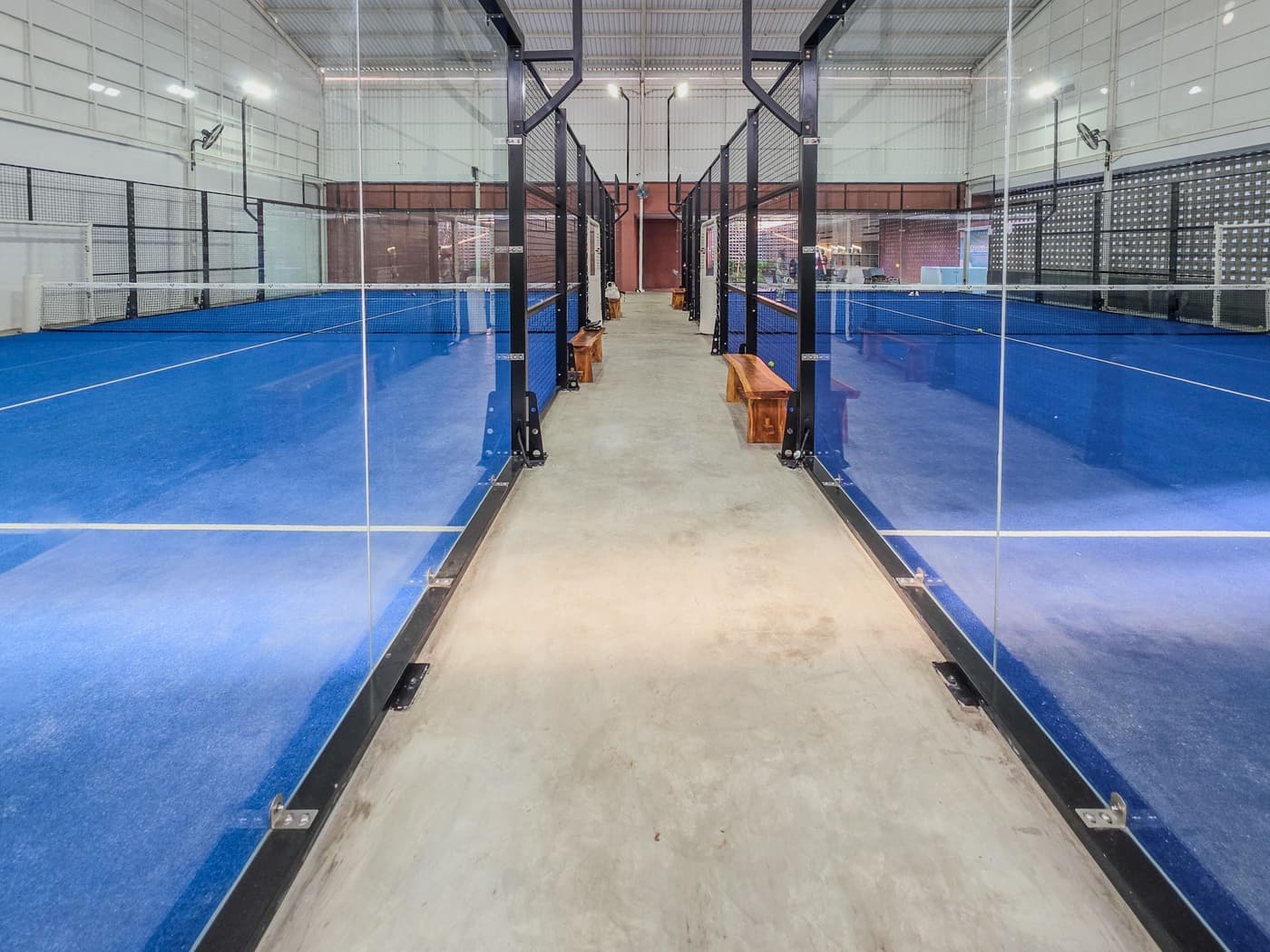
The short answer
The HEAD Evo Speed is the best padel racket for a tennis player: an oversize teardrop at 360 to 370 g with a soft foam core and a fiberglass face, so it rewards a swing rather than punishing one, while keeping a large, forgiving face. If you are already competitive, step up to the Babolat Technical Veron 3.0 instead.
Disclosure — we earn a commission on qualifying purchases made through links on this page, at no extra cost to you. It never changes which product we rank first. How this site is funded.
Our picks
| # | Product | Best for | Score | Price |
|---|---|---|---|---|
| 1 | 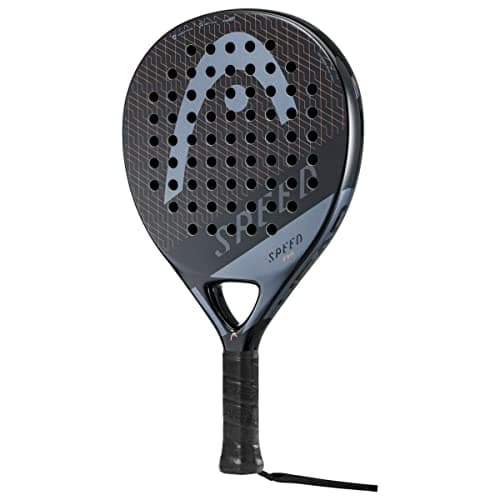 HEAD Evo SpeedTop pick | A tennis player's first padel racket | 8.65 criteria | $90.23 · View on Amazon Price as of October 17, 2026 · was $99.95, 10% off |
| 2 | 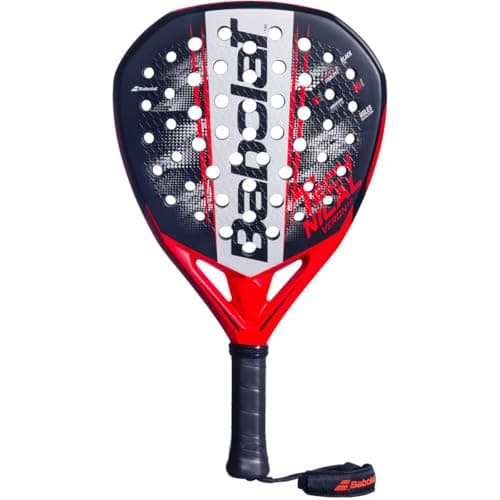 Babolat Technical Veron 3.0Best step up | Competitive tennis players | 8.75 criteria | $168.00 · View on Amazon Price as of October 17, 2026 · was $240.00, 30% off |
| 3 | 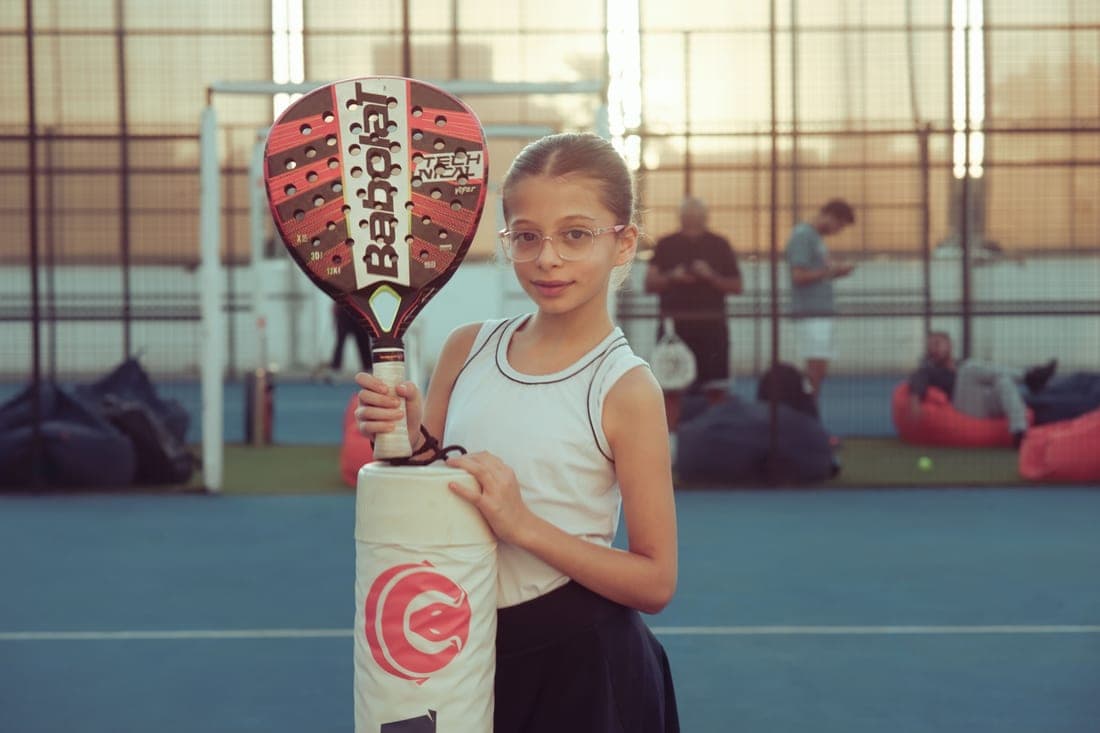 Nox Nextgen Pro Hybrid 3KBest middle ground | The middle of the transition | 8.55 criteria | |
| 4 | 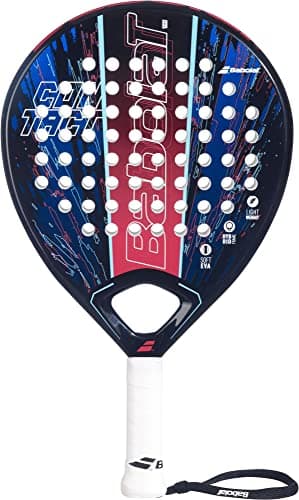 Babolat ContactMost forgiving | Tennis players who should swallow their pride | 8.45 criteria |
The picks in detail
01HEAD Evo Speed
Top pickBest for: A tennis player's first padel racket
This is the racket that meets a tennis player where they are. The shape is an oversize teardrop, which puts the sweet spot higher up the face than a round racket does - closer to where a tennis player's eye and hand already expect contact to happen - while keeping enough width lower down that an off-center ball still goes somewhere useful. A pure round racket is more forgiving, and a tennis convert will fight it.
The construction is the other half of the argument. A carbon frame around a fiberglass face and a soft foam core, at a published 360 to 370 g with a 270 mm medium balance and a 38 mm profile. Fiberglass is softer and more elastic than carbon on the hitting surface, so it gives you some free depth on a shot you have under-hit - which is most shots in your first month, because a padel ball off a wall arrives slower and lower than anything in tennis.
Two honest costs. 360 to 370 g sits at the top of the normal padel range, and a tennis player used to a 300 g frame will feel it in the wrist on the first session even though the swing is far shorter - our [padel racket weight guide](/guides/padel-racket-weight) explains why padel rackets are heavy on purpose. And a teardrop is a compromise by definition: less forgiving than round, less punishing than diamond. If your technique is still arriving, the Babolat Contact below is the more honest choice.
Our score
- Control
- 8.0
- Power
- 8.5
- Sweet spot
- 8.5
- Arm comfort
- 8.5
- Maneuverability
- 7.5
- Overall
- 8.6
Verified specs
- Shape
- Teardrop (oversize)
- Weight
- 360-370 g
- Balance
- 270 mm (medium)
- Core
- Soft foam
- Face
- Fiberglass
- Frame
- Carbon
- Profile
- 38 mm
Specs as published by Padel USA, checked September 2026.
Buy if
- You play tennis at any level and are starting padel
- You want a large face without giving up a high contact point
- You want a soft face that adds depth while your swing shortens
Pass if
- You have never played a racquet sport before
- You want the lightest racket you can buy
- You are already competing in padel and want a performance frame
Price as of October 17, 2026 · was $99.95, 10% off
02Babolat Technical Veron 3.0
Best step upBest for: Competitive tennis players
If you are a 4.0 tennis player or better, you will outgrow a beginner padel racket faster than the usual advice assumes, because the thing beginners lack - the ability to find the middle of the face repeatedly - is the thing you already have. Babolat positions the Technical Veron 3.0 at the versatile competitor, and at a published 360 g with a Carbonflex face it is the softest of Babolat's 2026 technical frames.
That softness is the reason it is the step up rather than the Viper Soft. Carbon faces are stiffer and more precise than fiberglass; they also transmit more of every impact into the forearm, and a tennis player's first months of padel involve a lot of mis-hit volleys against a wall-fed ball. A frame built around consistency rather than raw power is the one that survives that learning period without your elbow filing a complaint.
The costs are price and timing. This is a premium frame, and it is wasted on somebody who has played three times - the control it offers is control you have to be able to aim. At 360 g it is also no lighter than the HEAD above, so it does not solve the weight question. Buy it if you are competitive in tennis and expect to be competitive in padel; otherwise start one tier down.
Our score
- Control
- 9.0
- Power
- 8.5
- Sweet spot
- 8.0
- Arm comfort
- 8.5
- Maneuverability
- 7.5
- Overall
- 8.7
Verified specs
- Weight
- 360 g
- Face
- Carbonflex
- Aimed at
- Versatile competitor
Specs as published by Babolat, checked September 2026.
Buy if
- You play tennis competitively and expect to do the same in padel
- You want a carbon face for precision
- You want Babolat's softest 2026 technical frame
Pass if
- You are in your first few months of padel
- Budget is the deciding factor
- You want maximum power from the frame
Price as of October 17, 2026 · was $240.00, 30% off
03Nox Nextgen Pro Hybrid 3K
Best middle groundBest for: The middle of the transition
Nox describe this as a step-up racket, and the construction is exactly the hybrid a tennis player in month three wants: a hybrid teardrop shape, a 3K carbon face for a crisper response than fiberglass, and a soft, forgiving core underneath it. You get the precision of carbon on the surface and the mistake-tolerance of a soft core behind it.
This is the pick if the HEAD Evo Speed has started to feel vague but a Babolat technical frame feels like too much racket. Padel Market, whose guide we cite below, describes it as forgiving with room to grow into, and that is the honest description of a mid-tier frame: it will not be the limiting factor in your game for a couple of seasons.
The honest cost is that Nox publishes less about it than Babolat or HEAD do about theirs - there is no stated weight, balance or profile figure we can cite, so you are buying a described feel rather than a spec sheet. We are not going to fill those gaps with numbers. If you want published figures before you commit, the HEAD and the two Babolats all have them.
Our score
- Control
- 8.5
- Power
- 8.0
- Sweet spot
- 8.5
- Arm comfort
- 9.0
- Maneuverability
- 8.0
- Overall
- 8.5
Verified specs
- Shape
- Hybrid / teardrop
- Core
- Soft, forgiving
- Face
- 3K carbon
Specs as published by Padel Market, checked September 2026.
Buy if
- Your first padel racket has started to feel imprecise
- You want a carbon face with a soft core behind it
- You are not yet ready for a premium technical frame
Pass if
- You want published weight and balance figures
- This is your first padel racket
- You want the most powerful frame available
04Babolat Contact
Most forgivingBest for: Tennis players who should swallow their pride
Every variable on this racket is set to forgiving: a round head, a soft EVA core, a composite face, a published 340 g. Round means the sweet spot sits in the middle of the face and is as large as padel allows, and 340 g is the light end of the normal range. It is the default first padel racket for a reason.
It is on this page because the most common mistake a tennis player makes in padel is buying for the player they will be in a year. A teardrop or diamond frame punishes a long swing, and your swing is long - that is what tennis taught you. A round racket gives you a season of hitting the middle while you learn to shorten up, play the ball off the back glass, and stop trying to hit winners from the baseline.
The cost is a ceiling, and it is a real one. A soft EVA core and a composite face will not give you the put-away power off a high ball that a carbon teardrop will, and you will feel that once your technique catches up - probably within a year if you play weekly. We would rather you spent less now and upgraded knowingly than bought a frame that makes your first season harder. Our [full beginner roundup](/padel/best-rackets-for-beginners) covers the rest of the entry field.
Our score
- Control
- 8.5
- Power
- 7.0
- Sweet spot
- 9.5
- Arm comfort
- 9.0
- Maneuverability
- 8.5
- Overall
- 8.4
Verified specs
- Shape
- Round
- Weight
- 340 g
- Core
- Soft EVA
- Face
- Composite
- Frame
- Composite
Specs as published by Padel Padel, checked September 2026.
Buy if
- You are in your first season of padel
- You want the largest effective sweet spot available
- You would rather spend less now and upgrade knowingly
Pass if
- You already play padel regularly
- You want power from the frame
- You want a carbon hitting surface
What transfers from tennis, and what actively hurts
Three things transfer and they are worth a lot. Your eyes - you track a moving ball and arrive at the right place without thinking about it. Your contact point - you know what a clean strike feels like, and you will find the middle of a padel face far faster than somebody from no racquet background. And your volleys, because padel is largely a net game and a tennis player already knows how to stand at a net.
One thing actively hurts, and it is your swing length. A tennis groundstroke is a long arc generating racket-head speed through a ball that has come off a bounce at pace. In padel the ball arrives slower, lower and often off a wall, the court is 10 m by 20 m rather than 24 m long, and the racket has no strings - just a perforated composite face with cylindrical holes between 9 and 13 mm across. A full tennis swing in that environment sends the ball into the glass behind your opponents, over the fence, or into the frame.
The second habit to unlearn is the serve. Padel's serve is underarm, struck after a bounce, at or below waist level, with at least one foot on the ground. Your kick serve is worth nothing. What it is worth is understanding of placement, and the serve rules reward that: the ball must bounce in the diagonal service box, and the service lines sit 3 m from the back wall.
Shape, weight and core: the three decisions
Padel rackets vary on fewer axes than tennis frames do, which makes the decision quicker once you know what the axes are.
- Shape sets where the sweet spot sits. Round puts it low and central and makes it as large as possible; diamond puts it high and small and trades forgiveness for power; teardrop sits between them. Our padel racket shapes guide has the full breakdown.
- Weight is heavier than a tennis player expects - 340 to 370 g is normal, against roughly 300 g strung for a club tennis frame. It feels manageable because the swing is a fraction of the length, but it is why wrist fatigue is the common first-month complaint.
- Core hardness decides comfort and power. Soft EVA and foam cores deform more on impact, which returns less pace but absorbs more shock; hard EVA is the opposite. A tennis convert mis-hits more than they expect in month one, so a soft core is the arm-friendly choice.
- Face material is the finer adjustment. Fiberglass is softer and adds depth; carbon is stiffer and more precise, and 3K carbon sits between the two in feel.
- There is no string tension to tune, which removes the lever tennis players reach for first. The racket you buy is the response you get.
The four side by side
Shape and core tell you how the racket will behave; the published-weight column tells you what is actually documented. Two of these four have no published weight figure, and we have left those cells empty rather than filling them.
| Racket | Shape | Published weight | Core | Face |
|---|---|---|---|---|
| HEAD Evo Speed | Teardrop (oversize) | 360-370 g | Soft foam | Fiberglass, carbon frame |
| Babolat Technical Veron 3.0 | Versatile competitor frame | 360 g | Not published | Carbonflex |
| Nox Nextgen Pro Hybrid 3K | Hybrid / teardrop | Not published | Soft, forgiving | 3K carbon |
| Babolat Contact | Round | 340 g | Soft EVA | Composite |
Note what the table does not contain: a balance figure for three of the four, and a profile thickness for three of the four. Padel brands publish less than tennis brands do, and a page that printed a full grid of numbers for all four rackets would be inventing most of it. The HEAD is the best-documented racket here, which is a minor point in its favor on its own.
Your first month: what to change before you change rackets
- 01Shorten the backswing until it feels absurd. Start the stroke with the racket face already near where you want it. If your first session produced a lot of balls into the back glass, this is why, and no racket fixes it.
- 02Learn the back wall as an ally. A ball that passes you is not lost - it comes off the glass and you play it. Tennis instincts say chase; padel says wait, turn, and take it off the rebound.
- 03Add an overgrip before your second session. Padel handles are narrow and a sweaty hand on a narrow handle grips harder, which is how wrists and elbows get sore. Our overgrip picks work identically on a padel handle.
- 04Use the wrist cord. The rules require a non-elastic safety cord of no more than 35 cm around the wrist, and on a court with glass walls and a partner two meters away that is not a formality.
- 05Then judge the racket. Give it eight sessions before you decide the frame is wrong. Most first-month complaints are swing length, not equipment.
How these picks were made
Racket & Rally does not run a test lab. Nothing on this page is written as though we had played with, worn or measured anything ourselves, because we have not. What we do is read the published specification sheets, the independent measurements and the retailer listings cited at the foot of the page, set them against each other, and say which differences change something you will actually notice on court.
Every product here was confirmed on sale when its registry entry was built, and every claim traces to one of the sources listed at the bottom. Our full selection criteria set out the method, and the editorial policy covers corrections and how often pages are revisited. Where a brand does not publish a figure, we say that rather than filling the gap.
Common questions
Should a tennis player buy a round or teardrop padel racket?
Teardrop, in most cases, and that is a deliberate departure from the standard beginner advice. The usual reason to buy round is that beginners cannot find the middle of the face repeatedly - but a tennis player can, because that skill transfers. A teardrop keeps a usable sweet spot while putting it higher, nearer where your eye expects contact.
Is padel easier than tennis for a tennis player?
The rallies are easier to start and much harder to finish. A smaller court, a slower ball and walls that keep the ball in play mean you will be in rallies from day one. Ending them is the hard part, because your biggest tennis weapons - a long swing and a big serve - are not available to you here.
Can I use my tennis grip size in padel?
Padel handles are narrower than tennis handles as standard, and most players build them up with an overgrip rather than buying a thicker handle. If you take a larger tennis grip, expect to add one or two overgrips. Our grip size guide explains the measurement; the same logic applies, at a smaller starting point.
How heavy should my first padel racket be?
Within the normal 340 to 370 g range, start at the lighter end if your wrist or elbow has ever complained and at the heavier end if neither has. A tennis player's instinct is that 360 g is heavy, but the swing is so much shorter that the number does not mean what it means in tennis.
Do padel and tennis use the same ball?
No, though they look almost identical. A padel ball is slightly smaller than a tennis ball and carries less internal pressure, which is why it sits lower and slower off the surface. It matters more than it sounds for a tennis player's timing - we go through it on padel balls vs tennis balls.
Will padel ruin my tennis?
The risk people report is the swing: padel rewards a compact stroke and a lot of wrist, which is not what a tennis groundstroke wants. Players who do both tend to keep them separate rather than blended. The crossover is cleaner in the other direction - court sense, volleys and footwork all improve.
Read next
Sources
- 01Babolat - padel technical collection 2026
- 02Padel USA - HEAD Evo Speed
- 03Padel Market - best padel racket for beginners 2026
- 04Padel Padel - Babolat Contact
- 05Wikipedia - Padel (court, racket, ball and serve rules)
Every source above was retrieved while writing this page. Specifications are quoted from the listing or manufacturer page cited, not from memory.