Guide
Do padel and tennis use the same ball?
Side by side in a tube you would not pick them apart. On court the difference shows up in the first rally, and if you have been playing padel with tennis balls it explains more about your game than you would like.
By Janet H.Updated
The short answer
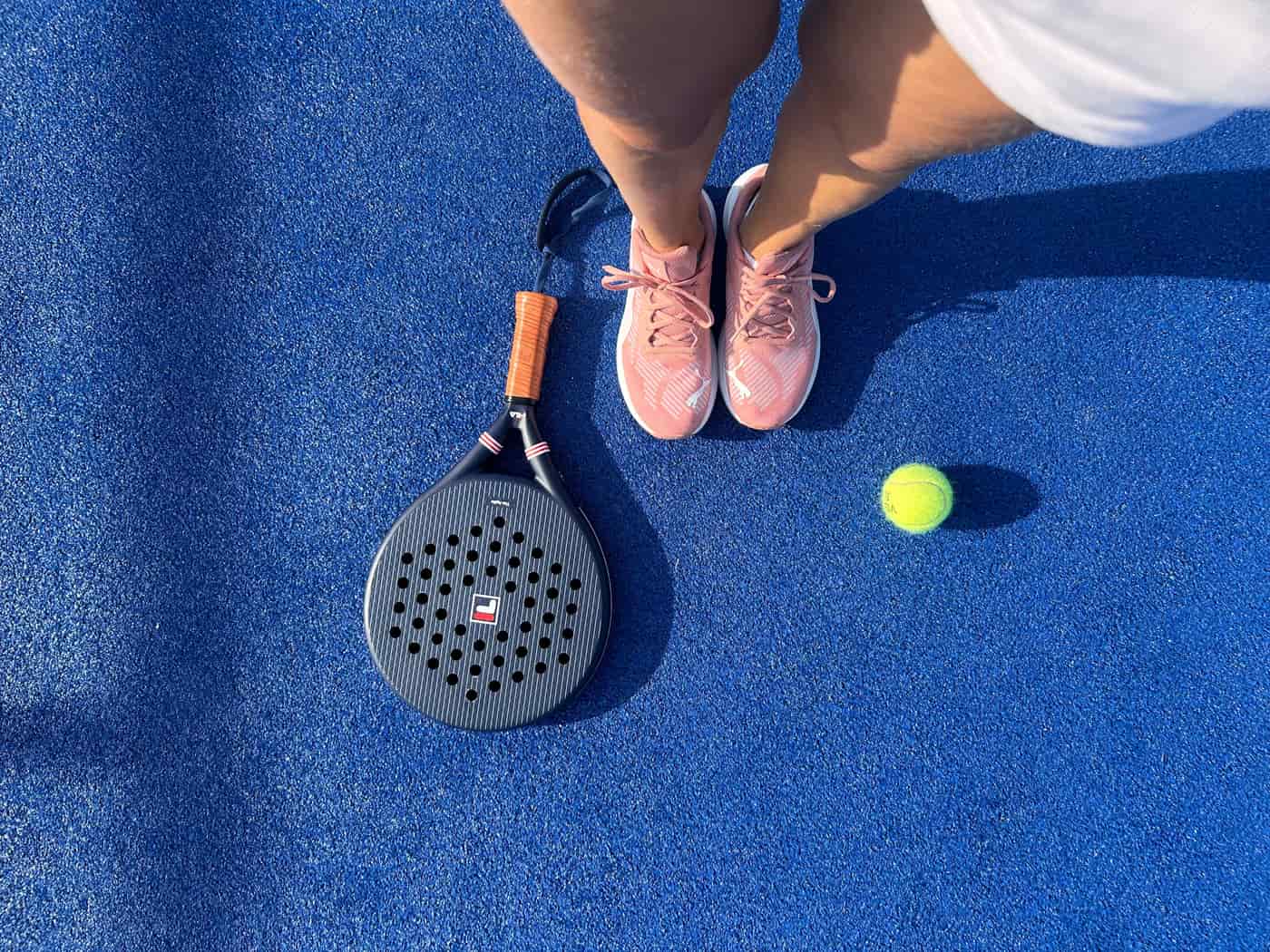
No. A padel ball is similar to a tennis ball but slightly smaller and carries less internal pressure, which makes it bounce lower and travel slightly slower. The two are not interchangeable for real play: a tennis ball in padel sits up higher and faster off the glass, which breaks the touch game the sport is built around. Padel balls must also be uniformly yellow or white.
Disclosure — we earn a commission on qualifying purchases made through links on this page, at no extra cost to you. It never changes which product we rank first. How this site is funded.
The actual difference
A padel ball is built on the same basic construction as a tennis ball - a pressurized rubber core with a felt covering - and the published distinction is twofold: it is slightly smaller in diameter, and it holds less internal pressure. Padel's own rules also require the ball to be uniformly yellow or white, which is why you do not see the color variation that turns up in tennis practice balls.
Less pressure is the part that changes the game. Internal pressure is what makes a ball spring back off a surface; a lower-pressure ball deforms more on contact and returns less of that energy, so it bounces lower and comes off both the floor and the glass with less pace. On a court 10 m wide and 20 m long with walls in play, that is not a detail - it is the difference between a sport of touch and a sport of reaction.
Everything else that feels different about padel comes from the rest of the equipment and the court rather than from the ball. The racket has no strings - it is a perforated composite face with cylindrical holes between 9 and 13 mm across - so it returns less energy than a strung bed does. The serve is underarm, struck after a bounce at or below waist height. The net sits at 88 cm in the center and 92 cm at the ends. The ball is one variable in a system designed to keep rallies alive.
What happens if you swap them
Tennis balls in padel
This is the common direction, because tennis balls are everywhere and cheap. The ball sits up higher off the floor and comes off the back glass faster and further, which has three consequences. Rallies get shorter, because a lively ball off the glass is easier to attack and harder to control. The touch shots the sport is built on - the bandeja, the controlled block, the drop into the corner - stop behaving the way they should. And smashes that should stay in the court fly out over the fence.
Nothing dangerous happens, and for a social hit with friends who are all learning it genuinely does not matter much. What it does do is teach you timing that will be wrong the first time you play with proper balls, which is the real cost if you intend to keep playing.
Padel balls in tennis
Less common and more obviously wrong. On a full-size tennis court a lower-pressure ball sits down, loses pace through the air and does not come up to a comfortable strike height on the bounce, so you end up generating all the pace yourself and playing everything low. As a deliberate drill - low balls, heavy topspin practice - that has some value. As a substitute for tennis balls it does not.
The two categories side by side
| Padel ball | Tennis ball | |
|---|---|---|
| Size | Slightly smaller than a tennis ball | Standard tennis diameter |
| Internal pressure | Lower | Higher |
| Bounce | Lower, less lively off floor and glass | Higher and faster |
| Color rule | Must be uniformly yellow or white | Optic yellow is standard; practice balls vary |
| Felt | Pressurized core with felt covering | Pressurized core with felt covering, duty types vary |
| Duty variants | Not a published distinction | Regular duty and extra duty for different surfaces |
| Typical life | Pressure loss over matches; brands report five to six matches for some models | Pressure loss from the moment the can is opened |
The duty row is the one tennis players overlook. Tennis balls come in regular and extra duty because hard courts and clay abrade felt at different rates - a distinction we cover on extra duty vs regular duty tennis balls. Padel does not publish an equivalent split, because padel is played on one surface type.
How long they last, and when to open a new tube
Both ball types lose pressure continuously once the can is opened, and both are finished long before they look finished. That is the single most common equipment mistake in either sport: players judge a ball by the felt and the felt is the slowest thing to fail.
The test is the same in both sports. Hold a new ball and your current ball at shoulder height and drop them together on a hard surface. If the old one bounces noticeably lower, the pressure has gone and the ball is done regardless of how the felt looks. In padel the effect is amplified because the glass is in play - a dead ball off the back wall barely comes off it at all, which quietly removes a third of the court from the game.
Reported ball life varies by model and is one of the few places where brands make a claim worth reading. Padel Browser report five to six full matches before the bounce softens on the Dunlop Pro Padel, and name the HEAD Padel Pro+ as holding pressure longest among the pressurized options they looked at. For tennis, our how long do tennis balls last page covers opened and sealed storage in full.
How this guide was put together
We do not run a test lab and nothing here is written as though we did. This page is built from published specification sheets, from the independent measurements and governing-body rules cited at the foot of the article, and from the physical reasoning that connects them. Where a figure is not published anywhere we can cite, the page says so rather than filling the gap.
The picks are existing products from our own registry, so each one carries a source you can check. Our full selection criteria set out the method, and the editorial policy covers corrections and how often pages are revisited. We earn a commission if you buy through our links, which is disclosed on every page and never changes a ranking.
Now pick yours
The specs above are only useful once they resolve into something you can buy. These are the products that match what this page has just explained.
Our picks
| # | Product | Best for | Score | Price |
|---|---|---|---|---|
| 1 | 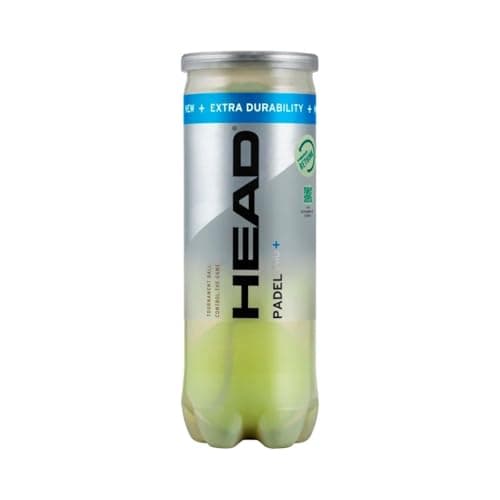 HEAD Padel Pro+Best padel ball | Padel, if you only buy one ball | 8.84 criteria | |
| 2 | 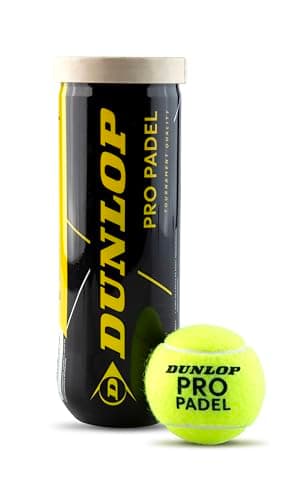 Dunlop Pro PadelBest value padel ball | Padel on a budget | 8.34 criteria | |
| 3 | 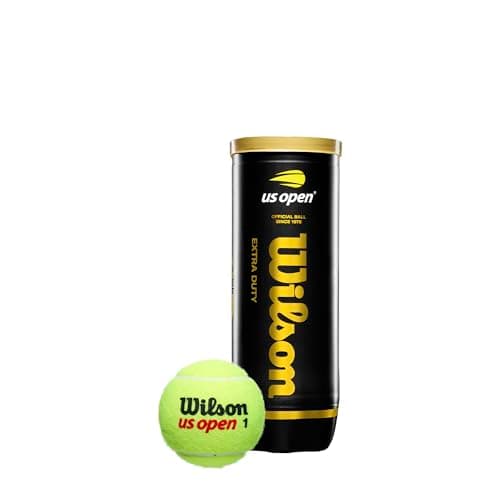 Wilson US OpenBest tennis ball | Tennis, the one most clubs already use | 8.84 criteria | |
| 4 | 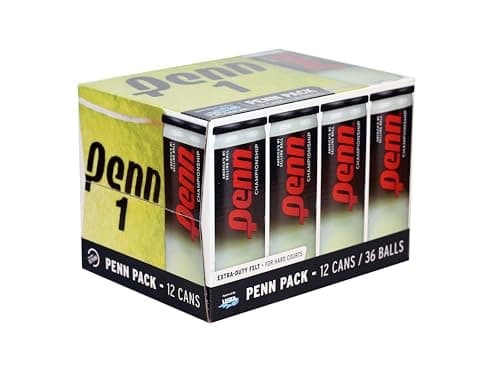 Penn ChampionshipBest value tennis ball | Tennis practice volume | 8.04 criteria |
01HEAD Padel Pro+
Best padel ballBest for: Padel, if you only buy one ball
The tournament default and an FIP-approved ball, which matters more in padel than the equivalent approval does in club tennis because the sport's competitive structure runs on a short list of approved balls. HEAD reformulated the core for 2026 specifically to hold pressure longer.
Padel Browser rate it as holding pressure longest among the pressurized options in their guide, and pressure life is the spec that matters: a padel ball that has gone soft stops coming off the glass, which is the part of the sport you cannot replace.
The honest cost is price - this is the mid-tier ball rather than the budget one, and if you are feeding a beginners' session where half the balls end up behind the fence, the Dunlop below is the sensible call.
Our score
- Performance
- 9.0
- Consistency
- 9.0
- Bounce life
- 9.0
- Value
- 7.5
- Overall
- 8.8
Verified specs
- Type
- Pressurized
- Approval
- FIP-approved
- Note
- 2026 core reformulated to hold pressure longer
Specs as published by Padel Browser, checked September 2026.
Buy if
- You play padel regularly or competitively
- You want the longest pressure life available
- You want an FIP-approved ball
Pass if
- You are buying balls for a large beginners' session
- Per-tube cost is the deciding factor
- You play outdoors on wet courts, where the Wilson is more water-resistant
02Dunlop Pro Padel
Best value padel ballBest for: Padel on a budget
An official FIP ball at the budget end, which is an unusual combination - in most sports the cheap ball is also the unapproved one. For club and social play that makes it the default recommendation.
Padel Browser report five to six full matches before the bounce softens, which is a specific, usable claim rather than a vague one. For a weekly player that is a sensible replacement cycle to plan around.
The honest cost is that five to six matches is shorter than the HEAD's reported life, so the per-match economics narrow once you factor in replacement. If you play three times a week, buy the HEAD.
Our score
- Performance
- 8.0
- Consistency
- 8.0
- Bounce life
- 7.5
- Value
- 9.5
- Overall
- 8.3
Verified specs
- Type
- Pressurized
- Approval
- Official FIP ball
- Reported life
- Five to six full matches before bounce softens
Specs as published by Padel Browser, checked September 2026.
Buy if
- You play social or club padel
- You want an FIP ball at the lowest sensible price
- You buy balls in quantity for group sessions
Pass if
- You play several times a week
- You want maximum pressure life
- You play outdoors in damp conditions
03Wilson US Open
Best tennis ballBest for: Tennis, the one most clubs already use
The ball most US club players already recognize, available in both regular and extra duty so you can match it to your surface, and The Tennis Tribe's Best Overall pick - they rate it as holding its bounce longer than rival balls.
Bounce life is the right axis to buy a tennis ball on, for the same reason it is in padel: felt wears visibly and pressure goes invisibly, and a ball that holds pressure is a ball that plays correctly for more sessions.
The honest cost is price relative to the Penn Championship, and the fact that duty choice is now your problem - a regular duty ball on an abrasive hard court will fluff up and slow down faster than an extra duty one. Our [tennis ball roundup](/gear/best-tennis-balls) has the whole category.
Our score
- Performance
- 9.0
- Consistency
- 9.0
- Bounce life
- 9.0
- Value
- 8.0
- Overall
- 8.8
Verified specs
- Duty
- Regular and extra duty
- Type
- Pressurized
- Award
- Best Overall — The Tennis Tribe
- Reported life
- Holds bounce longer than rival balls
Specs as published by The Tennis Tribe, checked September 2026.
Buy if
- You play club tennis and want the standard ball
- You want the longest bounce life
- You want a choice of regular or extra duty
Pass if
- You are feeding baskets and only need volume
- Per-can cost is the deciding factor
- You play padel - these are the wrong ball for it
04Penn Championship
Best value tennis ballBest for: Tennis practice volume
The Tennis Tribe's Best Value pick, in regular and extra duty, and the honest answer when the balls are going into a hopper rather than into a match. Nobody needs tournament pressure life for a basket of serves.
It is the ball to buy if the previous section persuaded you to stop playing with dead balls but the cost of replacing them more often put you off. Cheaper balls replaced sooner is better tennis than good balls played flat.
The honest cost is stated plainly in its own registry entry: it goes flat faster than the US Open ball. That is fine for feeding and poor for matches, and the distinction is the whole reason both balls are on this page.
Our score
- Performance
- 7.5
- Consistency
- 7.5
- Bounce life
- 7.0
- Value
- 9.5
- Overall
- 8.0
Verified specs
- Duty
- Regular and extra duty
- Type
- Pressurized
- Award
- Best Value — The Tennis Tribe
- Trade-off
- Goes flat faster than the US Open ball
Specs as published by The Tennis Tribe, checked September 2026.
Buy if
- You are feeding baskets or practicing serves
- You buy balls in volume
- You replace balls often rather than playing them flat
Pass if
- You play matches you care about
- You want the longest bounce life
- You play padel - again, wrong ball
Common questions
Do padel and tennis use the same ball?
No. A padel ball is similar in construction but slightly smaller and carries less internal pressure, so it bounces lower and travels a little slower. Padel rules also require the ball to be uniformly yellow or white. They are not interchangeable for serious play in either direction.
Can I use tennis balls for padel?
For a social hit among beginners, yes, and nothing bad happens. The ball sits up higher and comes off the glass faster, so rallies shorten, touch shots misbehave and smashes fly out. The real cost is that you learn timing that will be wrong when you switch to proper balls.
Can I use padel balls for tennis?
You can, but it plays poorly. On a full tennis court a lower-pressure ball sits down, loses pace and never comes up to a comfortable strike height, so you supply all the pace and play everything low. As a deliberate low-ball drill it has some value; as a substitute it does not.
How can I tell a padel ball from a tennis ball?
By the printing, mostly - the size difference is slight enough that you will not reliably eyeball it. Padel balls are marked as padel balls and carry their federation approval on the tube. If you have loose balls of both mixed together, a drop test will separate them: the padel ball bounces lower.
How long does a padel ball last?
It depends on the ball and how hard you play. Padel Browser report five to six full matches before the bounce softens on the Dunlop Pro Padel, and rate the HEAD Padel Pro+ as holding pressure longest among the pressurized options they reviewed. The drop test against a new ball is the reliable check.
Are there pressureless padel balls?
The approved competitive balls are pressurized, and padel does not publish a duty or pressureless split the way tennis publishes regular and extra duty. If pressure life is your concern, the practical answer is to buy a ball with a reported long pressure life rather than to look for a pressureless alternative.
Read next
Sources
- 01Wikipedia - Padel (ball, court and racket rules)
- 02Padel Browser - best padel balls 2026 buying guide
- 03The Tennis Tribe - best tennis balls
Every source above was retrieved while writing this page. Specifications are quoted from the listing or manufacturer page cited, not from memory.