Buying guide
Best pickleball paddles for intermediate players in 2026
The beginner question is which paddle forgives most. The intermediate question is different: which shape and face suit the shot you are now trying to hit on purpose.
By Janet H.Updated
The short answer
The Six Zero Coral is the best intermediate pickleball paddle: a 16 mm core with a damped Diamond Tough carbon face, which is Pickleheads' control pick and the paddle built for resetting a hard drive into the kitchen. The JOOLA Hyperion CFS 16 is the elongated alternative, and the Vatic Pro V-SOL Pro has a premium spec sheet at $99.99.
Disclosure — we earn a commission on qualifying purchases made through links on this page, at no extra cost to you. It never changes which product we rank first. How this site is funded.
Our picks
| # | Product | Best for | Score | Price |
|---|---|---|---|---|
| 1 | 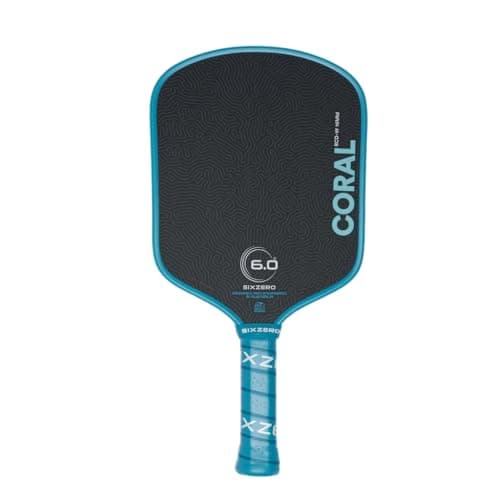 Six Zero CoralTop pick | Resetting hard balls at the kitchen line | 8.75 criteria | |
| 2 |  JOOLA Ben Johns Hyperion CFS 16Best elongated | Reach, leverage and a two-handed backhand | 8.65 criteria | |
| 3 | 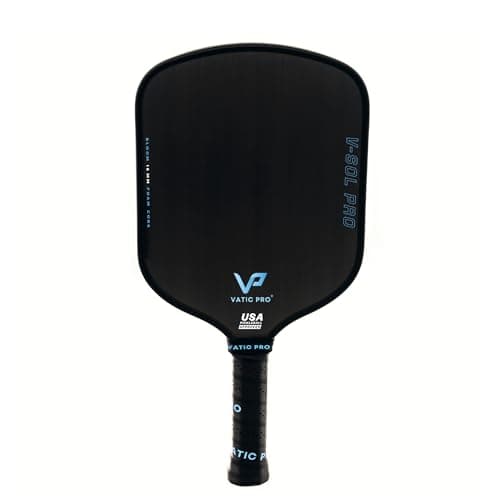 Vatic Pro V-SOL ProBest value | A premium spec sheet under $100 | 8.55 criteria | |
| 4 | Engage Pursuit MX 6.0Best for spin on a budget | Players chasing spin on a budget | 8.35 criteria | |
| 5 |  Ronbus Quanta ProBest under $100 | A light paddle with a long handle | 8.35 criteria |
The picks in detail
01Six Zero Coral
Top pickBest for: Resetting hard balls at the kitchen line
Pickleheads name the Coral their best control paddle: 8 to 8.3 oz on a thick 16 mm core with a Diamond Tough carbon face, listed at $180, with handle options at 5.5 and 5.75 inches. The thick core plus damped carbon combination is specifically what absorbs pace rather than returning it.
That is the right priority at this level, and it is the opposite of what most intermediate players buy. Once you are consistently at the kitchen line, the shot that decides points is the reset — taking a hard drive and dropping it dead into the no-volley zone. A paddle with pop makes that harder, not easier.
The cost is honest and it is power. If your problem is that you cannot get the ball deep enough to push opponents off the line, this is the wrong paddle and the elongated JOOLA below is the right one. At $180 it is also the most expensive thing on this page.
Our score
- Control
- 9.5
- Power
- 7.5
- Spin
- 8.5
- Sweet spot
- 8.5
- Value
- 7.0
- Overall
- 8.7
Verified specs
- Pickleheads award
- Best Control
- Weight
- 8-8.3 oz
- Core
- 16 mm
- Face
- Diamond Tough carbon
- Handle
- 5.5 / 5.75 in
- Price
- $180 as listed by Pickleheads
Specs as published by Pickleheads, checked September 2026.
Buy if
- You play most of your points at the kitchen line
- Resets and dinks are where you lose points
- You want a 5.75 inch handle option
Pass if
- You need more depth on your drives
- You want the cheapest route to a carbon face
- You are still learning where the kitchen line is
02JOOLA Ben Johns Hyperion CFS 16
Best elongatedBest for: Reach, leverage and a two-handed backhand
An elongated 16 mm paddle at 8.0 to 8.4 oz with a Carbon Friction face and a 5.5 inch handle, which PickleballUS name their best overall for beginners moving up. Elongated is the shape specification that trades sweet-spot width for reach and leverage.
The 5.5 inch handle is the detail that matters most and gets mentioned least. If you hit a two-handed backhand — and almost every tennis convert does — you need a handle both hands fit on. Several paddles in our registry list handles at 4 to 4.25 inches, which physically will not take two hands.
The trade is forgiveness. An elongated face is narrower, so the sweet spot is narrower too, and off-centre hits toward the edges are punished more than on a standard shape. This is a paddle for a player whose contact is already reliable.
Our score
- Control
- 8.5
- Power
- 9.0
- Spin
- 9.0
- Sweet spot
- 7.5
- Value
- 7.5
- Overall
- 8.6
Verified specs
- PickleballUS award
- Best Overall for beginners moving up
- Weight
- 8.0-8.4 oz
- Core
- 16 mm
- Face
- Carbon Friction
- Handle
- 5.5 in
- Shape
- Elongated
Specs as published by PickleballUS, checked September 2026.
Buy if
- You hit a two-handed backhand
- You want reach at the net and on the stretch
- You are coming from tennis
Pass if
- You still mishit toward the edges
- You want the widest sweet spot
- You play mostly soft, controlled points
03Vatic Pro V-SOL Pro
Best valueBest for: A premium spec sheet under $100
Pickleheads give this their best budget award and list it at $99.99: 8 to 8.5 oz, a 16 mm core, a raw T700 carbon face and a 5.3 to 5.6 inch handle. Read that specification without the price attached and it is a premium paddle.
Raw carbon is the face material that matters at this level because it is where spin actually comes from — the unfinished surface grips the ball for a fraction longer at contact. A painted or finished face, whatever it is made of, does less of that, and the difference shows up most on a topspin dink and a roll volley.
At this price the finish and the edge guard are not what a $180 paddle gets you, and raw carbon faces also wear smoother over time, which costs you grip on the ball as the paddle ages. Both are real, and neither changes the fact that the core specification is the same.
Our score
- Control
- 8.5
- Power
- 8.0
- Spin
- 9.0
- Sweet spot
- 8.0
- Value
- 9.5
- Overall
- 8.5
Verified specs
- Pickleheads award
- Best Budget
- Weight
- 8-8.5 oz
- Core
- 16 mm
- Face
- T700 raw carbon
- Handle
- 5.3-5.6 in
- Price
- $99.99 as listed by Pickleheads
Specs as published by Pickleheads, checked September 2026.
Buy if
- You want raw carbon without the premium price
- Spin is what you are working on
- You want a 5.3 to 5.6 inch handle
Pass if
- You want maximum control and damping
- You want the longest-lasting face texture
- You want the most refined build quality
04Engage Pursuit MX 6.0
Best for spin on a budgetBest for: Players chasing spin on a budget
PickleballUS name this for players chasing spin: 7.6 to 8.1 oz on an Engage ControlPro core with a skin-textured fiberglass face. Textured fiberglass takes a different route to the same destination as raw carbon — surface grip rather than material grip.
It is the lightest paddle in this group, which has a specific use. If you are playing long sessions and your shoulder or wrist is the limiting factor rather than your technique, half an ounce across hundreds of swings is not a trivial saving.
The handle is listed at 4.0 to 4.125 inches, which is short, so a two-handed backhand is off the table. Fiberglass also has more pop than raw carbon, which means slightly less help on a reset than the Six Zero gives.
Our score
- Control
- 8.5
- Power
- 7.5
- Spin
- 9.0
- Sweet spot
- 8.0
- Value
- 9.0
- Overall
- 8.3
Verified specs
- PickleballUS award
- Best for Beginners Chasing Spin
- Weight
- 7.6-8.1 oz
- Core
- Engage ControlPro
- Face
- Fiberglass with skin texture
- Handle
- 4.0-4.125 in
Specs as published by PickleballUS, checked September 2026.
Buy if
- Spin is your priority and budget matters
- You want the lightest paddle here
- You hit one-handed on both sides
Pass if
- You hit a two-handed backhand
- You want maximum damping on resets
- You want a raw carbon face specifically
05Ronbus Quanta Pro
Best under $100Best for: A light paddle with a long handle
Pickleheads' best-under-$100 pick at $99.99: 7.9 oz, a 16 mm core, a NanoBond raw carbon face and a 5.5 inch handle. That is the lightest sub-$100 paddle in their set, and the only one at that weight with a handle long enough for two hands.
Those two specifications rarely appear together. Long handles usually come on elongated paddles, which are heavier at the tip; light paddles usually have short handles because that is where the length went. Getting both is the reason this paddle is here.
Our registry carries no verified Amazon listing for it, so the buy link runs to a tagged search rather than a product page. It is also less powerful than the heavier paddles here, which is the straightforward consequence of 7.9 oz.
Our score
- Control
- 8.5
- Power
- 7.5
- Spin
- 8.5
- Sweet spot
- 8.0
- Value
- 9.5
- Overall
- 8.3
Verified specs
- Pickleheads award
- Best Under $100
- Weight
- 7.9 oz
- Core
- 16 mm
- Face
- NanoBond raw carbon
- Handle
- 5.5 in
- Price
- $99.99 as listed by Pickleheads
Specs as published by Pickleheads, checked September 2026.
Buy if
- You want a two-handed backhand on a light paddle
- You are keeping the budget under $100
- Arm fatigue is a factor in long sessions
Pass if
- You want power
- You want a confirmed single product listing
- You prefer a heavier, more planted paddle
What changes between beginner and intermediate
The beginner paddle question has one answer: maximise forgiveness. Thick core, standard shape, wide face, and do not worry about anything else. That advice is correct and it stops being useful at roughly the point you can reliably get to the kitchen line and stay there.
From there the decision splits in two, and which half you are in is set by where you lose points rather than by your rating. One group loses points on resets — the hard drive that comes at you at the net and that you pop up for a put-away. The other loses points because their drives sit up and their opponents take the net uncontested. These want opposite paddles.
| Where you lose points | What you need | Shape | Pick here |
|---|---|---|---|
| Popping up resets at the net | Damping, thick core, control face | Standard | Six Zero Coral |
| Drives sitting up short | Reach and leverage | Elongated | JOOLA Hyperion CFS 16 |
| Dinks floating, no bite on the ball | Face texture for spin | Standard | Vatic Pro V-SOL Pro |
| Arm tiring before your technique fails | Lower weight | Standard | Ronbus Quanta Pro |
If you are not sure which group you are in, the honest answer is the first one. Most intermediate points at every level are decided in the soft game, and most intermediate players buy for the hard game. How to choose a pickleball paddle covers the full spec set.
The five, side by side
Every figure below is published by Pickleheads or PickleballUS and cited at the foot of the page. Prices are what those sources list; the live figure is on each buy button, because paddle prices move more than almost anything else in racquet sports.
| Paddle | Weight | Core | Face | Handle | Listed price |
|---|---|---|---|---|---|
| Six Zero Coral | 8-8.3 oz | 16 mm | Diamond Tough carbon | 5.5 / 5.75 in | $180 |
| JOOLA Hyperion CFS 16 | 8.0-8.4 oz | 16 mm | Carbon Friction | 5.5 in | Not published |
| Vatic Pro V-SOL Pro | 8-8.5 oz | 16 mm | T700 raw carbon | 5.3-5.6 in | $99.99 |
| Engage Pursuit MX 6.0 | 7.6-8.1 oz | ControlPro | Textured fiberglass | 4.0-4.125 in | Not published |
| Ronbus Quanta Pro | 7.9 oz | 16 mm | NanoBond raw carbon | 5.5 in | $99.99 |
Handle length is the specification tennis players should check first
If you came to pickleball from tennis you almost certainly hit a two-handed backhand, and that stroke needs a handle both hands fit on. Paddle handles in our registry run from 4.0 inches to 5.75 inches, which is a difference of nearly two inches on a handle that is short to begin with.
Below about 5 inches a two-handed backhand is not available — your top hand ends up on the paddle face, which is both illegal to lean on and physically unpleasant. Above 5.5 inches it is comfortable. That makes handle length a hard filter rather than a preference, and it eliminates paddles before any other specification gets a look.
The second thing tennis converts should know is that a long handle shortens the face. The total paddle length is capped by the rules, so every inch of handle is an inch the hitting surface does not have. An elongated paddle with a long handle, like the JOOLA here, resolves that by being narrower rather than shorter — which is where the narrower sweet spot comes from.
Our best pickleball paddles for tennis players page is built entirely around the crossover, and tennis vs pickleball covers what a tennis background is and is not worth.
How these picks were made
Racket & Rally does not run a test lab. Nothing on this page is written as though we had hit with, worn or measured anything ourselves, because we have not. What we do instead is read the published specification sheets and the third-party lab measurements cited at the foot of the page, set them against each other, and say which differences change something you will notice.
Every product here is already in our registry, which means it carries a cited retailer or review source and a verified listing. Our full selection criteria set out the method, and the editorial policy covers corrections and how often pages are revisited. Prices are never written into the page — the number on each buy button is the live one.
Common questions
What is the best pickleball paddle for intermediate players?
The Six Zero Coral, Pickleheads' control pick: a 16 mm core with a damped Diamond Tough carbon face, listed at $180. It is built for resetting hard drives at the kitchen line, which is where most intermediate points are decided.
Should an intermediate player use a 16 mm paddle?
Almost always yes. Four of the five paddles here are 16 mm. A thicker core deforms more at contact, which absorbs incoming pace and widens the usable hitting area — both of which help the soft game that decides points at this level.
Is an elongated paddle better than a standard shape?
Only if your contact is already reliable. Elongated gives reach and leverage at the cost of sweet-spot width, because total paddle length is capped so a longer face has to be a narrower one. Standard shapes are more forgiving on off-centre hits.
What handle length do I need for a two-handed backhand?
About 5.5 inches. Below roughly 5 inches your top hand ends up on the paddle face. The JOOLA Hyperion CFS 16 and the Ronbus Quanta Pro both list 5.5 inches; the Engage Pursuit MX 6.0 lists 4.0 to 4.125 inches and will not take two hands.
Do I need a carbon face paddle?
Raw carbon is the material that grips the ball longest at contact, which is where spin comes from, so it is the reason to upgrade from a painted face. Textured fiberglass gets to a similar place by a different route. A finished or painted face of any material does less of it.
How much should an intermediate pickleball paddle cost?
Two paddles here are listed at $99.99 with 16 mm cores and raw carbon faces, which is the specification a premium paddle has. The jump to $180 buys damping and build refinement rather than a different category of paddle.
Read next
Sources
Every source above was retrieved while writing this page. Specifications are quoted from the listing or manufacturer page cited, not from memory.