Buying guide
Best tennis shoes for flat feet in 2026
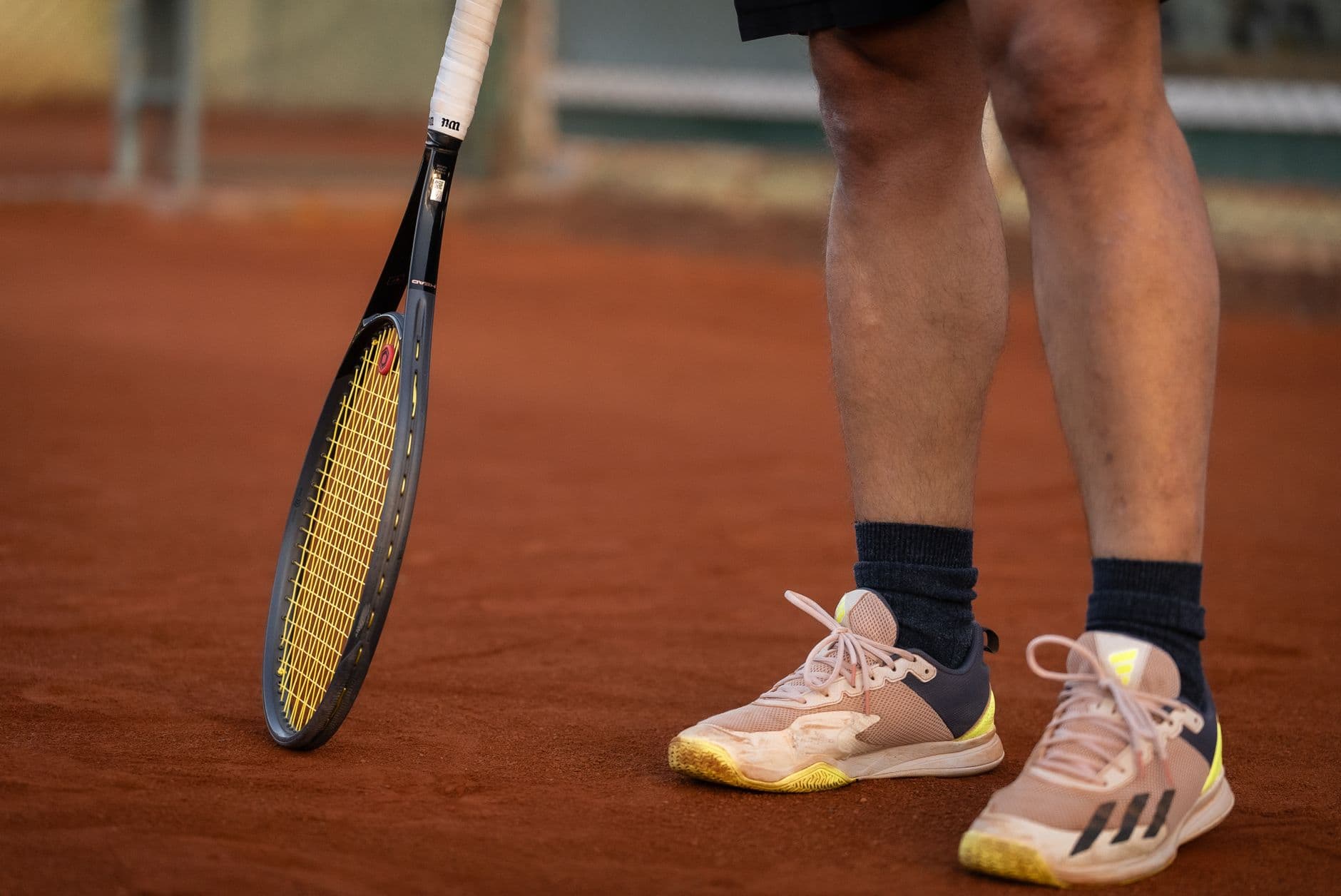
A low arch collapses inward under load. The specification that resists that is structural stiffness — which is almost the opposite of what a soft, cushioned shoe gives you.
By Janet H.Updated
The short answer
The ASICS GEL-Resolution X is the best court shoe for flat feet: RunRepeat score it 5 out of 5 for both torsional rigidity and heel counter stiffness, which are the two measured properties that resist arch collapse. The adidas Barricade 14 is the low-to-the-ground alternative and the New Balance CT-Rally v2 adds shock absorption without losing rigidity.
Disclosure — we earn a commission on qualifying purchases made through links on this page, at no extra cost to you. It never changes which product we rank first. How this site is funded.
Our picks
| # | Product | Best for | Score | Price |
|---|---|---|---|---|
| 1 | 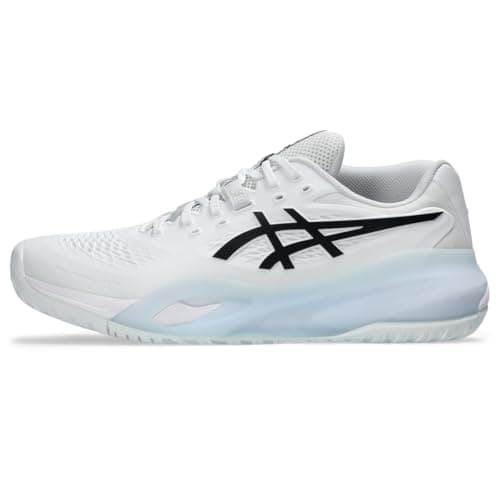 ASICS GEL-Resolution XTop pick | Maximum structural support | 8.95 criteria | $139.95 · View on Amazon Price as of October 10, 2026 · was $164.95, 15% off |
| 2 | 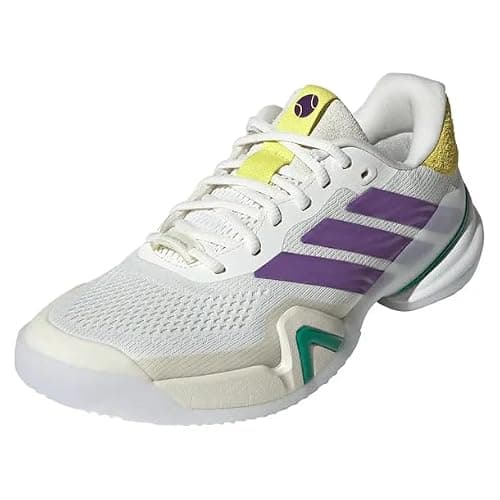 adidas Barricade 14Best court feel | Staying low to the ground | 8.25 criteria | |
| 3 | 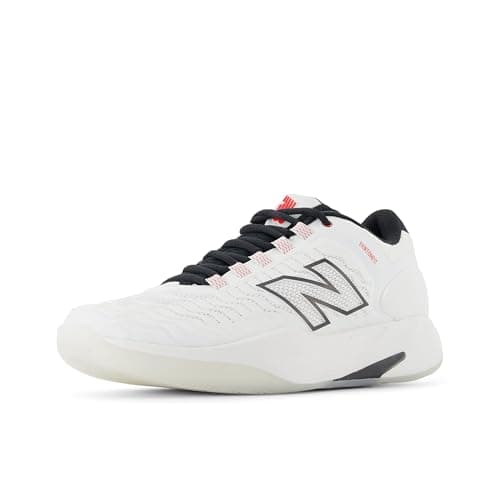 New Balance Fresh Foam X CT-Rally v2Best cushioned | Structure plus shock absorption | 8.65 criteria | |
| 4 | 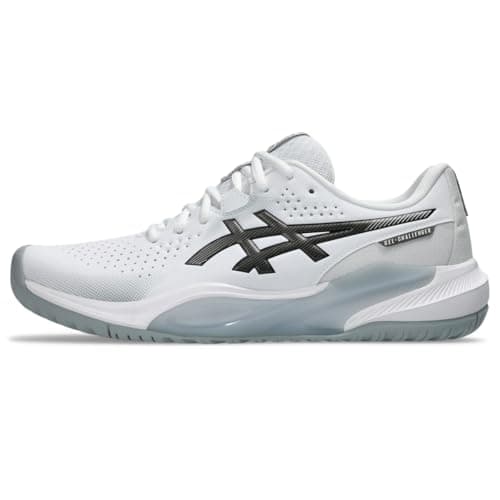 ASICS GEL-Challenger 15Best value | Structure at a beginner price | 8.15 criteria |
The picks in detail
01ASICS GEL-Resolution X
Top pickBest for: Maximum structural support
RunRepeat score this 90 overall and give it 5 out of 5 for torsional rigidity and 5 out of 5 for heel counter stiffness — the two maximum scores in the set, and the two measurements that matter most for a low arch. Their lab also recorded 98 SA heel shock absorption and a 90.4 HC outsole with only 0.6 mm of Dremel wear.
Those two stiffness figures describe exactly the mechanism you need. Torsional rigidity is resistance to the shoe twisting along its length, which is the movement a collapsing arch makes. Heel counter stiffness is how firmly the heel is held, which is what stops the whole foot rolling inward behind the arch.
The cost is weight, and it is substantial: 14.7 oz or 417 g in a men's 9, which is at the top of the category. There is no way around that trade — structure is material, and material is weight. If that is a problem, nothing on this page will be both light and rigid.
Our score
- Lateral stability
- 10.0
- Cushioning
- 8.5
- Outsole durability
- 9.5
- Fit accommodation
- 7.5
- Lightness
- 4.0
- Overall
- 8.9
Verified specs
- RunRepeat score
- 90 — Best Stability
- Weight
- 14.7 oz / 417 g (men's 9)
- Heel / forefoot stack
- 30.8 mm / 21.9 mm
- Drop
- 8.9 mm
- Torsional rigidity
- 5/5
- Heel counter stiffness
- 5/5
- Heel shock absorption
- 98 SA
- Outsole wear
- 0.6 mm depth, 90.4 HC
Specs as published by RunRepeat, checked September 2026.
Buy if
- You have a genuinely low arch
- You roll inward when you plant hard
- You want the most measured structure available
Pass if
- You want a light shoe
- You want maximum court feel
- You have narrow feet and want a close fit
Price as of October 10, 2026 · was $164.95, 15% off
02adidas Barricade 14
Best court feelBest for: Staying low to the ground
RunRepeat give the Barricade 14 their best court feel award and measured a 26.3 mm heel and a 14.4 mm forefoot — the lowest forefoot stack in the set. A low stack is a genuinely useful property for a flat foot and it is not the one people expect.
The reason is leverage. The further your foot sits above the ground, the more the shoe can tilt before anything stops it, and the more torque a collapsing arch generates against the sole. Sitting lower means less distance to roll through, which is a different route to the same stability the ASICS gets from stiffness.
The honest cost is in RunRepeat's own numbers: 47 SA forefoot shock absorption, against 78 for the New Balance below. That is a hard ride, and if you also have heel pain or play on concrete-backed hard courts it is the wrong shoe. [Best tennis shoes for plantar fasciitis](/tennis-shoes/best-for-plantar-fasciitis) is the page for that.
Our score
- Lateral stability
- 9.0
- Cushioning
- 6.0
- Outsole durability
- 9.0
- Fit accommodation
- 8.0
- Lightness
- 6.5
- Overall
- 8.2
Verified specs
- RunRepeat award
- Best Court Feel
- Heel stack
- 26.3 mm
- Forefoot stack
- 14.4 mm
- Heel shock absorption
- 89 SA
- Forefoot shock absorption
- 47 SA
Specs as published by RunRepeat, checked September 2026.
Buy if
- You want to sit low to the ground
- You dislike the perched feeling of a thick midsole
- You want court feel with stability
Pass if
- You have heel pain as well
- You want cushioning
- You play long sessions on hard surfaces
03New Balance Fresh Foam X CT-Rally v2
Best cushionedBest for: Structure plus shock absorption
RunRepeat score this 92 and give it their best shock absorption award: 116 SA at the heel, the highest figure they recorded, on a 33.3 mm heel stack with 78 SA at the forefoot. Critically, it still earns 5 out of 5 for torsional rigidity.
That combination is why it is on this page rather than only on a cushioning page. The usual trade is that soft foam lets the shoe twist, which is exactly what a flat foot does not need. Keeping a maximum torsional score alongside the highest shock absorption in the set is the hard part, and this shoe does it.
Its weakness relative to the ASICS is the heel counter, which RunRepeat did not score at maximum. A high stack also means more height to roll through, so if your arch collapses severely rather than mildly, the lower, stiffer options here hold you better.
Our score
- Lateral stability
- 9.0
- Cushioning
- 10.0
- Outsole durability
- 8.0
- Fit accommodation
- 8.5
- Lightness
- 7.0
- Overall
- 8.6
Verified specs
- RunRepeat score
- 92 — Best Shock Absorption
- Heel stack
- 33.3 mm
- Forefoot stack
- 20.2 mm
- Heel shock absorption
- 116 SA
- Forefoot shock absorption
- 78 SA
- Torsional rigidity
- 5/5
Specs as published by RunRepeat, checked September 2026.
Buy if
- You want cushioning without giving up rigidity
- You play long sessions
- You have mild rather than severe arch collapse
Pass if
- Your arch collapses severely
- You want the firmest heel hold available
- You want to sit low to the ground
04ASICS GEL-Challenger 15
Best valueBest for: Structure at a beginner price
RunRepeat score this 83 and name it their beginner pick, with 5 out of 5 for midsole stiffness and 5 out of 5 for heel counter stiffness. Those are the same two maximum structural scores the GEL-Resolution X earns, on a shoe at a fraction of the price.
It is also listed in RunRepeat's wide-feet catalog, which matters more here than it first appears. Flat feet are frequently wide feet, because a collapsing arch spreads the forefoot, and a structurally stiff shoe that pinches is a shoe you will not wear.
RunRepeat note it is notably heavier than average, and it does not match the GEL-Resolution X on torsional rigidity or outsole hardness. For a player on one or two sessions a week with a mildly low arch, neither gap is likely to be the limiting factor.
Our score
- Lateral stability
- 9.0
- Cushioning
- 7.5
- Outsole durability
- 8.0
- Fit accommodation
- 9.0
- Lightness
- 4.5
- Overall
- 8.1
Verified specs
- RunRepeat score
- 83 — Best for Beginners
- Midsole stiffness
- 5/5
- Heel counter stiffness
- 5/5
- Weight
- Notably heavier than average
- Width fit
- Listed in RunRepeat's wide-feet catalog
Specs as published by RunRepeat, checked September 2026.
Buy if
- You want measured structure at a lower price
- Your feet are wide as well as flat
- You play once or twice a week
Pass if
- You want the stiffest shoe available
- You play several times a week
- Weight is a concern
Why cushioning is the wrong answer for a flat foot
Flat feet get recommended cushioned shoes constantly, and it is close to backwards. A low arch is not a shock problem, it is a structural one: the arch collapses inward under load and the ankle rolls in behind it. Soft foam gives that collapse somewhere to go rather than resisting it.
The properties that actually resist it are measurable, and RunRepeat measure them. Torsional rigidity is how hard the shoe is to twist along its length, scored out of five on standardised equipment. Heel counter stiffness is how firmly the rear of the shoe holds your heel, also out of five. Both are stiffness, and stiffness is the opposite axis from cushioning.
| Shoe | RunRepeat score | Torsional rigidity | Heel counter | Forefoot stack |
|---|---|---|---|---|
| ASICS GEL-Resolution X | 90 | 5/5 | 5/5 | 21.9 mm |
| adidas Barricade 14 | Best court feel award | Not published | Not published | 14.4 mm |
| New Balance CT-Rally v2 | 92 | 5/5 | Not scored at maximum | 20.2 mm |
| ASICS GEL-Challenger 15 | 83 | Not published | 5/5 | Not published |
Where RunRepeat do not publish a figure we have left the cell blank rather than inferring one from a sibling model. The Barricade is in on its measured 14.4 mm forefoot stack and its court feel award, which is a different argument from a stiffness score and is made in its entry above.
Flat feet, plantar fasciitis and wide feet are three different problems
These three get treated as one category and they are not. They overlap often enough that people assume the same shoe solves all three, and the specifications they want are genuinely different.
- Flat feet is a structural problem. The arch collapses inward under load. What helps is torsional rigidity and a stiff heel counter — resistance to twisting and rolling.
- Plantar fasciitis is an inflammation problem, usually felt at the heel. What helps is heel shock absorption and a supportive heel platform. Stiffness alone does not address it.
- Wide feet is a fit problem. What helps is a wider last, a roomier toebox or a shoe offered in multiple widths. A shoe can be perfectly structured and still be unwearable if it pinches.
They do interact. A collapsing arch spreads the forefoot, so flat feet are often wide feet — which is why one shoe on this page is in RunRepeat's wide-feet catalog and why that is worth more than it looks. And a flat foot that has been rolling inward for years frequently ends up with plantar fascia irritation, at which point you need both properties at once and the New Balance becomes the right compromise.
Our separate pages are best tennis shoes for plantar fasciitis and best tennis shoes for wide feet. If you have two of the three, read both and pick the shoe that appears on both lists.
What this page cannot tell you
We are not clinicians and we are not going to write as though we were. Flat feet exist on a spectrum from a mildly low arch that needs nothing to a rigid flatfoot that needs a podiatrist, and no roundup can tell you where on that spectrum you sit.
What this page does is match published lab measurements to the mechanism, which is a job that can be done honestly from the outside. If you have pain rather than just a low arch, or if you have been prescribed orthotics, the shoe question changes — an orthotic needs a removable insole and vertical room, and neither is something we can confirm from a specification sheet.
The one piece of general advice that holds: replace court shoes on wear rather than on a feeling, because a shoe whose structure has broken down stops supporting you before it looks finished. When to replace tennis shoes covers what to check, and how to choose tennis shoes covers the surface question this page assumes you have already settled.
How these picks were made
Racket & Rally does not run a test lab. Nothing on this page is written as though we had hit with, worn or measured anything ourselves, because we have not. What we do instead is read the published specification sheets and the third-party lab measurements cited at the foot of the page, set them against each other, and say which differences change something you will notice.
Every product here is already in our registry, which means it carries a cited retailer or review source and a verified listing. Our full selection criteria set out the method, and the editorial policy covers corrections and how often pages are revisited. Prices are never written into the page — the number on each buy button is the live one.
Common questions
What are the best tennis shoes for flat feet?
The ASICS GEL-Resolution X. RunRepeat score it 5 out of 5 for both torsional rigidity and heel counter stiffness — the two measured properties that resist a collapsing arch — on a shoe they rate 90 overall.
Do flat feet need cushioned or supportive shoes?
Supportive. Flat feet are a structural problem rather than a shock problem: the arch collapses inward and soft foam gives that collapse somewhere to go. The specifications that resist it are torsional rigidity and heel counter stiffness, which are the opposite axis from cushioning.
What is torsional rigidity and why does it matter?
It is how hard the shoe is to twist along its length, scored out of five by RunRepeat on standardised equipment. Twisting along the length is the movement a collapsing arch makes, so a shoe that resists it resists the collapse.
Are flat feet and plantar fasciitis the same thing?
No, though they often occur together. Flat feet is structural — the arch collapses. Plantar fasciitis is inflammation, usually felt at the heel, and it wants shock absorption and a supportive heel platform rather than stiffness alone.
Can I wear running shoes if I have flat feet?
Not for court sport. Running shoes are built for forward motion and have almost no lateral structure, which is the exact load a tennis or padel movement applies. A flat foot is the foot that needs that structure most.
Will a stiffer shoe be heavier?
Yes, and there is no way around it — structure is material. The ASICS GEL-Resolution X weighs 14.7 oz or 417 g in a men's 9, at the top of the category. If weight is your binding constraint, you are choosing between properties rather than finding a shoe with both.
Read next
Sources
- 01RunRepeat — ASICS GEL-Resolution X lab teardown
- 02RunRepeat — Best Hard Court Tennis Shoes
- 03RunRepeat — Best Tennis Shoes
- 04RunRepeat — Wide tennis shoes catalog
Every source above was retrieved while writing this page. Specifications are quoted from the listing or manufacturer page cited, not from memory.