Buying guide
Best tennis strings for spin in 2026
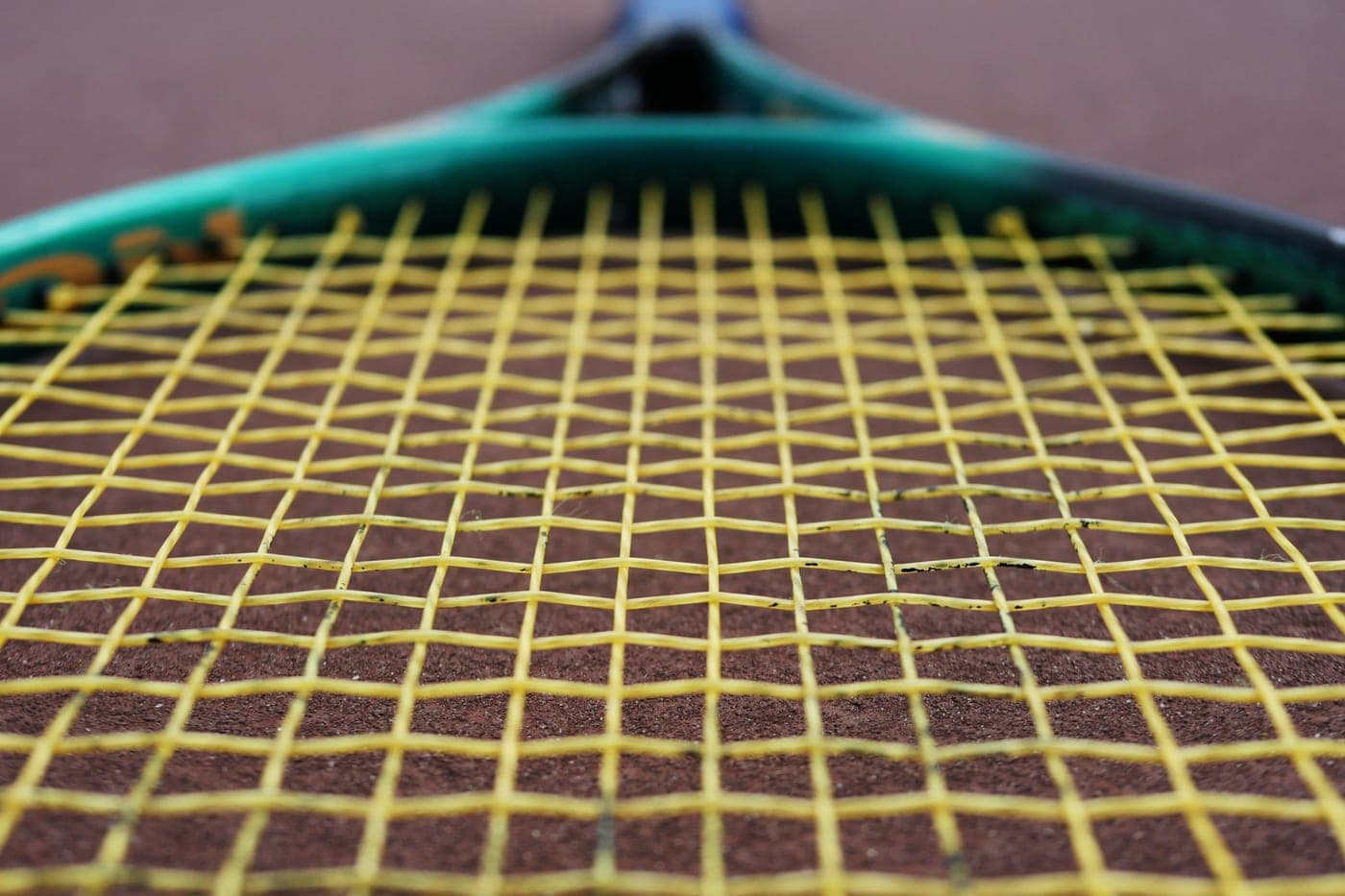
String is the cheapest spin upgrade there is, and the mechanism is not mysterious: the mains have to slide across the crosses and snap back before the ball leaves the bed.
By Janet H.Updated
The short answer
Solinco Hyper-G is the best spin string for most players: a control polyester listed at $13.99 a set with the widest gauge range here, from 15L down to 20, so you can go thinner as your technique improves. If your arm cannot take a polyester, a thin-gauge Tecnifibre X-One Biphase is the honest compromise.
Disclosure — we earn a commission on qualifying purchases made through links on this page, at no extra cost to you. It never changes which product we rank first. How this site is funded.
Our picks
| # | Product | Best for | Score | Price |
|---|---|---|---|---|
| 1 | 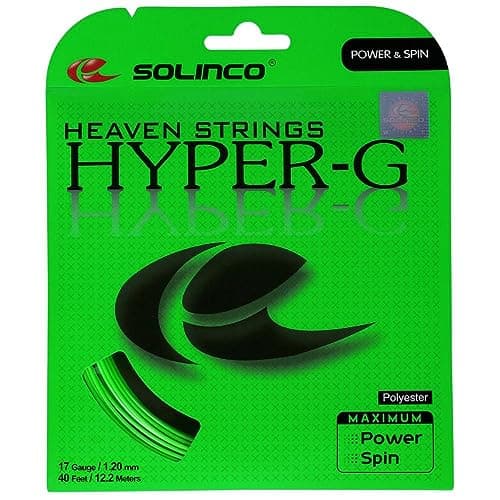 Solinco Hyper-GTop pick | Spin without paying benchmark prices | 8.64 criteria | |
| 2 | 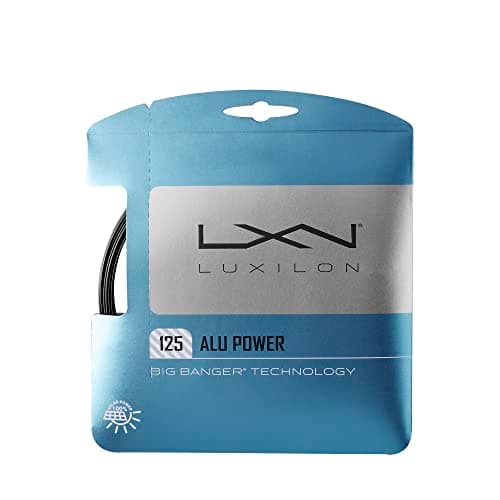 Luxilon ALU PowerThe reference polyester | Players who already know they want poly | 8.14 criteria | |
| 3 | 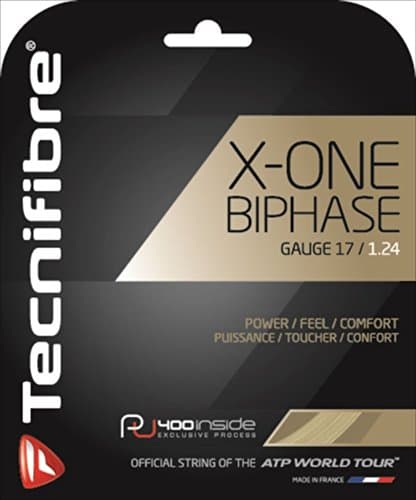 Tecnifibre X-One BiphaseBest soft option | Spin when your arm rules out poly | 8.04 criteria | |
| 4 | 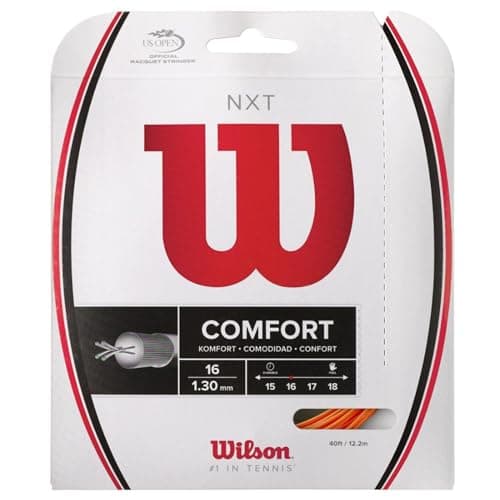 Wilson NXTBest all-round compromise | The honest answer for most club players | 8.44 criteria |
The picks in detail
01Solinco Hyper-G
Top pickBest for: Spin without paying benchmark prices
Hyper-G is Tennis Warehouse's control polyester, listed at $13.99 a set, and the reason it leads here is the gauge range: 15L, 16, 16L, 17, 17L, 18, 19 and 20. Gauge is the lever that matters most for spin, because a thinner string bites into the ball more and slides back into place more freely.
Polyester is a monofilament, so it holds its shape under load rather than stretching. That is what lets the mains displace sideways and snap back, and snapback is where racket-generated spin actually comes from. A multifilament's thousands of fibers grip each other and resist exactly that movement.
The cost is comfort and tension life. Poly is stiff to start with and sheds a substantial fraction of its tension in the first hours of play, so it is the wrong answer for anyone with a history of arm trouble. String it several pounds below where you would set a soft string.
Our score
- Performance
- 9.0
- Comfort
- 6.5
- Durability
- 9.0
- Value
- 9.0
- Overall
- 8.6
Verified specs
- Type
- Polyester
- Gauges
- 15L to 20
- TW award
- Control
- Listed price
- $13.99 per set
Specs as published by Tennis Warehouse, checked September 2026.
Buy if
- You already swing up through the ball
- You want a lower launch angle and more bite
- You want gauge options to experiment with
Pass if
- You have had tennis elbow
- You restring rarely and want tension to hold
- You need the string to add power
02Luxilon ALU Power
The reference polyesterBest for: Players who already know they want poly
ALU Power is the string the rest of the polyester category is measured against, listed at $21.50 a set in 16, 16L, 17L and 18. If you want the benchmark for predictable, low-launch spin on a full swing, this is it.
What you are paying for is consistency rather than any single standout property. It gives back exactly what you put in, which is why it suits an advanced player with a frame that supplies its own power and penalizes anyone relying on the string for help.
For most club players it is the wrong choice and we would rather say so. It is stiff, it is expensive for a poly, and in a lighter frame swung at club pace it produces a dead, low-powered bed. Hyper-G does the same job for two thirds of the money with more forgiveness.
Our score
- Performance
- 9.5
- Comfort
- 5.5
- Durability
- 8.5
- Value
- 6.0
- Overall
- 8.1
Verified specs
- Type
- Polyester
- Gauges
- 16, 16L, 17L, 18
- TW category
- Reference polyester
- Listed price
- $21.50 per set
Specs as published by Tennis Warehouse, checked September 2026.
Buy if
- You are an advanced player with a full swing
- Your frame supplies its own power
- You want the category benchmark
Pass if
- You are a beginner or improver
- You have any history of arm pain
- You want the best value poly - buy Hyper-G
03Tecnifibre X-One Biphase
Best soft optionBest for: Spin when your arm rules out poly
This is the multifilament Tennis Warehouse rate for power rather than only for comfort, listed at $22.95 to $23.95 a set, and it is offered in 15L, 16, 17 and 18. That 18 gauge is why it is on a spin page: a thin multifilament is the closest a soft string gets to biting the ball.
Be clear about what you are buying. A multifilament will never match a polyester for snapback, because the fiber bundle grips itself. What a thin one does give you is a rougher effective surface against the ball and a softer bed, which is a reasonable trade if the alternative is not playing.
It is the least durable thing on this page and the most expensive per hour of play. At 18 gauge in an open-pattern frame, expect to restring it often. If you break strings already, this is money set on fire and you should be in the Hyper-G.
Our score
- Performance
- 9.0
- Comfort
- 9.5
- Durability
- 6.5
- Value
- 6.5
- Overall
- 8.0
Verified specs
- Type
- Multifilament
- Gauges
- 15L, 16, 17, 18
- TW award
- Power
- Listed price
- $22.95-$23.95 per set
Specs as published by Tennis Warehouse, checked September 2026.
Buy if
- A polyester is off the table for your arm
- You restring on a schedule rather than on breakage
- You want to try a thinner gauge
Pass if
- You break strings inside two weeks
- Cost per set is a factor
- You want maximum snapback
04Wilson NXT
Best all-round compromiseBest for: The honest answer for most club players
NXT is Tennis Warehouse's comfort winner in the string category and it is listed at $23.95 a set in 16 and 17 gauge. It is on a spin page as the reality check: for a player whose topspin is limited by technique rather than equipment, a comfortable string you can swing freely at will produce more spin than a stiff poly you flinch into.
The construction is over a thousand ultra-flexible fibers bonded with polyurethane, so the bed stretches further under load and returns the ball with less shock traveling up the frame. That extra stretch is also why it will not snap back the way a monofilament does.
It frays rather than snapping cleanly, and a frayed multifilament has already lost much of its stretch before it fails. Treat visible fraying as the restring signal - [how often to restring a tennis racket](/guides/how-often-to-restring-a-tennis-racket) covers the rest of the schedule.
Our score
- Performance
- 8.5
- Comfort
- 10.0
- Durability
- 7.0
- Value
- 7.5
- Overall
- 8.4
Verified specs
- Type
- Multifilament
- Gauges
- 16, 17
- TW award
- Comfort
- Construction
- 1,000+ fibers bonded with polyurethane
- Listed price
- $23.95 per set
Specs as published by Tennis Warehouse, checked September 2026.
Buy if
- Your spin is limited by technique, not string
- A set currently lasts you a month or more
- You want comfort first and spin second
Pass if
- You want maximum snapback
- You break strings quickly
- You want the lowest cost per set
Where string spin actually comes from
The popular explanation is that rough or textured string grips the ball. That is a small part of it. The large part is snapback: on a brushing stroke the main strings displace sideways across the crosses, and if they return to position while the ball is still on the bed they drag the ball's surface and add rotation on the way out. If the mains stay displaced, nothing happens.
That is why string material decides more than string shape. A monofilament polyester is one solid strand with a slippery surface, so it slides and returns freely. A multifilament is a bundle of fibers that catch on each other and on the crosses, so it resists the same movement. Shaped or twisted polys exist and do add a little, but they are a refinement on top of the material choice, not a substitute for it.
The second lever is gauge. Thinner string has a smaller contact patch against the crosses, so it slides more freely, and it embeds slightly deeper into the ball. The cost is durability, which is why the thin gauges live at the top of this page and not at the bottom. Our tennis string gauge guide has the number ranges.
The four picks compared
| String | Type | Gauges offered | Listed price | Snapback |
|---|---|---|---|---|
| Solinco Hyper-G | Polyester | 15L to 20 | $13.99 a set | High |
| Luxilon ALU Power | Polyester | 16, 16L, 17L, 18 | $21.50 a set | High |
| Tecnifibre X-One Biphase | Multifilament | 15L, 16, 17, 18 | $22.95 to $23.95 | Low |
| Wilson NXT | Multifilament | 16, 17 | $23.95 a set | Low |
The table makes the decision for you in most cases. If your arm is healthy, the first row is the cheapest high-snapback string on the list and there is no argument for paying 50 percent more for the second. If your arm is not healthy, neither of the top two rows is for you and the question becomes which soft string you can get in a thin gauge.
Two things that beat a string change
Before you buy anything, two other levers produce more spin than any string on this page, and one of them is free.
- 01Swing path. Spin is produced by the racket head traveling upward through contact. No string creates rotation on a flat drive. If your swing is level, the string change will do almost nothing.
- 02String pattern. A 16x19 frame has wider gaps than an 18x20, so the mains have further to displace and more room to snap back. Moving from a dense pattern to an open one changes more than moving between the strings above.
If you are choosing a frame as well, best tennis rackets for power and spin covers the open-pattern options and what they cost in control.
How these picks were made
Racket & Rally does not run a test lab. Nothing on this page is written as though we had hit with, worn or measured anything ourselves, because we have not. What we do is read the published specification sheets and the third-party lab measurements cited at the foot of the page, set them against each other, and say which differences change something you will actually notice on court.
Every product here is already in our registry, which means it carries a cited retailer or review source and a verified listing. Our full selection criteria set out the method, and the editorial policy covers corrections and how often pages are revisited. No price is written into this page as a recommendation - the figure on each buy button is the live one.
Common questions
What tennis string gives the most spin?
A polyester, and among the ones we list, Solinco Hyper-G at a thin gauge. Polyester is a monofilament, so the main strings slide sideways and snap back freely, and snapback is what adds rotation to the ball.
Does a thinner string give more spin?
Yes, modestly. A thinner gauge has a smaller contact patch against the crosses so it slides more freely, and it embeds slightly deeper into the ball. The cost is durability - a thin poly in an open pattern will not last long.
Is textured string better for spin than round string?
A little, but much less than the material choice. Shaped and twisted polyesters add some bite on top of snapback. Going from a multifilament to any round polyester is a bigger change than going from a round poly to a shaped one.
Can I get spin from a soft string?
Some, but not through snapback. A multifilament bundle grips itself and resists the sideways slide. If your arm rules out polyester, a thin-gauge multifilament like X-One Biphase at 18 gauge is the best available compromise.
What tension should I use for spin?
Lower than your normal setting, within reason. Looser mains move further and snap back harder. The trade is a higher launch angle, so drop a few pounds at a time and watch whether your depth control survives.
Will spin string hurt my arm?
Polyester is the stiffest string category and it loses tension quickly, which is why it is the one most associated with arm complaints. If you have had tennis elbow, stay with a multifilament and read our strings for tennis elbow page instead.
Read next
Sources
- 01Tennis Warehouse - Best Tennis Strings
- 02Tennis Warehouse - Best Tennis Racquets
- 03Tennis Warehouse - HEAD Extreme MP
Every source above was retrieved while writing this page. Specifications are quoted from the listing or manufacturer page cited, not from memory.