Guide
How often should you restring a tennis racket?
The old rule is to restring as many times a year as you play per week. It is a good starting point and it misses the thing that actually degrades: tension, not the string.
By Janet H.Updated
The short answer
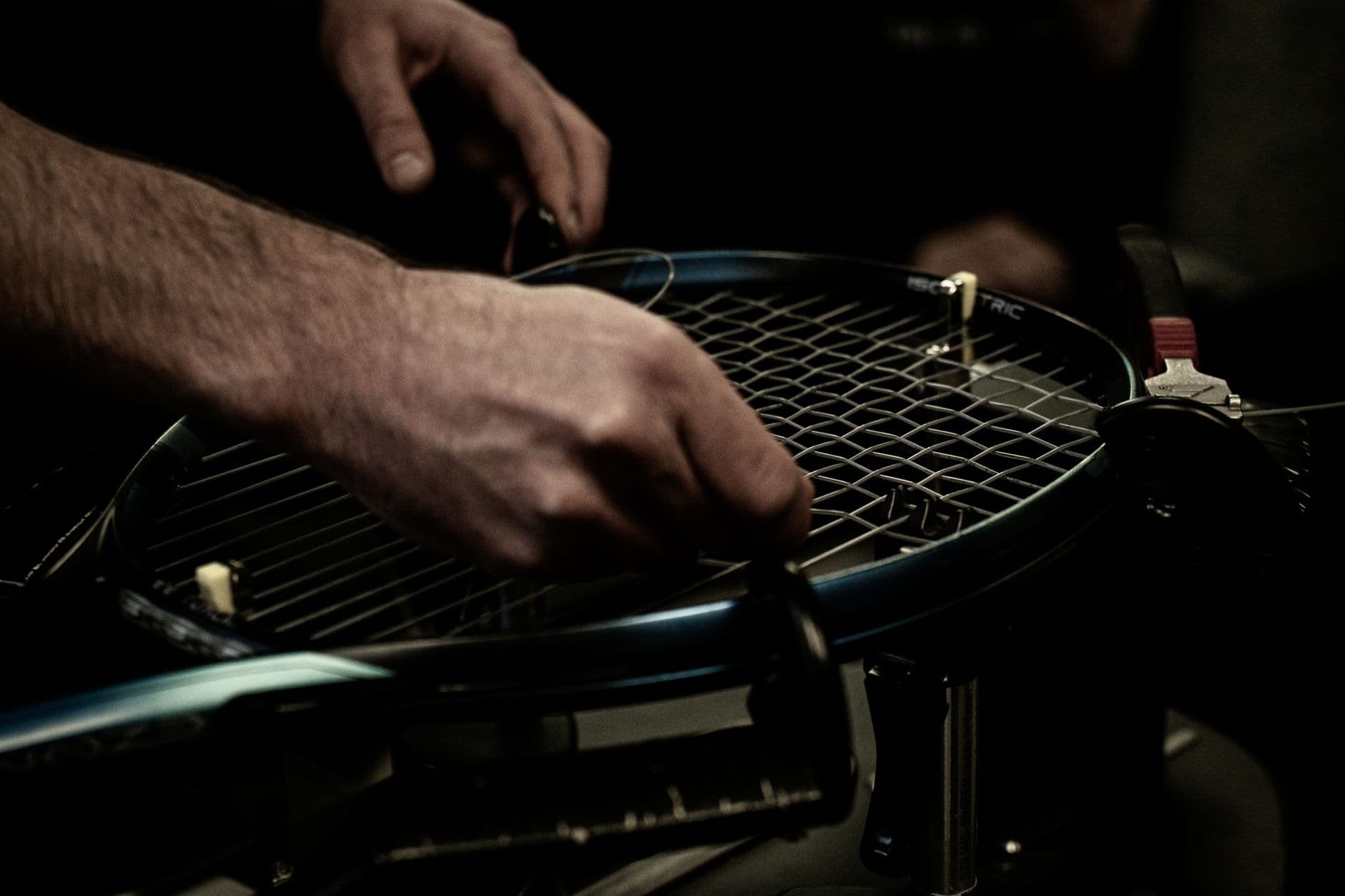
Restring as many times per year as you play per week — twice a week means twice a year, as a floor. If you break strings, you restring on breakage instead. The reason to restring a string that has not broken is tension loss, which begins immediately and continues whether or not you play.
Disclosure — we earn a commission on qualifying purchases made through links on this page, at no extra cost to you. It never changes which product we rank first. How this site is funded.
The rule, and what it is actually for
The standard advice is to restring as many times a year as you play per week. Play twice a week, restring twice a year. Play five times a week, restring five times a year. It is a crude rule and it is a genuinely useful one, because it is anchored to playing volume rather than to the calendar.
Treat it as a floor rather than a target, and understand what it is protecting you from. It is not protecting you from a broken string — you will notice that. It is protecting you from the much more common situation where the string is intact, looks fine, and has quietly lost most of the tension it was strung at.
That is the central fact of this whole topic. Strings begin losing tension the moment they come off the machine and keep losing it whether the racket is in play or in a cupboard. A frame strung at 55 lb a year ago is not a frame at 55 lb, and nothing about looking at it will tell you where it actually is.
| You play | Restring at least | If you break strings |
|---|---|---|
| Once a week or less | Once a year | On breakage |
| Twice a week | Twice a year | On breakage |
| Three times a week | Three times a year | On breakage |
| Four or five times a week | Four or five times a year | On breakage |
| Competitively, weekly matches | Every 6-8 weeks | On breakage |
A dead string bed plays worse than a broken one
This is the sentence worth taking away from this page. A snapped string is honest: the racket is unusable and you deal with it. A dead string bed is dishonest. The racket looks fine and plays progressively worse, and because the change is gradual you adapt to it rather than noticing it.
What a player adapts to is usually technique, and that is the cost. As tension drops, the launch angle rises and balls start landing long, so you swing less freely or close the racket face to compensate. Both are habits, and both outlast the string that caused them. Players regularly describe a fresh restring as feeling like a new racket for exactly this reason.
- Balls landing longer than you intend — the clearest sign of lost tension, because a looser bed launches higher.
- A duller, flatter sound at contact — a bed with tension makes a distinctly higher-pitched note.
- Visible main-string notching — grooves worn where the crosses cross them. The string is close to failing here.
- Strings staying out of line — a healthy bed snaps back into place; a dead one needs straightening by hand every few points.
- Fraying on a multifilament — it is already well past its best, because a frayed multi has lost its stretch.
How fast tension goes depends on the string type
The four string material families lose tension at very different rates, which means the right restring interval depends on what is in your racket. Nobody publishes a universal decay curve, so what follows is the direction and the ordering rather than a set of numbers we cannot source.
- Polyester loses tension fastest, and a substantial share of it goes in the first few hours of play. This is why competitive players using poly restring on a schedule measured in weeks rather than months.
- Multifilament loses it more gradually but frays as it goes, which at least gives you a visual signal before it fails.
- Synthetic gut sits in the middle on both counts, which is part of why it is the sensible default.
- Natural gut holds tension best of all the materials, and is also the most sensitive to damp.
The practical consequence is that a poly player and a multifilament player playing identical hours need different intervals, and the poly player needs the shorter one despite poly being the more durable string. Durability and tension maintenance are different properties, and people conflate them constantly. Tennis string types sets the four families out in full.
Four reasons to restring regardless of the rule
- 01You broke a string. No judgement required. Do not play on a broken bed even for one more game — an unbalanced string bed puts uneven load on the frame.
- 02You are changing something deliberately. A new tension, a new gauge, a new type. The restring is the mechanism for the experiment, so it happens when you want to run it. Tennis string tension covers how big a change to make.
- 03The racket has been in storage. Tension went while it sat there. A frame coming out after a winter off wants a fresh bed before you judge how it plays.
- 04Your shots have started landing long. That is tension loss with a symptom attached, and it is the one case where the racket is telling you directly.
The one reason not to restring is a feeling that the racket is wrong without any of the signs above. In that case the racket may genuinely be wrong for you, and a restring will not fix a frame that is too heavy, too stiff or the wrong head size. How to choose a tennis racket is the page for that question.
On cost: the string itself runs from under $5 a set to around $24 at Tennis Warehouse's listed prices, and labour is charged separately by whoever does the work and varies by shop, so we do not quote a total. What we will say is that it is the cheapest meaningful change you can make to how a racket plays, by a wide margin.
How this guide was put together
We do not run a test lab and nothing here is written as though we did. This guide is built from the published specification sheets and third-party lab measurements cited at the foot of the page, plus the physical reasoning that connects them. Where a figure is not published we say so rather than estimating it.
The picks below are drawn from our product registry, so every one carries a cited source and a verified listing. Our full selection criteria set out the method and the editorial policy covers corrections. No price is written into this page — the figure on each buy button is the live one.
Now pick yours
The specs above are only useful once they resolve into something you can buy. These are the products that match what this page has just explained.
Our picks
| # | Product | Best for | Score | Price |
|---|---|---|---|---|
| 1 | 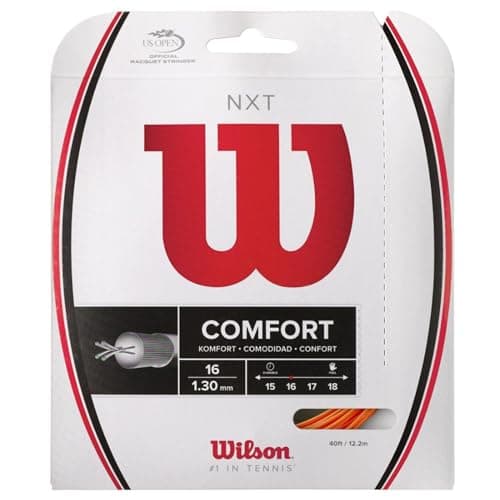 Wilson NXTBest for scheduled restringing | A soft string that shows you when it is going | 8.74 criteria | |
| 2 |  Prince Synthetic Gut DuraflexBest value | Restringing often on a budget | 7.94 criteria | |
| 3 | 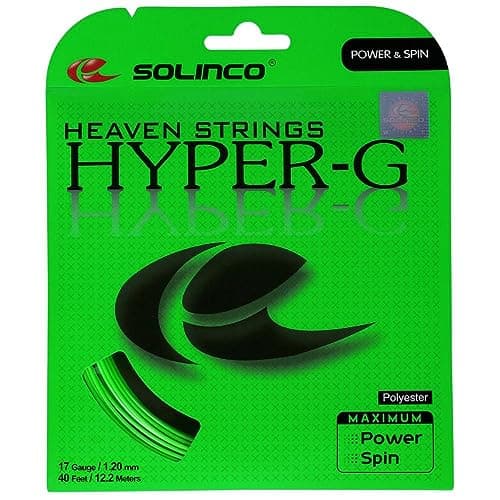 Solinco Hyper-GBest for string breakers | Players restringing on breakage | 8.54 criteria |
01Wilson NXT
Best for scheduled restringingBest for: A soft string that shows you when it is going
Tennis Warehouse's comfort winner at $23.95 a set, built from over a thousand fibers bonded with polyurethane. For a player restringing on a schedule rather than on breakage, a multifilament is the right family: it holds tension more gradually than poly and it is far more comfortable throughout.
It also gives you a visual signal, which matters on this particular page. A multifilament frays before it snaps, so the bed tells you it is finished rather than leaving you to guess. Restring at the first fraying rather than waiting.
If you are breaking this string inside two weeks you are in the wrong family and the polyester below is the answer, not a thicker gauge of this.
Our score
- Performance
- 8.5
- Comfort
- 10.0
- Durability
- 7.0
- Value
- 7.5
- Overall
- 8.7
Verified specs
- Type
- Multifilament
- Gauges
- 16, 17
- TW award
- Comfort
- Construction
- 1,000+ fibers bonded with polyurethane
- Listed price
- $23.95 per set
Specs as published by Tennis Warehouse, checked September 2026.
Buy if
- You restring on a schedule
- You want a visual wear signal
- Comfort is a priority
Pass if
- You break strings inside two weeks
- You want the lowest cost per set
- You want maximum control
02Prince Synthetic Gut Duraflex
Best valueBest for: Restringing often on a budget
At $4.76 a set with Tennis Warehouse's All-Around Value award, this is the string that makes frequent restringing affordable. If the thing standing between you and a fresh bed is cost, this removes it.
That is a real strategy rather than a compromise. A fresh set of cheap synthetic gut plays better than a year-old set of premium multifilament, because tension is doing more of the work than material is. Restring twice as often on this and you are ahead.
It does not reach the comfort of a multifilament or the control of a poly. At a fifth of the price of either, that is the trade being offered.
Our score
- Performance
- 7.0
- Comfort
- 8.0
- Durability
- 7.5
- Value
- 10.0
- Overall
- 7.9
Verified specs
- Type
- Synthetic gut
- Gauges
- 16, 17
- TW award
- All-Around Value
- Listed price
- $4.76 per set
Specs as published by Tennis Warehouse, checked September 2026.
Buy if
- You want to restring more often for the same money
- This is an early restring
- You want a neutral baseline
Pass if
- You need maximum comfort
- You want maximum control
- You break strings quickly
03Solinco Hyper-G
Best for string breakersBest for: Players restringing on breakage
Tennis Warehouse's control polyester at $13.99 a set, in gauges from 15L to 20. If you break strings, the schedule question does not apply to you — you restring when it snaps — and this is the string that makes that interval as long as it can be.
Note the trade that is specific to this page though. Poly is the most durable family and the worst at holding tension, losing a substantial share in the first hours of play. A poly player restringing only on breakage is playing most of their tennis on a bed well below its set tension.
That is the argument for restringing poly on a schedule even if it has not broken, which is what competitive players do. If you are playing matches that matter, consider an interval of weeks rather than waiting for the snap.
Our score
- Performance
- 9.0
- Comfort
- 6.5
- Durability
- 9.0
- Value
- 9.0
- Overall
- 8.5
Verified specs
- Type
- Polyester
- Gauges
- 15L to 20
- TW award
- Control
- Listed price
- $13.99 per set
Specs as published by Tennis Warehouse, checked September 2026.
Buy if
- You break a set inside two weeks
- You want the longest interval between restrings
- You want control and a lower launch angle
Pass if
- You have had tennis elbow
- You want the best tension maintenance
- Your sets already last a month
Common questions
How often should I restring my tennis racket?
As many times a year as you play per week, as a floor. Twice a week means twice a year; five times a week means five times a year. If you break strings, you restring on breakage instead and the rule does not apply.
Do tennis strings go bad if you do not play?
Yes. Tension loss begins the moment the racket comes off the stringing machine and continues in storage. A racket strung two years ago and never used is playing well below the tension it was set at.
How do I know when my strings need replacing?
Balls landing longer than you intend, a duller sound at contact, visible notching where the crosses cross the mains, strings that no longer snap back into line, or fraying on a multifilament. Any one of those is enough.
Which string type loses tension fastest?
Polyester, by a clear margin, with much of the loss happening in the first few hours of play. This is why competitive players using poly restring on an interval measured in weeks despite poly being the most durable family.
Is it bad to play with a broken string?
Yes, and not only because the racket plays badly. A bed with one string gone loads the frame unevenly. Stop playing and get it restrung rather than finishing the session.
Can I restring my racket myself?
You can, with a stringing machine, and plenty of frequent players do because the labour cost adds up. It is a skill with a learning curve, and a badly strung bed is worse than an old one. Most club players are better off paying a stringer.
Read next
Sources
- 01Tennis Warehouse — Best Tennis Strings gear guide
- 02Tennis Warehouse — Wilson Clash 100 v3 (tension range reference)
Every source above was retrieved while writing this page. Specifications are quoted from the listing or manufacturer page cited, not from memory.