Guide
Pickleball paddle weight explained
Paddle weight is a narrower variable than it looks - the whole market fits inside about an ounce and a quarter - and that small range decides whether you win at the kitchen line or from the baseline.
By Janet H.Updated
The short answer
Most pickleball paddles weigh between 7.2 and 8.5 oz. Under about 7.8 oz is a lightweight paddle, favoring hand speed at the kitchen line; 7.8 to 8.2 oz is the midweight band most players should start in; above 8.2 oz is heavyweight, favoring stability and drive power at the cost of reaction time.
Disclosure — we earn a commission on qualifying purchases made through links on this page, at no extra cost to you. It never changes which product we rank first. How this site is funded.
The range is smaller than you think
Across every paddle in our registry the span is 7.2 oz at the lightest to 8.5 oz at the heaviest. That is a total range of about 1.3 oz, or roughly 37 grams. By comparison, adult tennis rackets span about 80 grams. Pickleball has a much narrower window, which is why tenths of an ounce get discussed seriously in a sport where the implement is so light to begin with.
The reason the range is narrow is the ball. A pickleball is hollow perforated plastic weighing under 30 g, so a paddle does not need mass to stand up to incoming pace the way a padel racket or a tennis frame does. What mass buys you instead is stability on contact and momentum on the drive, and what it costs you is hand speed.
Hand speed is the specific thing at stake, because the decisive exchange in pickleball happens at the kitchen line at close range with very little time. A tenth of an ounce that would be invisible in tennis is noticeable in a hands battle.
The three bands
Lightweight: under about 7.8 oz
Fast hands, quick resets, less fatigue over a long session, and the easiest paddles to control if you have any wrist or elbow trouble. The cost is that incoming pace pushes the face around more, so a hard drive is harder to block cleanly, and your own drives carry less behind them.
This band suits a player whose game is built on the soft exchange, anyone returning from injury, and players with less upper-body strength who would otherwise shorten their swing late in a match.
Midweight: about 7.8 to 8.2 oz
This is where most of the market sits and where most players should start. It is enough mass to block a drive without the face twisting, and still quick enough for a hands battle. If you have no clear reason to be elsewhere, buy here.
Heavyweight: above about 8.2 oz
More momentum through contact, so the ball leaves faster for the same swing speed, and more stability against pace. The cost is reaction time at the net and more load on the arm over a long match. This band suits a player who wins points by driving and whose hands are already fast enough.
Weight is not the same as how it feels
Two paddles at the same stated weight can feel completely different, for the same reason two tennis rackets at the same static weight swing differently. What your arm experiences is the distribution of that mass, not the total.
The big factor in pickleball is shape. An elongated paddle moves mass further from your wrist, because total length plus width is capped by rule, so a longer face has to be a narrower one. That longer lever means an 8.0 oz elongated paddle can feel heavier in a hands battle than an 8.3 oz standard shape - and it also means it drives harder for the same swing.
Handle length is the other variable people overlook. The paddles in our registry run from a 4.0 inch handle to 5.75 inches, and a long handle both suits a two-handed backhand and shifts a little mass toward your hand. Our how to choose a pickleball paddle guide works through shape, core and handle together.
What about adding lead tape?
Adding weight tape to a paddle's edge is common and it works, with two honest caveats. The first is that where you add it matters more than how much: tape at the top of the face adds drive power and slows your hands most, tape at the sides adds stability against twisting, and tape near the throat adds mass with the least cost to swing speed.
The second is that you can add weight and you cannot remove it. So the sensible approach is to buy at the light end of the band you think you want and add upward if the paddle feels unstable - the reverse is a new purchase.
We do not stock weight tape and we are not going to recommend specific gram figures we have not verified. What we will say is that the adjustment is real and cheap, and it is the reason buying slightly light is the lower-risk error.
How this guide was put together
We do not run a test lab and nothing here is written as though we did. This guide is built from the published specification sheets and retailer listings cited at the foot of the page, plus the physical reasoning that connects them. Where a figure is not published we say so rather than estimating it.
The picks below are drawn from our product registry, so every one carries a cited source and a verified listing. Our full selection criteria set out the method and the editorial policy covers corrections. No price is written into this page as a recommendation - the figure on each buy button is the live one.
Now pick yours
The specs above are only useful once they resolve into something you can buy. These are the products that match what this page has just explained.
Our picks
| # | Product | Best for | Score | Price |
|---|---|---|---|---|
| 1 | 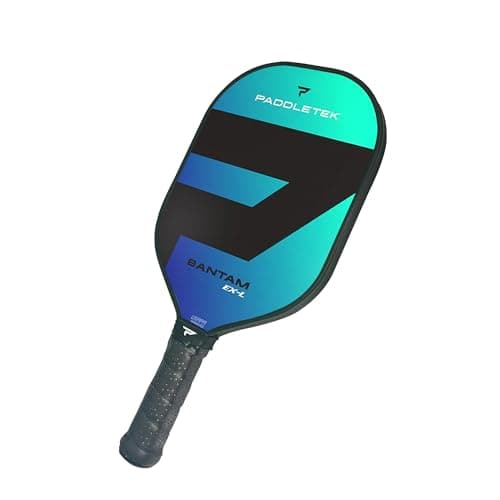 Paddletek Bantam EX-LLightest option | The lightweight band | 8.05 criteria | |
| 2 |  Ronbus Quanta ProBest light all-rounder | Light with a long handle | 8.45 criteria | |
| 3 | 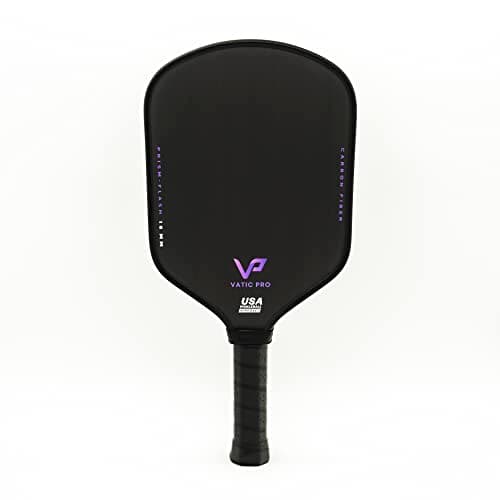 Vatic Pro Prism FlashBest midweight | The midweight default | 8.55 criteria | |
| 4 |  JOOLA Ben Johns Hyperion CFS 16Most mass and leverage | The heavyweight band | 8.65 criteria |
01Paddletek Bantam EX-L
Lightest optionBest for: The lightweight band
At 7.2 to 7.8 oz this is the lightest paddle in our registry, and PickleballUS name it for control-first beginners. A Paddletek polymer core under a graphite face, standard shape.
It is the paddle to buy if your problem is being late to the ball or if your wrist complains. Fast hands are the direct benefit of low mass, and there is no substitute for it in a close exchange.
It will not drive. There is very little momentum behind the ball, so depth and pace have to come from your swing, and a hard drive will push the face around more than a heavier paddle would.
Our score
- Control
- 9.0
- Power
- 6.0
- Spin
- 6.5
- Sweet spot
- 8.0
- Value
- 8.0
- Overall
- 8.0
Verified specs
- PickleballUS award
- Best for Control-First Beginners
- Weight
- 7.2-7.8 oz
- Core
- Paddletek polymer
- Face
- Graphite
- Shape
- Standard
Specs as published by PickleballUS, checked September 2026.
Buy if
- You are late to the ball at the net
- You have wrist or elbow trouble
- Your game is built on the soft exchange
Pass if
- You win points by driving
- You face hard hitters regularly
- You want maximum spin
02Ronbus Quanta Pro
Best light all-rounderBest for: Light with a long handle
7.9 oz with a 5.5 inch handle and a NanoBond raw carbon face, listed by Pickleheads at $99.99 and given their best-under-$100 award. It is the lightest sub-$100 paddle in their set.
The combination is unusual and useful: low mass for hand speed, a long handle for a two-handed backhand, and a raw carbon face for spin. Normally the long handle comes with the extra weight of an elongated shape.
At 7.9 oz it sits right at the boundary between light and midweight, which makes it a sensible place to start if you are not sure which band you want. Add tape if it feels unstable.
Our score
- Control
- 8.5
- Power
- 7.0
- Spin
- 8.5
- Sweet spot
- 8.0
- Value
- 9.5
- Overall
- 8.4
Verified specs
- Pickleheads award
- Best Under $100
- Weight
- 7.9 oz
- Core
- 16 mm
- Face
- NanoBond raw carbon
- Handle
- 5.5 in
- Price
- $99.99 as listed by Pickleheads
Specs as published by Pickleheads, checked September 2026.
Buy if
- You hit a two-handed backhand
- You want light with real spin
- You want to stay under $100
Pass if
- You want drive power
- You want an elongated shape
- You want maximum stability
03Vatic Pro Prism Flash
Best midweightBest for: The midweight default
7.8 to 8.2 oz, a 16 mm core, a raw carbon fiber face and a standard shape - PickleballUS list it as their best value all-rounder, and it is the modern default specification for a pickleball paddle.
This is the band we send most players to. The mass is enough to block a drive without the face twisting and still quick enough for a hands battle, and the standard shape keeps the sweet spot as wide as the rules allow.
It will not out-drive an elongated paddle or out-reset a premium damped one. What it does is nothing badly, which at this price is the point.
Our score
- Control
- 8.0
- Power
- 7.5
- Spin
- 9.0
- Sweet spot
- 9.0
- Value
- 9.5
- Overall
- 8.5
Verified specs
- PickleballUS award
- Best Value All-Rounder
- Weight
- 7.8-8.2 oz
- Core
- 16 mm
- Face
- Raw carbon fiber
- Shape
- Standard
Specs as published by PickleballUS, checked September 2026.
Buy if
- You have no strong reason to be light or heavy
- You want a wide, forgiving face
- You want raw carbon spin at a fair price
Pass if
- You need maximum reach and leverage
- You want the fastest hands available
- You want a premium damped face
04JOOLA Ben Johns Hyperion CFS 16
Most mass and leverageBest for: The heavyweight band
8.0 to 8.4 oz on an elongated shape with a 5.5 inch handle, a 16 mm core and a Carbon Friction face. PickleballUS name it their best overall for beginners moving up.
It is the clearest illustration of the point made above about distribution. The stated weight overlaps the midweight band, but the elongated shape moves the mass further from your wrist, so it swings and drives like a heavier paddle.
The cost is the sweet spot. A narrower face punishes contact toward the edges, and the extra leverage that helps your drive also slows your hands at the kitchen line. Buy it when your contact is already reliable.
Our score
- Control
- 8.0
- Power
- 9.5
- Spin
- 8.5
- Sweet spot
- 7.0
- Value
- 7.0
- Overall
- 8.6
Verified specs
- PickleballUS award
- Best Overall for beginners moving up
- Weight
- 8.0-8.4 oz
- Core
- 16 mm
- Face
- Carbon Friction
- Handle
- 5.5 in
- Shape
- Elongated
Specs as published by PickleballUS, checked September 2026.
Buy if
- You win points by driving the ball
- You want reach and leverage
- Your contact point is consistent
Pass if
- You mishit toward the edges
- You want the fastest hands at the net
- You are brand new to the sport
Common questions
What weight pickleball paddle should a beginner use?
Midweight, about 7.8 to 8.2 oz. It is heavy enough to block a drive without the face twisting and light enough for a hands battle at the kitchen line, and nothing about it will need unlearning once your game develops.
What is considered a lightweight pickleball paddle?
Under about 7.8 oz. Across the paddles we list, the lightest is 7.2 oz. Light paddles favor hand speed and resets and suit players with wrist or elbow trouble; they cost you stability against pace and drive power.
Is a heavier pickleball paddle better for power?
Yes, directly - more mass means more momentum through contact, so the ball leaves faster for the same swing. The cost is reaction time at the net and more load on the arm over a long match.
Does paddle weight affect spin?
No. Spin in pickleball comes from the friction of the face surface against the ball. Weight, shape and core thickness do not generate it. If spin is your goal, the face material is the lever.
Can you add weight to a pickleball paddle?
Yes, with weight tape on the edges, and where you place it matters more than how much. Tape high on the face adds drive and slows your hands most; tape near the throat adds mass with the least cost to swing speed. You can add weight and you cannot remove it, so buy light and build up.
Why does my paddle feel heavier than its stated weight?
Almost always because of shape. An elongated paddle moves mass further from your wrist, so an 8.0 oz elongated paddle can feel heavier in the hand than an 8.3 oz standard one - and it drives harder for the same swing.
Read next
Sources
Every source above was retrieved while writing this page. Specifications are quoted from the listing or manufacturer page cited, not from memory.