Buying guide
Best pickleball paddles for power and control in 2026
Power and control sit at opposite ends of one variable - core thickness - so no paddle maximizes both. What you can do is pick where on that line you want to stand.
By Janet H.Updated
The short answer
The JOOLA Ben Johns Hyperion CFS 16 is the best power-and-control paddle we list: an elongated shape for leverage on the drive with a 16 mm core for a soft reset, which is the closest thing to having both. If you want raw pop above everything, the 13 mm HEAD Radical Elite is the thin-core option.
Disclosure — we earn a commission on qualifying purchases made through links on this page, at no extra cost to you. It never changes which product we rank first. How this site is funded.
Our picks
| # | Product | Best for | Score | Price |
|---|---|---|---|---|
| 1 |  JOOLA Ben Johns Hyperion CFS 16Top pick | Leverage on the drive, softness on the reset | 8.75 criteria | |
| 2 | 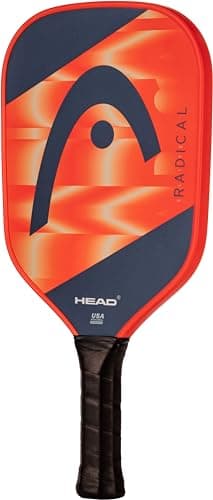 HEAD Radical EliteMost power | Raw pop off the face | 8.05 criteria | |
| 3 |  Selkirk SLK Evo Hybrid MaxBest hybrid face | Pop from the face rather than the core | 8.15 criteria | |
| 4 | 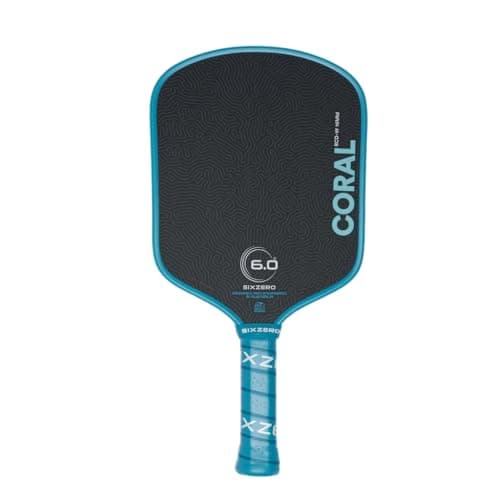 Six Zero CoralBest control | The control half of the question | 8.45 criteria |
The picks in detail
01JOOLA Ben Johns Hyperion CFS 16
Top pickBest for: Leverage on the drive, softness on the reset
PickleballUS name this as their best overall paddle for beginners moving up, and the spec is why it works for a player chasing both qualities: an elongated shape with a 5.5 inch handle, a 16 mm core, a Carbon Friction face and 8.0 to 8.4 oz of weight.
The elongated shape is where the power comes from. Total paddle length is capped by rule, so an elongated face is a narrower one, and the extra length moves the contact point further from your wrist. That longer lever converts the same swing speed into more head speed, which is more power without a thinner core.
The 16 mm core is where the control stays. A thick core deforms more on impact, which dwells the ball longer and takes pace off a reset. The cost of the whole package is forgiveness: a narrower face has a narrower sweet spot, so this is a paddle for a player whose contact is already reliable.
Our score
- Control
- 8.0
- Power
- 9.5
- Spin
- 8.5
- Sweet spot
- 7.0
- Value
- 7.0
- Overall
- 8.7
Verified specs
- PickleballUS award
- Best Overall for beginners moving up
- Weight
- 8.0-8.4 oz
- Core
- 16 mm
- Face
- Carbon Friction
- Handle
- 5.5 in
- Shape
- Elongated
Specs as published by PickleballUS, checked September 2026.
Buy if
- You want drive power without a harsh thin core
- You hit a two-handed backhand and want the 5.5 inch handle
- Your contact point is already consistent
Pass if
- You mishit toward the edges often
- You want the widest possible face
- You are brand new to the sport
02HEAD Radical Elite
Most powerBest for: Raw pop off the face
A 13 mm core is the thinnest in our registry and thin cores are the direct route to pop. Less foam between the faces means less deformation on impact, so more of the collision energy goes back into the ball rather than into compressing the core. PickleballUS name this paddle specifically for tennis players converting.
That recommendation makes sense for a reason beyond the core. A graphite face over a thin core rewards a full swing rather than absorbing it, which is what a tennis player's stroke actually does. At 7.8 oz on a standard shape, it is also quick to get moving.
What you lose is the soft game. A thin core gives you almost no help on a dink or a reset - the ball comes off fast whether you wanted it to or not. If more than half your points are decided at the kitchen line, this is the wrong paddle and the Coral below is the right one.
Our score
- Control
- 6.5
- Power
- 9.5
- Spin
- 6.0
- Sweet spot
- 7.0
- Value
- 9.0
- Overall
- 8.0
Verified specs
- PickleballUS award
- Best for Tennis Players Converting
- Weight
- 7.8 oz
- Core
- 13 mm
- Face
- Graphite
- Shape
- Standard
Specs as published by PickleballUS, checked September 2026.
Buy if
- You are converting from tennis
- You win points by driving the ball
- You want the cheapest route to real pop
Pass if
- You play a soft, patient kitchen game
- You want help resetting a hard drive
- You want maximum spin
03Selkirk SLK Evo Hybrid Max
Best hybrid faceBest for: Pop from the face rather than the core
PickleballUS list this for brand reliability, and the spec is the interesting part on a power page: a hybrid fiberglass and carbon face over a 16 mm core, 7.8 to 8.2 oz, with a short 4.25 inch handle.
Fiberglass is springier than carbon, so a hybrid face returns more energy to the ball than a raw carbon one on the same core. That is a different route to power from thinning the core, and it is a better-mannered one: you keep the thick core's soft reset and buy the pop from the surface instead.
The 4.25 inch handle is the catch and it is a real one. That is short, so a two-handed backhand will not fit comfortably. If you hold the paddle with two hands on the backhand side, the JOOLA's 5.5 inch handle is the one to buy.
Our score
- Control
- 7.5
- Power
- 8.5
- Spin
- 7.0
- Sweet spot
- 8.5
- Value
- 8.0
- Overall
- 8.1
Verified specs
- PickleballUS award
- Best for Brand Reliability
- Weight
- 7.8-8.2 oz
- Core
- 16 mm
- Face
- Hybrid fiberglass / carbon
- Handle
- 4.25 in
Specs as published by PickleballUS, checked September 2026.
Buy if
- You want pop without a thin core
- You play a one-handed backhand
- You want a forgiving standard shape
Pass if
- You hit a two-handed backhand
- You want maximum spin from a raw face
- You want the most power available
04Six Zero Coral
Best controlBest for: The control half of the question
Pickleheads name the Coral their control pick, and it is on this page as the honest other end of the trade: a 16 mm core with a damped Diamond Tough carbon face, 8.0 to 8.3 oz, in 5.5 or 5.75 inch handle lengths. Pickleheads list it at $180.
A thick core plus a damped face is built to do one thing well - take the pace off a hard drive and drop it into the kitchen. That is the shot that decides points above about the 3.5 level, and it is the shot a power paddle makes hardest.
It will not out-drive anything else on this page and it is the most expensive of the four. If your losses come from being outhit from the baseline, buy from higher up the page. If they come from popping resets up into a smash, this is the fix.
Our score
- Control
- 9.5
- Power
- 7.0
- Spin
- 8.0
- Sweet spot
- 8.5
- Value
- 6.5
- Overall
- 8.4
Verified specs
- Pickleheads award
- Best Control
- Weight
- 8-8.3 oz
- Core
- 16 mm
- Face
- Diamond Tough carbon
- Handle
- 5.5 / 5.75 in
- Price
- $180 as listed by Pickleheads
Specs as published by Pickleheads, checked September 2026.
Buy if
- You lose points on resets rather than on drives
- You play a patient kitchen game
- You want a two-handed-friendly handle
Pass if
- You want drive power
- Budget is a factor
- You are converting from tennis
Power and control are one variable, not two
The reason no paddle gives you both is that the main lever controls them in opposite directions. Core thickness in a pickleball paddle runs from about 13 mm to 16 mm, and the foam between the two faces is what decides how the ball behaves on impact.
A thin core deforms less, so less energy is absorbed and more is returned to the ball. That is pop, and it is why thin-core paddles drive hard. A thick core deforms more, dwells the ball slightly longer and gives some of the incoming pace back to the foam rather than to the ball. That is control, and it is why thick cores reset well.
Everything else on the spec sheet modifies that basic trade rather than escaping it. Shape changes leverage, face material changes how much energy the surface returns and how much friction it generates, and weight changes how much momentum you bring to contact. Our how to choose a pickleball paddle guide works through all four in order.
The four paddles compared
| Paddle | Core | Shape | Face | Handle |
|---|---|---|---|---|
| JOOLA Ben Johns Hyperion CFS 16 | 16 mm | Elongated | Carbon Friction | 5.5 in |
| HEAD Radical Elite | 13 mm | Standard | Graphite | Not published |
| Selkirk SLK Evo Hybrid Max | 16 mm | Standard | Hybrid fiberglass / carbon | 4.25 in |
| Six Zero Coral | 16 mm | Standard | Diamond Tough carbon | 5.5 / 5.75 in |
Three of these are 16 mm paddles, which tells you where the market has settled. The ways they differ on power are shape and face material, not core - and that is the useful insight, because both of those let you add pop without giving up the thick core's soft hands.
Which end of the trade you actually need
The honest way to decide is to look at how you lose points rather than at how you would like to win them.
- You get outhit from the baseline and your drives sit up. Power problem. Go thin core or elongated - the HEAD or the JOOLA.
- Your resets pop up and get smashed. Control problem. Go thick core with a damped face - the Coral.
- Both, depending on the day. That is a consistency issue rather than an equipment one, and the widest, most forgiving face on the page will cost you the least while you work on it.
If you are not yet sure which bracket you are in, best pickleball paddles for intermediate players sorts the registry by symptom, and best pickleball paddles for control covers the soft-game end in more depth.
How these picks were made
Racket & Rally does not run a test lab. Nothing on this page is written as though we had hit with, worn or measured anything ourselves, because we have not. What we do is read the published specification sheets and the third-party lab measurements cited at the foot of the page, set them against each other, and say which differences change something you will actually notice on court.
Every product here is already in our registry, which means it carries a cited retailer or review source and a verified listing. Our full selection criteria set out the method, and the editorial policy covers corrections and how often pages are revisited. No price is written into this page as a recommendation - the figure on each buy button is the live one.
Common questions
What pickleball paddle gives the most power?
A thin core, generally 13 mm, on an elongated shape. Of the paddles we list, the 13 mm HEAD Radical Elite has the most raw pop off the face, while the elongated JOOLA Hyperion CFS 16 generates its power from leverage instead.
Can one paddle have both power and control?
Not maximally, because core thickness drives both in opposite directions. The closest compromise is a thick 16 mm core, which keeps the soft reset, paired with an elongated shape or a springier hybrid face to recover the power.
Is a 13 mm or 16 mm core better?
13 mm for drive power, 16 mm for touch and resets. The market has largely settled on 16 mm because the soft game decides more points above beginner level, and because power can be recovered through shape and face material.
Does an elongated paddle give more power?
Yes, through leverage. Total length is capped by rule, so an elongated face is narrower, and the contact point sits further from your wrist. The same swing produces more head speed. The cost is a narrower sweet spot.
Should a tennis player buy a power paddle?
Often, yes. A tennis stroke supplies its own swing speed and a thin core rewards it rather than absorbing it, which is why PickleballUS name the 13 mm HEAD Radical Elite specifically for converts. The adjustment to make is the soft game, not the drive.
Does paddle weight affect power?
Some. A heavier paddle carries more momentum into contact, so the ball leaves faster for the same swing speed. It also slows your hands at the kitchen line, which is where most heavy paddles lose more than they gain.
Read next
Sources
Every source above was retrieved while writing this page. Specifications are quoted from the listing or manufacturer page cited, not from memory.