Guide
Tennis elbow vs golfer's elbow
Same joint, opposite sides, different tendons - and the gear changes that help one are not the changes that help the other. Here is how to tell which one you are dealing with before you spend money on it.
By Janet H.Updated
The short answer
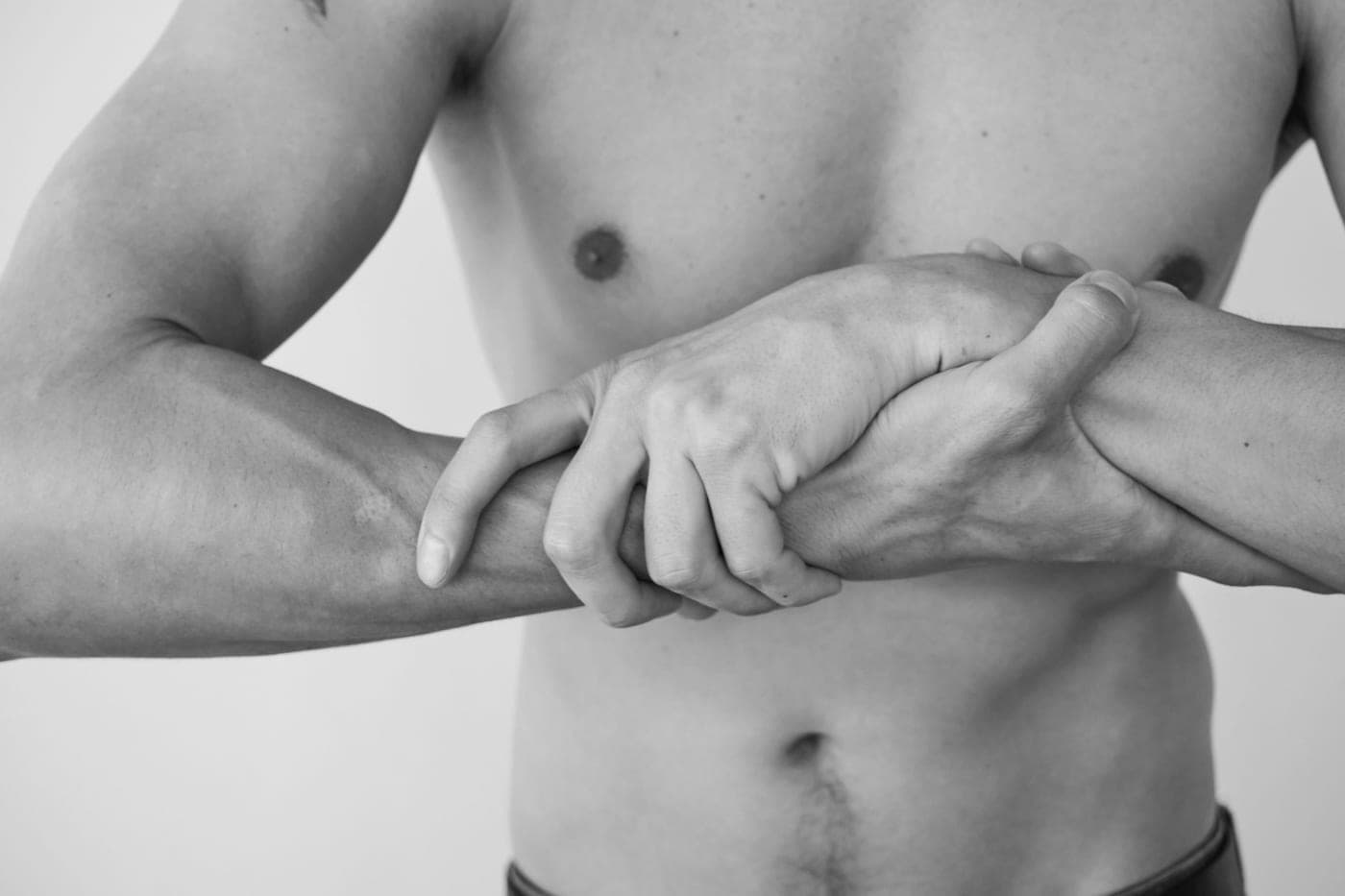
Tennis elbow is pain on the outside of the elbow, usually at the extensor carpi radialis brevis tendon, and it hurts when you extend the wrist or grip. Golfer's elbow is pain on the inside, most often at the pronator teres tendon, and it hurts when you flex the wrist or turn the palm down. Press the bony bump on each side: the one that is tender names the injury.
Disclosure — we earn a commission on qualifying purchases made through links on this page, at no extra cost to you. It never changes which product we rank first. How this site is funded.
Outside is tennis, inside is golf
Both injuries are tendinopathies at the elbow, and both come from the same mechanism: repetitive load on a tendon where it attaches to bone, which frays the fibers faster than the body rebuilds them. What separates them is which side of the joint, which tendon, and therefore which movement hurts.
Tennis elbow - lateral epicondylitis - sits on the outer side. OrthoInfo describes it as usually involving the extensor carpi radialis brevis tendon, which attaches the muscle that extends your wrist and fingers to the lateral epicondyle, the bony bump on the outside of the elbow. The pain is on that outer side, sometimes burning, sometimes present at night, and grip strength is commonly weak.
Golfer's elbow - medial epicondylitis - sits on the inner side. OrthoInfo names the pronator teres as the muscle most often injured, alongside the flexor carpi radialis, palmaris longus, flexor digitorum superficialis and flexor carpi ulnaris, all of which attach at the medial epicondyle. Because the ulnar nerve runs behind that bump, some people also get pain shooting toward the hand, or numbness and tingling in the ring and little fingers.
The two-minute self-check
This is not a diagnosis - it is a way of knowing which page to read and which question to take to a clinician. Do it on the painful arm, gently, and stop if anything is sharp.
- 01Find the two bony bumps. Bend your elbow to about 90 degrees with the palm up. The bump on the outer side is the lateral epicondyle; the one on the inner side is the medial epicondyle. Press each one firmly. One of them will be noticeably more tender.
- 02Test wrist extension. Straighten the arm, make a fist, and try to lift the back of the hand upward against the resistance of your other hand. Pain on the outside of the elbow points to tennis elbow.
- 03Test wrist flexion and pronation. With the arm straight and the palm up, resist as you try to curl the wrist toward you, then try to turn the palm downward against resistance. Pain on the inside points to golfer's elbow.
- 04Check the grip. Both conditions weaken grip strength, so a weak grip tells you there is a tendon problem - not which one.
- 05Check the fingers. Numbness or tingling in the ring and little fingers is a medial-side sign, because the ulnar nerve can be irritated where it passes the inner bump. Take that one to a clinician rather than to a gear page.
One more thing worth knowing: both can arrive without any single recognizable injury. OrthoInfo says tennis elbow most often affects people between 30 and 50 and that some cases are idiopathic, with no identifiable repetitive cause, while golfer's elbow usually turns up between 40 and 60. If you cannot point to the session that did it, that is normal and does not mean you are imagining it.
Why the gear answer is different for each
On the outside of the elbow, the tendon that hurts is the one that extends the wrist, and in tennis the load that stresses it is the backhand - particularly a late, wristy, one-handed backhand where the ball pushes the racket head back against a wrist that is trying to hold it firm. A frame that transmits more shock, strung tight with a stiff string, is the setup most associated with making that worse.
On the inside, the tendons that hurt are the ones that flex the wrist and turn the palm down - which is precisely what a modern forehand and a serve do. So medial pain tends to come from the serving and forehand side of the game, and the gear lever that matters most is not the backhand setup but grip size, swingweight and how violently the wrist is asked to pronate.
That is why the same two changes are not the answer to both. For lateral pain, reduce impact shock: a lower-stiffness frame, a softer string, a lower tension. For medial pain, reduce the demand on the wrist: a lighter swingweight so the head is not lagging behind the hand, and a grip size that lets you hold the handle without clenching. Our racket weight and grip size guides cover how to measure both.
What the orthopedic guidance actually says about equipment
It is worth being straight about this, because it is one of the few places where mainstream medical advice and racquet-industry advice do not line up neatly. OrthoInfo's equipment note for tennis elbow says to have your equipment checked for fit, that stiffer or looser-strung racquets can reduce stress on the forearm, and that moving from an oversized racquet to a smaller head may help.
The stringing half of that is uncontroversial and it is the change we would make first: a looser bed deflects more on impact, so less of the shock reaches your arm, and it costs nothing beyond a restring. On frame stiffness our own pages take the more common racquet-industry line - that a lower RA frame transmits less shock, which is why the frames on our tennis elbow roundup measure in the fifties rather than the high sixties, while the two popular frames compared on Pure Aero 98 vs Pure Drive sit at 66 and 69. We flag the disagreement rather than hide it, and we would put the string change ahead of a new frame either way.
The rest of the nonsurgical list is not gear at all, and it is the part that does the work: rest from the painful movement, ice, a counterforce brace worn over the forearm, and a physical therapy program. For medial epicondylitis, OrthoInfo singles out eccentric strengthening as particularly beneficial, and it cautions that steroid injections may give early relief while lengthening rehabilitation. No racket fixes a tendon. A different racket stops you re-injuring it while it heals.
The order to change things in
Spend from the cheap end. The sequence below is ordered by cost per unit of likely benefit, not by what a shop would rather sell you.
- 01Change the string first, then the tension. Moving out of a full polyester bed into a multifilament, at a few pounds lower, is the single cheapest meaningful change available - and if you are a string breaker, a multifilament in the crosses only is a reasonable compromise.
- 02Fix the grip size. Too small is the common error, because it makes you clench to stop the handle twisting. An overgrip adds roughly half a size if you are between two.
- 03Restring more often. A dead polyester bed goes stiff and stays stiff, so an old string is harder on the arm than a fresh one of the same type.
- 04Then look at the frame. A lower-stiffness frame is a real change, not a marginal one, but it costs twenty times what a set of string does - so it belongs here rather than at the top.
- 05Last, look at the swingweight, especially for medial pain. If the head is arriving late, the wrist is absorbing the difference.
The gear that helps, and what each one gives up
Four picks, in the order we would actually spend the money, and all four are already in our registry with a cited source. The first two are strings, because the strings are the first change. The frames follow, with the honest caveat that a new frame is the expensive answer to a problem a restring sometimes solves.
How this guide was put together
We do not run a test lab and nothing here is written as though we did. The clinical side of this page is summarized from OrthoInfo, the American Academy of Orthopaedic Surgeons' patient-information site, and both articles we used are linked at the foot of the page. The gear side is built from published specification sheets and retailer listings, plus the physical reasoning that connects them.
This is a gear page written by a gear site. It is not medical advice, it cannot diagnose you, and persistent elbow pain is worth a real appointment - OrthoInfo notes that most cases of lateral epicondylitis respond to nonsurgical treatment, which is a good reason to start that treatment early rather than to self-manage for a year. The picks come from our product registry, so each one carries a cited source. Our full selection criteria set out the method.
Now pick yours
The specs above are only useful once they resolve into something you can buy. These are the products that match what this page has just explained.
Our picks
| # | Product | Best for | Score | Price |
|---|---|---|---|---|
| 1 | 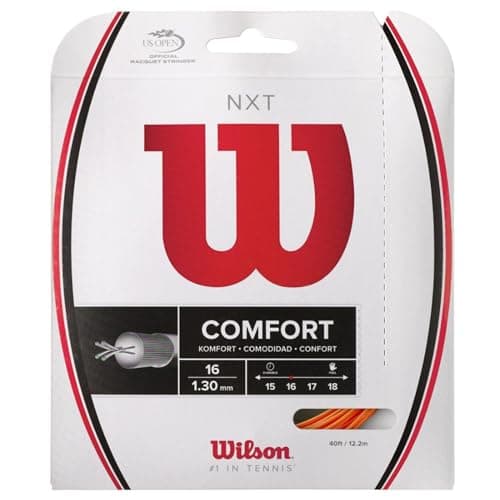 Wilson NXTStart here | The first change to make | 8.84 criteria | |
| 2 | 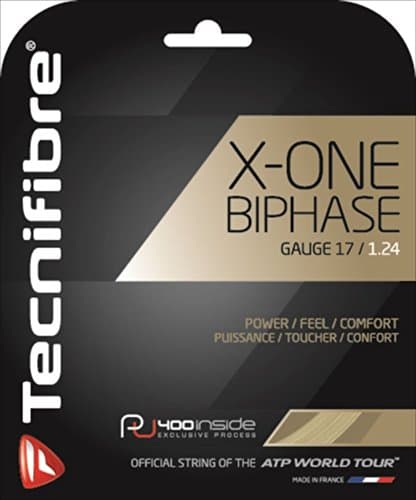 Tecnifibre X-One BiphaseSoftest with power kept | Comfort without losing pace | 8.74 criteria | |
| 3 | 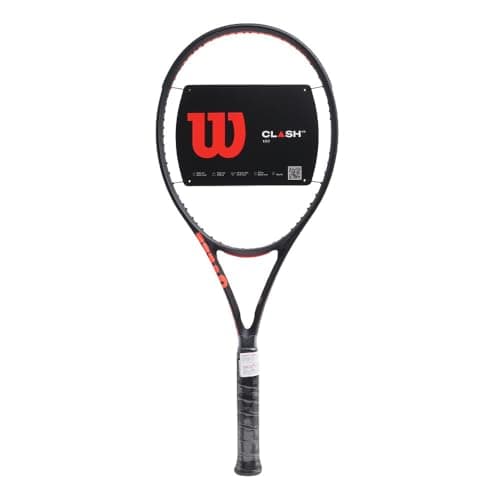 Wilson Clash 100 v3Softest mainstream frame | The frame change for lateral pain | 8.84 criteria | $224.25 · View on Amazon Price as of October 15, 2026 · was $299.00, 25% off |
| 4 | 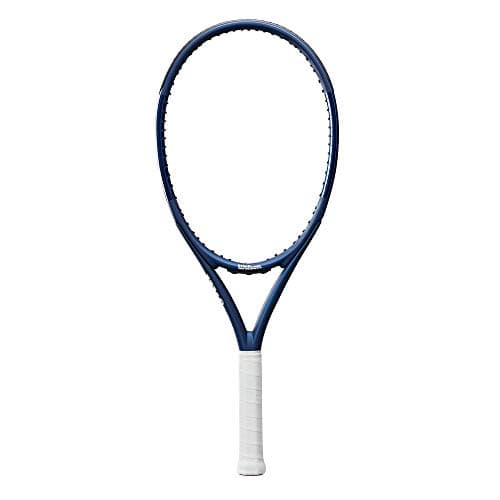 Wilson Triad ThreeMaximum shock absorption | When comfort has to come first | 8.04 criteria |
01Wilson NXT
Start hereBest for: The first change to make
A multifilament built from more than a thousand fibers bonded with polyurethane, and Tennis Warehouse's Comfort award winner in its string guide. Multifilament is the construction that matters here: hundreds of thin filaments deflect and recover far more readily than a single stiff polyester monofilament, so less of each impact reaches the tendon.
It is the pick for a first move because the cost is trivial next to a frame and the effect is immediate. If you are currently in a full bed of polyester and your outer elbow hurts, this single change plus a few pounds off your usual tension is the intervention with the best ratio of benefit to money anywhere on this page.
The honest cost is durability. A multifilament frays and goes soft sooner than a polyester, and if you break strings every couple of weeks you will notice the running cost. That is a real trade and the answer is not to go back to a full poly bed - it is to restring more often, or to put the multifilament in the crosses only.
Our score
- Arm comfort
- 9.5
- Performance kept
- 7.5
- Forgiveness
- 8.5
- Value
- 9.0
- Overall
- 8.8
Verified specs
- Type
- Multifilament
- Gauges
- 16, 17
- TW award
- Comfort
- Construction
- 1,000+ fibers bonded with polyurethane
- Listed price
- $23.95 per set
Specs as published by Tennis Warehouse, checked September 2026.
Buy if
- You currently play with a full polyester string bed
- Your pain is on the outside of the elbow
- You want the cheapest change that might actually work
Pass if
- You break strings every week or two
- You need maximum spin from the string bed
- You have already moved to a multifilament and it has not helped
02Tecnifibre X-One Biphase
Softest with power keptBest for: Comfort without losing pace
The other multifilament we recommend, and the one for a player who tried a soft string, liked their arm and hated their flat forehand. Tennis Warehouse gives it their Power award rather than their Comfort award, which is the useful distinction: it is a soft string that adds pace instead of only absorbing it.
It comes in 15L through 18 gauge, which matters more than it sounds for an arm problem. A thicker gauge lasts longer and plays firmer; a thinner one is softer and more lively. If you are chasing comfort, going one gauge thinner at the same tension is a second, free lever once you have made the string change itself.
The cost is the same as the NXT's, plus a bit of price: multifilaments are not durable, and this is the more expensive of the two per set. If you break strings often, the economics argue for the NXT or for a hybrid setup rather than this one.
Our score
- Arm comfort
- 9.5
- Performance kept
- 8.5
- Forgiveness
- 8.0
- Value
- 7.5
- Overall
- 8.7
Verified specs
- Type
- Multifilament
- Gauges
- 15L, 16, 17, 18
- TW award
- Power
- Listed price
- $22.95-$23.95 per set
Specs as published by Tennis Warehouse, checked September 2026.
Buy if
- You want a soft string that still generates pace
- You want gauge options to fine-tune feel
- You are a moderate rather than heavy string breaker
Pass if
- Budget per set is the deciding factor
- You break strings frequently
- You want the firmest possible response for control
03Wilson Clash 100 v3
Softest mainstream frameBest for: The frame change for lateral pain
A 54 RA in a 100 sq in head, 312 g strung with a 308 swingweight and a 24.5 mm uniform beam. That stiffness figure is the reason it is here: 54 is dramatically softer than the high-sixties frames that dominate the performance shelf, and a frame that flexes more absorbs more of what would otherwise travel into the tendon.
It is a genuine performance frame rather than a medical appliance, which is what makes it the recommendation rather than a compromise. You are not giving up the ability to play competitively to get the comfort; the 100 sq in head and the moderate swingweight keep it usable at club level in a way a dedicated oversize comfort frame does not.
Two honest costs. The flexible layup means less free depth than a stiff aero-beam frame gives you, so a player who relies on the racket for pace will feel the ball land shorter until they adjust. And it is a premium-priced frame, which is exactly why it sits below the strings on this page rather than above them.
Our score
- Arm comfort
- 9.5
- Performance kept
- 8.0
- Forgiveness
- 8.5
- Value
- 7.0
- Overall
- 8.8
Verified specs
- Head size
- 100 sq in
- Strung weight
- 11 oz / 312 g
- Balance
- 7 pts head light
- Swingweight
- 308
- Stiffness (RA)
- 54
- Beam
- 24.5 mm uniform
- String pattern
- 16x19
- Length
- 27 in
Specs as published by Tennis Warehouse, checked September 2026.
Buy if
- Your pain is on the outside of the elbow
- You have already changed string and tension without enough improvement
- You want a soft frame you can still compete with
Pass if
- You have not yet tried a softer string
- You need the frame to supply depth and pace
- Your pain is on the inside of the elbow and swingweight is the issue
Price as of October 15, 2026 · was $299.00, 25% off
04Wilson Triad Three
Maximum shock absorptionBest for: When comfort has to come first
Wilson's Triad construction isolates the head from the handle with an elastomer joint, so a measurable part of the impact never reaches the grip at all. Tennis Warehouse lists it under Comfort rather than under any performance category, which is the clearest statement of what it is for.
This is the pick when the question has stopped being which racket plays best and become whether you can play at all. If a soft string in a soft frame still leaves you sore the next morning, a frame designed around shock isolation rather than around feel is the next honest step.
The costs are blunt and we would rather state them than bury them. You lose feedback - an isolated head tells you less about where on the string bed you made contact - and you lose the crispness a connected frame gives you, which some players dislike immediately. It is also listed at a premium price for a frame that is not sold on performance. Try before you commit if a demo program is available to you.
Our score
- Arm comfort
- 10.0
- Performance kept
- 6.5
- Forgiveness
- 9.0
- Value
- 6.5
- Overall
- 8.0
Verified specs
- Category
- Listed by Tennis Warehouse under Comfort
- Price band
- Listed at $269 by Tennis Warehouse
Specs as published by Tennis Warehouse, checked September 2026.
Buy if
- Shock reaching your arm is the limiting factor on playing at all
- You have already changed string, tension and grip size
- You value comfort above feel and feedback
Pass if
- You want a connected, communicative feel at contact
- You compete and need precise feedback on contact point
- You have not yet exhausted the cheaper changes above
Common questions
How do I know if I have tennis elbow or golfer's elbow?
By which side of the elbow is tender. Tennis elbow is outer-side pain at the lateral epicondyle, worse when you extend the wrist or grip something. Golfer's elbow is inner-side pain at the medial epicondyle, worse when you flex the wrist or turn the palm down. Numbness in the ring and little fingers is an inner-side sign.
Can you have both at once?
Yes. They are separate tendons on opposite sides of the same joint, and nothing stops both from being overloaded - overhead throwing and weightlifting are named causes of medial pain, while gripping and wrist extension drive the lateral kind. If both bumps are tender, that is worth a clinical opinion rather than a gear change.
Does a different racket cure tennis elbow?
No. Tendon damage heals with load management, rehabilitation and time; OrthoInfo's nonsurgical list is rest, ice, a counterforce brace and physical therapy, with equipment checked for fit. A softer frame and a softer string reduce the shock going into the tendon, which stops you re-injuring it - that is a real benefit, but it is prevention rather than treatment.
Should I string tighter or looser for elbow pain?
Looser. A looser bed deflects more on impact and returns less shock up the handle, and it is the cheapest change on the list. OrthoInfo's own equipment note mentions looser-strung racquets specifically. Drop a few pounds from your usual tension and change string type at the same time if you are in a full polyester bed.
Is golfer's elbow more common in tennis players than golfers?
The names are not diagnostic. OrthoInfo lists golf, overhead throwing, tennis and weightlifting among the activities linked to medial epicondylitis, and plenty of cases come from household or occupational repetition with no sport involved. In tennis, medial pain tends to track the serve and forehand rather than the backhand.
How long does it take to get better?
Longer than most people expect, and the published guidance reflects that: surgery for tennis elbow is generally only considered after six to twelve months of nonsurgical treatment that has not worked, which tells you the normal recovery window is measured in months. OrthoInfo reports roughly 80 to 95 percent of patients succeed with nonsurgical treatment.
Read next
Sources
- 01OrthoInfo (AAOS) - Tennis Elbow (Lateral Epicondylitis)
- 02OrthoInfo (AAOS) - Medial Epicondylitis (Golfer's Elbow)
- 03Tennis Warehouse - Best Tennis Strings
- 04Tennis Warehouse - Wilson Clash 100 v3
- 05Tennis Warehouse - Comfort racquets category
Every source above was retrieved while writing this page. Specifications are quoted from the listing or manufacturer page cited, not from memory.