Comparison
Babolat Pure Aero 98 vs Pure Drive
These are the two Babolats a club player actually chooses between, and the specification sheets disagree about almost everything that matters. One asks you to supply the pace; the other supplies it for you.
By Janet H.Updated

The short answer
Buy the Pure Drive if you want the frame to add depth and pace: 318 g strung, 100 sq in, a 23/26/23 mm beam and a 69 stiffness. Buy the Pure Aero 98 if you already hit a heavy ball and want to aim it: 323 g, 98 sq in, a 21/23/22 mm beam, a 16x20 pattern and a 66 stiffness. Most club players should take the Pure Drive.
Disclosure — we earn a commission on qualifying purchases made through links on this page, at no extra cost to you. It never changes which product we rank first. How this site is funded.
Our picks
| # | Product | Best for | Score | Price |
|---|---|---|---|---|
| 1 | 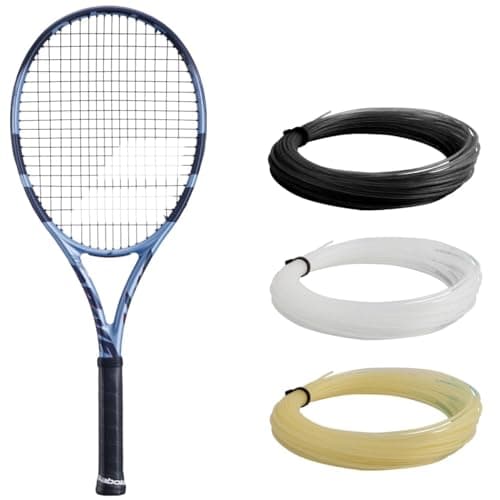 Babolat Pure Drive 2025Pick for most players | Players who want the racket to supply pace | 8.85 criteria | |
| 2 | 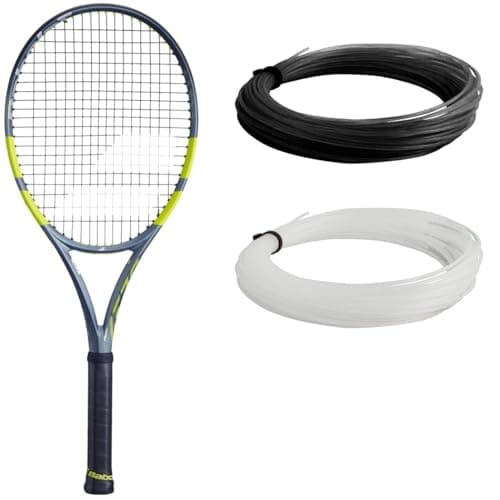 Babolat Pure Aero 98 2026Pick for control | Players who already generate their own pace | 8.55 criteria | $231.75 · View on Amazon Price as of October 15, 2026 · was $309.00, 25% off |
| 3 |  Babolat Pure Drive Lite 2025Pick for a lighter swing | If both of the above swing too heavy | 8.25 criteria |
The picks in detail
01Babolat Pure Drive 2025
Pick for most playersBest for: Players who want the racket to supply pace
The Pure Drive is the easier frame to own, and the numbers say why: 318 g strung, a 317 swingweight, a 100 sq in head and a 23/26/23 mm beam that thickens exactly where a frame resists bending. That beam profile is the power source, far more than any claim about the layup, and it is why this frame has been the reference for free depth at club level for three decades.
The 100 sq in head is the other half of the case. Two square inches sound trivial against the Aero's 98, but the usable string bed difference is not, and a bigger bed is more tolerant of the ball you catch slightly late at the end of the second set. The 2025 generation adds flax-fiber damping in the throat, which takes a little of the edge off a frame that has historically been a firm ride.
The honest cost is the 69 stiffness. That is stiff, and a stiff frame sends more of each impact up your arm - the combination of a stiff frame and a stiff polyester string is the one most associated with arm complaints. Pair it with a multifilament, and if your elbow is already talking to you read [tennis elbow vs golfer's elbow](/guides/tennis-elbow-vs-golfers-elbow) before you order either of these frames.
Our score
- Power
- 9.5
- Control
- 7.5
- Forgiveness
- 8.0
- Arm comfort
- 7.0
- Maneuverability
- 7.5
- Overall
- 8.8
Verified specs
- Head size
- 100 sq in
- Strung weight
- 11.2 oz / 318 g
- Balance
- 4 pts head light
- Swingweight
- 317
- Stiffness (RA)
- 69
- Beam
- 23 / 26 / 23 mm
- String pattern
- 16x19
- Length
- 27 in
Specs as published by Tennis Warehouse, checked September 2026.
Buy if
- You want the frame to add depth and pace
- You play club singles or doubles and want forgiveness on off-center hits
- You want the most widely stocked and serviced frame at club level
Pass if
- You already hit a heavy ball and your problem is the ball landing long
- You have a history of tennis elbow
- You want a thin-beam, flexible feel at contact
02Babolat Pure Aero 98 2026
Pick for controlBest for: Players who already generate their own pace
This is the control version of the Aero family and the specification sheet makes that explicit: 323 g strung, a 322 swingweight, a 98 sq in head, a 21/23/22 mm beam and a 16x20 string pattern. Tennis Warehouse rates its power level Low-Medium, which for a frame carrying the Aero name is the clearest statement of intent available.
The thin beam is the point. A 21 mm box at the throat flexes more than a 23 mm aero beam, and a frame that flexes returns less free energy to the ball - which is exactly what you want if your current racket keeps sending a well-struck ball two feet long. Add the denser 16x20 pattern, which gives the strings less room to move and snap back, and you get a frame built to put a heavy ball inside the lines rather than to create one.
The costs are real and worth stating plainly. At 98 sq in the sweet spot is smaller than the Pure Drive's, so a mishit is punished more; a 322 swingweight takes genuine fitness to carry through a third set; and the 16x20 pattern will give you slightly less spin than the 16x19 Aero models despite the family badge. This is a frame to buy because you already hit heavy, not because you hope to.
Our score
- Power
- 7.5
- Control
- 9.5
- Forgiveness
- 6.5
- Arm comfort
- 8.0
- Maneuverability
- 6.5
- Overall
- 8.5
Verified specs
- Head size
- 98 sq in
- Strung weight
- 11.4 oz / 323 g
- Balance
- 6 pts head light
- Swingweight
- 322
- Stiffness (RA)
- 66
- Beam
- 21 / 23 / 22 mm
- String pattern
- 16x20
- Length
- 27 in
Specs as published by Tennis Warehouse, checked September 2026.
Buy if
- You generate your own pace and want to aim it
- Your well-struck balls land long rather than short
- You play league or competitive club tennis
Pass if
- You need the racket to supply depth
- You are still building consistency
- You tire late in matches or want a lighter swingweight
Price as of October 15, 2026 · was $309.00, 25% off
03Babolat Pure Drive Lite 2025
Pick for a lighter swingBest for: If both of the above swing too heavy
There is a third answer to this comparison and it is worth saying out loud, because a lot of people choosing between the two frames above are really choosing between two swingweights. The Pure Drive Lite keeps the 100 sq in head, the 23/26/23 beam and the 16x19 pattern, and drops to 283 g strung with a 295 swingweight.
A 295 swingweight against the Aero 98's 322 is the biggest single difference anywhere on this page - far bigger than the two square inches of head size everybody argues about. If your racket feels fine for a set and heavy by the end of the match, this is the frame that fixes the actual problem, and it keeps the Pure Drive's power profile while doing it.
The trade is stability. At 283 g and 1 point head light, the frame is pushed around by a heavy incoming ball in a way neither full-weight option is, so against a hard hitter you will feel the difference on the return. It is also the same 69 stiffness as the standard Pure Drive, so it is not the comfort answer - only the weight answer.
Our score
- Power
- 8.5
- Control
- 7.0
- Forgiveness
- 8.5
- Arm comfort
- 7.0
- Maneuverability
- 9.0
- Overall
- 8.2
Verified specs
- Head size
- 100 sq in
- Strung weight
- 10 oz / 283 g
- Balance
- 1 pt head light
- Swingweight
- 295
- Stiffness (RA)
- 69
- Beam
- 23 / 26 / 23 mm
- String pattern
- 16x19
- Length
- 27 in
Specs as published by Tennis Warehouse, checked September 2026.
Buy if
- Your current frame feels heavy by the third set
- You want Pure Drive power with a quicker swing
- You play a lot of doubles and need fast hands at the net
Pass if
- You face hard hitters and need plow-through
- You want a control frame
- Arm comfort is your main concern
The specification sheets, side by side
Both frames are 27 inches long, both are graphite, and both are sold in four grip sizes. Everything else below is a genuine difference, and the three that change how the ball leaves the string bed are the beam, the string pattern and the head size.
| Spec | Pure Aero 98 2026 | Pure Drive 2025 | Pure Drive Lite 2025 |
|---|---|---|---|
| Head size | 98 sq in | 100 sq in | 100 sq in |
| Strung weight | 11.4 oz / 323 g | 11.2 oz / 318 g | 10 oz / 283 g |
| Swingweight | 322 | 317 | 295 |
| Balance | 6 pts head light | 4 pts head light | 1 pt head light |
| Stiffness | 66 | 69 | 69 |
| Beam | 21 / 23 / 22 mm | 23 / 26 / 23 mm | 23 / 26 / 23 mm |
| String pattern | 16x20 | 16x19 | 16x19 |
| Power level | Low-Medium | Not published in these terms | Not published in these terms |
Notice what the table does not show: a large weight gap between the two full-weight frames. Five grams is nothing you will feel. The separation between the Aero 98 and the Pure Drive is not mass at all - it is the shape of the beam, the density of the string pattern and two square inches of hoop, and those three things pull in the same direction.
Difference one: 98 against 100, and what two square inches cost
Head size is the spec people fixate on and it is the third most important difference here, not the first. What it changes is the size of the usable string bed and how hard a mishit is punished. A 100 sq in hoop gives you a larger area where the ball leaves with the pace and direction you intended; a 98 shrinks it, which is useful only if you are consistent enough that you rarely need the margin.
The second effect is less obvious and matters more: a smaller head with the same mass concentrates the frame's stiffness over a shorter span, which is part of why the Aero 98 reads as a control frame. Our head size guide covers the full relationship, but the short version is that the hoop size and the beam shape are not independent variables, and manufacturers tune them together.
If you are not sure which side of that line you are on, there is a simple test and it does not involve demoing anything. Think about where your well-struck balls land. If a good swing lands the ball short, you need the bigger head and the thicker beam. If a good swing lands it beyond the baseline, you need the smaller head and the thinner beam. Most club players are in the first group.
Difference two: the beam is the actual power switch
The Pure Drive's beam is 23 mm at the tip, 26 mm through the middle and 23 mm at the throat. The Aero 98's is 21 / 23 / 22 mm. That three-millimeter difference in the middle of the hoop is the single most important number on this page, because beam depth is what decides how much a frame bends on impact, and a frame that bends less returns more energy to the ball.
This is also why the stiffness figures are closer than the playing difference suggests. The Pure Drive is published at 69 and the Aero 98 at 66 - not a chasm - yet the Pure Drive plays substantially more powerfully, because stiffness is measured on the whole frame while the beam decides where the frame is allowed to flex. Read them together, and read our stiffness guide if the RA scale is new to you.
A practical consequence: a thin box beam feels more connected to the ball and a thick aero beam feels crisper and more explosive. Neither is better. One tells you more about what just happened; the other does more of the work for you.
Difference three: 16x20 against 16x19, and the spin question
The Aero badge means spin, so the string pattern here is a genuine surprise: 16 mains and 20 crosses is a denser bed than the Pure Drive's 16x19. Density matters because spin on a modern frame comes substantially from the mains sliding sideways and snapping back, and the more crosses there are, the less room the mains have to move.
So the Aero 98 is the control member of a spin family: it keeps the aerodynamic frame shape that lets you swing faster, and tightens the bed so the extra racket-head speed turns into a heavier, flatter ball rather than a looping one. If maximum spin is what you came for, the 16x19 frames in the Aero line - or the Pure Drive with a shaped polyester - will give you more of it. Our rackets for power and spin roundup covers that shelf.
The denser pattern has one more consequence worth knowing before you buy: it is kinder to strings. A 16x20 bed moves less, which means less notching and a longer life for a polyester, so the running cost of the Aero 98 is lower than the Pure Drive's if you break strings. See how often to restring for the intervals that actually apply.
Difference four: which one is kinder to your arm
On the published numbers the Aero 98 is the softer frame, 66 against 69, and the thin box beam reinforces that - a frame that flexes absorbs some of what would otherwise travel up your forearm. The Pure Drive's flax-fiber damping in the throat is a real answer to the same problem from the other direction, but it is damping added to a stiff frame rather than a soft frame.
Neither frame, though, is the right answer if your elbow already hurts. Both sit in the upper half of the stiffness range for modern rackets, and the single biggest arm-comfort decision is not which of these two you buy but what you string it with. A full bed of stiff polyester in either frame is harder on a joint than the three-point stiffness gap between them.
If arm comfort is the deciding factor, the honest recommendation is to leave this comparison entirely: our rackets for tennis elbow page exists for exactly that case, and the frames on it measure in the fifties rather than the high sixties.
So which one should you buy?
Work through these in order and stop at the first one that is true of you.
- 01Your elbow or shoulder hurts: buy neither. Go to the tennis elbow page and buy a frame in the fifties.
- 02Your racket feels heavy by the third set: buy the Pure Drive Lite. The 295 swingweight is the fix, and no head-size argument will substitute for it.
- 03Your good shots land short: buy the Pure Drive. You need the thicker beam and the bigger head, and you will get depth you are currently generating yourself.
- 04Your good shots land long: buy the Pure Aero 98. You need the thinner beam and the denser bed, and the 98 sq in head is the margin you can afford to give up.
- 05None of the above fired: buy the Pure Drive. It is the frame that makes the fewest assumptions about your game, and it is the easier of the two to resell if you get it wrong.
Both are currently sold, in every grip size
We checked before publishing. On 15 October 2026 Tennis Warehouse listed the Pure Aero 98 2026 in stock in all four grip sizes, discounted from its full price, and the Pure Drive 2025 and Pure Drive Lite 2025 were both listed as current models. No frame on this page is a closeout, a previous generation sold as new, or a model we could not confirm on a retailer's shelf.
Prices move constantly in this category - Babolat's flagship frames are discounted at predictable points in the year, and a 25 percent cut on one generation usually means the next one is close. We do not print a price in prose for that reason. The figure on each buy button is the live one at the moment you load the page, and if a frame cannot be priced the button says so instead of showing a stale number.
If you want the longer version of either verdict, we have a full page on each frame: the Pure Aero 98 2026 review and the Pure Drive 2025 review.
How this comparison was made
We have not hit with either frame. Racket & Rally does not run a test lab and nothing here is written as though we had one.
What this page is instead: both specification sheets read side by side from the retailer listing cited at the foot of the page, retrieved on 15 October 2026, plus an explanation of which differences change something you will notice and which are marketing. Where the two frames are genuinely indistinguishable on paper we say so rather than inventing a separation. Our full selection criteria set out the method, and the editorial policy covers corrections.
Common questions
Is the Pure Aero 98 more powerful than the Pure Drive?
No. Tennis Warehouse rates the Pure Aero 98's power level Low-Medium, and its 21/23/22 mm beam is thinner than the Pure Drive's 23/26/23 mm. The Aero 98 is the control frame of the two despite the Aero name, which is a family badge rather than a power rating.
Which Babolat is better for an intermediate player?
The Pure Drive, in almost every case. It has the larger head, the more forgiving string bed and the beam profile that supplies depth, and our registry lists it for intermediate and advanced players while the Pure Aero 98 is listed for advanced only.
Does the Pure Aero 98 give less spin than other Aero frames?
On the pattern, yes. It uses 16 mains and 20 crosses, which is denser than the 16x19 beds elsewhere in the line, and a denser bed lets the mains move and snap back less. You keep the aerodynamic frame shape and the racket-head speed it allows; you give up some of the string-bed contribution.
Which one is better for tennis elbow?
Neither. The Aero 98 is the softer of the two at a published 66 against 69, but both sit in the upper half of the stiffness range. If your arm hurts, choose from our tennis elbow roundup instead, and treat the string you put in the frame as the bigger decision.
Is the five-gram weight difference between them noticeable?
No. Five grams strung is below what any player reliably detects. The swingweight gap of 322 against 317 is also small; the difference you will actually feel is the beam, the pattern and the head size, and against the Pure Drive Lite, the 27-point swingweight drop.
Can I use the same string in both frames?
You can, but you probably should not use the same tension. A denser 16x20 bed plays firmer than a 16x19 at the same tension, so players moving from the Pure Drive to the Aero 98 often drop a few pounds to get the same feel. Our string tension guide covers the trade.
Read next
Sources
- 01Tennis Warehouse - Babolat Pure Aero 98 2026
- 02Tennis Warehouse - Babolat Pure Drive 2025
- 03Tennis Warehouse - Babolat Pure Drive Lite 2025
- 04Tennis Warehouse - Best Tennis Racquets
Every source above was retrieved while writing this page. Specifications are quoted from the listing or manufacturer page cited, not from memory.