Review
HEAD Titanium Ti.S6 review
A racket that has outlasted every frame it originally competed against, for one reason: nothing else combines a 115 sq in head with a 244 g strung weight. That is a genuine engineering outlier, and it has consequences in both directions.
By Janet H.Updated
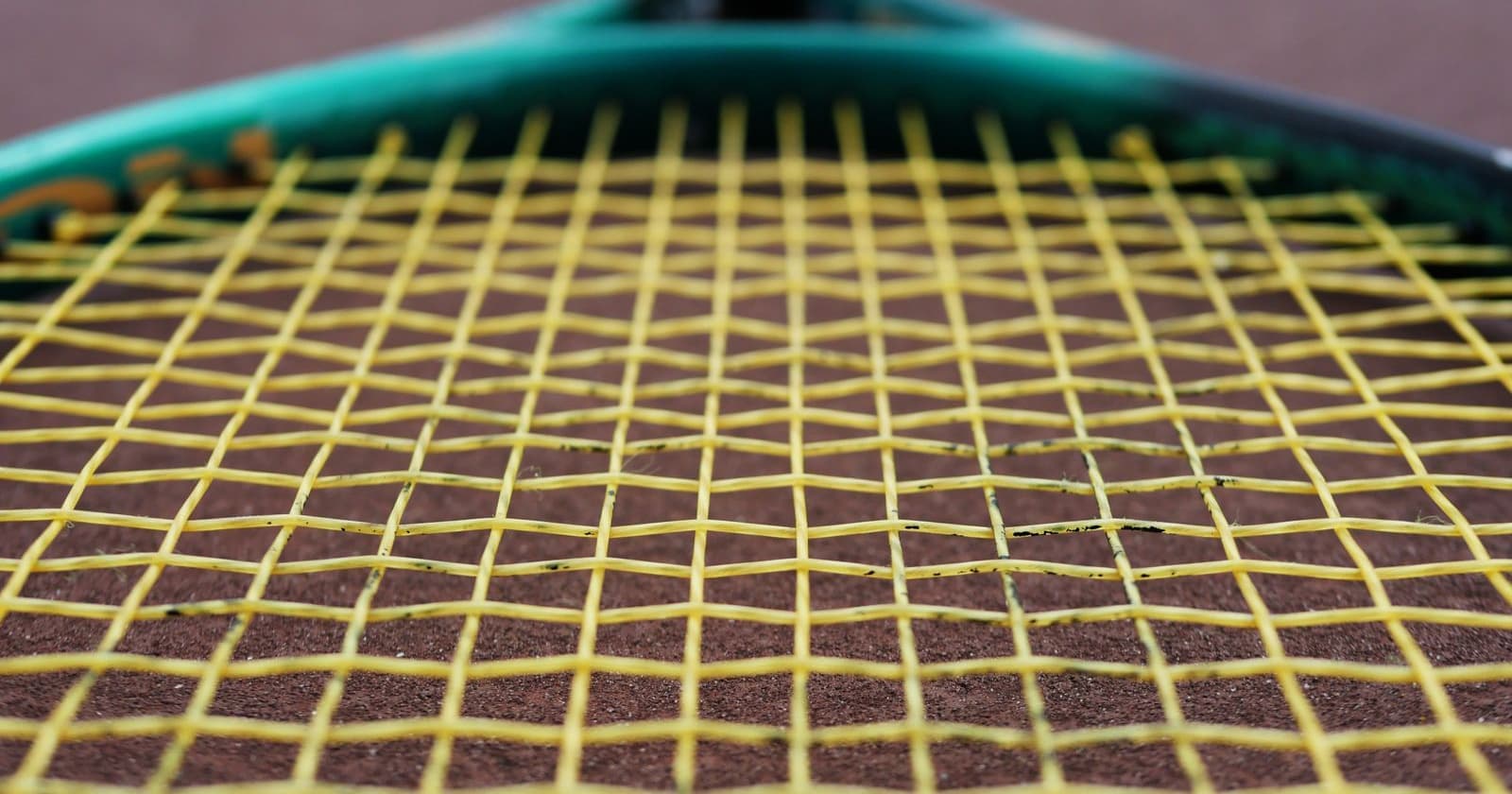
The short answer
The Ti.S6 is a 115 sq in frame at 244 g strung, 7 points head heavy, 27.75 inches long, with a 309 swingweight and a 71 RA. Tennis Warehouse list it in stock in their under-$100 bracket, supplied pre-strung. It suits an adult beginner or returning player with a compact, slow swing, and almost nobody else.
Disclosure — we earn a commission on qualifying purchases made through links on this page, at no extra cost to you. It never changes which product we rank first. How this site is funded.
Our picks
| # | Product | Best for | Score | Price |
|---|---|---|---|---|
| 1 | 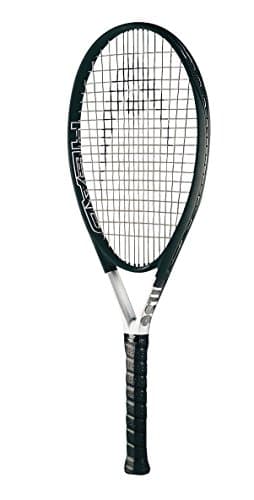 HEAD Titanium Ti.S6Our verdict | Adult beginners and returning players with a compact swing | 7.65 criteria |
The picks in detail
01HEAD Titanium Ti.S6
Our verdictBest for: Adult beginners and returning players with a compact swing
One number explains this racket's thirty-year career: 244 g strung, with a 115 sq in head. Tennis Warehouse's current listing confirms both. No other frame in general circulation puts a sweet spot that large on a frame that light, and for a player who has not yet learned where the middle of the string bed is, forgiveness beats every other property.
The second number is the one most buyers miss and it is the more interesting one. Despite weighing 244 g the Ti.S6 has a 309 swingweight, because the balance sits 7 points head heavy and the frame is 27.75 inches long. Mass out at the tip generates pace on a slow swing — which is precisely why Tennis Warehouse rate its power level High while rating its swing speed requirement Slow-Moderate. It is light to pick up and not light to swing.
What you pay for that is control and comfort. A 115 sq in head on a 27 to 28 mm beam at 71 RA is a stiff, thick, very powerful frame, and a stiff frame with little mass to absorb impact is the least arm-friendly combination in racket design. The recommended tension is 57-66 lb — unusually high, and necessary, because at a normal tension this string bed would send balls long. Those are not flaws so much as the price of the specification.
Our score
- Power
- 9.5
- Control
- 5.0
- Forgiveness
- 9.5
- Arm comfort
- 5.5
- Maneuverability
- 7.0
- Overall
- 7.6
Verified specs
- Head size
- 115 sq in
- Strung weight
- 8.6 oz / 244 g
- Balance
- 7 pts head heavy
- Swingweight
- 309
- Stiffness (RA)
- 71
- Beam
- 27 / 28 / 27 mm
- String pattern
- 16x19
- Length
- 27.75 in
Specs as published by Tennis Warehouse, checked September 2026.
Buy if
- You are starting or restarting and your swing is short
- You want the largest sweet spot sold, pre-strung, for $99
- You play social doubles and want free depth
Pass if
- You have any history of elbow or forearm trouble
- You already take a full swing at the ball
- You expect to be playing competitively within a year
The specification, in full
Tennis Warehouse list the Ti.S6 at 115 sq in, 8.6 oz / 244 g strung, 7 points head heavy, 27.75 inches, with a 309 swingweight, a 71 RA, a 27 / 28 / 27 mm beam and a 16x19 pattern in a graphite and titanium composite. Recommended tension is 57-66 lb. It ships with a HEAD Cushion Grip and it arrives strung, and it was in stock in Tennis Warehouse's under-$100 bracket when we checked on 8 October 2026.
Read as a set rather than line by line, almost every number here sits at an extreme of its range. That is unusual. Most rackets are compromises in several directions at once; this one has made a single decision — maximum help for a slow, short swing — and then accepted every consequence of it.
| Specification | Ti.S6 | Typical club frame | What the gap does |
|---|---|---|---|
| Head size | 115 sq in | 98-100 sq in | Much larger sweet spot, lower control ceiling |
| Strung weight | 244 g | 300-320 g | Easy to lift, less stable against pace |
| Balance | 7 pts head heavy | 4-7 pts head light | Mass at the tip, so it swings heavier than it weighs |
| Length | 27.75 in | 27 in | More reach and leverage, slower to maneuver |
| Swingweight | 309 | 305-320 | Mid-range — not a light swing despite the light frame |
| Stiffness (RA) | 71 | 61-69 | More power, more shock to the arm |
| Beam | 27 / 28 / 27 mm | 21-26 mm | Thick and stiff throughout, built for free depth |
| Tension range | 57-66 lb | 46-58 lb | High tension needed to contain a large string bed |
The light-but-head-heavy trick, explained
This is the part of the Ti.S6 worth understanding before you buy, because it is the source of both its reputation and most of the complaints about it.
Static weight — the 244 g on the scale — determines how heavy the racket feels in your hand at rest and how tiring it is to hold. Swingweight determines how heavy it feels to swing, and it depends on where the mass sits rather than how much there is. Put mass at the tip and you raise swingweight without raising static weight. The Ti.S6 does exactly that: 7 points head heavy on a frame three quarters of an inch longer than standard.
The benefit is real. A head-heavy frame carries its own momentum into the ball, so a player who cannot yet generate racket-head speed still gets depth. That is why the power rating is High on a frame this light, and it is the single most useful property the Ti.S6 has for a first-year player.
The cost is equally real. A head-heavy racket is slower to redirect, which shows up at the net and on fast exchanges, and the mass arriving at the ball with less of your body behind it transmits more of the impact back up the handle. Tennis racket balance and swingweight works through the mechanics properly if you want the longer version.
The 71 RA problem, stated plainly
RA measures a frame's resistance to bending. Higher is stiffer, stiffer returns more energy to the ball, and stiffer also returns more of the impact impulse to your arm. At 71 the Ti.S6 is stiffer than almost every performance frame on the market — the Wilson Clash 100 v3 is 54, the Wilson Blade 98 v10 is 61, and a modern power frame typically sits around 68 to 69.
Stiffness alone is manageable. Stiffness combined with low mass is the harder case, because mass is what absorbs impact before it reaches you, and a 244 g frame has less of it than a 318 g one. If you have ever had lateral epicondylitis — tennis elbow — this specification is the wrong place to start, and our best tennis rackets for tennis elbow page says so about this exact frame.
To be fair to the racket: HEAD did not choose 71 arbitrarily. A 115 sq in head has long main strings and a large unsupported area, and a flexible frame at that size would deform unpredictably on impact. The stiffness is what makes an oversize head behave, which is the same reason the Prince O3 Legacy 120 and other super-oversize frames are stiff too. It is a consequence of the head size, not a shortcut.
If arm comfort matters to you and budget is the reason you are here, the cheapest meaningful lever is not the frame. It is the string: a soft multifilament at the lower end of the tension range will do more for your elbow than anything else you can buy for $20.
Why the tension range is 57-66 lb and why that matters
Most rackets on this site carry a recommended range in the high 40s to mid 50s. The Ti.S6's is 57-66 lb, nine to eleven pounds higher, and that is not a quirk of the listing.
A larger head means longer strings, and longer strings deflect further at the same tension. On a 115 sq in frame the string bed would behave like a trampoline at 50 lb, and the extra depth you gained would all land beyond the baseline. Stringing it tight is how the frame is kept inside the court.
Two practical consequences. First, if you buy it pre-strung and later have it restrung, tell the stringer the range — a shop that defaults to 55 lb out of habit will hand you back a racket that sprays long. Second, high tension is stiffer tension, which compounds the comfort issue above. Tennis string tension covers how to pick a number inside a range like this one.
Who should buy it
- Adult beginners who are honest about their swing. If you are pushing at the ball rather than swinging through it, this frame will put the ball in the court for you while you learn. Nothing else does it as cheaply.
- Returning players after a long gap. The forgiveness and the free depth cover for timing that has not come back yet.
- Social doubles players who do not intend to improve. A genuinely legitimate buyer. If tennis is a weekly social fixture rather than a project, the control ceiling will never bind.
- Anyone shopping at the very bottom of the market. It arrives strung, so there is no extra $20-$40 for string and labor on top — which makes the real-world gap to a mid-price unstrung frame wider than the sticker suggests.
Who should not
- Anyone with arm history. 71 RA at 244 g is the least forgiving combination in the category for a sore elbow. Start at best rackets for tennis elbow instead.
- Players who already take a full swing. If you can generate your own racket-head speed, the frame's free power turns into balls landing long and you will spend the season fighting it.
- Anyone intending to play competitively. A 115 sq in head is not a shape you can take to 4.0 level, and you will have to unlearn it. A 100 sq in frame now avoids that — see best tennis rackets for beginners.
- Juniors. At 27.75 inches it is longer than a standard adult frame, let alone a junior one. Best tennis rackets for juniors is the right page.
What buyers actually say, and what that is worth
Tennis Warehouse show a 4.7 out of 5 average across 44 customer reviews on this frame at the time of writing. We are reporting that rather than endorsing it, because retailer review averages on long-lived beginner products skew high for a structural reason: the people who buy an entry-price oversize frame are mostly beginners, and beginners compare it to no racket at all rather than to a $300 one.
That does not make the score meaningless. A product sold continuously for decades with a 4.7 average is doing something right for the people buying it. It does mean the rating answers the question 'are first-time buyers happy with this' and not the question 'is this the best racket for me', which is the question this page is for.
Racket & Rally publishes no star rating of its own on any product, and the score above is our editorial assessment against the same five criteria we use on every racket page, not a user rating.
Alternatives worth considering
| If you want | Consider | Why |
|---|---|---|
| A standard playing shape at the same price | HEAD Graphene XT Radical S | Near-standard head, same entry bracket |
| Something between oversize and standard | Prince Warrior 107 | 107 sq in, same entry bracket, a middle path |
| A softer frame for the same job | Prince O3 Legacy 120 | Super-oversize but built around arm comfort |
| To buy once and keep it | Wilson Clash 100 v3 | 54 RA, 100 sq in — a frame you grow into rather than out of |
| Entry price with modern geometry | Babolat Boost Drive | Pure Drive beam shape at a fraction of the weight and price |
The full price-constrained ranking is on best tennis rackets under $100, which is where the Ti.S6 currently sits at number one.
The verdict
The Ti.S6 is not a good racket in the way a $300 frame is a good racket, and it is not trying to be. It is an unusually well-aimed one: a single specification, pushed to its limit, that solves one problem — getting the ball in the court when your swing is short and your contact point is unreliable — better and cheaper than anything else sold.
Buy it if that is your problem and you accept the two bills that come with it: a control ceiling you will meet if you keep improving, and a stiffness-plus-low-mass profile that is the wrong bet for a questionable elbow. If either of those describes you, spend the extra and buy a 100 sq in frame instead.
When you do outgrow it — and if you keep playing, you will — the two frames most club players end up choosing between are the Babolat Pure Drive and the Yonex EZONE 100. We put their specification sheets side by side in Pure Drive vs Yonex EZONE 100, because on paper they are almost the same racket.
How this review was written
We did not hit with this product. Racket & Rally does not run a physical test lab, and nothing on this page is written as though we did.
What this review contains instead: the published specification from the retailer listing cited at the foot of the page, an explanation of what those numbers mean for different players, and a clear statement of who the product suits and who it does not. Every figure is quoted from a source we retrieved. Our full selection criteria set out the method.
Common questions
Is the HEAD Ti.S6 good for beginners?
Yes, and that is who it is for. A 115 sq in head at 244 g strung gives the largest sweet spot in common circulation on one of the lightest frames, and it arrives pre-strung at an entry price. The limits are a low control ceiling and a stiff 71 RA that does not suit a sore arm.
How much does the HEAD Ti.S6 cost?
It is an entry-price frame: Tennis Warehouse listed it in stock in their under-$100 bracket when we checked on 8 October 2026, supplied pre-strung. Prices move, so take the current figure from the buy link above rather than from a number written into a page.
Why does the Ti.S6 feel heavy if it only weighs 244 g?
Because the mass is at the tip. The balance is 7 points head heavy on a 27.75 inch frame, which produces a 309 swingweight — mid-range for a club racket. It is light to hold and not light to swing, and that is the design: tip mass generates depth for a slow swing.
Is the HEAD Ti.S6 bad for tennis elbow?
It is the wrong frame for a sore elbow. At 71 RA it is stiffer than almost any performance racket, and a 244 g frame has little mass to absorb impact before it reaches your arm. If you have had tennis elbow, start with a low-stiffness frame instead.
What tension should the Ti.S6 be strung at?
Inside Tennis Warehouse's listed 57-66 lb range, which is high by normal standards because a 115 sq in head needs tight strings to stay inside the court. Tell your stringer the range — a shop that defaults to a standard 55 lb will leave you hitting long.
Will I outgrow the HEAD Ti.S6?
If you keep improving, yes. A 115 sq in head with 71 RA stiffness has a real control ceiling, and most players who progress past about 3.5 move to a 100 sq in frame. If you would rather buy once, a 100 sq in racket now avoids the switch.
Does the HEAD Ti.S6 come strung?
Yes. It is sold pre-strung, which matters at this price point — an unstrung frame in the same bracket costs another $20 to $40 in string and labor before you can play with it.
Read next
Sources
- 01Tennis Warehouse — HEAD Titanium Ti.S6
- 02Tennis Warehouse — Best Tennis Racquets for Beginners
- 03Tennis Warehouse — Best Tennis Racquets gear guide
Every source above was retrieved while writing this page. Specifications are quoted from the listing or manufacturer page cited, not from memory.