Buying guide
Best padel shoes for beginners in 2026
Your first padel shoe has one job: stop you sliding on sand. Everything above that - Vibram compounds, reinforced GEL, race-weight uppers - is solving a problem you will not have until you are playing twice a week.
By Janet H.Updated
The short answer
The Joma Open Men is the best padel shoe for a beginner: Padel Market call it the most balanced option for your first steps, and its listing spells out an omni rubber sole, a Foam Reactive midsole and a breathable VTS mesh upper - the only entry padel shoe here that publishes all three. Buy the ASICS GEL-Resolution X Padel instead only if you already know you will still be playing in a year.
Disclosure — we earn a commission on qualifying purchases made through links on this page, at no extra cost to you. It never changes which product we rank first. How this site is funded.
Our picks
| # | Product | Best for | Score | Price |
|---|---|---|---|---|
| 1 |  Joma Open MenTop pick | A genuine first pair | 8.55 criteria | |
| 2 | 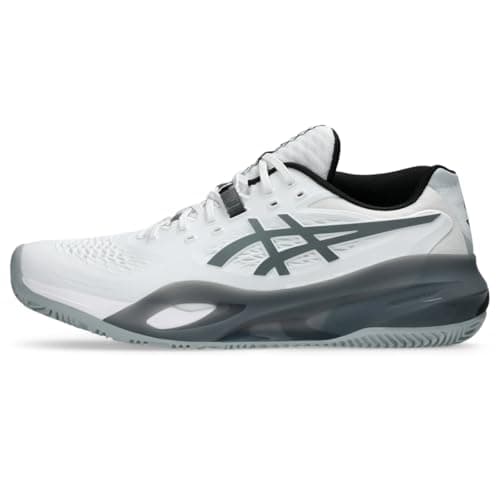 ASICS GEL-Resolution X PadelBest if you buy once | Players who already know they will stick with it | 8.65 criteria | |
| 3 | adidas Adizero CybersonicLightest option | Fast movers coming from tennis | 7.95 criteria | |
| 4 | Bullpadel Hack Vibram 26VMost durable | Three sessions a week, on sand | 8.45 criteria |
The picks in detail
01Joma Open Men
Top pickBest for: A genuine first pair
Padel Market's guide puts it as plainly as a guide ever does: for beginners, focus on comfort and a stable grip, and the Joma Open Men is the most balanced option for your first steps. It is the only shoe in their comparison table listed at the beginner-to-intermediate level, and the only one whose stated strengths are ventilation, a comfortable fit and value rather than competition-grade grip or lateral lockdown.
The retailer listing is unusually forthcoming about what is actually in the shoe, which is rare at this price: an omni rubber sole, a Foam Reactive midsole, a breathable VTS mesh upper and a lace-up closure, in a 7 to 12 US men's size run. An omni sole is the right default for a beginner because, as Padel Market put it, omni works better on carpet-style courts or those with minimal sand - and the club courts most people learn on are swept, not deep.
Two honest costs. Omni is the right default and not the right answer everywhere: if your club's courts are heavily sanded you will want a clay-pattern herringbone sole, which Padel Market say offers maximum grip on that surface. And this is not a durability shoe. If you move to playing three or more times a week, you will wear it out faster than the Bullpadel below, which is exactly the point at which replacing it is an easy decision rather than a wasted one.
Our score
- Lateral stability
- 7.5
- Cushioning
- 8.0
- Outsole durability
- 7.5
- Fit accommodation
- 8.5
- Lightness
- 8.0
- Overall
- 8.5
Verified specs
- Sole
- Omni rubber, per the retailer listing
- Midsole
- Foam Reactive, per the retailer listing
- Upper
- Breathable VTS mesh, lace-up
- Cushioning
- High-cushioning, per the retailer listing
- Sizes
- 7-12 US men
- Aimed at
- Beginner to intermediate
Specs as published by Padel Market, checked September 2026.
Buy if
- This is your first pair of padel shoes
- Your club's courts are swept rather than deeply sanded
- You want the entry shoe whose specification is actually published
Pass if
- You play on heavily sanded turf every session
- You already play three or more times a week
- You want maximum lateral lockdown
02ASICS GEL-Resolution X Padel
Best if you buy onceBest for: Players who already know they will stick with it
This is the shoe to buy if the honest answer to 'will you still be playing padel next year' is yes. Padel Market credit it with lateral support and reinforced GEL in the high-impact zones, and it is the one shoe on this page with a hybrid sole - which, per their own sole table, suits all court types with high lateral traction and versatility. A hybrid sole removes the single decision a beginner is least equipped to make: what the surface at the club they have not joined yet is going to be.
Lateral support is also the thing a padel beginner is most likely to need and least likely to appreciate. Padel is played off the glass, which means a lot of the movement is backwards and sideways at the same time, on a surface that is deliberately slightly loose. A shoe built to stop the foot rolling is doing real work in those first months, and the GEL reinforcement is aimed at the impact zones rather than spread thinly through the midsole.
The honest cost is that you are buying above your level, with everything that implies. Padel Market list it at the intermediate-to-advanced level, it is the premium-tier shoe on this page, and the ASICS stability chassis is heavy - that is the trade that buys you the support. If there is any real chance padel turns out not to be your sport, the Joma above costs you far less to find out with.
Our score
- Lateral stability
- 9.5
- Cushioning
- 9.0
- Outsole durability
- 8.5
- Fit accommodation
- 8.0
- Lightness
- 5.5
- Overall
- 8.6
Verified specs
- Sole
- Hybrid
- Cushioning
- GEL, reinforced in high-impact zones
- Aimed at
- Intermediate to advanced
Specs as published by Padel Market, checked September 2026.
Buy if
- You are committed to playing padel regularly
- You do not know what surface you will mostly play on
- You want lateral support above everything
Pass if
- You are trying padel for the first time
- You want a light, quick shoe
- You want the cheapest route onto the court
03adidas Adizero Cybersonic
Lightest optionBest for: Fast movers coming from tennis
If you are arriving from tennis with quick feet and the heavy ASICS chassis puts you off, this is the shoe in Padel Market's set built the other way. They describe it as ultra-lightweight with fast footwork as the payoff, on a clay-specific outsole - the herringbone-type pattern that their sole table pairs with courts carrying a lot of sand.
That makes it a genuinely good match for one specific beginner: somebody who already moves well on a tennis court, is joining a club with heavily sanded turf, and whose instinct is to be quick rather than planted. Lightness is not free in court footwear, but for a player whose footwork is already good it costs less than it does for somebody still learning where to stand.
Three honest costs, and they stack. Padel Market place it at intermediate-to-advanced level, so you are buying above your level here too. The clay-specific outsole is the opposite of versatile - they say it is best suited to sandy synthetic grass, which means a drier or carpet-style court is the wrong home for it. And an ultra-light shoe gets light by removing structure, which is the structure a new padel player benefits from. If you are not sure about the surface, the hybrid-soled ASICS above is the safer buy.
Our score
- Lateral stability
- 7.5
- Cushioning
- 7.0
- Outsole durability
- 7.0
- Fit accommodation
- 8.0
- Lightness
- 9.5
- Overall
- 7.9
Verified specs
- Sole
- Clay / herringbone
- Cushioning
- Boost
- Aimed at
- Intermediate to advanced
Specs as published by Padel Market, checked September 2026.
Buy if
- You come from tennis and move quickly
- Your club's courts are heavily sanded
- A heavy stability shoe feels like wearing boots
Pass if
- You play on drier or carpet-style courts
- You want structure while you learn to move
- You want one shoe that works anywhere
04Bullpadel Hack Vibram 26V
Most durableBest for: Three sessions a week, on sand
This is on a beginner page as the shoe we are telling you not to buy yet, which is more useful than leaving it off. Padel Market list it at advanced-to-pro level and credit it with grip, abrasion resistance, control and durability from a Vibram outsole - Vibram being a compound brand that exists because of abrasion, not because of marketing.
The reason to know about it now is that abrasion is the specific way padel shoes die. Sanded turf is grit on a hard base, and grit is sandpaper. A player who ends up on court three or four times a week will wear through an entry sole in a way that makes a Vibram outsole the cheaper purchase over a year, and this is the shoe that conversation ends at.
The honest cost is simply that it is not a first shoe. It is the pro-tier option on this page, it is built around durability and control rather than forgiveness, and buying it before you know your own frequency means paying for a season you may not play. Come back to it when you have worn out a pair - that is the signal, and our [padel shoes roundup](/padel/best-shoes) covers the full set when you get there.
Our score
- Lateral stability
- 9.0
- Cushioning
- 8.0
- Outsole durability
- 10.0
- Fit accommodation
- 8.0
- Lightness
- 6.0
- Overall
- 8.4
Verified specs
- Sole
- Vibram
- Strength
- Grip and abrasion resistance
- Aimed at
- Advanced and competitive players
Specs as published by Padel Market, checked September 2026.
Buy if
- You are already on court three or more times a week
- Your courts are heavily sanded and abrasive
- You have worn through a cheaper pair already
Pass if
- This is your first pair
- You play once a week or less
- You want a light shoe
Your first padel shoe only has to do one thing
Padel is played on sand-dressed artificial turf: short synthetic fibers with silica sand brushed through them, sitting on a hard base. Functionally that is a thin layer of loose grit over concrete, and it is the reason a padel shoe is not a tennis shoe and definitely not a running shoe.
What that surface does is let your foot move a controlled amount before it stops. A sole designed for it digs into the sand and holds; a hard-court tennis tread rides on top of the grit, and a running shoe with a soft unstable sidewall does the same thing with less warning. So the first job - the only job that matters for a first pair - is a sole pattern made for sand.
Everything else on a padel shoe spec sheet is solving a frequency problem rather than a competence problem. Vibram compounds exist because abrasion kills soles, which matters at three sessions a week and not at one. Reinforced GEL in the impact zones matters when the number of impacts is large. Race-weight uppers matter when your footwork is already fast enough to notice. None of those is a reason for a first purchase, and all of them are a reason to replace a first purchase later.
Three sole patterns, and which one is yours
This is the only specification a beginner genuinely has to get right, and the answer depends on your club rather than on you. Padel Market's guide splits the category three ways and states what each one is for.
| Sole pattern | What Padel Market say it is for | Buy it if |
|---|---|---|
| Clay / herringbone | Ideal for courts with a lot of sand, offering maximum grip | Your club's courts are visibly sandy and you can see footprints in them |
| Omni | More versatile; works better on carpet-style courts or those with minimal sand | Your courts are swept and firm, or you are not sure - this is the sensible default |
| Hybrid / mixed | Suited to all court types, with high lateral traction and versatility | You play at more than one club, or you do not yet know where you will settle |
The practical way to answer it: go to the court you will actually play on and scuff a foot across it. If sand moves and you can see the mark, buy herringbone. If the surface is firm underfoot and your shoe does not shift anything, buy omni. If you are going to play at two clubs, buy hybrid and stop thinking about it. There is no fourth answer and no shoe that is better than the right pattern.
Worth knowing for later: sole pattern is also why padel shoes do not cross over to other racquet sports cleanly. A clay-pattern padel sole on an indoor pickleball court is wrong in the other direction, which is covered in tennis shoes vs pickleball shoes.
The five criteria we ranked on
Padel Market name five things that matter in a padel shoe - sole type, cushioning, fit, weight and lateral stability - and we score every court shoe on the site on the same five axes, so a score means the same thing on every page. These are our editorial judgments drawn from the published descriptions cited below; they are not user ratings and they are not our own measurements.
- Lateral stability - whether the shoe stays under you when you load an edge on a surface that is deliberately slightly loose. Weighted heavily here, because backwards-and-sideways movement off the glass is what padel asks for and what a beginner is least prepared for.
- Cushioning - impact protection, and specifically whether it is placed where the impacts are. Padel Market single out the ASICS for reinforced GEL in the high-impact zones; nothing else in their set carries a cushioning claim that specific.
- Outsole durability - abrasion resistance. This is the axis where the pro shoe runs away from the field, and the axis a one-session-a-week beginner can most afford to ignore.
- Fit accommodation - comfort and ventilation over a two-hour session. Padel Market list ventilation and a comfortable fit as the Joma's stated strengths, which is the right priority for a first pair.
- Lightness - how little the shoe asks of your first step. Deliberately weighted last: in court footwear a light shoe usually got light by removing the structure a new player benefits from.
One figure we cannot give you anywhere on this page: a weight in grams. None of the four shoes in Padel Market's comparison publishes one, and no independent lab measures padel shoes the way RunRepeat measures tennis shoes. So the lightness column is a relative reading of the brands' own descriptions - ultra-lightweight for the adidas, a firm build for the pro shoes - and not a number we are in a position to print.
What a beginner should and should not spend on
Padel is an expensive sport to equip badly, because the two things that look optional - the racket and the shoes - are the two things that change how it feels. Here is where the money goes if you are starting from nothing.
- 01Shoes, first, and only to the level above. A sole made for sand is non-negotiable; a pro-tier compound is not. The Joma at entry level does the job the surface requires.
- 02A racket next, and at entry level too. A round head with a soft core is the forgiving shape, and our beginner padel rackets roundup works entirely inside that band. Buying a diamond-shaped power frame first is the classic mistake, which padel racket shapes goes through.
- 03Balls, cheaply and often. Pressurized padel balls go dead in three or four matches - best padel balls has the pressure-retention comparison, and for social play the value ball is the right call.
- 04A bag, last and barely. Padel rackets are shorter than tennis frames, so a standard six-racquet tennis bag swallows two rackets, shoes and a change of kit; padel bags covers it.
How to narrow it to one
Work in this order and you will land on a single pair.
- 01If this is genuinely your first pair, buy the Joma Open Men. It is Padel Market's first-pair pick, its listing publishes the sole, midsole and upper, and the omni sole is the sensible default.
- 02If you already know you will still be playing in a year, buy the ASICS GEL-Resolution X Padel and get the hybrid sole and the lateral support - you will not need to think about surfaces at all.
- 03If you come from tennis, move fast, and your club's courts are visibly sandy, buy the adidas Adizero Cybersonic and accept that it is a surface-specific shoe.
- 04If you are somehow already playing three times a week, buy the Bullpadel Hack Vibram 26V for the outsole and nothing else.
- 05If none of those is available in your size, match the sole pattern to your court first and let brand and tier come second. The pattern is the specification that matters.
Two shoes we would also look at but have not ranked, because we could not retrieve a published specification for either: the Wilson Bela Tour and the HEAD Motion Pro 1.5, both sold as men's padel shoes on the US market. Both are real and currently listed; neither has a spec sheet we were able to read, so neither gets a card on a page that scores shoes on published figures.
When the pair you buy is worn out, when to replace tennis shoes applies identically to padel - the checks are the same and they take two minutes.
How these picks were made
Racket & Rally does not run a test lab. Nothing on this page is written as though we had worn, carried or measured anything ourselves, because we have not. What we do is read the published specifications, the independent guides and the retailer listings cited at the foot of the page, set them against each other, and say which differences change something you will actually notice.
Every product here was confirmed on sale when its registry entry was built, and every claim traces to one of the sources listed at the bottom. Our full selection criteria set out the method, and the editorial policy covers corrections and how often pages are revisited. Where a brand or a listing does not state a figure, we say that rather than filling the gap.
Common questions
What padel shoes should a beginner buy?
The Joma Open Men, on Padel Market's own recommendation - they call it the most balanced option for your first steps, and it is the only shoe in their comparison listed at beginner-to-intermediate level. Its listing also publishes an omni rubber sole, a Foam Reactive midsole and a breathable VTS mesh upper, which is more detail than most entry padel shoes give you.
Can I play padel in tennis shoes?
You can, and you will slide. Padel is played on sand-dressed artificial turf, which is loose grit over a hard base, and a hard-court tennis outsole is designed to grip a clean hard surface - on sand it rides on top of the grit instead of digging in. A clay-pattern, omni or hybrid sole is the fix; see padel shoes vs tennis shoes.
What sole pattern do I need for padel?
It depends on your club's courts, not on your level. Padel Market say clay or herringbone soles are ideal for courts with a lot of sand and offer maximum grip; omni soles are more versatile and work better on carpet-style courts or those with minimal sand; and hybrid soles suit all court types with high lateral traction. If you are unsure, omni is the sensible default and hybrid is the no-decision option.
Are expensive padel shoes worth it for a beginner?
Not usually. What the premium tier buys is abrasion resistance, placed cushioning and lateral lockdown - properties that matter at three sessions a week and barely register at one. The exception is if you already know you are committed, in which case a hybrid-soled shoe like the ASICS GEL-Resolution X Padel means never having to think about court surface again.
How much do padel shoes weigh?
Nobody publishes it. None of the four shoes in Padel Market's comparison states a weight, and no independent lab measures padel shoes the way RunRepeat measures tennis shoes. The most you get is a brand description - ultra-lightweight for the adidas Adizero Cybersonic, a firm build for the pro shoes - which is why we have not printed a figure anywhere on this page.
How long do padel shoes last?
The variable is abrasion, and sanded turf is sandpaper. A one-session-a-week player will get a long time out of an entry shoe; a three- or four-session player is the reason Vibram outsoles exist in this category. The replacement checks on when to replace tennis shoes apply identically to padel.
Do I need men's or women's specific padel shoes?
Fit is the only thing that matters, and the Joma Open Men on this page is sold in a 7 to 12 US men's size run. Our padel shoes for men page covers the men's-fit set in full; where a brand sells a women's last, buying it is simply a better fit rather than a different shoe.
Read next
Sources
- 01Padel Market - best padel shoes guide (levels, sole patterns, beginner verdict)
- 02Amazon product listing - Joma Open Men professional padel shoes
- 03Padel Market - best padel rackets for beginners (spend-order reference)
Every source above was retrieved while writing this page. Specifications are quoted from the listing or manufacturer page cited, not from memory.