Buying guide
Best 16 mm pickleball paddles in 2026
Core thickness is the first spec that matters on a paddle, and 16 mm is the control end. Here is what that buys, and the two players it does not suit.
By Janet H.Updated
The short answer
The Six Zero Coral is the best 16 mm pickleball paddle: Pickleheads' control pick, a thick 16 mm core with a damped Diamond Tough carbon face at 8 to 8.3 oz, built to reset a hard drive into the kitchen. The Vatic Pro Prism Flash is the budget pick, a raw carbon face on the same core thickness at a fraction of the price.
Disclosure — we earn a commission on qualifying purchases made through links on this page, at no extra cost to you. It never changes which product we rank first. How this site is funded.
Our picks
| # | Product | Best for | Score | Price |
|---|---|---|---|---|
| 1 | 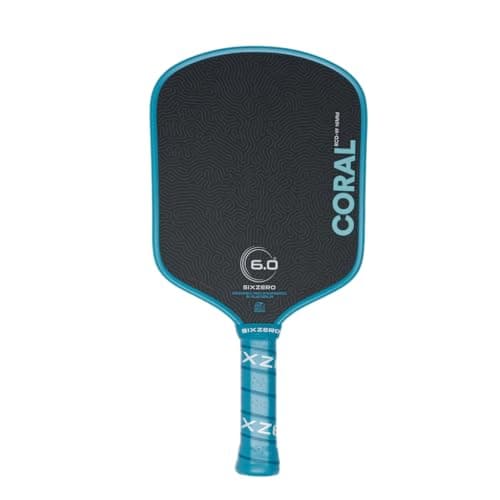 Six Zero CoralTop pick | Players whose game is built at the kitchen line | 8.65 criteria | |
| 2 | 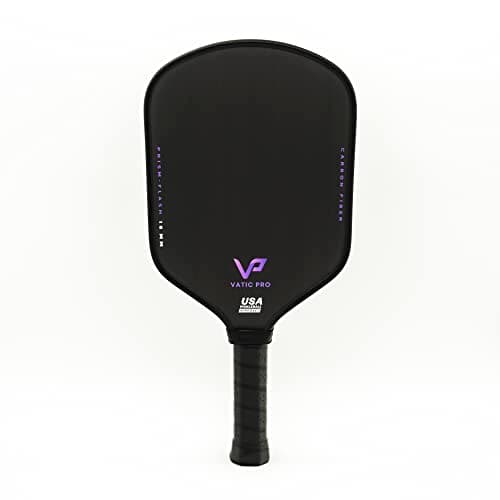 Vatic Pro Prism FlashBudget pick | A first 16 mm paddle at a sensible price | 8.35 criteria | $79.99 · View on Amazon Price as of November 28, 2026 · was $99.99, 20% off |
| 3 |  JOOLA Ben Johns Hyperion CFS 16Best for tennis players | Tennis converts who want reach and leverage | 8.15 criteria | |
| 4 |  Ronbus Quanta ProLightest 16 mm | Players who want 16 mm control at the lowest weight | 8.05 criteria | |
| 5 | Selkirk SLK Evo Hybrid MaxMost pop | One-handed players who want more pop than raw carbon gives | 7.85 criteria |
The picks in detail
01Six Zero Coral
Top pickBest for: Players whose game is built at the kitchen line
Pickleheads name this their control pick, and the specification is the reason: a 16 mm core with a Diamond Tough carbon face that is damped rather than lively, at 8 to 8.3 oz. Those three things together describe a paddle built to absorb a hard drive and drop it dead in the kitchen, which is the single most valuable skill in doubles pickleball.
The handle comes in 5.5 and 5.75 inch lengths, which matters more than it sounds. A longer handle gives a two-handed backhand somewhere to go, and a two-handed backhand is the shot most tennis converts bring with them and most pickleball paddles make awkward. Having two lengths to choose from is a genuine advantage over paddles sold in one.
The honest cost is price and pop. This is the most expensive paddle in our registry, and the damping that makes it reset so well is the same damping that costs you put-away power at the net. If you finish points with speed-ups rather than resets, [best pickleball paddles for power](/pickleball/best-paddles-for-power) is the better page.
Our score
- Control
- 9.5
- Power
- 7.0
- Spin
- 8.5
- Sweet spot
- 8.5
- Value
- 6.5
- Overall
- 8.6
Verified specs
- Pickleheads award
- Best Control
- Weight
- 8-8.3 oz
- Core
- 16 mm
- Face
- Diamond Tough carbon
- Handle
- 5.5 / 5.75 in
- Price
- $180 as listed by Pickleheads
Specs as published by Pickleheads, checked September 2026.
Buy if
- Your game is resets and dinks
- You hit a two-handed backhand
- You want a damped carbon face
Pass if
- You finish with speed-ups
- You are price sensitive
- You want maximum pop
02Vatic Pro Prism Flash
Budget pickBest for: A first 16 mm paddle at a sensible price
PickleballUS name this their best value all-rounder, and it is the cheapest route to a genuine 16 mm raw carbon paddle in our registry: a raw carbon fibre face on a 16 mm core at 7.8 to 8.2 oz in a standard shape. Raw carbon is the surface that grips the ball for spin, and a 16 mm core is the control thickness, so the spec sheet is a premium one.
The standard shape is deliberate and worth choosing. It is the sibling of the elongated V-SOL, and the shorter, wider head puts the sweet spot in the middle of the face rather than up it, which is far easier to find if you have not held a paddle for long. For a player buying their first serious paddle this is the right geometry.
The honest cost is what a budget raw carbon face is. The grit on a raw carbon surface wears, and cheaper faces wear faster, so the spin you buy on day one is not the spin you have in six months. Nobody publishes an abrasion figure for pickleball faces, so that is a category-wide caveat rather than a criticism of this paddle specifically.
Our score
- Control
- 8.5
- Power
- 7.5
- Spin
- 8.5
- Sweet spot
- 8.5
- Value
- 9.5
- Overall
- 8.3
Verified specs
- PickleballUS award
- Best Value All-Rounder
- Weight
- 7.8-8.2 oz
- Core
- 16 mm
- Face
- Raw carbon fiber
- Shape
- Standard
Specs as published by PickleballUS, checked September 2026.
Buy if
- You want raw carbon and 16 mm cheaply
- You want a standard, forgiving shape
- This is your first serious paddle
Pass if
- You want the most damped face available
- You want a long handle
- You want a premium build
Price as of November 28, 2026 · was $99.99, 20% off
03JOOLA Ben Johns Hyperion CFS 16
Best for tennis playersBest for: Tennis converts who want reach and leverage
An elongated 16 mm paddle with a 5.5 inch handle and a Carbon Friction face at 8.0 to 8.4 oz. PickleballUS name it their best overall for beginners moving up, and the reason it is on this page is the shape: elongated puts more face further from your hand, which is the reach and leverage a tennis player instinctively expects.
The 5.5 inch handle is the other half of that. Tennis players arrive with a two-handed backhand and a full swing, and a short-handled standard paddle makes both uncomfortable. This is the paddle that lets the swing you already own work, while the 16 mm core keeps the soft game available. [Best pickleball paddles for tennis players](/pickleball/best-paddles-for-tennis-players) covers the transition in full.
The honest cost is the sweet spot, and it is inherent to the shape. An elongated head moves the sweet spot up the face and makes it narrower, so off-centre hits are punished more than on a standard paddle. We also have no live listing for this paddle at present, so it is here as the right recommendation for a specific player rather than as something we can price for you.
Our score
- Control
- 8.0
- Power
- 8.5
- Spin
- 8.5
- Sweet spot
- 7.0
- Value
- 7.0
- Overall
- 8.1
Verified specs
- PickleballUS award
- Best Overall for beginners moving up
- Weight
- 8.0-8.4 oz
- Core
- 16 mm
- Face
- Carbon Friction
- Handle
- 5.5 in
- Shape
- Elongated
Specs as published by PickleballUS, checked September 2026.
Buy if
- You are coming from tennis
- You hit a two-handed backhand
- You want reach and leverage
Pass if
- You are new to racquet sports
- You mishit regularly
- You want a wide, forgiving face
04Ronbus Quanta Pro
Lightest 16 mmBest for: Players who want 16 mm control at the lowest weight
At 7.9 oz this is the lightest 16 mm paddle Pickleheads list under $100, with a NanoBond raw carbon face and a 5.5 inch handle. Light and thick is an unusual pairing, because core thickness normally adds mass, and it makes this the easiest control paddle here to get into position at the kitchen line.
The 5.5 inch handle on a sub-$100 paddle is the detail worth flagging. Long handles are usually a premium feature, and a two-handed-backhand player shopping at this price generally has to choose between the handle and the face material. This one does not force that choice.
The honest cost is that we have no live listing for it at present, so we cannot show you a current price, and that a light paddle is more easily pushed around by a hard drive than an 8.3 oz one. [Pickleball paddle weight explained](/guides/pickleball-paddle-weight) covers the trade properly.
Our score
- Control
- 8.5
- Power
- 7.0
- Spin
- 8.0
- Sweet spot
- 8.0
- Value
- 9.0
- Overall
- 8.0
Verified specs
- Pickleheads award
- Best Under $100
- Weight
- 7.9 oz
- Core
- 16 mm
- Face
- NanoBond raw carbon
- Handle
- 5.5 in
- Price
- $99.99 as listed by Pickleheads
Specs as published by Pickleheads, checked September 2026.
Buy if
- You want the lightest 16 mm paddle
- You hit a two-handed backhand
- You want raw carbon under $100
Pass if
- You want stability against hard drives
- You want a paddle you can buy today
- You prefer a heavier head
05Selkirk SLK Evo Hybrid Max
Most popBest for: One-handed players who want more pop than raw carbon gives
The outlier here, and a useful one. A hybrid fibreglass and carbon face on a 16 mm core at 7.8 to 8.2 oz, with a 4.25 inch handle. Fibreglass is livelier than raw carbon, so this is the 16 mm paddle for a player who wants the control thickness without the damped, dead feel that a full carbon face produces.
The short handle is a deliberate match for that. At 4.25 inches it is the shortest in our registry, which suits a one-handed player and puts more of the paddle's length into face rather than grip. PickleballUS name it for brand reliability, which is a modest claim and an honest one.
The honest cost is spin. Fibreglass does not grip the ball the way a raw carbon surface does, so a topspin dink holds less, and the hybrid face is a compromise on both axes rather than a win on either. We also have no live listing for it at present. [Best pickleball paddles for spin](/pickleball/best-paddles-for-spin) ranks the faces that do grip.
Our score
- Control
- 7.5
- Power
- 8.5
- Spin
- 7.0
- Sweet spot
- 8.5
- Value
- 7.5
- Overall
- 7.8
Verified specs
- PickleballUS award
- Best for Brand Reliability
- Weight
- 7.8-8.2 oz
- Core
- 16 mm
- Face
- Hybrid fiberglass / carbon
- Handle
- 4.25 in
Specs as published by PickleballUS, checked September 2026.
Buy if
- You want pop with a 16 mm core
- You play one-handed
- You find raw carbon too dead
Pass if
- Spin is central to your game
- You hit a two-handed backhand
- You want a paddle you can buy today
What a 16 mm core actually does
Core thickness is the first specification that separates pickleball paddles, and the market has settled into two bands: roughly 13 mm and roughly 16 mm. A thicker core deforms more on impact and returns less energy, which sounds like a weakness and is the entire point. Less return means a ball that comes off slower and more predictably, which is what you want when you are trying to drop a hard drive into a seven-foot box.
A 13 mm core does the opposite. It is stiffer, returns more energy and produces more pop, which suits a player who drives and speeds up rather than one who resets. The HEAD Radical Elite in our registry is 13 mm, and PickleballUS name it specifically for tennis converts because it rewards a swing rather than absorbing it. Neither thickness is better; they are two different games. How to choose a pickleball paddle covers the full decision and pickleball paddle weight explained covers the other major spec.
We do not write prices into the text of our pages, because a typed price is wrong within days. Every buy button on this page carries the current retailer price with its own as-of date, refreshed daily, so if a pick has moved you see that rather than our guess.
The five, side by side
| Paddle | Core | Face | Weight | Handle | Shape |
|---|---|---|---|---|---|
| Six Zero Coral | 16 mm | Diamond Tough carbon | 8-8.3 oz | 5.5 / 5.75 in | Not stated by our source |
| Vatic Pro Prism Flash | 16 mm | Raw carbon fiber | 7.8-8.2 oz | Not stated by our source | Standard |
| JOOLA Ben Johns Hyperion CFS 16 | 16 mm | Carbon Friction | 8.0-8.4 oz | 5.5 in | Elongated |
| Ronbus Quanta Pro | 16 mm | NanoBond raw carbon | 7.9 oz | 5.5 in | Not stated by our source |
| Selkirk SLK Evo Hybrid Max | 16 mm | Hybrid fiberglass / carbon | 7.8-8.2 oz | 4.25 in | Not stated by our source |
The handle column is the one most buyers skip and the one that causes the most regret. If you hit a two-handed backhand, anything under about 5.25 inches will feel cramped, which rules out one of the five paddles here regardless of how good its face is.
How these picks were made
Racket & Rally does not run a test lab and does not play-test equipment. Nothing on this page is written as though we had hit with anything ourselves, because we have not. What we do is read the published specifications, the independent reviews and the retailer listings cited at the foot of the page, set them against each other, and say which differences change something you will actually notice.
Every product here was confirmed on sale when its registry entry was built, and every claim traces to one of the sources listed at the bottom. Our full selection criteria set out the method, and the editorial policy covers corrections and how often pages are revisited. Where a brand or a listing does not state a figure, we say so rather than filling the gap.
Common questions
Is a 16mm pickleball paddle better than a 13mm?
Neither is better; they suit different games. A 16 mm core deforms more and returns less energy, which gives you a slower, more predictable ball and makes resets and dinks easier. A 13 mm core is stiffer and gives more pop, which suits a player who drives and speeds up. Most doubles players at the kitchen line are better served by 16 mm.
What is the best 16mm pickleball paddle?
The Six Zero Coral. Pickleheads name it their control pick: a 16 mm core with a damped Diamond Tough carbon face at 8 to 8.3 oz, built to reset a hard drive into the kitchen, with a choice of 5.5 or 5.75 inch handles. The Vatic Pro Prism Flash is the budget alternative with a raw carbon face on the same core thickness.
Do 16mm paddles have less power?
Yes, and deliberately. A thicker core absorbs more of the ball's energy on impact and returns less, which is what produces the slower, more controllable ball. If you want power from a 16 mm paddle, the way to get it is a livelier face: the Selkirk SLK Evo Hybrid Max uses a hybrid fibreglass and carbon surface for exactly that reason.
Should a beginner buy a 16mm paddle?
Usually yes, with one caveat. A 16 mm core is more forgiving on a mishit and makes the soft game easier to learn, which matters because the kitchen is where pickleball is decided. The caveat is for tennis converts, who often prefer a thinner core that rewards a full swing rather than absorbing it. Best pickleball paddles for beginners covers the first-paddle question.
What handle length do I need on a 16mm paddle?
About 5.25 inches or more if you hit a two-handed backhand, and anything shorter is fine if you do not. On this page the handles run from 4.25 inches to 5.75 inches, which is a large spread for one core thickness. It is the specification most buyers overlook and the one most likely to make a good paddle feel wrong.
Does core thickness affect spin?
Barely. Spin comes almost entirely from the face: a raw carbon surface has a grit texture that grips the ball, while fibreglass is smoother and holds less. Core thickness changes how fast the ball leaves, not how much it rotates. Best pickleball paddles for spin ranks on face material instead.
Read next
Sources
Every source above was retrieved while writing this page. Specifications are quoted from the listing or manufacturer page cited, not from memory.