Buying guide
Most cushioned tennis shoes in 2026
Heel cushioning and forefoot cushioning are different measurements, and almost no shoe wins both. Work out which end of your foot hurts first.
By Janet H.Updated
The short answer
The New Balance Fresh Foam X CT-Rally v2 is the most cushioned tennis shoe: 116 SA of heel shock absorption on a 33.3 mm stack, the highest reading in RunRepeat's hard-court set, and it holds 5/5 torsional rigidity. For forefoot cushioning the ASICS Court FF 3 is the pick at 77 SA, which RunRepeat call unusually high. The ASICS GEL-Dedicate 8 is the budget pick.
Disclosure — we earn a commission on qualifying purchases made through links on this page, at no extra cost to you. It never changes which product we rank first. How this site is funded.
Our picks
| # | Product | Best for | Score | Price |
|---|---|---|---|---|
| 1 | 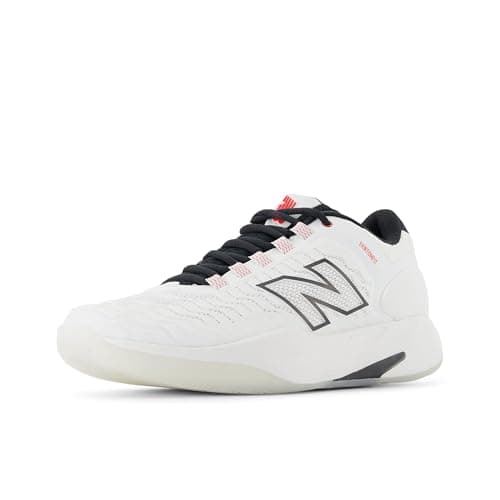 New Balance Fresh Foam X CT-Rally v2Top pick | Heels and knees that give out before your legs do | 8.55 criteria | $127.79 · View on Amazon Price as of November 28, 2026 · was $149.99, 15% off |
| 2 | 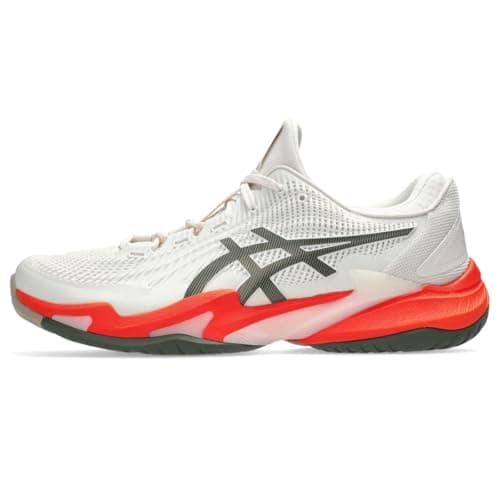 ASICS Court FF 3Best forefoot cushioning | Pain under the ball of the foot rather than the heel | 8.75 criteria | |
| 3 | 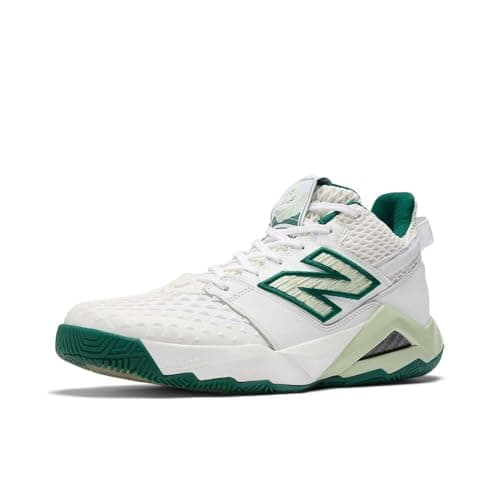 New Balance Coco CG2Most propulsive | Women's sizing, with cushioning and rebound together | 8.45 criteria | $132.76 · View on Amazon Price as of November 28, 2026 · was $159.99, 17% off |
| 4 | 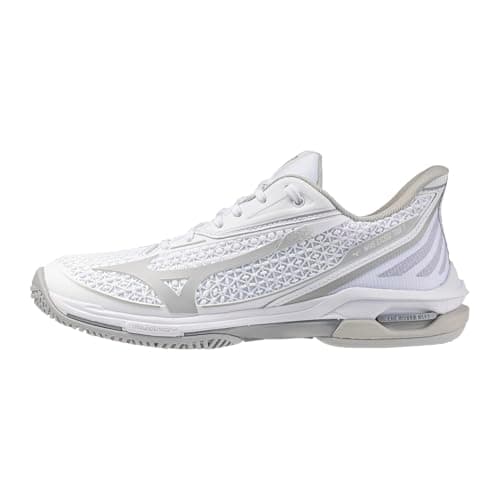 Mizuno Wave Exceed Tour 7 ACBest rebound | Players who want protection and a springy ride | 8.25 criteria | |
| 5 | 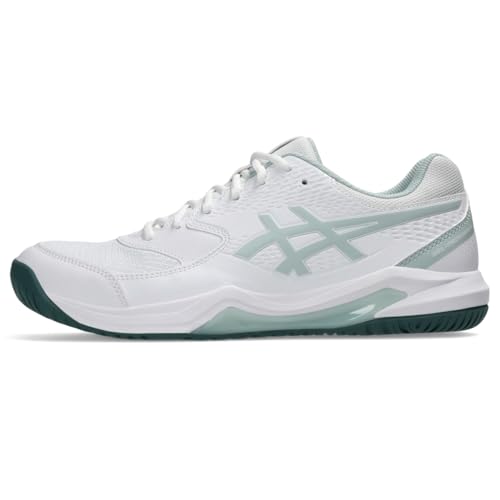 ASICS GEL-Dedicate 8Budget pick | A soft shoe at the lowest price | 7.25 criteria |
The picks in detail
01New Balance Fresh Foam X CT-Rally v2
Top pickBest for: Heels and knees that give out before your legs do
This is the highest heel shock-absorption figure RunRepeat have recorded in the category: 116 SA on a 33.3 mm heel stack, against a category average near 99 SA. They score the shoe 92 and give it their best shock absorption award. If your matches end because your heels or knees have had enough rather than because your legs are tired, this is the single most useful specification in court footwear.
What makes it the top pick rather than just the softest is that it kept the midfoot. Torsional rigidity scored 5/5, the same full mark the stability flagships earn. Most shoes that add this much foam give the chassis away and then feel vague under a hard change of direction; this one did not, which is why it also appears on our [best tennis shoes that need no break-in](/tennis-shoes/best-no-break-in) page.
Two honest costs. The forefoot is 20.2 mm with 78 SA, so almost all of the gain is at the heel: if your pain is under the ball of the foot this solves less than the headline figure suggests, and the Court FF 3 below is the better answer. And a 33.3 mm heel raises you further off the court, which asks more of the heel counter on a hard slide. Our source publishes no outsole hardness or abrasion figure for it, so sole life is the unknown here.
Our score
- Lateral stability
- 8.5
- Cushioning
- 9.5
- Outsole durability
- 7.0
- Fit accommodation
- 7.5
- Lightness
- 7.0
- Overall
- 8.5
Verified specs
- RunRepeat score
- 92 — Best Shock Absorption
- Heel stack
- 33.3 mm
- Forefoot stack
- 20.2 mm
- Heel shock absorption
- 116 SA
- Forefoot shock absorption
- 78 SA
- Torsional rigidity
- 5/5
Specs as published by RunRepeat, checked September 2026.
Buy if
- Heel impact is what ends your matches
- You want cushioning without losing 5/5 torsion
- You are stepping off a thin, firm shoe
Pass if
- Your pain is in the forefoot
- You want court feel
- You want published outsole-wear data
Price as of November 28, 2026 · was $149.99, 15% off
02ASICS Court FF 3
Best forefoot cushioningBest for: Pain under the ball of the foot rather than the heel
Forefoot cushioning is the measurement almost every court shoe fails, because the forefoot is where a tennis shoe is asked to be thin and stable. This one returned 77 SA, which RunRepeat describe as unusually high, on a 21.8 mm forefoot and a 32.2 mm heel for a 10.4 mm drop. Heel shock absorption is a solid 100 SA. At 93 it is their top-scoring tennis shoe outright.
It is also the cushioned shoe that gave up nothing structural. Torsional rigidity scored 5/5 against a 4.5 average and the heel counter 4/5, and toebox durability scored 5/5 against a 3.7 average, so the protection is not bought from support or longevity. For a player with metatarsal or forefoot soreness this is the clearest recommendation on the page.
Three honest costs, all measured. RunRepeat list not for wide feet as a con: 92.2 mm at the widest point, which is exactly average, and 66.2 mm at the big toe, a little under the 69.3 mm average. The heel lining scored only 2/5 for padding durability. And energy return is below average at 42.1 percent heel and 42.5 percent forefoot against 50.2 percent, so it is protective rather than springy.
Our score
- Lateral stability
- 9.5
- Cushioning
- 8.0
- Outsole durability
- 8.5
- Fit accommodation
- 5.0
- Lightness
- 5.0
- Overall
- 8.7
Verified specs
- RunRepeat score
- 93 — Top pick, best tennis shoes
- Weight
- 14.3 oz / 406 g
- Heel / forefoot stack
- 32.2 mm / 21.8 mm
- Drop
- 10.4 mm
- Torsional rigidity
- 5/5 (average 4.5)
- Heel counter stiffness
- 4/5 (average 4.2)
- Shock absorption
- 100 SA heel / 77 SA forefoot
- Energy return
- 42.1% heel / 42.5% forefoot (average 50.2%)
- Outsole hardness
- 85.3 HC
- Toebox width
- 92.2 mm widest / 66.2 mm at the big toe
- Toebox durability
- 5/5 (average 3.7)
- Heel padding durability
- 2/5 (average 3.2)
- Fit note
- RunRepeat: not for wide feet
Specs as published by RunRepeat, checked September 2026.
Buy if
- Forefoot or metatarsal soreness is the problem
- You want cushioning with 5/5 torsion and a 5/5 toebox
- You want the highest-scoring shoe here
Pass if
- You have wide feet or bunions
- You want a lively, high-rebound ride
- You want the most heel cushioning
03New Balance Coco CG2
Most propulsiveBest for: Women's sizing, with cushioning and rebound together
113 SA at the heel and 72 SA at the forefoot on a 28.2 mm and 22.0 mm stack puts this second only to the CT-Rally v2 on heel protection, and it is the only shoe on this page measured on a women's pair, a US 9.5 at 12.6 oz / 356 g. RunRepeat score it 92 and make it their best overall women's court shoe. It is also sold at retail in B and D widths, which is rare.
The figure that sets it apart is forefoot energy return at 60.4 percent, the highest in our set against a 50.2 percent average, with torsional rigidity at 5/5. Cushioned shoes usually feel absorbent and dead; this one returns more than it eats, on a 6.2 mm drop that is notably lower than the 9 to 11 mm most court shoes use.
Two honest costs. Heel counter stiffness scored 3/5 against a 4.2 average, the weakest rearfoot lockdown figure on this page, so it is the least suitable cushioned pick for a player with ankle history. And the outsole lost 1.9 mm in the Dremel test on an 89.4 HC compound, roughly three times the best result in our set, with traction at 0.63 against a 0.78 average. There is a six-month outsole guarantee, which helps.
Our score
- Lateral stability
- 8.0
- Cushioning
- 9.0
- Outsole durability
- 6.5
- Fit accommodation
- 8.0
- Lightness
- 7.5
- Overall
- 8.4
Verified specs
- RunRepeat score
- 92 — Best Overall, women's
- Tested pair
- Women's US 9.5
- Weight
- 12.6 oz / 356 g
- Heel / forefoot stack
- 28.2 mm / 22.0 mm
- Drop
- 6.2 mm
- Torsional rigidity
- 5/5
- Heel counter stiffness
- 3/5
- Forefoot energy return
- 60.4%
- Shock absorption
- 113 SA heel / 72 SA forefoot
- Outsole
- 89.4 HC, 1.9 mm Dremel wear
- Traction
- 0.63
- Widths at retail
- B and D
- Outsole warranty
- 6 months
Specs as published by RunRepeat, checked September 2026.
Buy if
- You buy women's sizing and want width options
- You want cushioning that still feels lively
- You prefer a lower drop
Pass if
- You have rolled an ankle
- You grind outsoles on abrasive courts
- You want maximum grip
Price as of November 28, 2026 · was $159.99, 17% off
04Mizuno Wave Exceed Tour 7 AC
Best reboundBest for: Players who want protection and a springy ride
100 SA at the heel on a 30.4 mm stack is solid rather than remarkable, and the reason this shoe is here is the pairing: 55.7 percent heel and 58.5 percent forefoot energy return, both above the 50.2 percent average, on a 12.1 oz / 343 g frame. RunRepeat score it 90. If you have tried maximal cushioning and found it sluggish, this is the alternative that is protective without feeling absorbent.
Durability is the bonus. Abrasion wear measured 0.7 mm with a 1.04 traction figure and a six-month outsole warranty from the brand, so the cushioning is not sitting on a sole that will be gone in a season. An 11.1 mm drop is the steepest here, which some players with achilles history prefer; our [best tennis shoes for achilles tendonitis](/tennis-shoes/best-for-achilles-tendonitis) page covers why.
Two honest costs, and the first is serious. Torsional rigidity measured 12.9 Nm against an 18.1 Nm average, the lowest structural figure on this page, so the midfoot flexes more than any other pick here. The forefoot is also 19.3 mm with 67 SA, the least protected forefoot in this group. RunRepeat additionally list not for wide feet.
Our score
- Lateral stability
- 6.5
- Cushioning
- 7.5
- Outsole durability
- 8.5
- Fit accommodation
- 5.5
- Lightness
- 8.0
- Overall
- 8.2
Verified specs
- RunRepeat score
- 90
- Tested pair
- Men's — women's AC version sold separately
- Weight
- 12.1 oz / 343 g
- Heel / forefoot stack
- 30.4 mm / 19.3 mm
- Drop
- 11.1 mm
- Energy return
- 55.7% heel / 58.5% forefoot
- Shock absorption
- 100 SA heel / 67 SA forefoot
- Traction
- 1.04
- Torsional rigidity
- 12.9 Nm (average 18.1 Nm)
- Heel counter stiffness
- 4/5
- Outsole wear
- 0.7 mm
- Fit note
- RunRepeat: not for wide feet
- Outsole warranty
- 6 months
Specs as published by RunRepeat, checked September 2026.
Buy if
- You want protection that still feels fast
- You want a published outsole warranty
- You prefer a steeper drop
Pass if
- You have rolled an ankle
- Forefoot pain is the problem
- You have wide feet
05ASICS GEL-Dedicate 8
Budget pickBest for: A soft shoe at the lowest price
The cheapest real court shoe RunRepeat score, and it is soft rather than merely cheap: the midsole measured 51.3 AC against a 48.0 AC average on a 28.6 mm heel and 18.4 mm forefoot stack. At 11.3 oz / 319 g it is lighter than roughly 90 percent of the shoes they have tested, which is itself a comfort factor over three sets.
For a player who plays once a week and simply wants a shoe that does not feel like a plank, this is the honest budget answer, and it is a long way below the price of everything else on this page. Breathability scored 4/5 against a 3/5 average, and the outsole read 86.0 HC with 0.8 mm of Dremel wear, which is ordinary rather than poor.
Two honest costs. Toebox durability scored 1/5 and RunRepeat's Dremel went through the upper in twelve seconds, so this is not a shoe for a toe-dragger at any price, and heel counter stiffness is 3/5 against a 4.2 average. It also overall scores 78, the lowest here. It is a comfortable cheap shoe, not a cushioned shoe in the sense the CT-Rally v2 is.
Our score
- Lateral stability
- 6.0
- Cushioning
- 7.0
- Outsole durability
- 6.0
- Fit accommodation
- 6.5
- Lightness
- 8.5
- Overall
- 7.2
Verified specs
- RunRepeat score
- 78
- Weight
- 11.3 oz / 319 g — lighter than ~90% of tested tennis shoes
- Heel / forefoot stack
- 28.6 mm / 18.4 mm
- Drop
- 10.2 mm
- Midsole softness
- 51.3 AC (average 48.0 AC)
- Torsional rigidity
- 4/5 (average 4.5)
- Heel counter stiffness
- 3/5 (average 4.2)
- Outsole
- 86.0 HC, 0.8 mm Dremel wear
- Toebox width
- 68.6 mm
- Breathability
- 4/5 (average 3)
- Toebox durability
- 1/5 — hole through the upper in 12 seconds
Specs as published by RunRepeat, checked September 2026.
Buy if
- You want soft and cheap in one shoe
- You play once a week or less
- You want a light, ventilated upper
Pass if
- You drag a toe on serve
- You want measured shock-absorption figures
- You have a specific injury to manage
Heel cushioning and forefoot cushioning are different purchases
Shock absorption is reported as an SA figure at the heel and again at the forefoot, with a category average near 99 SA at the heel. The two numbers move independently, because the two ends of a court shoe have different jobs: the heel absorbs landing, and the forefoot has to stay thin and stable enough to push off and change direction. That is why the shoe with the highest heel figure in our set, at 116 SA, measures only 78 SA at the forefoot, and the shoe RunRepeat call unusually high at the forefoot sits at 77 SA with a 100 SA heel.
The practical consequence is that you should decide which end hurts before you shop. Heel and knee pain after matches points at the heel column; soreness under the ball of the foot or in the metatarsals points at the forefoot column. Buying the shoe with the biggest headline cushioning number can solve the wrong problem, which is the single most common mistake in this category.
We do not write prices into the text of our pages, because a typed price is wrong within days. Every buy button on this page carries the current retailer price with its own as-of date, refreshed daily, so if a pick has moved you see that rather than our guess.
Shock absorption and stack, measured side by side
| Shoe | Heel SA | Forefoot SA | Heel / forefoot stack | Structure |
|---|---|---|---|---|
| New Balance CT-Rally v2 | 116 SA | 78 SA | 33.3 mm / 20.2 mm | Torsion 5/5 |
| New Balance Coco CG2 | 113 SA | 72 SA | 28.2 mm / 22.0 mm | Torsion 5/5; heel counter 3/5 |
| ASICS Court FF 3 | 100 SA | 77 SA | 32.2 mm / 21.8 mm | Torsion 5/5; heel counter 4/5 |
| Mizuno Wave Exceed Tour 7 AC | 100 SA | 67 SA | 30.4 mm / 19.3 mm | Torsion 12.9 Nm; heel counter 4/5 |
| ASICS GEL-Dedicate 8 | Not published | Not published | 28.6 mm / 18.4 mm | Torsion 4/5; heel counter 3/5 |
Two readings of this table are worth making. The first is that the top two shoes on heel SA are both New Balance, and they differ most on heel counter stiffness, where the CT-Rally v2 is the safer pick. The second is that the Court FF 3 is the only shoe here that is above average at both ends.
When cushioning is the wrong answer
Three cases where more foam does not help, and one of them is common enough to be worth stating first.
- If the problem is your ankle rather than your joints. Cushioning raises you off the court, and height is leverage against you in a hard roll. Buy on torsional rigidity and heel counter stiffness instead: best tennis shoes for ankle support ranks on exactly those figures.
- If the problem is heel pain on the first steps of the morning. That pattern points at plantar fascia rather than impact, and arch support and drop matter more than stack height. Best tennis shoes for plantar fasciitis covers it properly.
- If the problem is that your shoes are finished. A midsole that has done a few hundred hours absorbs far less than a new one, and the figures on this page are all new-shoe measurements. When to replace tennis shoes is the cheaper first move.
The other side of the trade is court feel, and it is a real loss rather than a marketing one. The firmest shoes we have figures for, the adidas Barricade 14 at 47 SA in the forefoot and the adidas CourtJam Control 3 at the same figure, tell you exactly where your weight is in a way a 33 mm heel cannot. Which you want is a genuine preference, not a quality ladder: best hard court tennis shoes sets the whole field side by side.
How these picks were made
Racket & Rally does not run a test lab. Nothing on this page is written as though we had worn, swung or measured anything ourselves, because we have not. What we do is read the published specifications, the independent lab results and the retailer listings cited at the foot of the page, set them against each other, and say which differences change something you will actually notice.
Every product here was confirmed on sale when its registry entry was built, and every claim traces to one of the sources listed at the bottom. Our full selection criteria set out the method, and the editorial policy covers corrections and how often pages are revisited. Where a brand or a listing does not state a figure, we say that rather than filling the gap.
Common questions
What are the most cushioned tennis shoes?
The New Balance Fresh Foam X CT-Rally v2, at 116 SA of heel shock absorption on a 33.3 mm heel stack, which is the highest reading in RunRepeat's hard-court set against a category average near 99 SA. It also holds 5/5 torsional rigidity, so the cushioning does not come at the cost of midfoot support. The forefoot is more modest at 20.2 mm and 78 SA.
Which tennis shoe has the most forefoot cushioning?
The ASICS Court FF 3, at 77 SA, which RunRepeat describe as unusually high, on a 21.8 mm forefoot stack. It is the only shoe in our set that is above average at both the heel and the forefoot. The ASICS GEL-Resolution X and the adidas Barricade 14 are the two to avoid if forefoot soreness is the problem, at 21.9 mm with no published forefoot SA and 14.4 mm with 47 SA respectively.
Does more cushioning make a tennis shoe less stable?
It can, but it does not have to, and the measurements separate the two cases. Both New Balance picks here hold 5/5 torsional rigidity on the two highest heel shock-absorption figures we have. What does weaken is rearfoot lockdown on the Coco CG2, whose heel counter scored 3/5 against a 4.2 average. Read the heel counter column rather than assuming.
Is a high stack height bad for ankles?
It is a factor rather than a verdict. A taller stack puts your ankle further from the court, which increases the leverage in a roll, so a cushioned shoe needs its structural figures to be good rather than merely adequate. If you have rolled an ankle, buy on torsional rigidity and heel counter stiffness first and treat cushioning as a secondary preference.
Will cushioned tennis shoes help my knees?
They can reduce impact loading, which is what the SA figures measure, and the CT-Rally v2's 116 SA heel is the most protective reading we have. But a shoe is not a treatment, and knee pain that persists is a clinical question rather than a shopping one. What we can say with evidence is which shoe puts the most measured shock absorption under your heel.
Are cushioned tennis shoes heavier?
Usually, and there is a cheap exception. The CT-Rally v2 and the Coco CG2 both sit in the mid range at 356 g for the women's pair we have figures for, while the firm, low adidas GameCourt 2 is 336 g. The real weight outliers in court footwear are the stability flagships at 417 g rather than the cushioned models. Best lightweight tennis shoes ranks on weight directly.
Read next
Sources
- 01RunRepeat - New Balance Fresh Foam X CT-Rally v2 lab report
- 02RunRepeat - ASICS Court FF 3 lab report
- 03RunRepeat - New Balance Coco CG2 lab report
- 04RunRepeat - Mizuno Wave Exceed Tour 7 lab report
- 05RunRepeat - ASICS GEL-Dedicate 8 lab report
- 06RunRepeat - best hard court tennis shoes
Every source above was retrieved while writing this page. Specifications are quoted from the listing or manufacturer page cited, not from memory.