Buying guide
Best tennis shoes that need no break-in
Break-in is not a mystery. It is midsole hardness, upper stiffness and heel padding, and all three are measured. Here is what the figures say.
By Janet H.Updated
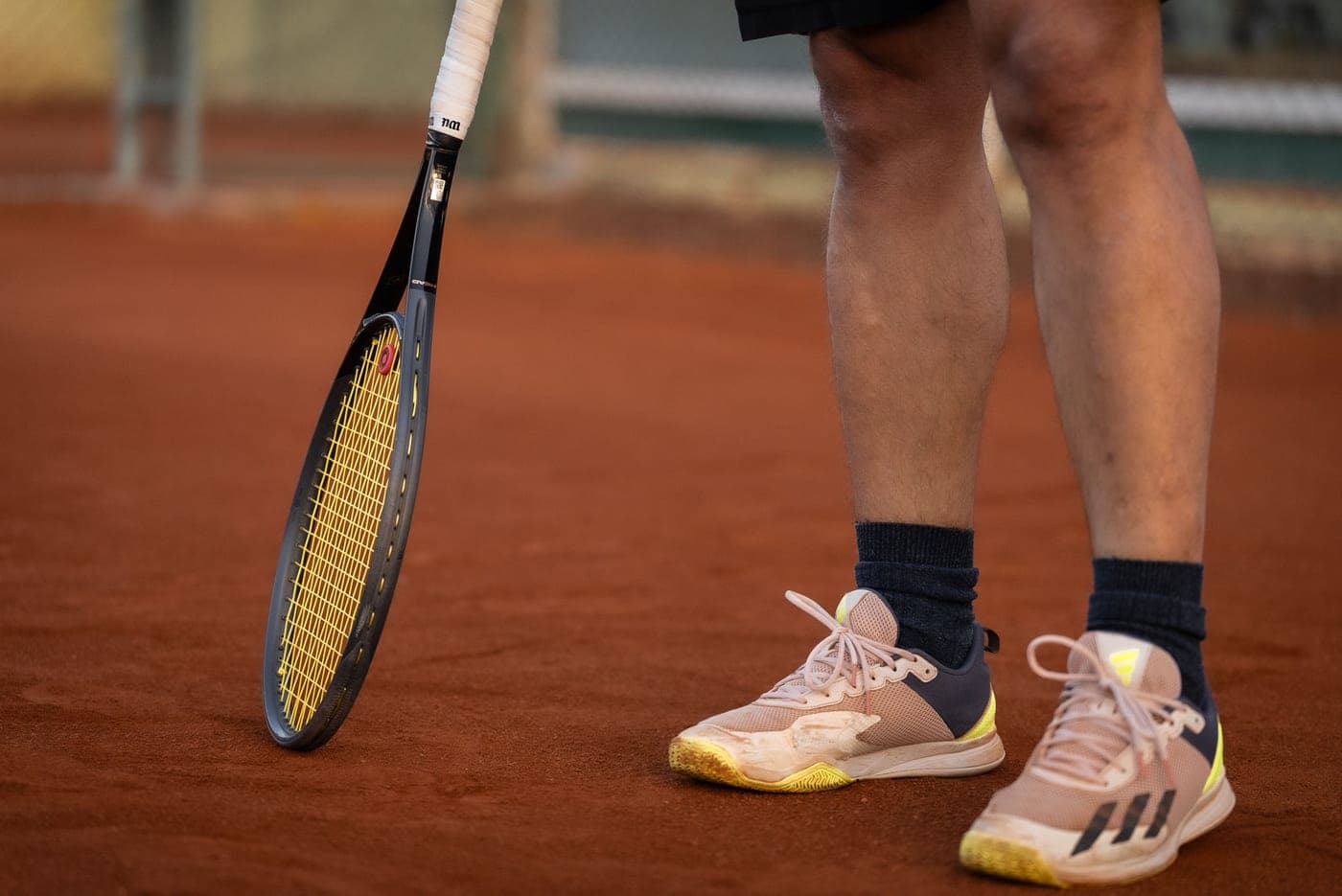
The short answer
The ASICS Solution Swift FF 2 needs the least break-in: RunRepeat measured its midsole at 25.1 HA against a 28.1 HA average, making it softer than typical out of the box, with a 5/5 heel counter so the softness is not bought from support. The ASICS GEL-Dedicate 8 is the budget pick at 51.3 AC midsole softness. The adidas Barricade 14 is the one to avoid if you want day-one comfort.
Disclosure — we earn a commission on qualifying purchases made through links on this page, at no extra cost to you. It never changes which product we rank first. How this site is funded.
Our picks
| # | Product | Best for | Score | Price |
|---|---|---|---|---|
| 1 | 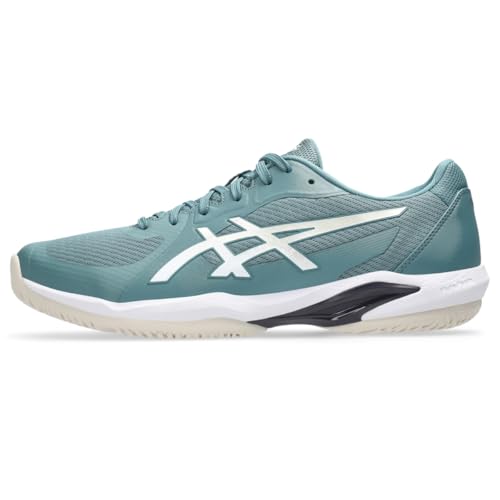 ASICS Solution Swift FF 2Top pick | A shoe you can play a match in the day it arrives | 8.65 criteria | |
| 2 | 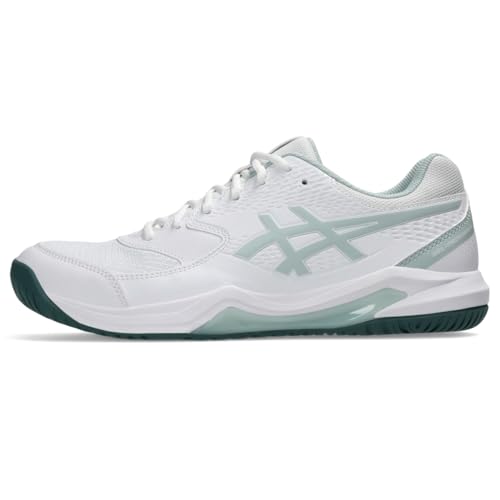 ASICS GEL-Dedicate 8Budget pick | Occasional players who want comfort on day one, cheaply | 7.25 criteria | |
| 3 | 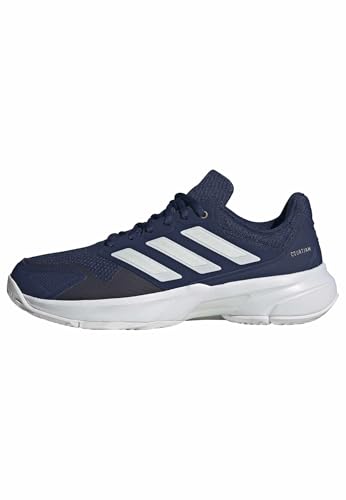 adidas CourtJam Control 3Softest foam with 5/5 torsion | Players who want day-one comfort with a rigid midfoot | 7.55 criteria | $67.95 · View on Amazon Price as of November 28, 2026 · was $90.00, 25% off |
| 4 | 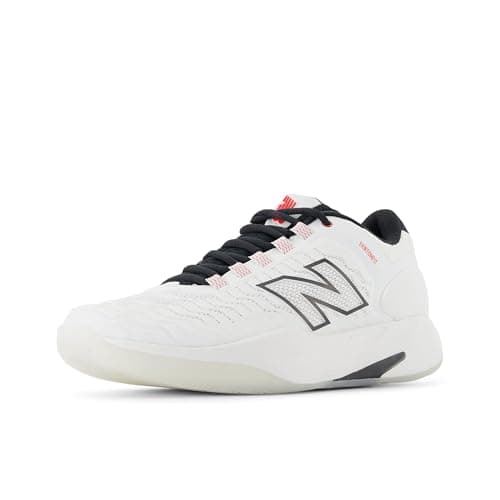 New Balance Fresh Foam X CT-Rally v2Most cushioning on day one | Players whose joints need the shoe to be soft from the first point | 8.55 criteria | $127.79 · View on Amazon Price as of November 28, 2026 · was $149.99, 15% off |
| 5 | 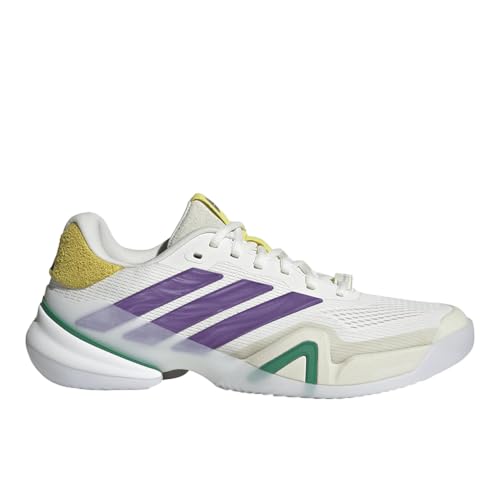 adidas Barricade 14The one to avoid for day-one comfort | Players who will accept a break-in period for court feel | 8.05 criteria | $99.89 · View on Amazon Price as of November 28, 2026 · was $109.94, 9% off |
The picks in detail
01ASICS Solution Swift FF 2
Top pickBest for: A shoe you can play a match in the day it arrives
Break-in is mostly one number: how hard the foam under your foot is when it is new. RunRepeat measured this midsole at 25.1 HA against a 28.1 HA category average, so it arrives softer than the typical court shoe rather than needing to be compressed into softness. At 10.7 oz / 302 g against a 12.9 oz / 365 g average, there is also simply less material to soften.
The reason it leads rather than ties is that the softness did not cost support. Heel counter stiffness scored 5/5 against a 4.2 average, which is the figure that decides whether your heel is held when you plant. Most shoes that feel good immediately feel that way because they are structurally slack; this one does not, and that distinction is the entire point of ranking this category on measurements.
Two honest costs. Torsional rigidity measured 16.2 Nm against an 18.1 Nm average, so the midfoot is more flexible than a stability flagship, and breathability came in at 61 BR against a 73 BR average. Neither affects break-in, but both affect whether this is the right shoe for you: [best lightweight tennis shoes](/tennis-shoes/best-lightweight) sets it against the rest of the light field.
Our score
- Lateral stability
- 7.5
- Cushioning
- 7.5
- Outsole durability
- 7.0
- Fit accommodation
- 6.5
- Lightness
- 9.5
- Overall
- 8.6
Verified specs
- RunRepeat score
- 84 — Best lightweight, budget tennis shoes
- Weight
- 10.7 oz / 302 g (average 12.9 oz / 365 g)
- Heel / forefoot stack
- 30.2 mm / 19.3 mm
- Drop
- 10.9 mm
- Midsole softness
- 25.1 HA (average 28.1 HA)
- Torsional rigidity
- 16.2 Nm (average 18.1 Nm)
- Heel counter stiffness
- 5/5 (average 4.2)
- Toebox width
- 69.9 mm
- Breathability
- 61 BR (average 73 BR)
- Dremel wear
- 0.9 mm dent (padel version tested)
Specs as published by RunRepeat, checked September 2026.
Buy if
- You want to play in them the day they arrive
- You want day-one comfort without losing the heel
- You also want a light shoe
Pass if
- You want maximum midfoot rigidity
- You play in heat and need ventilation
- You want a thick, plush stack
02ASICS GEL-Dedicate 8
Budget pickBest for: Occasional players who want comfort on day one, cheaply
RunRepeat measured the midsole at 51.3 AC against a 48.0 AC average, so it is softer than typical, on a 28.6 mm heel and 18.4 mm forefoot stack. At 11.3 oz / 319 g it is lighter than roughly 90 percent of the tennis shoes they have tested. Soft foam, little of it, and a flexible upper is the recipe for a shoe that is comfortable immediately, and this is the cheapest version of it they score.
Breathability also scored 4/5 against a 3/5 average, which matters on the specific day you are least tolerant of a new shoe. The outsole read 86.0 HC with 0.8 mm of Dremel wear, which is ordinary: you are not buying a shoe that falls apart, you are buying one that was never stiff.
The honest cost is durability at the toe. Toebox durability scored 1/5 and RunRepeat's Dremel went through the upper in twelve seconds, so a shoe this soft is also a shoe this thin. Heel counter stiffness is 3/5 against a 4.2 average. If you play more than once a week, the Solution Swift FF 2 above is the better long-run buy.
Our score
- Lateral stability
- 6.0
- Cushioning
- 7.0
- Outsole durability
- 6.0
- Fit accommodation
- 6.5
- Lightness
- 8.5
- Overall
- 7.2
Verified specs
- RunRepeat score
- 78
- Weight
- 11.3 oz / 319 g — lighter than ~90% of tested tennis shoes
- Heel / forefoot stack
- 28.6 mm / 18.4 mm
- Drop
- 10.2 mm
- Midsole softness
- 51.3 AC (average 48.0 AC)
- Torsional rigidity
- 4/5 (average 4.5)
- Heel counter stiffness
- 3/5 (average 4.2)
- Outsole
- 86.0 HC, 0.8 mm Dremel wear
- Toebox width
- 68.6 mm
- Breathability
- 4/5 (average 3)
- Toebox durability
- 1/5 — hole through the upper in 12 seconds
Specs as published by RunRepeat, checked September 2026.
Buy if
- You want immediate comfort at the lowest cost
- You play once a week or less
- You want a ventilated upper
Pass if
- You drag your toe on serve
- You want rearfoot structure
- You play often
03adidas CourtJam Control 3
Softest foam with 5/5 torsionBest for: Players who want day-one comfort with a rigid midfoot
This is the odd one out and worth the space. The midsole measured 50.3 AC against a 48.0 AC average, so the foam is soft and ready, while torsional rigidity scored 5/5 against a 4.5 average and the heel counter 4/5. That pairing is unusual: a soft midsole on a rigid chassis means the part that touches you gives and the part that protects you does not.
RunRepeat award it best court feel in the budget set and read it as a budget Barricade, on a 24.3 mm heel and 14.5 mm forefoot stack. The platform is wide at 116.6 mm in the forefoot and 95.1 mm at the heel, which also helps on day one: a broad base under a soft foam is stable without needing to pack down.
Three honest costs, and they are real. Forefoot shock absorption measured 47 SA against a category average near 99 SA, which is less than half the protection under the ball of the foot, so soft foam here does not mean a cushioned ride. Traction measured 0.64 against a 0.78 average, the weakest grip figure on this page. And the toebox is 66.2 mm against a 69.3 mm average, so it is narrow as well as low.
Our score
- Lateral stability
- 8.5
- Cushioning
- 5.0
- Outsole durability
- 7.0
- Fit accommodation
- 6.0
- Lightness
- 6.0
- Overall
- 7.5
Verified specs
- RunRepeat score
- 77 — Best court feel, budget tennis shoes
- Weight
- 13.2 oz / 374 g (average 12.9 oz / 365 g)
- Heel / forefoot stack
- 24.3 mm / 14.5 mm
- Drop
- 9.8 mm
- Midsole softness
- 50.3 AC (average 48.0 AC)
- Torsional rigidity
- 5/5 (average 4.5)
- Heel counter stiffness
- 4/5
- Shock absorption
- 86 SA heel / 47 SA forefoot
- Traction
- 0.64 friction coefficient (average 0.78)
- Toebox width
- 66.2 mm (average 69.3 mm)
- Dremel wear
- 1.0 mm dent
- Platform width
- 116.6 mm forefoot / 95.1 mm heel
Specs as published by RunRepeat, checked September 2026.
Buy if
- You want soft foam and a rigid midfoot together
- You like to feel the court
- You want a wide, stable platform
Pass if
- You have forefoot sensitivity
- You need maximum grip
- You have wide feet
Price as of November 28, 2026 · was $90.00, 25% off
04New Balance Fresh Foam X CT-Rally v2
Most cushioning on day oneBest for: Players whose joints need the shoe to be soft from the first point
A shoe does not need breaking in if it was never firm, and this is the least firm court shoe we have figures for. RunRepeat recorded 116 SA of heel shock absorption, the highest reading in their hard-court set, on a 33.3 mm heel stack, and score it 92 with their best shock absorption award. If break-in for you means the week your heels hurt, this skips it.
Torsional rigidity still scored 5/5, which is why it belongs on a page about immediate comfort rather than only on a cushioning page. Most shoes with this much foam give the midfoot away and then feel unstable until the foam compresses; this one kept the structural figure, so what you feel on day one is what you keep.
Two honest costs. The forefoot is 20.2 mm with 78 SA, so almost all of the gain is at the heel, and a 33.3 mm heel raises you further off the court, which asks more of the heel counter on a hard slide. Our source does not publish an outsole hardness or abrasion figure for it, so longevity is the unknown on this card. [Most cushioned tennis shoes](/tennis-shoes/best-cushioned) ranks the full cushioning field.
Our score
- Lateral stability
- 8.5
- Cushioning
- 9.5
- Outsole durability
- 7.0
- Fit accommodation
- 7.5
- Lightness
- 7.0
- Overall
- 8.5
Verified specs
- RunRepeat score
- 92 — Best Shock Absorption
- Heel stack
- 33.3 mm
- Forefoot stack
- 20.2 mm
- Heel shock absorption
- 116 SA
- Forefoot shock absorption
- 78 SA
- Torsional rigidity
- 5/5
Specs as published by RunRepeat, checked September 2026.
Buy if
- Heel impact is what ends your matches
- You want soft and 5/5 torsional together
- You are coming off a thin, firm shoe
Pass if
- Your pain is in the forefoot
- You want court feel
- You want published outsole-wear data
Price as of November 28, 2026 · was $149.99, 15% off
05adidas Barricade 14
The one to avoid for day-one comfortBest for: Players who will accept a break-in period for court feel
We include this because naming the wrong answer is more useful than listing five right ones. RunRepeat award it best court feel on a 26.3 mm heel and a 14.4 mm forefoot, the lowest stack here, and forefoot shock absorption measured 47 SA against a category average near 99 SA. That is a firm, grounded, stability-first shoe, and firm shoes are the ones that need time.
For the right player it is still a good buy, and that player exists: if you slide into shots and push off hard, a low platform tells you where your weight is in a way a 33 mm stack cannot. The Barricade line is also deep enough that the current generation routinely sits below the premium band, so it is the cheapest route into a stability-first chassis.
The honest cost is exactly the thing this page is about. With 47 SA under the forefoot and the lowest stack in the group, this shoe will feel hard for the first few sessions and it will still feel hard afterwards, because the firmness is the design rather than a phase. If you have any forefoot or heel sensitivity it is the wrong shoe at any price. [Best hard court tennis shoes](/tennis-shoes/best-for-hard-court) sets it against the rest of the premium field.
Our score
- Lateral stability
- 9.0
- Cushioning
- 4.5
- Outsole durability
- 8.0
- Fit accommodation
- 7.0
- Lightness
- 6.0
- Overall
- 8.0
Verified specs
- RunRepeat award
- Best Court Feel
- Heel stack
- 26.3 mm
- Forefoot stack
- 14.4 mm
- Heel shock absorption
- 89 SA
- Forefoot shock absorption
- 47 SA
- Forefoot traction
- 0.84 friction coefficient (average 0.78 across 47 shoes), Lighttraxion outsole
- Platform width
- 116.8 mm forefoot / 93.6 mm heel (average 112.5 / 89.7)
- Torsional rigidity
- 13.4 Nm (average 18.1 Nm)
- Dremel wear
- 2.6 mm, the worst result in RunRepeat's category
Specs as published by RunRepeat, checked September 2026.
Buy if
- You want to feel the court rather than float above it
- You slide and push off hard
- You are happy to break a shoe in
Pass if
- You want day-one comfort
- You have forefoot or heel sensitivity
- You want a cushioned ride
Price as of November 28, 2026 · was $109.94, 9% off
What break-in actually is
Break-in is three separate things, and they are measured separately. The first is midsole hardness: new foam is firmer than settled foam, and a shoe that starts soft has less distance to travel. RunRepeat report this as a durometer reading, either in HA or AC depending on the test rig, with a published category average to compare against. The second is upper stiffness, which is why a one-piece knit feels ready and a layered synthetic with overlays does not. The third is heel padding, which is where most of the complaints about new court shoes actually come from.
The thing that break-in is not is a quality signal. A stiff shoe is not a better shoe being withheld from you, and a soft shoe is not a shoe that will fall apart. The measurements on this page include a 5/5 heel counter on the softest midsole and a 1/5 toebox on the second softest, which is the whole argument for reading the figures one at a time instead of trusting a feeling in a shop.
We do not write prices into the text of our pages, because a typed price is wrong within days. Every buy button on this page carries the current retailer price with its own as-of date, refreshed daily, so if a pick has moved you see that rather than our guess.
The figures that predict a ready shoe
| Shoe | Midsole softness | Structure | Forefoot stack | Ready on day one? |
|---|---|---|---|---|
| ASICS Solution Swift FF 2 | 25.1 HA (average 28.1 HA) | Heel counter 5/5 | 19.3 mm | Yes, and it keeps the heel |
| ASICS GEL-Dedicate 8 | 51.3 AC (average 48.0 AC) | Torsion 4/5; heel counter 3/5 | 18.4 mm | Yes, at the cost of the upper |
| adidas CourtJam Control 3 | 50.3 AC (average 48.0 AC) | Torsion 5/5; heel counter 4/5 | 14.5 mm | Soft foam, firm ride |
| New Balance CT-Rally v2 | Not published; 116 SA heel | Torsion 5/5 | 20.2 mm | Yes, by cushioning |
| adidas Barricade 14 | Not published; 47 SA forefoot | Stability-first chassis | 14.4 mm | No, and it stays firm |
The two columns that disagree most are midsole softness and forefoot stack. The CourtJam Control 3 has soft foam and the second-lowest forefoot stack on the page, which is why a soft durometer reading on its own does not mean a comfortable shoe. Read both.
How to get through the first week anyway
If the shoe you want is one of the firm ones, the first week is manageable. Four things that help, none of which require buying anything.
- 01Wear them for a hitting session before a match. Thirty minutes of rallying loads the midsole without the hard lateral stops that cause blisters.
- 02Use the socks you actually play in when you size them. A court sock is thicker than a dress sock and half a size of apparent fit lives in that difference.
- 03Lace the last eyelet properly. Most new-shoe heel rub is heel slip, not padding, and the top eyelet is what stops it.
- 04Alternate with your old pair for the first week. Two pairs rotated outlast two pairs worn to death one after the other, which is true regardless of break-in.
What does not work is forcing it. If a shoe still hurts after three sessions, the fit is wrong rather than new, and the fix is a different width rather than more time. Best tennis shoes for wide feet and best tennis shoes for narrow feet list the models whose measured widths are published, and when to replace tennis shoes is worth reading before you buy anything at all.
How these picks were made
Racket & Rally does not run a test lab. Nothing on this page is written as though we had worn, swung or measured anything ourselves, because we have not. What we do is read the published specifications, the independent lab results and the retailer listings cited at the foot of the page, set them against each other, and say which differences change something you will actually notice.
Every product here was confirmed on sale when its registry entry was built, and every claim traces to one of the sources listed at the bottom. Our full selection criteria set out the method, and the editorial policy covers corrections and how often pages are revisited. Where a brand or a listing does not state a figure, we say that rather than filling the gap.
Common questions
Which tennis shoes need the least break-in time?
On measured figures, the ASICS Solution Swift FF 2. RunRepeat recorded its midsole at 25.1 HA against a 28.1 HA average, so it is softer than typical when new, and at 10.7 oz / 302 g there is less material to settle. It is also the only shoe here that pairs a softer-than-average midsole with a 5/5 heel counter, so the day-one comfort is not bought from support.
How long should a tennis shoe take to break in?
Two or three hitting sessions for a firm shoe, and none at all for a soft one. If a shoe still rubs or pinches after three sessions, that is a fit problem rather than a break-in period, and more time will not fix it. The usual culprit is width rather than length.
Do stiff tennis shoes get more comfortable?
The foam softens and the upper creases, so yes, up to a point. What does not change is stack height and shock absorption: the adidas Barricade 14 measured 47 SA under the forefoot on a 14.4 mm stack, and no amount of wearing adds protection that was never built in. A firm shoe that is firm by design stays firm.
Is a shoe that needs no break-in less supportive?
Not automatically, and this page is the counter-example. The softest midsole here scored 5/5 for heel counter stiffness, and the New Balance CT-Rally v2 holds 5/5 torsional rigidity on the highest heel cushioning figure RunRepeat recorded. The shoes where soft does mean slack are the ones whose structural figures are low or simply not published, which is why we print both columns.
Should I buy a half size up to avoid break-in discomfort?
No. Extra length lets your foot slide forward on a hard stop, which causes exactly the toe and nail problems people blame on new shoes. Size to your normal length in the socks you play in, and solve pinching with width instead. Several models are sold in more than one width, including the New Balance Coco CG2 in B and D.
Can I use running shoes while my tennis shoes break in?
Not on court. Running shoes are built for forward load and have no lateral structure, and the failure mode is an ankle rather than a worn sole. Are court shoes different than running shoes sets out the construction differences and tennis shoes vs running shoes covers the injury risk.
Read next
Sources
- 01RunRepeat - ASICS Solution Swift FF 2 lab report
- 02RunRepeat - ASICS GEL-Dedicate 8 lab report
- 03RunRepeat - adidas CourtJam Control 3 lab report
- 04RunRepeat - New Balance Fresh Foam X CT-Rally v2 lab report
- 05RunRepeat - best tennis shoes
- 06RunRepeat - best cheap tennis shoes
Every source above was retrieved while writing this page. Specifications are quoted from the listing or manufacturer page cited, not from memory.