Buying guide
Best tennis shoes under $100 in 2026
At this price you are not choosing between good and better. You are choosing which single weakness you can live with - and the lab results say exactly which weakness each shoe has.
By Janet H.Updated
The short answer
The K-Swiss Ultrashot Light is the best tennis shoe under $100: RunRepeat name it the best overall budget court shoe, it weighs 11.0 oz / 312 g, and its outsole dent came in 25 percent shallower than the category average. The adidas GameCourt 2 is the budget pick and the most durable thing here - a 0.4 mm Dremel dent against a 0.8 mm average - and the ASICS Solution Swift FF 2 is the lightest at 302 g.
Disclosure — we earn a commission on qualifying purchases made through links on this page, at no extra cost to you. It never changes which product we rank first. How this site is funded.
Our picks
| # | Product | Best for | Score | Price |
|---|---|---|---|---|
| 1 | 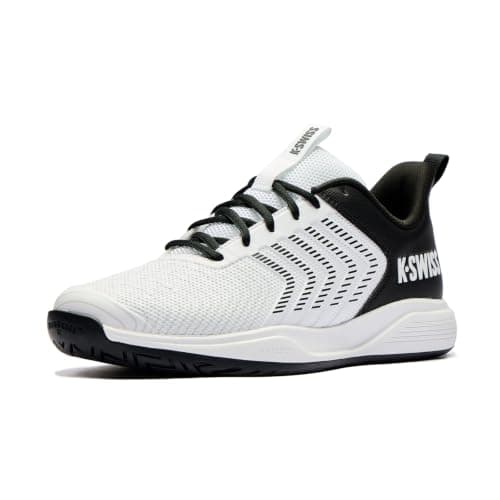 K-Swiss Ultrashot LightTop pick | Most players spending under $100 | 8.65 criteria | |
| 2 | 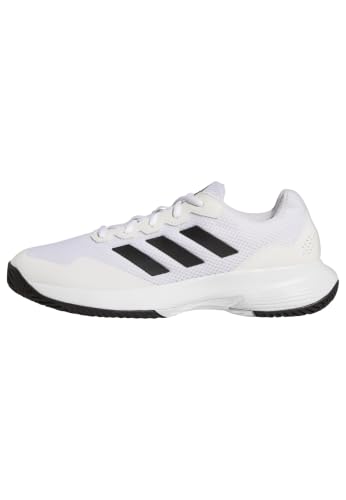 adidas GameCourt 2Best value | Spending as little as possible without buying a sneaker | 8.35 criteria | $49.97 · View on Amazon Price as of November 13, 2026 · was $70.00, 29% off |
| 3 | 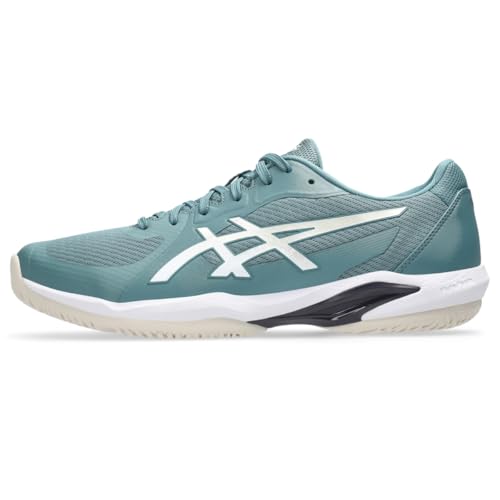 ASICS Solution Swift FF 2Lightest option | Players who move first and think later | 8.25 criteria | |
| 4 | 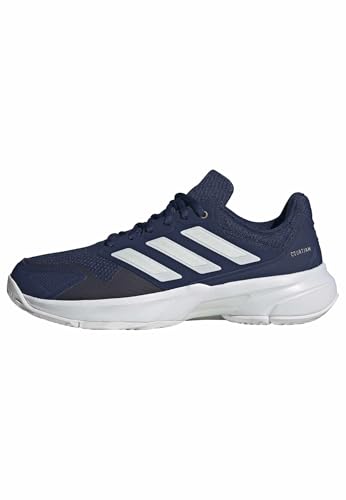 adidas CourtJam Control 3Best court feel | Feeling the court under you | 7.75 criteria | $69.24 · View on Amazon Price as of November 13, 2026 · was $90.00, 23% off |
| 5 | 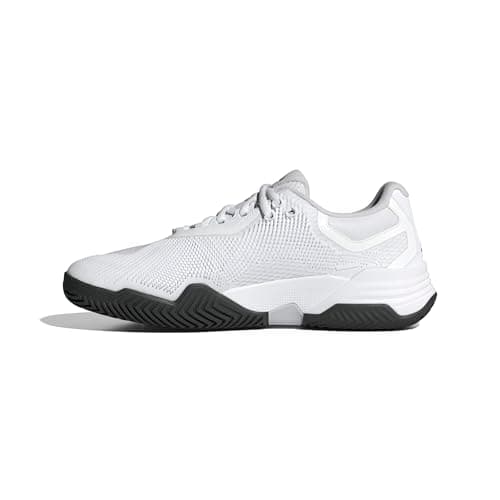 adidas SoleMatch Control 2Most accommodating | An all-court shoe at the top of the bracket | 7.95 criteria | $84.95 · View on Amazon Price as of November 13, 2026 · was $130.00, 35% off |
| 6 | 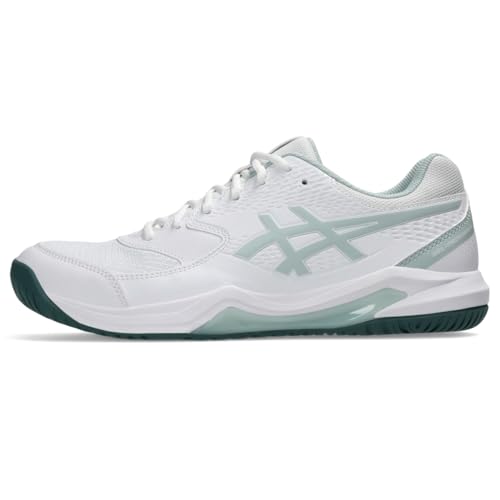 ASICS GEL-Dedicate 8Cheapest real court shoe | A first pair you will not be sad to replace | 7.35 criteria | $69.95 · View on Amazon Price as of November 13, 2026 · was $85.00, 18% off |
The picks in detail
01K-Swiss Ultrashot Light
Top pickBest for: Most players spending under $100
RunRepeat's budget guide covers court shoes with an MSRP of $110 or less and puts this one first in the whole set, and the measurements behind that are the ones that matter in a cheap shoe rather than the ones that sell it. It weighs 11.0 oz / 312 g, which is light for any tennis shoe and unusual at this price; its wet friction score is 1.01, so grip does not collapse when the court is damp; and its forefoot flexibility measured 38 percent above average, which is why it feels broken in rather than boardy on the first outing.
The number we would actually pay for is the abrasion result: RunRepeat's Dremel test left a dent 25 percent shallower than the category average. Outsole wear is how budget court shoes die - a sub-$100 shoe that lasts a season is cheaper per month than a $150 shoe you replace at the same time, and this is the one in the bracket with evidence behind the claim rather than a compound name.
The honest costs. It is light because it is a minimal shoe, so there is less structure around the foot than a stability chassis like the ASICS GEL-Challenger 15 gives you, and nothing here is doing much for a heavy heel striker. If you play three or more times a week, or you already know you roll an ankle, this is the point at which spending above the bracket genuinely buys something - our [tennis shoes for ankle support](/tennis-shoes/best-for-ankle-support) page covers that end.
Our score
- Lateral stability
- 8.0
- Cushioning
- 7.5
- Outsole durability
- 8.5
- Fit accommodation
- 8.0
- Lightness
- 9.0
- Overall
- 8.6
Verified specs
- RunRepeat award
- Best Budget
- Weight
- 11.0 oz / 312 g
Specs as published by RunRepeat, checked September 2026.
Buy if
- You want the best-reviewed budget court shoe and no argument
- You want a light shoe that is still a tennis shoe
- You play once or twice a week
Pass if
- You need a stability chassis around the ankle
- You are a heavy heel striker who wants a thick heel stack
- You play on clay and want a clay-specific tread
02adidas GameCourt 2
Best valueBest for: Spending as little as possible without buying a sneaker
This is the cheapest shoe on the page and it is also the most durable one, which does not usually happen. RunRepeat's Dremel test took 0.4 mm out of the outsole against a 0.8 mm category average - half the wear of a typical tennis shoe, and better than most premium models - and the toe-drag guard scored 4/5. The guide names it best durability in the budget category on exactly those grounds.
Two more results make it the safe recommendation for somebody new to the sport. Lateral stability scored 5 out of 5 against a 4.5 average, which RunRepeat read as a safe option for beginner players, and the platform measures 115.7 mm at the forefoot and 93.9 mm at the heel - a wide base is the cheapest form of stability there is. The toebox is 72.9 mm at the big toe, which RunRepeat called one of the widest they have ever recorded, so this is also the obvious first try if your foot is broad; our [tennis shoes for wide feet](/tennis-shoes/best-for-wide-feet) page has the rest of that set.
The honest cost is cushioning, and it is not a small one. The forefoot stack is 15.5 mm and heel shock absorption measured 94 SA against a 99 SA average - RunRepeat's own verdict is that it suits recreational players who play once or twice a week, and that anybody wanting stronger impact protection should look at a GEL-Challenger or a Hypercourt Express instead. At 11.9 oz / 336 g it is also not light. Buy it for durability, width and a wide base; do not buy it expecting a soft ride.
Our score
- Lateral stability
- 9.0
- Cushioning
- 5.5
- Outsole durability
- 9.5
- Fit accommodation
- 9.5
- Lightness
- 6.5
- Overall
- 8.3
Verified specs
- RunRepeat award
- Best durability, budget tennis shoes
- Weight
- 11.9 oz / 336 g
- Dremel wear
- 0.4 mm dent
- Torsional rigidity
- 5/5
- Lateral stability
- 5/5 (average 4.5)
- Platform width
- 115.7 mm forefoot / 93.9 mm heel
- Forefoot stack
- 15.5 mm
- Heel shock absorption
- 94 SA (average 99 SA)
- Toebox at big toe
- 72.9 mm
- Breathability
- 4/5 (average 3.1)
- Toebox durability
- 4/5
Specs as published by RunRepeat, checked September 2026.
Buy if
- You want the longest-lasting outsole in the bracket
- You have wide feet and have struggled to find court shoes
- You play once or twice a week
Pass if
- You want real forefoot cushioning
- You play long matches on concrete
- You want a light shoe
Price as of November 13, 2026 · was $70.00, 29% off
03ASICS Solution Swift FF 2
Lightest optionBest for: Players who move first and think later
At 10.7 oz / 302 g this is the lightest shoe on the page and 17 percent lighter than the average tennis shoe RunRepeat has measured, which they award as the best lightweight option in the budget bracket. What makes it interesting rather than merely light is the pairing: a 25.1 HA midsole, softer than the 28.1 HA average, and a heel counter that scored a full 5/5. Light, soft and still locked down at the rear is a combination that normally costs twice this.
It scores 84 overall, with a sub-score of 88 for speed, and RunRepeat describe it as one of the best entry-level models for players who prioritize speed on court. The stack is 30.2 mm at the heel and 19.3 mm at the forefoot - a normal amount of shoe - so none of the lightness came from removing the midsole, which is the usual shortcut.
Two honest costs, both measured. Traction came in at a 0.53 friction coefficient against a 0.78 average, although RunRepeat flag that this figure was taken on the padel version of the shoe and the hard-court outsole may differ - it is the one number on this card we would not lean on. Breathability measured 61 BR against a 73 BR average, so it runs warm, and the page lists very low energy return as its other weakness: this is a quick shoe, not a springy one.
Our score
- Lateral stability
- 7.5
- Cushioning
- 8.0
- Outsole durability
- 8.0
- Fit accommodation
- 8.0
- Lightness
- 9.5
- Overall
- 8.2
Verified specs
- RunRepeat score
- 84 — Best lightweight, budget tennis shoes
- Weight
- 10.7 oz / 302 g (average 12.9 oz / 365 g)
- Heel / forefoot stack
- 30.2 mm / 19.3 mm
- Drop
- 10.9 mm
- Midsole softness
- 25.1 HA (average 28.1 HA)
- Torsional rigidity
- 16.2 Nm (average 18.1 Nm)
- Heel counter stiffness
- 5/5 (average 4.2)
- Toebox width
- 69.9 mm
- Breathability
- 61 BR (average 73 BR)
- Dremel wear
- 0.9 mm dent (padel version tested)
Specs as published by RunRepeat, checked September 2026.
Buy if
- You want the lightest court shoe in the bracket
- You want a soft midsole without a heavy chassis
- Your game is built on first-step speed
Pass if
- You want maximum grip and nothing else
- You play in heat and need a ventilated upper
- You want a bouncy, high-return ride
04adidas CourtJam Control 3
Best court feelBest for: Feeling the court under you
RunRepeat's read on this one is the most useful sentence in their budget guide: its stability and durability make it feel like a budget version of the Barricade. The numbers support it. Torsional rigidity scored 5/5, heel counter stiffness 4/5, and the platform measures 116.6 mm at the forefoot and 95.1 mm at the heel - the widest base on this page. The stack is deliberately low at 24.3 mm heel and 14.5 mm forefoot, which is where the court feel comes from.
If you have ever stepped off a thickly cushioned shoe and felt like you were playing on a mattress, this is the corrective, and it is the cheapest route to that feeling - the full-price version of the same idea is the adidas Barricade, on our [all-court shoes roundup](/tennis-shoes/best-all-court). A firm 50.3 AC midsole and a grounded platform give you a clear sense of where your weight is, which matters more than cushioning for players who slide and push off aggressively.
Three honest costs, and they are real. Forefoot shock absorption measured 47 SA, which is less than half the category average, and cushioning scores 51 out of 100 on RunRepeat's own breakdown - if your knees or heels complain, this is the wrong shoe at any price. The toebox measures 66.2 mm against a 69.3 mm average and the page calls the fit extremely narrow, so wide feet should buy the adidas GameCourt 2 above instead. And at 13.2 oz / 374 g it is the heaviest shoe here, with 1.0 mm of Dremel wear - slightly above average.
Our score
- Lateral stability
- 9.0
- Cushioning
- 4.5
- Outsole durability
- 8.0
- Fit accommodation
- 5.5
- Lightness
- 6.0
- Overall
- 7.7
Verified specs
- RunRepeat score
- 77 — Best court feel, budget tennis shoes
- Weight
- 13.2 oz / 374 g (average 12.9 oz / 365 g)
- Heel / forefoot stack
- 24.3 mm / 14.5 mm
- Drop
- 9.8 mm
- Midsole softness
- 50.3 AC (average 48.0 AC)
- Torsional rigidity
- 5/5 (average 4.5)
- Heel counter stiffness
- 4/5
- Shock absorption
- 86 SA heel / 47 SA forefoot
- Traction
- 0.64 friction coefficient (average 0.78)
- Toebox width
- 66.2 mm (average 69.3 mm)
- Dremel wear
- 1.0 mm dent
- Platform width
- 116.6 mm forefoot / 95.1 mm heel
Specs as published by RunRepeat, checked September 2026.
Buy if
- You want to feel the court rather than float above it
- You have narrow feet
- You want Barricade-style stability at a budget price
Pass if
- You have any joint or heel sensitivity
- You have wide or even average-width feet
- You want a light shoe
Price as of November 13, 2026 · was $90.00, 23% off
05adidas SoleMatch Control 2
Most accommodatingBest for: An all-court shoe at the top of the bracket
This is the shoe at the very top of the bracket and it is here as the accommodating all-court option: RunRepeat score it 84 and list it in their wide-feet catalog, which is the shortlist that matters if standard court lasts pinch. It is the only shoe on this page from adidas's performance all-court line rather than their budget line, so the upper and the lockdown are a step up on the two cheaper adidas models above it.
An all-court outsole is also the right default if you do not know what you will be playing on. One pair that works on a hard court, a club carpet and a dry clay court is worth more to most club players than a surface-specific tread, and [what are court shoes](/guides/what-are-court-shoes) covers why that tread matters at all.
The honest cost is information. RunRepeat have scored it but not published the full lab breakdown they give the other shoes here - no weight, no stack, no shock absorption, no abrasion figure - so this card rests on a score and a catalog listing rather than on measurements, and we are not going to pretend otherwise. It also sits closest to the $100 line of anything on the page, so it is the pick most likely to fall out of the bracket when prices move.
Our score
- Lateral stability
- 8.0
- Cushioning
- 7.5
- Outsole durability
- 7.5
- Fit accommodation
- 9.0
- Lightness
- 7.0
- Overall
- 7.9
Verified specs
- RunRepeat score
- 84
- Width fit
- Listed in RunRepeat's wide-feet catalog
Specs as published by RunRepeat, checked September 2026.
Buy if
- You want one shoe for several surfaces
- Standard court shoes pinch across the forefoot
- You are comfortable spending to the top of the bracket
Pass if
- You want published lab measurements before buying
- You want the cheapest workable shoe
- You play on one surface only
Price as of November 13, 2026 · was $130.00, 35% off
06ASICS GEL-Dedicate 8
Cheapest real court shoeBest for: A first pair you will not be sad to replace
This is the entry point to ASICS court footwear and it scores 78 - which, for the cheapest tennis shoe RunRepeat have run through the lab, is a respectable number. It weighs 11.3 oz / 319 g, making it lighter than roughly 90 percent of the tennis shoes they have measured, breathability scored 4/5 against a 3 average, and the outsole came in at 86.0 HC with 0.8 mm of Dremel wear - exactly average, which at this price is a win.
The reason to consider it over the adidas pair above is the ride. The stack is 28.6 mm heel and 18.4 mm forefoot with a 10.2 mm drop, so there is a normal amount of foam under you, and the listed pros are a breathable upper, strong out-of-the-box grip and sufficient impact protection. For somebody taking a term of lessons and genuinely unsure whether tennis will stick, that is the right shape of purchase.
The honest cost is the upper, and it is dramatic: toebox durability scored 1 out of 5 against a 3.7 average, and RunRepeat's abrasion tool went through the material to a see-through hole in twelve seconds. Heel padding durability scored 2/5. If you drag your toe on serve - and many developing players do - this shoe will show it fast. Torsional rigidity is 4/5 and the heel counter 3/5, both below average, so it is also the least supportive thing on the page.
Our score
- Lateral stability
- 7.0
- Cushioning
- 7.0
- Outsole durability
- 6.0
- Fit accommodation
- 7.5
- Lightness
- 8.5
- Overall
- 7.3
Verified specs
- RunRepeat score
- 78
- Weight
- 11.3 oz / 319 g — lighter than ~90% of tested tennis shoes
- Heel / forefoot stack
- 28.6 mm / 18.4 mm
- Drop
- 10.2 mm
- Midsole softness
- 51.3 AC (average 48.0 AC)
- Torsional rigidity
- 4/5 (average 4.5)
- Heel counter stiffness
- 3/5 (average 4.2)
- Outsole
- 86.0 HC, 0.8 mm Dremel wear
- Toebox width
- 68.6 mm
- Breathability
- 4/5 (average 3)
- Toebox durability
- 1/5 — hole through the upper in 12 seconds
Specs as published by RunRepeat, checked September 2026.
Buy if
- You want the cheapest shoe that is still a court shoe
- You want normal cushioning rather than a firm ride
- You are not sure whether you will keep playing
Pass if
- You drag your toe on serve
- You want a stiff heel counter
- You want the shoe to last more than a season
Price as of November 13, 2026 · was $85.00, 18% off
What $100 actually buys in a court shoe
A tennis shoe has four jobs: hold your foot when you load an edge sideways, grip a surface without gripping so hard that your knee takes the twist, absorb the landing, and survive the abrasion of a hard court. Premium shoes do all four. Under $100, every shoe on the market does two or three of them well and one of them badly - and the only question worth asking is which one it skimps on.
That is why this page is organized around the weakness rather than the headline. RunRepeat put court shoes through a consistent set of lab tests - a durometer for midsole firmness, a Dremel abrasion rig for the outsole and upper, a traction machine, a torsion rig, a shock-absorption plate - and publish the numbers against category averages. Read those columns and the compromise in each budget shoe is visible before you buy it rather than six weeks after.
The one thing we would not compromise is lateral support. Running shoes fail in tennis because a soft, high, unstable sidewall rolls under a sideways load, and a court shoe that saves money by thinning out the chassis is doing the same thing more quietly. Our tennis shoes vs running shoes comparison covers that difference in detail, and it is the reason every shoe on this page scored at least 4 out of 5 on torsional rigidity.
The five criteria we ranked on
Every court shoe on the site is scored on the same five axes, so a score means the same thing on every page. These are our editorial judgments drawn from the published measurements cited below - they are not user ratings and they are not our own tests.
- Lateral stability - torsional rigidity, heel counter stiffness and platform width. Weighted heaviest, because it is the axis where a cheap shoe can actually hurt you rather than merely disappoint you.
- Cushioning - shock absorption in SA at heel and forefoot, plus stack height. This is the axis the budget bracket sacrifices most often, and the GameCourt 2 and CourtJam Control 3 both sacrifice it hard.
- Outsole durability - the depth of the dent RunRepeat's Dremel leaves, against a 0.8 mm average. At this price durability is value: a shoe that lasts twice as long is half the price per month.
- Fit accommodation - toebox width in millimeters at the big toe, and whether RunRepeat list the shoe in their wide-feet catalog. The spread here is enormous: 72.9 mm on the GameCourt 2 against 66.2 mm on the CourtJam Control 3.
- Lightness - measured weight against the 12.9 oz / 365 g category average. Deliberately weighted last: in court footwear a light shoe usually got light by removing structure, and structure is what you are here for.
One axis we deliberately do not score is energy return, even though RunRepeat measure it. At this price the spread is small and the figure is dominated by midsole foam that budget shoes do not have much of; weighting it would reward marketing over the things that decide whether a pair survives the season.
The numbers side by side
Every figure below is a RunRepeat lab measurement from the pages cited at the foot of this page. Where a cell says not published, the measurement does not exist in their report and we have not estimated it.
| Shoe | Weight | Outsole wear (Dremel) | Torsional rigidity | Toebox at big toe | The weakness |
|---|---|---|---|---|---|
| K-Swiss Ultrashot Light | 11.0 oz / 312 g | 25% shallower than average | Not published | Not published | Minimal structure |
| adidas GameCourt 2 | 11.9 oz / 336 g | 0.4 mm | 5/5 | 72.9 mm | 15.5 mm forefoot stack |
| ASICS Solution Swift FF 2 | 10.7 oz / 302 g | 0.9 mm (padel version) | 16.2 Nm | 69.9 mm | 61 BR breathability |
| adidas CourtJam Control 3 | 13.2 oz / 374 g | 1.0 mm | 5/5 | 66.2 mm | 47 SA forefoot |
| adidas SoleMatch Control 2 | Not published | Not published | Not published | Not published | No published lab data |
| ASICS GEL-Dedicate 8 | 11.3 oz / 319 g | 0.8 mm | 4/5 | 68.6 mm | 1/5 toebox durability |
The two columns to read together are outsole wear and weight. The GameCourt 2 is heavy and lasts; the Solution Swift FF 2 is light and wears at about the average rate. There is no shoe in this bracket that is both light and exceptionally durable, which is the single clearest thing the lab numbers tell you about spending under $100.
Surface changes the answer
Everything above assumes a hard court, because that is what most club and public tennis is played on in the US. Two cases change the pick.
- 01Clay. A hard-court tread fills with clay and then slides unpredictably; what you want is a full herringbone pattern. The ASICS Solution Speed FF 3 Clay sits right at the top of this bracket and is the clay-specific option we would buy at the price - best clay court tennis shoes has the full set, and can you wear clay court shoes on hard court answers the question in the other direction.
- 02Indoor carpet or a multi-surface club. An all-court outsole is the right compromise, which is the case for the adidas SoleMatch Control 2 above it. Best all-court tennis shoes covers the category properly.
- 03Pickleball on an indoor gym floor. Court shoes transfer well, but the tread and the toe guard priorities shift - tennis shoes vs pickleball shoes sets out what changes, and best pickleball shoes has the dedicated picks.
One shoe worth knowing about that we have not given a card: the NikeCourt Lite 4, which RunRepeat score 84 and list in their wide-feet catalog, and which they measured at 58.4 percent heel and 60.6 percent forefoot energy return with a 5/5 torsional score. Its MSRP puts it inside this bracket, but the Amazon listing we would send you to is sitting above the $100 line today, so it is not on the page as an under-$100 pick. If you see it at list price, it belongs in this conversation.
How to narrow it to one pair
Work through these in order and you will land on a single shoe.
- 01If you have wide feet, buy the adidas GameCourt 2. A 72.9 mm toebox is not a preference, it is the difference between playing and not playing, and no other shoe here is close.
- 02If you have any joint, heel or arch sensitivity, do not buy either the GameCourt 2 or the CourtJam Control 3 - both measured well below average on forefoot shock absorption. Buy the ASICS GEL-Dedicate 8 or the Solution Swift FF 2, and read best tennis shoes for plantar fasciitis before you spend.
- 03If you play twice a week or more and want the pair to survive, buy the GameCourt 2 for the outsole or the K-Swiss Ultrashot Light for the balance of grip and wear.
- 04If your game is speed and footwork, buy the ASICS Solution Swift FF 2 - it is 17 percent lighter than average and still scored 5/5 on the heel counter.
- 05If you drag your toe on serve, skip the GEL-Dedicate 8 specifically. Its 1/5 toebox durability score is the one result on this page that will visibly change your shoe within weeks.
- 06If none of the above applies, buy the K-Swiss Ultrashot Light. It is RunRepeat's best overall budget pick and the one shoe here with no disqualifying weakness.
Whatever you buy, when to replace tennis shoes matters more in this bracket than above it: budget outsoles go smooth before the upper looks worn, and a smooth outsole on a hard court is how ankles get turned. If you are also still choosing a frame, best tennis rackets under $100 is the racket side of the same budget, and best lightweight tennis rackets covers the frames that pair with a light shoe.
How these picks were made
Racket & Rally does not run a test lab. Nothing on this page is written as though we had worn, swung or measured anything ourselves, because we have not. What we do is read the published specifications, the independent lab results and the retailer listings cited at the foot of the page, set them against each other, and say which differences change something you will actually notice.
Every product here was confirmed on sale when its registry entry was built, and every claim traces to one of the sources listed at the bottom. Our full selection criteria set out the method, and the editorial policy covers corrections and how often pages are revisited. Where a brand or a listing does not state a figure, we say that rather than filling the gap.
Common questions
What is the best tennis shoe under $100?
The K-Swiss Ultrashot Light. RunRepeat's budget guide names it the best overall shoe in the bracket, it weighs 11.0 oz / 312 g, its wet friction score is 1.01 and its outsole abrasion dent came in 25 percent shallower than the category average. It has no disqualifying weakness, which is rare under $100.
Are cheap tennis shoes worth buying?
Yes, with one condition: it has to be a real court shoe rather than a lifestyle sneaker with tennis in the title. Every shoe on this page scored at least 4 out of 5 for torsional rigidity, which is the measurement that tells you the sole will not twist under a sideways load. Below about $60 that stops being true.
Which budget tennis shoe lasts the longest?
The adidas GameCourt 2. RunRepeat's Dremel abrasion test left a 0.4 mm dent in its outsole against a 0.8 mm category average - half the wear of a typical tennis shoe - and its toe-drag guard scored 4/5. It is also the cheapest shoe on this page, which is an unusual combination.
Can I use running shoes for tennis instead?
No. A running shoe is built to move your foot forward and has a soft, tall, deliberately unstable sidewall; tennis loads the shoe sideways, and that sidewall rolls. It also has no toe guard and a tread that wears through on abrasive hard courts. See tennis shoes vs running shoes for the full breakdown.
What is the lightest tennis shoe under $100?
The ASICS Solution Swift FF 2 at 10.7 oz / 302 g, which RunRepeat measured as 17 percent lighter than the average tennis shoe. Unusually for a light budget shoe it also scored 5/5 on heel counter stiffness, so the weight did not come out of the rearfoot support.
Do any under-$100 tennis shoes fit wide feet?
The adidas GameCourt 2 is the standout: RunRepeat measured its toebox at 72.9 mm at the big toe and called it one of the widest they have ever recorded. The adidas SoleMatch Control 2 is also in their wide-feet catalog. Avoid the CourtJam Control 3, measured at 66.2 mm and described as extremely narrow. Our tennis shoes for wide feet page has the full list.
How long should a budget tennis shoe last?
Nobody publishes a figure, because it depends on how often you play, the court surface and how you move. What the lab data does tell you is relative wear: a 0.4 mm Dremel dent against a 1.0 mm dent is a real difference in outsole life. The practical answer is to watch the tread rather than the calendar - when to replace tennis shoes has the two-minute check.
Should I spend more than $100 on tennis shoes?
If you play three or more times a week, or you have had an ankle or knee problem, yes - that is where stability chassis, thicker shock absorption and outsole warranties start. If you play once or twice a week on a hard court, the shoes on this page do the job and the money is better spent on strings or lessons.
Read next
Sources
- 01RunRepeat - best cheap tennis shoes guide (awards, MSRP ceiling, per-shoe figures)
- 02RunRepeat - ASICS GEL-Dedicate 8 lab report
- 03RunRepeat - adidas Gamecourt 2.0 lab report
- 04RunRepeat - ASICS Solution Swift FF 2 lab report
- 05RunRepeat - adidas CourtJam Control 3 lab report
- 06RunRepeat - wide tennis shoes catalog
- 07RunRepeat - best tennis shoes (category averages, K-Swiss Ultrashot Light)
Every source above was retrieved while writing this page. Specifications are quoted from the listing or manufacturer page cited, not from memory.