Buying guide
Best tennis balls for beginners in 2026
Everyone starting out is sold the wrong thing. You do not need the ball the professionals use - you need a cheap one, because you will lose them, and quite possibly a softer one, because a full-pressure ball comes off the court faster than a new swing can handle.
By Janet H.Updated
The short answer
The Penn Championship is the best tennis ball for most beginners: The Tennis Tribe name it their Best Value pick and say plainly that it is good for any skill level, and a beginner goes through balls far too fast to justify a premium can. If you are still learning the swing itself, buy a green-stage ball instead - standard size, 75 percent of a yellow ball's compression, so it sits down where you can reach it.
Disclosure — we earn a commission on qualifying purchases made through links on this page, at no extra cost to you. It never changes which product we rank first. How this site is funded.
Our picks
| # | Product | Best for | Score | Price |
|---|---|---|---|---|
| 1 | 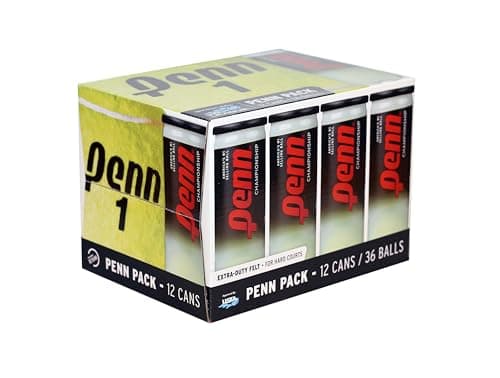 Penn ChampionshipTop pick | Most beginners, most of the time | 8.74 criteria | |
| 2 | 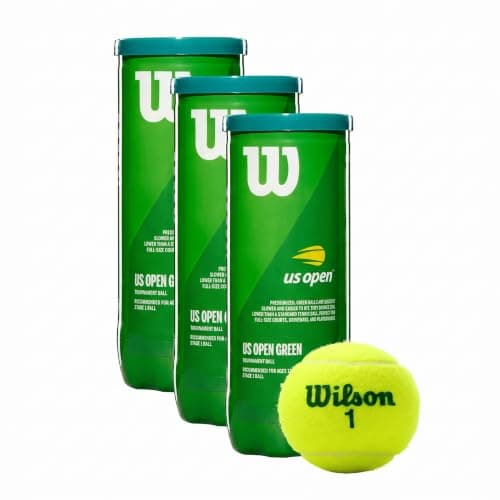 Wilson US Open Green TournamentBest for learning | Adults learning the swing, and juniors around 11 to 12 | 8.64 criteria | |
| 3 | 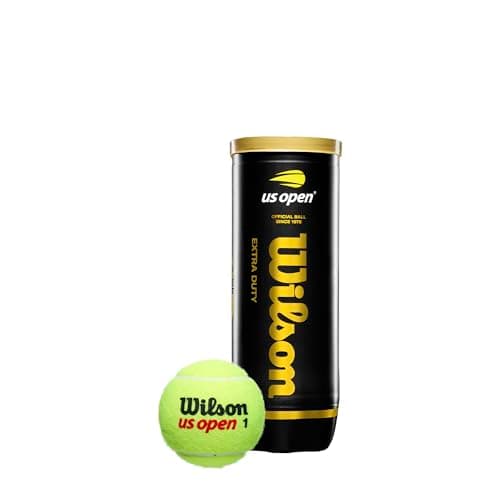 Wilson US OpenBest bounce life | The one can to buy if you only buy one | 8.54 criteria | |
| 4 | 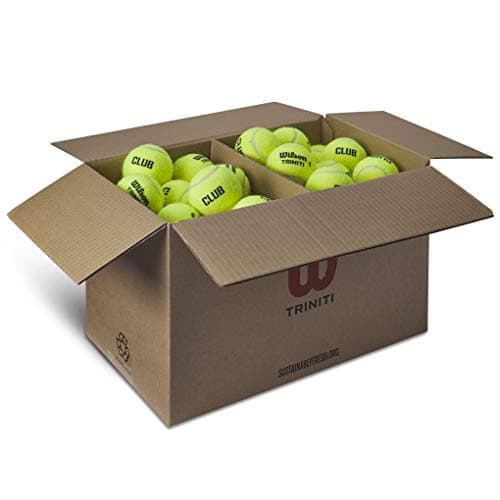 Wilson TrinitiLongest life, least waste | Players who hate throwing cans away | 8.24 criteria | |
| 5 | 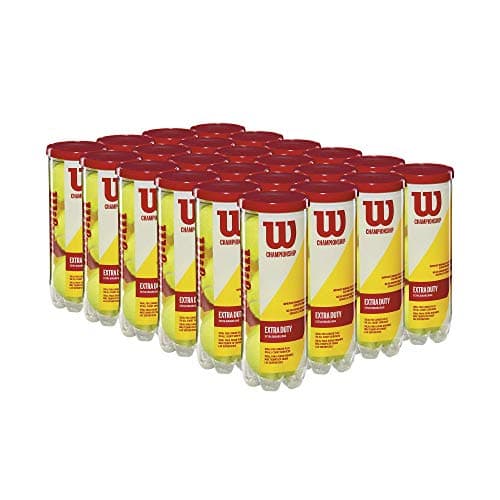 Wilson ChampionshipCheapest per ball | Basket feeding, wall practice and ball machines | 7.54 criteria |
The picks in detail
01Penn Championship
Top pickBest for: Most beginners, most of the time
This is The Tennis Tribe's Best Value ball and they attach an unusually broad endorsement to it: good for any skill level. That matters here because the usual advice to a beginner - buy cheap - normally comes with an implied penalty, and in this case it does not. You are not getting a worse ball to learn with, you are getting the same ball with a shorter life.
Short life is the right trade when you are starting out, and the arithmetic is not close. A beginner hits balls into the fence, over the fence, off the frame and into the net far more often than they hit a clean rally ball, and every one of those is a ball that gets scuffed, lost or stepped on long before its internal pressure matters. Paying a premium for a can that holds bounce for weeks is paying for a property you will not live to use.
The honest cost is stated in the source: The Tennis Tribe note it goes flat faster than the Wilson US Open. If you have reached the point where you play a real set once a week with the same three balls, you have outgrown this one and the US Open below is the upgrade. Until then, buy these by the box - and if you want the full duty-rating argument, [extra duty vs regular duty](/guides/extra-duty-vs-regular-duty-tennis-balls) is the page for it.
Our score
- Performance
- 8.0
- Comfort
- 8.0
- Durability
- 7.0
- Value
- 9.5
- Overall
- 8.7
Verified specs
- Duty
- Regular and extra duty
- Type
- Pressurized
- Award
- Best Value — The Tennis Tribe
- Trade-off
- Goes flat faster than the US Open ball
Specs as published by The Tennis Tribe, checked September 2026.
Buy if
- You are in your first year of playing
- You lose or scuff balls faster than they go flat
- You want the lowest cost per hitting session
Pass if
- You play competitive sets with the same can
- You want the longest possible bounce life
- You are still learning the swing itself - buy green stage instead
02Wilson US Open Green Tournament
Best for learningBest for: Adults learning the swing, and juniors around 11 to 12
This is the pick almost nobody tells an adult beginner about, and it is the one that would fix the most first lessons. A green-stage ball is the last rung of the published 10-and-under progression: standard size, played on a full 78-foot-by-27-foot singles court, with 75 percent of a yellow ball's compression. Less compression means less bounce, and less bounce means the ball waits for you.
The reason that helps is mechanical rather than psychological. A full-pressure yellow ball leaves the court high and fast, so a player who has not yet built a swing path has to rush - and rushing is what produces the late, wristy contact that both sprays the ball and loads the elbow. Take 25 percent of the compression out and the ball arrives lower and slower, the swing has time to happen properly, and the stroke you groove is the stroke you want to keep.
Three honest costs. The published age bracket for the green stage is eleven to twelve, so an adult buying these is using a junior product off-label - it works, but nobody at your club will be impressed. You will have to graduate off them, and the transition to a yellow ball feels fast for a week. And the stage figures in the spec table are the published green-stage specification rather than numbers Wilson prints for this particular ball, which is why we have labeled them that way. Our [how to choose a tennis racket](/guides/how-to-choose-a-tennis-racket) page is worth reading alongside this: a soft ball and a forgiving frame solve the same problem from two directions.
Our score
- Performance
- 7.0
- Comfort
- 9.5
- Durability
- 7.5
- Value
- 8.5
- Overall
- 8.6
Verified specs
- Stage
- Green (ITF/USTA 10-and-under green stage)
- Size
- Standard size, per the green-stage specification
- Compression
- 75% compression of a yellow ball, per the green-stage specification
- Court
- Full court - 78 ft by 27 ft singles
- Published age bracket
- Eleven to twelve, per the green-stage specification
- Type
- Pressurized, low compression
Specs as published by Wikipedia, checked September 2026.
Buy if
- You are an adult in your first few months of lessons
- You are buying for a junior around eleven or twelve
- A full-pressure ball feels like it arrives before your swing does
Pass if
- You already rally comfortably with yellow balls
- You play in matches or leagues
- You want one ball that covers learning and playing
03Wilson US Open
Best bounce lifeBest for: The one can to buy if you only buy one
This is The Tennis Tribe's Best Overall ball, specifically for long-lasting consistent bounce and performance on hard courts, and they single out its durability as the best part of it. If you want one can in your bag that will still be worth opening in a month, this is the can.
There is also a non-obvious argument for a beginner buying the good ball occasionally. Learning what a properly pressurized ball does - how high it sits, how fast it leaves the strings, how it behaves off a clean contact - is genuinely useful calibration, and you cannot get that from a dead ball. Keep a can of these for the sessions that matter and a box of Penn Championships for everything else.
The honest cost is price per ball and nothing else. It is a premium can, and the property you are paying for - bounce life measured in weeks - is the property a beginner is least likely to use, because the ball will be lost or scuffed first. That is why it sits third on this page rather than first, despite being the best ball on it. [How long do tennis balls last](/guides/how-long-do-tennis-balls-last) covers what you are actually buying.
Our score
- Performance
- 9.5
- Comfort
- 8.5
- Durability
- 9.0
- Value
- 7.5
- Overall
- 8.5
Verified specs
- Duty
- Regular and extra duty
- Type
- Pressurized
- Award
- Best Overall — The Tennis Tribe
- Reported life
- Holds bounce longer than rival balls
Specs as published by The Tennis Tribe, checked September 2026.
Buy if
- You want the best ball rather than the best value
- You play on hard courts and want consistency
- You are starting to play real sets
Pass if
- You are feeding a basket or hitting against a wall
- You lose several balls a session
- Cost per session is your priority
04Wilson Triniti
Longest life, least wasteBest for: Players who hate throwing cans away
The Tennis Tribe put this in their eco-friendly category and report that it maintains bounce longer than most balls. It is an all-surface ball rather than a duty-rated one, which removes a decision a beginner should not have to make in the first place - there is no regular-versus-extra-duty call to get wrong here.
The waste argument is real and it is sharper for a beginner than for anybody else. If you are opening a can every week or two while you learn, you are generating a genuinely silly amount of packaging and dead rubber for a hobby that is otherwise almost waste-free. A ball with a longer usable life and recyclable packaging is the only lever available.
Two honest costs. It sits at the premium end on price, so the per-ball economics are the opposite of the Penn Championship at the top of this page - and for a player still spraying balls over the fence, that is the wrong direction. It also plays differently from a standard pressurized ball, which some players notice and dislike; if you have been hitting with regular balls and you switch, expect it to feel a little different rather than a little better.
Our score
- Performance
- 8.5
- Comfort
- 8.0
- Durability
- 9.0
- Value
- 7.5
- Overall
- 8.2
Verified specs
- Duty
- All court
- Type
- Pressurized
- Category
- Eco-friendly — The Tennis Tribe
- Reported life
- Maintains bounce longer than most balls
Specs as published by The Tennis Tribe, checked September 2026.
Buy if
- The packaging waste genuinely bothers you
- You want long bounce life without choosing a duty rating
- You play on more than one surface
Pass if
- You want the cheapest cost per session
- You want the standard ball feel you are used to
- You are filling a practice basket
05Wilson Championship
Cheapest per ballBest for: Basket feeding, wall practice and ball machines
This is the cheapest ball The Tennis Tribe review - a single dollar sign in their price column - and it is on this page for one specific job. If you are hitting serves alone, feeding a basket, or working against a wall, nothing about the ball's pressure retention matters, because the balls are going to get beaten flat in a fortnight either way.
Volume is the whole point of a practice ball. Two hundred serves in a session is a reasonable amount of work for somebody learning the motion, and that is a physically impossible number of balls to hit without a basket or a hopper full of cheap ones. Buying premium balls for that is burning money on a property you are actively destroying.
The honest cost is printed right there in the source: The Tennis Tribe say it will not last more than several days. Read that literally. This is not a ball for matches, not a ball to keep in your bag, and not a ball to judge your own progress with - a flat ball makes a good swing feel bad and will have you adjusting your technique to compensate for the equipment. Keep these strictly in the practice bag, and read [how long do tennis balls last](/guides/how-long-do-tennis-balls-last) if you want to know when to bin them.
Our score
- Performance
- 7.0
- Comfort
- 7.5
- Durability
- 5.5
- Value
- 9.0
- Overall
- 7.5
Verified specs
- Duty
- Regular and extra duty
- Type
- Pressurized
- Price band
- The Tennis Tribe's lowest, one dollar sign
- Reported life
- The Tennis Tribe: will not last more than several days
Specs as published by The Tennis Tribe, checked September 2026.
Buy if
- You practice serves or wall rallies alone
- You own or rent a ball machine
- You want the absolute lowest cost per ball
Pass if
- You play matches or sets
- You want a ball that survives more than a few days
- You only buy one type of ball
A beginner's ball problem is quantity, not quality
Every ball guide on the internet ranks balls on bounce life, and for a club player that is the right axis. For somebody in their first year it is close to irrelevant, because the thing that ends a beginner's tennis ball is almost never the loss of internal pressure.
It is the fence. It is the shot that clips the frame and goes two courts over. It is the ball that was never found behind the backstop, the one that got stepped on, the one that rolled into a puddle, and the one that spent a fortnight in a hot car. A ball that is engineered to hold its pressure for a month is selling you a month you will not get, and you are paying a premium for it in a season when you need more balls than anybody else on the court.
So the ranking on this page is deliberately weighted differently from our main tennis balls roundup. Value is the heaviest axis, the best ball on the page sits third, and the cheapest ball on the page is recommended for a specific job rather than dismissed. The Tennis Tribe put the same conclusion more bluntly than we would: beginners should purchase a cheaper ball.
The compression question nobody raises with adults
There is a published, governing-body-backed progression of softer tennis balls, and it is explained to the parents of eight-year-olds and almost never to a thirty-eight-year-old taking up the sport. It is called the 10-and-under or red-orange-green progression, and the whole idea is to reduce the ball's compression so a developing player can actually make contact in balance.
| Stage | Size | Compression | Singles court | Published age bracket | Racket length |
|---|---|---|---|---|---|
| Red stage 1 | Foam ball | Not applicable | 36 ft by 18 ft | Four to six | 23 in or less |
| Red stage 2 | 15% larger than a standard yellow ball | 25% compression of a yellow ball | 36 ft by 18 ft | Six to eight | 23 in or less |
| Orange | Standard size | 50% compression of a yellow ball | 60 ft by 21 ft | Seven to ten | 23-25 in |
| Green | Standard size | 75% compression of a yellow ball | 78 ft by 27 ft | Eleven to twelve | 25-27 in |
| Yellow (standard) | Standard size | Full compression - the reference the column above is measured against | 78 ft by 27 ft | Not part of the 10-and-under progression | Not part of the 10-and-under progression |
Read that compression column carefully, because it is easy to invert. A green ball at 75 percent compression of a yellow ball is the closest of the three to a full ball; an orange at 50 percent is noticeably softer; a red stage 2 at 25 percent is very soft indeed and also physically larger. The green stage is also the only one played on a full-size court with a full-length racket, which is exactly why it is the stage that transfers to an adult.
The practical upshot for an adult beginner: if your problem is that the ball is on you before your racket is ready, a green ball solves it and nothing else on this page does. If your problem is that you cannot find the middle of the strings, that is a racket and a lesson problem rather than a ball problem - start with how to choose a tennis racket and what size tennis racket do I need.
The four criteria we ranked on
Every ball here is scored on the same four axes this site uses for gear, so a score means the same thing on every page. These are our editorial judgments drawn from the published awards, price bands and durability notes in the sources cited below - they are not user ratings and we do not present them as our own test results.
- Value - cost per hitting session rather than sticker price, and the heaviest axis on this page. A beginner's cost per session is driven by how many balls leave the court, not by how long a ball holds pressure, which is why the cheapest ball here is not the worst.
- Durability - bounce life as the sources report it, from The Tennis Tribe's 'will not last more than several days' on the Wilson Championship to 'keeps pressure for weeks' elsewhere in their set. Real, and deliberately weighted below value for the reader this page serves.
- Performance - read here as how well the ball does the job you bought it for, not as absolute quality. That is why a green-stage ball scores moderately: it is excellent at being a learning ball and is not trying to be a match ball.
- Comfort - how the ball feels off the strings and what it asks of your arm. A lower-compression ball comes off the court slower and lets a developing swing arrive on time, which is the one place on this page where a softer ball is unambiguously the better product.
Two properties we did not score. Pressureless and trainer balls are a real category - The Tennis Tribe note the goal with them is longevity, that they do not go flat like pressurized balls, that they are often used in ball machines, and that a beginner or child may want to start with pressureless or trainer balls - but we are not naming a specific model, because we could not verify a current listing against a published specification we trust. That is a gap in this page and we would rather state it than fill it with a guess. High-altitude balls are the other: real, relevant above about 3,500 feet, and covered on our main balls roundup rather than here.
How many balls a beginner actually needs
This is the question behind the question, and getting it right saves more money than any individual ball choice on this page.
- 01For a lesson or a hitting session with a partner, three balls is the working minimum and six is comfortable. Three means you stop to collect every few rallies; six means you keep the session moving, which is the thing you are actually paying a coach for.
- 02For solo serve practice, you want somewhere between thirty and a hundred. Below thirty you spend more of the session walking than serving. This is the only job on the page where the cheapest ball is the correct ball, and it is the reason the Wilson Championship is here.
- 03For wall practice, a dozen is plenty, because you will lose very few - but expect them to wear faster, since a wall is more abrasive than a court and returns every ball you hit.
- 04For a ball machine, follow the machine's hopper capacity and buy pressureless or the cheapest pressurized ball you can find in bulk. Nothing you feed a machine will hold its pressure for long.
One habit worth building from the start: keep your practice balls and your playing balls in separate bags, and never let a dead ball back into the good bag. A flat ball teaches your hands the wrong feedback about your own contact, and a beginner is the player least able to tell the difference between a bad swing and a bad ball.
When to stop buying beginner balls
Two signals, and they arrive at different times.
Move off green-stage balls when you can rally cross-court for ten balls without rushing. The point of a lower-compression ball is to buy time for a swing that is still forming; once the swing exists, a soft ball starts holding you back, because it does not reward the racket head speed you have built. Expect a week of feeling early on everything when you switch, and do not read that as a loss of form.
Move off value balls when you start playing sets that you care about the result of. At that point the thing you want from a ball is consistency across the whole match - the same bounce in the third set as the first - and that is precisely what the premium balls are selling. Until then, you are buying an insurance policy on a ball you will have lost by Thursday.
What should not change at either point is the practice bag. Even a strong club player feeding a basket of serves should be feeding the cheapest balls they can buy; nothing about improving at tennis makes premium balls the right thing to beat flat against a fence. If you want the full upgrade path for everything else in the bag, does a good tennis racket make a difference is the honest version of that conversation.
How to narrow it to one
Work in this order and you will land on a single purchase.
- 01If the ball is consistently on you before your racket is ready, buy the Wilson US Open Green Tournament and stop here. No amount of extra pressure retention will fix a timing problem.
- 02If you are rallying but still losing balls regularly, buy the Penn Championship in the largest pack you can find. This is the right answer for most people reading this page.
- 03If you are practicing serves alone or feeding a basket, buy the Wilson Championship and keep them out of your match bag.
- 04If you are starting to play sets you care about, buy the Wilson US Open and keep a cheaper box for practice.
- 05If the packaging waste bothers you more than the cost per ball, buy the Wilson Triniti and accept that it feels slightly different from what you are used to.
Two things worth settling alongside the balls, because both do more for a beginner than any ball choice. Best tennis rackets for beginners covers the frame, and best tennis shoes for beginners covers the one piece of equipment on this list that can actually hurt you if you get it wrong.
How these picks were made
Racket & Rally does not run a test lab. Nothing on this page is written as though we had hit, bounced or measured anything ourselves, because we have not. What we do is read the published specifications, the independent reviews and the retailer listings cited at the foot of the page, set them against each other, and say which differences change something you will actually notice on court.
Every product here was confirmed on sale when its registry entry was built, and every claim traces to one of the sources listed at the bottom. Our full selection criteria set out the method, and the editorial policy covers corrections and how often pages are revisited. Where a brand or a reviewer does not publish a figure, we say that rather than filling the gap.
Common questions
What tennis balls should a beginner buy?
A cheap pressurized ball for general play - The Tennis Tribe name the Penn Championship their Best Value pick and say it is good for any skill level - and a green-stage low-compression ball if you are still building the swing itself. A beginner loses and scuffs balls far faster than they go flat, so paying for long bounce life is paying for a property you will not use.
Are low compression tennis balls good for adult beginners?
Yes, and the green stage is the one to use. It is a standard-size ball at 75 percent of a yellow ball's compression, played on a full 78-by-27-foot court with a full-length racket, so nothing about the court or the equipment changes - only the speed the ball comes off the surface. The published age bracket is eleven to twelve, so an adult is using it off-label, but the mechanics are identical.
What is the difference between red, orange and green tennis balls?
Compression and court size. Red stage 2 is 25 percent compression of a yellow ball, 15 percent larger, on a 36-by-18-foot court for ages six to eight. Orange is 50 percent compression, standard size, on a 60-by-21-foot court for ages seven to ten. Green is 75 percent compression, standard size, on a full 78-by-27-foot court for ages eleven to twelve.
Should beginners use pressureless tennis balls?
For practice, yes. The Tennis Tribe say a beginner or child may want to start with pressureless or trainer balls, that the goal with them is longevity, and that they do not go flat like pressurized balls - which is why ball machines use them. We have not named a specific model on this page because we could not verify a current listing against a published specification we trust.
How many tennis balls does a beginner need?
Three as a working minimum for a hitting session and six to keep it flowing; thirty to a hundred for solo serve practice, where the cheapest ball is genuinely the right ball; a dozen for wall work. Buy a case rather than cans - the per-ball cost falls sharply and you stop rationing balls during practice.
Do I need extra duty or regular duty as a beginner?
Extra duty for hard courts, regular duty for soft courts - extra duty balls carry a thicker coating of fiber to get the right bounce on an abrasive surface. Regular duty can be used on hard courts but will not last as long. Most beginners in the US are on hard courts and should buy extra duty. Full detail on extra duty vs regular duty.
Is it worth buying expensive tennis balls when starting out?
Buy one good can and a cheap box. Hitting a properly pressurized ball occasionally is useful calibration - it tells you what a clean contact is supposed to feel like - but the premium you pay buys bounce life measured in weeks, and most of your balls will be lost, scuffed or stepped on long before that.
Read next
Sources
- 01The Tennis Tribe - best tennis balls (awards, price bands, durability notes)
- 02Wikipedia - 10 and Under Tennis (red, orange and green stage specifications)
- 03Tennis Warehouse - beginner equipment guide
Every source above was retrieved while writing this page. Specifications are quoted from the listing or manufacturer page cited, not from memory.