Guide
Does a good tennis racket make a difference?
An affiliate site is supposed to say yes to this. The truthful answer is that the right racket makes a large difference and an expensive racket often makes none - and the two are not the same question.
By Janet H.Updated
The short answer
The right racket makes a large difference; an expensive racket often makes none. Fit specs - grip size, weight, head size and stiffness - change how the ball comes off your strings and how your arm feels afterward. Price mostly buys materials and tolerances. If you are playing with a hand-me-down frame that does not fit you, a correctly specified mid-price racket is one of the biggest upgrades available.
Disclosure — we earn a commission on qualifying purchases made through links on this page, at no extra cost to you. It never changes which product we rank first. How this site is funded.
Three different questions, usually asked as one
"Does a good racket make a difference" bundles three questions that have three different answers, and separating them is most of the work.
- Does a racket that fits me beat one that does not? Yes, substantially and immediately. Grip size, weight and head size change what happens to the ball and to your arm, and a mismatch on any of them is felt within a few games.
- Does a $250 racket beat a $120 racket? Usually not in a way you will notice at club level. What more money buys is materials, layup precision and manufacturing consistency - real engineering, with modest returns for most players.
- Does a racket turn a 3.0 into a 4.0? No. Nothing you buy does that. A racket can stop limiting you and can stop hurting you, and that is the honest ceiling of the claim.
The reason the bundle matters is that the answers point in opposite directions when you are standing in a shop. Yes, go and get a racket that fits you - and no, you do not need the one on the top shelf to do it.
Where the specs genuinely change the ball
Four specs do measurable work. Each one has its own guide on this site, because each one is a decision rather than a number to admire.
| Spec | Typical range | What it changes | Who notices most |
|---|---|---|---|
| Head size | 95-120 sq in | Sweet spot size and free power - a bigger head is more forgiving and more powerful, less precise | Anybody mis-hitting regularly |
| Weight | about 255-320 g strung | Stability against pace and how tiring the frame is - heavier is more stable, more tiring | Players overpowered by hard hitters |
| Stiffness (RA) | about 54-72 | How much impact the frame absorbs rather than passing to your arm - lower is softer | Anybody with elbow or wrist history |
| Grip size | 4 to 4 5/8 in | How hard you have to squeeze, and therefore forearm load and touch | Everybody, and almost nobody checks it |
Two of those four are worth pulling out. Stiffness is the spec with the clearest link to whether you can keep playing: a Wilson Clash 100 v3 at 54 RA flexes far more on impact than a frame in the high sixties, and a frame that flexes absorbs energy that would otherwise travel into the tendon. That is why it appears on our tennis elbow roundup and why racket stiffness has its own page.
Grip size is the spec nobody checks and everybody should. A grip that is too small makes you squeeze harder to stop the frame twisting, and squeezing harder is both tiring and the loading pattern associated with lateral elbow pain. It is also the cheapest thing on the list to fix - an overgrip or two changes it. Our grip size guide has the ruler measurement.
Where the money mostly does not go
Price in rackets tracks three things: the carbon layup and any damping materials, the tightness of manufacturing tolerances, and how recently the model was released. All three are real. None of them is where a club player's improvement comes from.
The clearest evidence is in our own registry. The HEAD Titanium Ti.S6 is an entry-tier frame that has been sold for decades and is still one of the most recommended rackets for players who want effortless depth, because it is light with a large head - specs, not price. Meanwhile several premium frames are premium specifically because they are harder to use: a tour frame is heavy, stiff through the hoop and demanding, and handing one to an improving player makes them worse.
The other thing price does not buy is strings, and strings are where a surprising amount of the feel lives. A fresh set of a well-chosen string in a mid-price frame will do more for most players than the same money spent moving up a frame tier - we cover the options on tennis string types and the restringing interval on how often to restring.
Three changes to make before you buy a racket
- 01Check your grip size with a ruler. Measure from the middle crease of your palm to the tip of your ring finger. If your current grip is smaller than that figure, add an overgrip and play a week before you conclude anything about your racket.
- 02Restring it. Strings lose tension continuously from the moment they go in, and most club players are playing on a bed that went dead a year ago. If you cannot remember your last restring, that is the cheapest change available and it will feel like a new racket.
- 03Weigh what you have. A lot of hand-me-down rackets are 320 g tour frames from the 1990s, and a lot of players struggling with a racket are struggling with mass rather than with technology. If you do not know what you are playing with, you cannot tell whether the next one is an upgrade.
- 04Then shop by fit, not by tier. Pick head size for forgiveness, weight for stability, stiffness for your arm. Our how to choose a tennis racket guide runs the whole sequence, and the level roundups apply it.
How this guide was put together
We do not run a test lab and nothing here is written as though we did. This page is built from published specification sheets, from the independent measurements and governing-body rules cited at the foot of the article, and from the physical reasoning that connects them. Where a figure is not published anywhere we can cite, the page says so rather than filling the gap.
The picks are existing products from our own registry, so each one carries a source you can check. Our full selection criteria set out the method, and the editorial policy covers corrections and how often pages are revisited. We earn a commission if you buy through our links, which is disclosed on every page and never changes a ranking.
Now pick yours
The specs above are only useful once they resolve into something you can buy. These are the products that match what this page has just explained.
Our picks
| # | Product | Best for | Score | Price |
|---|---|---|---|---|
| 1 | 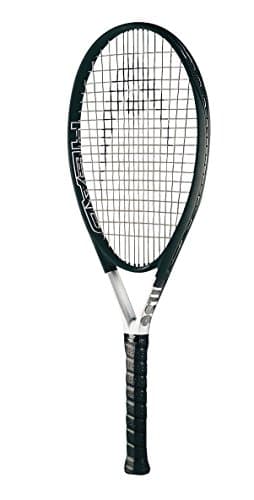 HEAD Titanium Ti.S6Most difference per dollar | Proving that specs beat price | 8.25 criteria | |
| 2 | 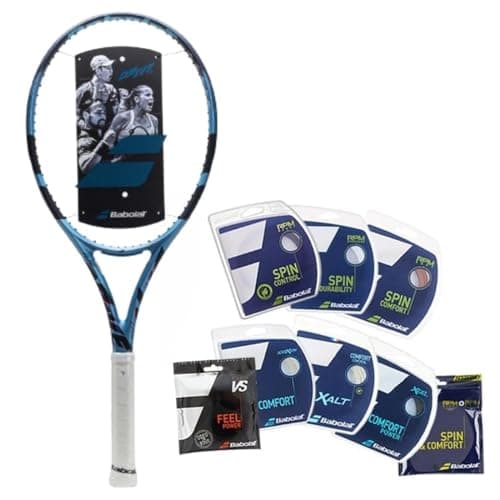 Babolat Pure Drive Lite 2025Best mid-price | A correctly specified mid-price frame | 8.35 criteria | |
| 3 | 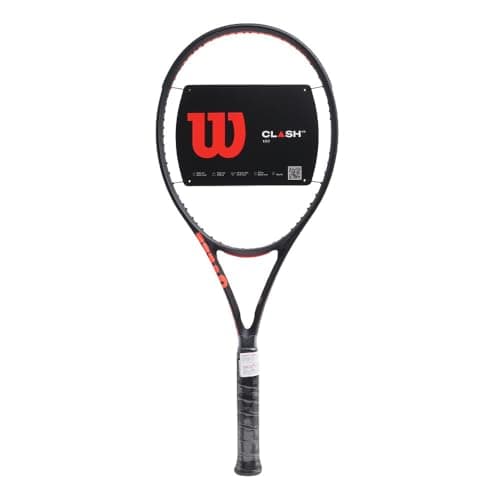 Wilson Clash 100 v3Best case for spending more | When premium genuinely buys something | 8.75 criteria | $224.25 · View on Amazon Price as of October 17, 2026 · was $299.00, 25% off |
01HEAD Titanium Ti.S6
Most difference per dollarBest for: Proving that specs beat price
An entry-tier frame that has outlived most of the premium rackets launched alongside it, and the reason is pure specification: it is very light with a very large head, which is the combination that produces effortless depth and a huge sweet spot. Nothing about that requires expensive carbon.
It is the best single answer to the question in this page's title. A player who switches from a heavy, small-headed hand-me-down to this will feel a dramatic difference, and they will have spent entry-tier money to get it. The difference came from fit and specs, not from price.
The honest cost is the other side of the same specs. Very light and very large means little stability against a hard hitter and limited precision when you want to place a ball rather than hit it deep - and plenty of players outgrow it. It is also stiff rather than flexible, which is worth knowing if your arm is sensitive. Our [oversize roundup](/tennis-rackets/best-oversize) has the rest of the category.
Our score
- Power
- 9.5
- Control
- 6.0
- Forgiveness
- 9.5
- Arm comfort
- 8.5
- Maneuverability
- 9.0
- Overall
- 8.2
Verified specs
- Head size
- 115 sq in
- Strung weight
- 8.6 oz / 244 g
- Balance
- 7 pts head heavy
- Swingweight
- 309
- Stiffness (RA)
- 71
- Beam
- 27 / 28 / 27 mm
- String pattern
- 16x19
- Length
- 27.75 in
Specs as published by Tennis Warehouse, checked September 2026.
Buy if
- You are coming off a heavy, small-headed old frame
- You want depth without having to generate it
- You want the largest sweet spot for the least money
Pass if
- You already generate your own pace
- You play against hard hitters and get pushed around
- You want precision and control
02Babolat Pure Drive Lite 2025
Best mid-priceBest for: A correctly specified mid-price frame
This is what the sensible middle of the market looks like: the Pure Drive platform - the most widely played frame family in club tennis - in a lighter layup aimed at beginners and improvers. You get the modern geometry and the brand's engineering without the weight or the price of the full tour version.
It is the frame we would point to as the actual answer for most people asking whether a good racket makes a difference. Buy the mid-tier version of a well-known platform in your correct grip size and weight band, and you have captured essentially all of the available benefit.
The honest cost is that it is a lighter frame, so it is less stable against pace than the standard Pure Drive, and the Pure Drive family is known for free power rather than for precision or for softness. If your arm is the issue, the Clash below is the better call.
Our score
- Power
- 8.5
- Control
- 7.5
- Forgiveness
- 8.5
- Arm comfort
- 7.5
- Maneuverability
- 8.5
- Overall
- 8.3
Verified specs
- Head size
- 100 sq in
- Strung weight
- 10 oz / 283 g
- Balance
- 1 pt head light
- Swingweight
- 295
- Stiffness (RA)
- 69
- Beam
- 23 / 26 / 23 mm
- String pattern
- 16x19
- Length
- 27 in
Specs as published by Tennis Warehouse, checked September 2026.
Buy if
- You want a modern frame from a mainstream platform
- You are a beginner or improver rather than a competitor
- You want depth and spin without a heavy frame
Pass if
- You need maximum stability against hard hitters
- Arm comfort is your main concern
- You want a control-oriented frame
03Wilson Clash 100 v3
Best case for spending moreBest for: When premium genuinely buys something
54 RA in a 100 sq in head, 312 g strung with a 308 swingweight and a 24.5 mm uniform beam. That stiffness figure is the point: 54 is dramatically softer than the high-sixties frames that fill the performance shelf, and a frame that flexes more absorbs more of what would otherwise reach your tendon.
This is the honest example of premium money buying a real thing. You cannot get a 54 RA layup at entry level - flexible frames that still play like performance frames are a materials and construction problem, and that is what the price is for. If impact reaching your arm is the thing limiting your tennis, this is a different purchase from buying features.
Two costs. A flexible frame gives you less free depth than a stiff aero-beam frame, so a player who relies on the racket for pace will feel the ball landing shorter until they adjust. And it is premium-priced, which is exactly the point of including it here: you should spend this money for comfort, not for an expectation of improvement.
Our score
- Power
- 8.0
- Control
- 8.5
- Forgiveness
- 8.5
- Arm comfort
- 9.5
- Maneuverability
- 8.0
- Overall
- 8.7
Verified specs
- Head size
- 100 sq in
- Strung weight
- 11 oz / 312 g
- Balance
- 7 pts head light
- Swingweight
- 308
- Stiffness (RA)
- 54
- Beam
- 24.5 mm uniform
- String pattern
- 16x19
- Length
- 27 in
Specs as published by Tennis Warehouse, checked September 2026.
Buy if
- Your arm, elbow or wrist is the limiting factor
- You want a soft frame you can still compete with
- You have already tried a softer string and need more
Pass if
- You want the racket to supply pace
- You have not yet tried a softer string and a lower tension
- Budget is the deciding factor
Price as of October 17, 2026 · was $299.00, 25% off
Common questions
Does a good tennis racket make a difference?
A racket that fits you makes a large difference - grip size, weight, head size and stiffness all change what happens to the ball and how your arm feels afterward. An expensive racket usually makes very little difference at club level, because price mostly buys materials and tolerances rather than performance you can feel.
Is an expensive tennis racket worth it for a beginner?
Generally no, and often it is actively worse. Premium frames are frequently premium because they are demanding - heavier, stiffer through the hoop, less forgiving - which is the opposite of what an improving player needs. Spend on fit and on a correctly specified mid-tier frame instead.
Will a new racket improve my game?
It can stop limiting you and it can stop hurting you. It will not change your level. If you are playing a frame that is too heavy, too small-headed or the wrong grip size, fixing that is a real improvement in what you can do - but no racket substitutes for strokes.
What is the single most important racket spec?
Grip size, because almost nobody checks it and it affects everything else. A grip that is too small forces you to squeeze harder, which is tiring, costs you touch and is the loading pattern associated with lateral elbow pain. It is also the cheapest to fix, with an overgrip.
Should I restring before I buy a new racket?
Yes, almost always. Strings lose tension from the day they go in, and most club players are playing on a dead string bed. A fresh restring with a well-chosen string costs a fraction of a new frame and will change the feel more than moving up a tier would.
How often should I replace a tennis racket?
Frames do not wear out the way shoes or strings do - graphite fatigues slowly, and a well-treated racket lasts years. Replace it when your needs change, when it stops suiting your arm, or when it is a hand-me-down whose specs were never yours. Not on a schedule.
Read next
Sources
- 01Tennis Warehouse - best tennis racquets
- 02Tennis Warehouse - racquets for beginners
- 03Tennis Warehouse - HEAD Titanium Ti.S6
- 04Tennis Warehouse - Wilson Clash 100 v3
- 05Tennis Warehouse - Babolat Pure Drive Lite 2025
Every source above was retrieved while writing this page. Specifications are quoted from the listing or manufacturer page cited, not from memory.